



We caught up with the brilliant and insightful Stefan Van De Graaff a few weeks ago and have shared our conversation below.
Hi Stefan, thanks for joining us today. What’s been the most meaningful project you’ve worked on?
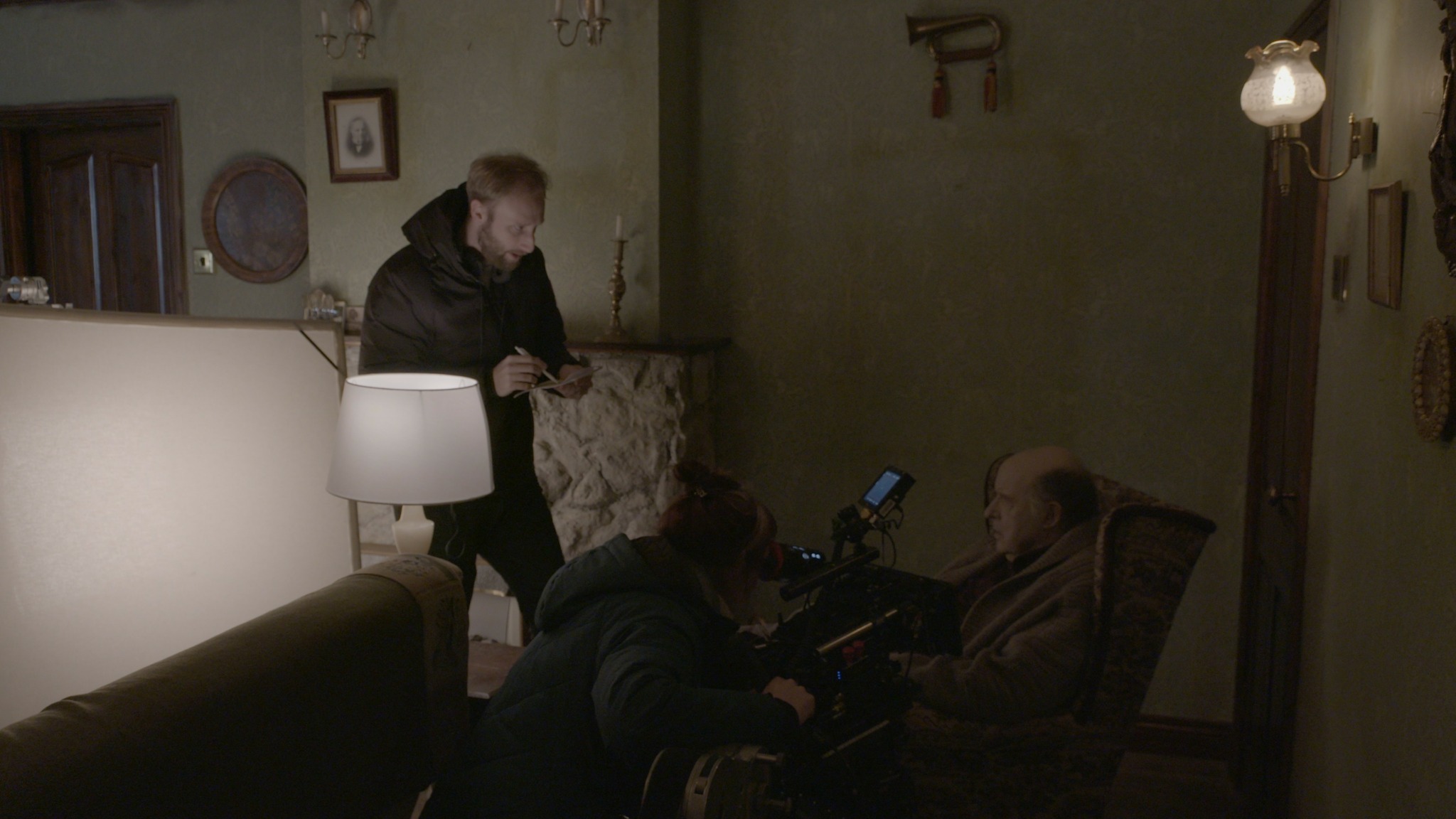
One of Us is a film that I wrote and directed in the aftermath of losing my mom and son in the same year. I was just drowning in grief. And I found that writing was really the only means by which I could process the tragedy in any way, at least in any meaningful one. The film is an existential horror that revolves around a young man attending a funeral when members of his family begin dying one by one and he’s tasked with finding the killer in their midst. It’s this dark, mysterious who-dunnit but it’s really a horror in a Greek tragedy sense. The entire film is performed in poetic verse, this very absurd, performative language. But it mirrors my experience in life after witnessing such intimate death, like Kafka when he wrote about showing up to the costume party with his real face. And of course the language and theatrical nature of the film feels very strange and is hard for some to watch because they’re asking themselves, “What are they all talking about?!” But that is precisely what I want them to think. And I’ve tried to ask the viewer to push through that discomfort and I will accompany them on a journey into treacherous waters about what it means to lose loved ones and our sense of meaning and to doubt our sanity and to see our perceptions of reality erode and to question, “Upon whose head can I lay blame for all of our suffering?”
There is a great danger of course in putting so much of oneself and one’s suffering on a canvas that can be misunderstood and tossed aside and ridiculed. My hope is that there may be one other person in the world who needs a story like this as much as I do, and that my real purpose as an artist is to go and find them, to extend a hand, and to try to bear the burden of their suffering with them.

Stefan, love having you share your insights with us. Before we ask you more questions, maybe you can take a moment to introduce yourself to our readers who might have missed our earlier conversations?
I’ve been writing and making films since I was a kid growing up in Chicago. But that midwestern, pragmatic nature might have gotten the best of me in college when I decided to study advertising because it felt more “realistic” than pursuing the arts. So I started a digital advertising agency called Chamber Media with a friend and we ran that for a number of years, growing it significantly before selling it to a private equity firm in 2021. The agency, where I still sit on the board, primarily makes social media ads for its clients and we’ve driven billions of views and hundreds of millions of dollars for our partners. But my heart has always been in film, so in 2019 I started writing my first feature film script and eventually partnered with a good friend of mine to co-create Simmer on a micro-budget. We got immensely lucky with some viral marketing stunts that eventually got us a deal with HBO Max. These days, when I’m not making my own films or helping out at Chamber Media, I’m assisting and investing in other people’s work. I founded The Jung School, which is a coalition of artists making groundbreaking, non-conformative work. I also spend a lot of time with my wife and son.
Is there mission driving your creative journey?
Obviously, having started The Jung School, I am an avid reader of Carl Jung. He believed deeply in the responsibility of the artist to function as a sort of translator with humanity’s collective unconscious. Those parts of ourselves and of society that are troubled, dismissed, ignored, even uncovered? Its’ the artist’s job to bring those to the surface and to sublimate them in a way that can give human’s meaning and understanding and wisdom. I’ve had one particular moment with a single piece of art that truly changed the trajectory of my entire life. Never had I felt so seen, so understood. That is the fundamental goal of my creative journey; to make art that can find those who need it in their dark and desperate places and to try to offer some companionship in this absurd life.

In your view, what can society to do to best support artists, creatives and a thriving creative ecosystem?
Because I view art and those who consume it as participating in a creative act together, then art that is dependent on institutions will always be on a razor’s edge. In the 21st century and beyond, I think it will become increasingly important to collapse the chasm that has existed between artist and consumer. Artists have a responsibility to the consumers, not the institutions, to provide them the stories, the frameworks, the psychological meals that sustain us. On the other hand, consumers of the arts have an obligation to reward the artists, not the institutions, that do this effectively. This can only happen when those who make the art and those who like the art can meet and exchange together directly. In short, follow your favorite artists wherever they are and support the things they make with your money if you have it and with your voice if you don’t. But I would argue that the onus is on the artist to make the first move (if we’re going to symbolize the relationship as a kiss)!
Contact Info:
- Website: https://www.thejungschool.com
- Instagram: https://www.instagram.com/stefan.vdg
- Other: https://substack.com/@thejungschool


