


Alright – so today we’ve got the honor of introducing you to Nancy Dillingham Marks. We think you’ll enjoy our conversation, we’ve shared it below.
Nancy, thanks for joining us, excited to have you contributing your stories and insights. Can you open up about a risk you’ve taken – what it was like taking that risk, why you took the risk and how it turned out?
Opening an art studio before I ever called myself an artist wasn’t part of some master plan—it was a risk that made absolutely no sense on paper.
At the time, I wasn’t thinking, “I’m going to build a creative business.” I was thinking, “I need to create a space where art can exist, where people can gather, and where something meaningful can happen.” The truth is, I didn’t feel qualified. I didn’t have a formal art background, I wasn’t producing my own body of work, and I definitely didn’t see myself as someone who *belonged* in that world. But I kept feeling pulled toward it anyway.
The backstory is simple but uncomfortable: I saw a gap. I saw how hard it was for artists—especially emerging ones—to find space, community, and support. I also saw how intimidating art spaces could feel for everyday people. Somewhere in that tension, I felt like maybe I could build something different. The problem was, I had no blueprint and no credentials to back it up.
So the risk wasn’t just financial—though that part was real. Signing a lease, investing money, and committing to a physical space without knowing if it would work was terrifying. But the bigger risk was internal. I was stepping into a role I hadn’t “earned” yet. I worried people would see right through me and think, “Who does she think she is?”
There were moments I almost didn’t do it. Moments where logic told me to wait until I was more experienced, more established, more… legitimate. But something in me knew that waiting would probably turn into never. So I moved forward anyway—uncertain, underprepared, but committed.
Opening the studio felt equal parts exhilarating and surreal.
And then—about five weeks in—COVID hit.
What had already felt like a leap suddenly became a free fall. Doors closed almost as quickly as they opened. The uncertainty was immediate and overwhelming. There was no roadmap for how to keep a brand-new creative space alive in the middle of a global shutdown. Financial pressure, fear, and constant pivots became part of daily life.
In many ways, that moment tested the risk more than the decision to open ever did. It forced me to get scrappy, to rethink everything, and to keep going even when there was no clear path forward. It wasn’t just about believing in the idea anymore—it was about fighting for it.
At first, I leaned heavily into creating opportunities for other artists—hosting, curating, building community. I stayed behind the scenes, comfortable in the role of organizer and supporter. It felt safer that way.
But something unexpected started to happen. Being surrounded by art every day, watching artists take risks with their work, and holding space for creativity—it started to shift something in me. Slowly, almost quietly, I began to explore my own artistic voice.
That was a second layer of risk I hadn’t planned on.
Because now it wasn’t just about building a space—it was about stepping into it myself. Letting myself be seen not just as the person running things, but as someone creating. That vulnerability felt even bigger than opening the studio.
Looking back, the risk paid off—but not in the way I originally imagined. Yes, the studio became something real. It grew into a community, a place where artists and people could connect. But more importantly, it changed me.
It gave me permission to become the thing I didn’t think I was allowed to be.
If I had waited until I felt ready or qualified, none of it would exist—not the studio, not the community, and honestly, not the version of myself I am today.
So the biggest takeaway? Sometimes the risk isn’t just about building something external. Sometimes it’s about trusting yourself enough to step into a role before you feel ready—and allowing the experience to shape you into that person along the way.
Awesome – so before we get into the rest of our questions, can you briefly introduce yourself to our readers.
For those who are just getting to know me, my path into this work hasn’t been traditional—and that’s really the foundation of everything I’ve built.
Before any of this, I spent over 35 years in the corporate world, working in a mix of administration and sales, primarily in technology. It was structured and fast-paced, and while it gave me strong business instincts, creativity was never something I identified with. In fact, for most of my life, I had convinced myself I simply wasn’t a creative person.
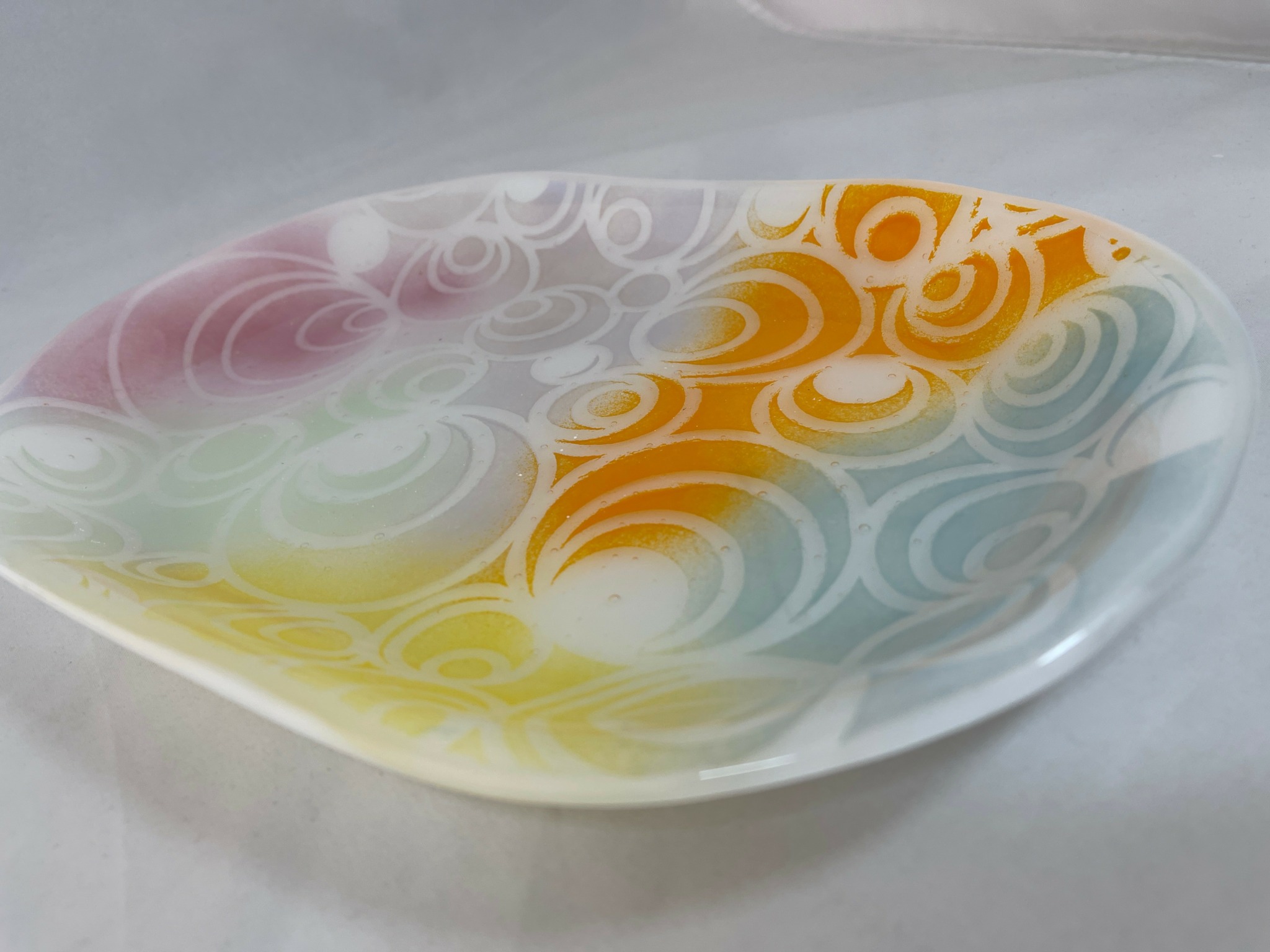
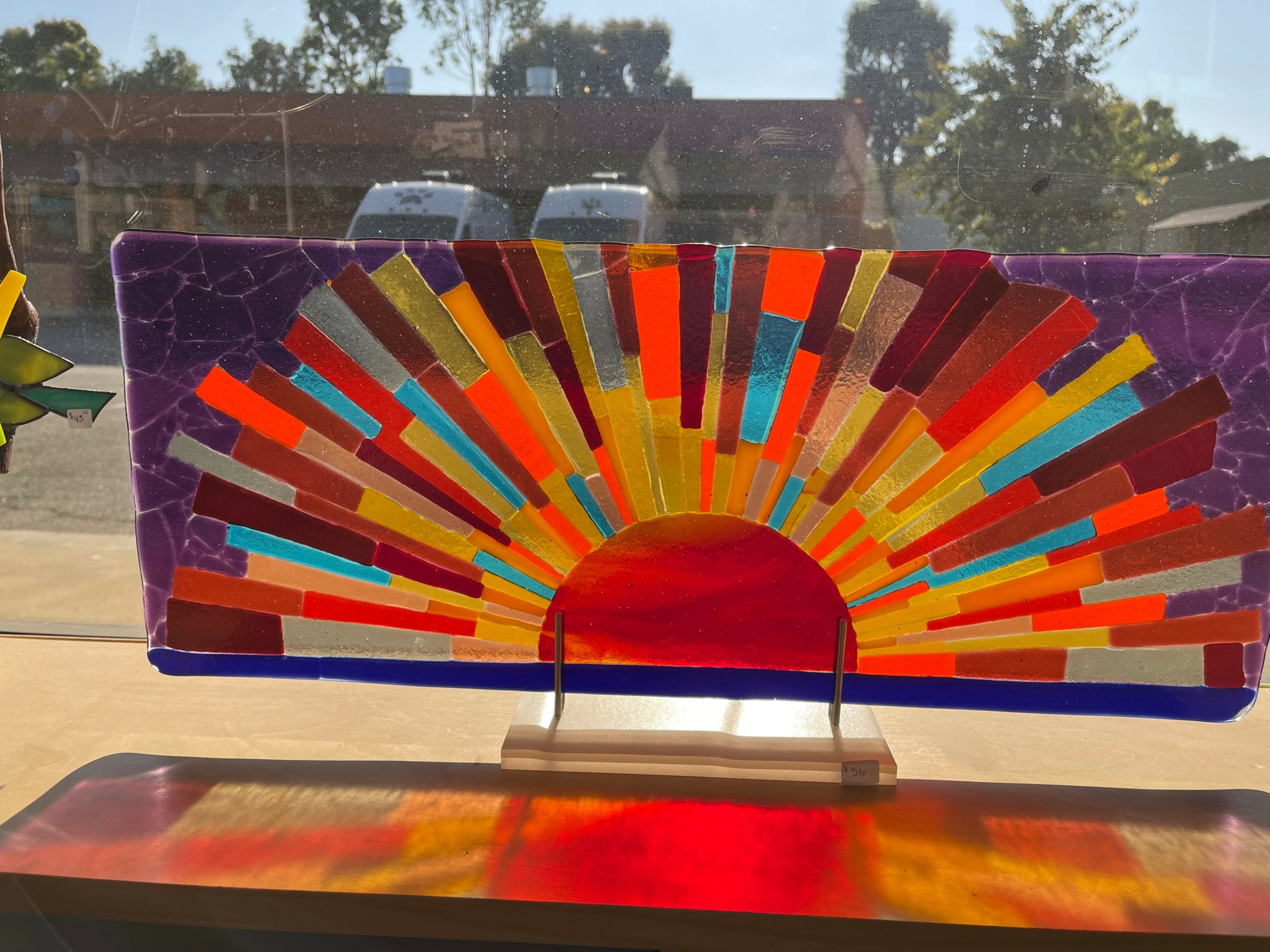
My introduction to fused glass wasn’t about starting a business or finding a passion—it was just something to do with my mom. But it was the first time I made something with my hands and actually felt proud of it. That small moment shifted something for me.
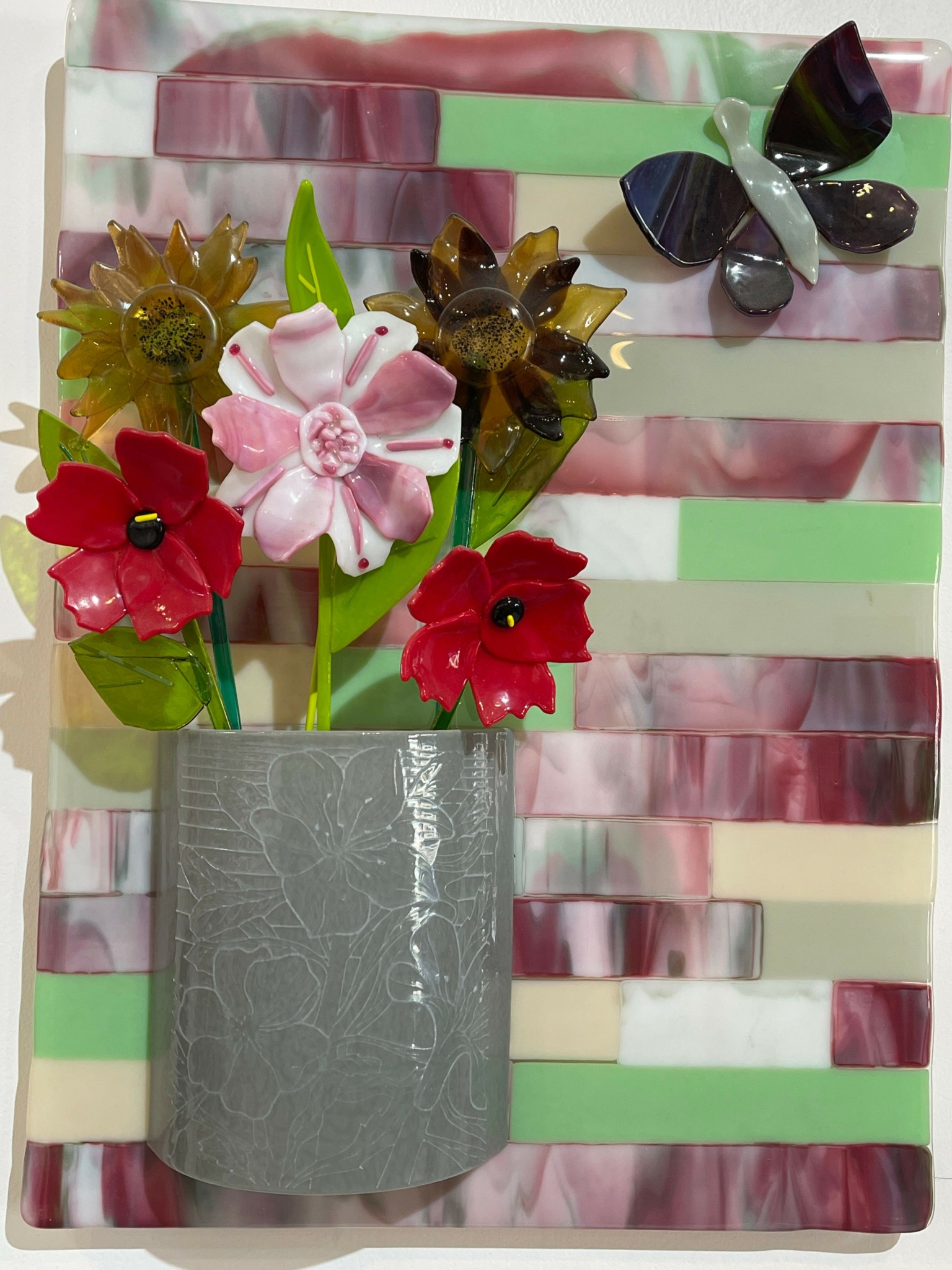
One piece in particular made me start to believe I might actually be creative. I wanted to push beyond flat work and create something more dimensional and textured. I designed a wall piece with a soft base of warm pinks and greens, then built a vase in a muted gray. At first it felt flat, so I added a subtle raised pattern in a soft white—something you only really notice up close. I shaped the glass so the vase slightly lifted off the surface, giving it depth, like it was coming forward.
Then came the flowers. Two sunflowers with layered yellows and dark centers, two smaller red poppies, and one pink-and-white flower that wasn’t modeled after anything—it just felt right. I even designed it so the flowers could be changed out seasonally, though I loved it so much I never did. The final detail was a butterfly in mid-flight, not perfectly to scale, but exactly what the piece needed.
That piece wasn’t just something I made—it was the first time I saw creativity in myself.
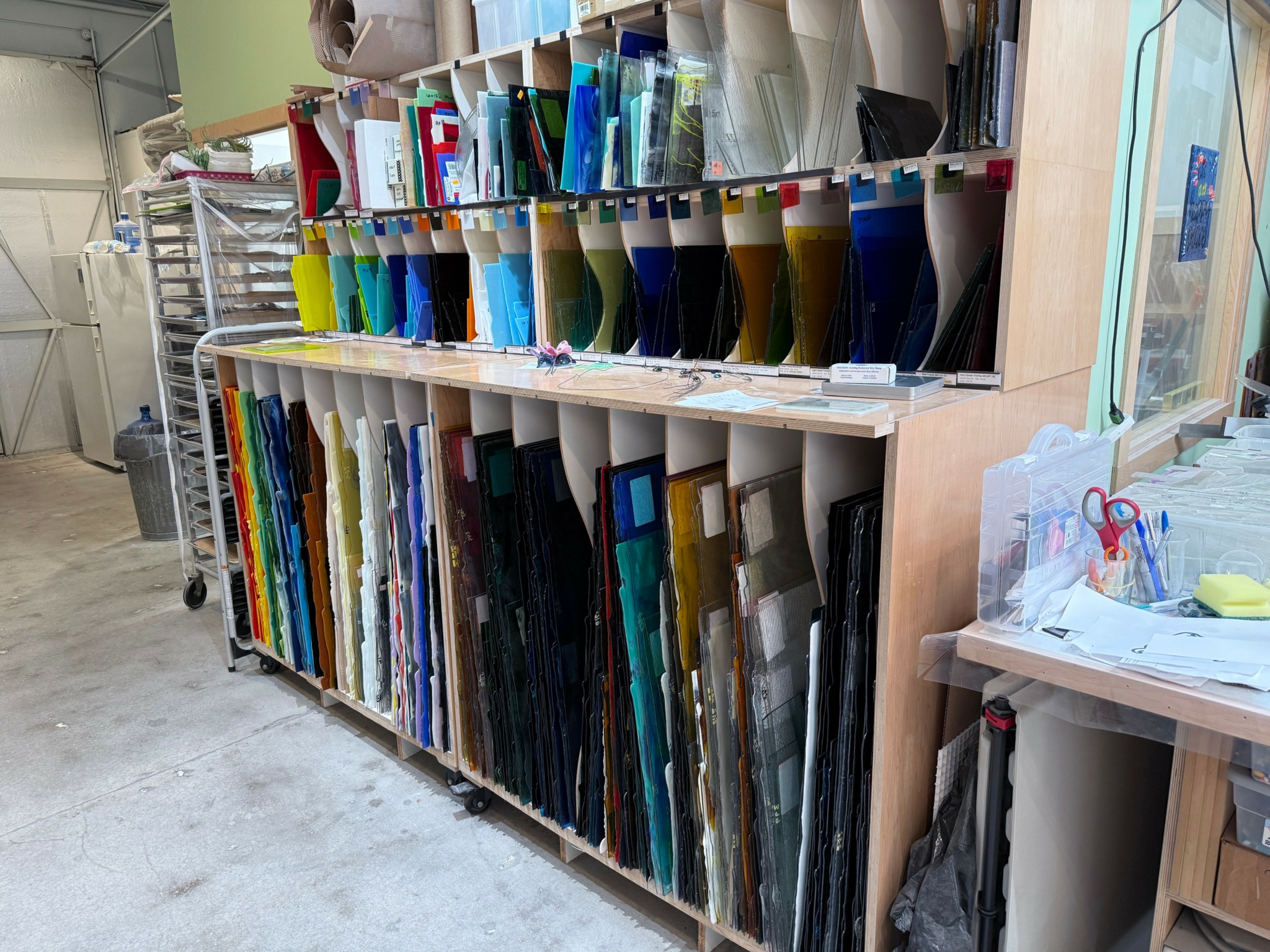
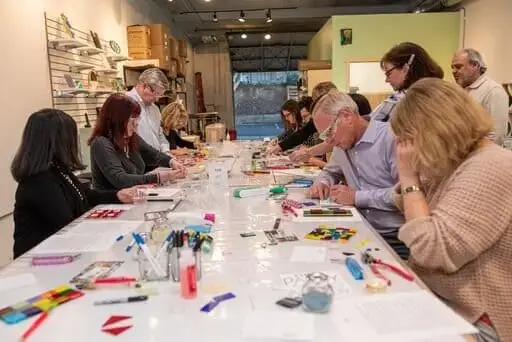
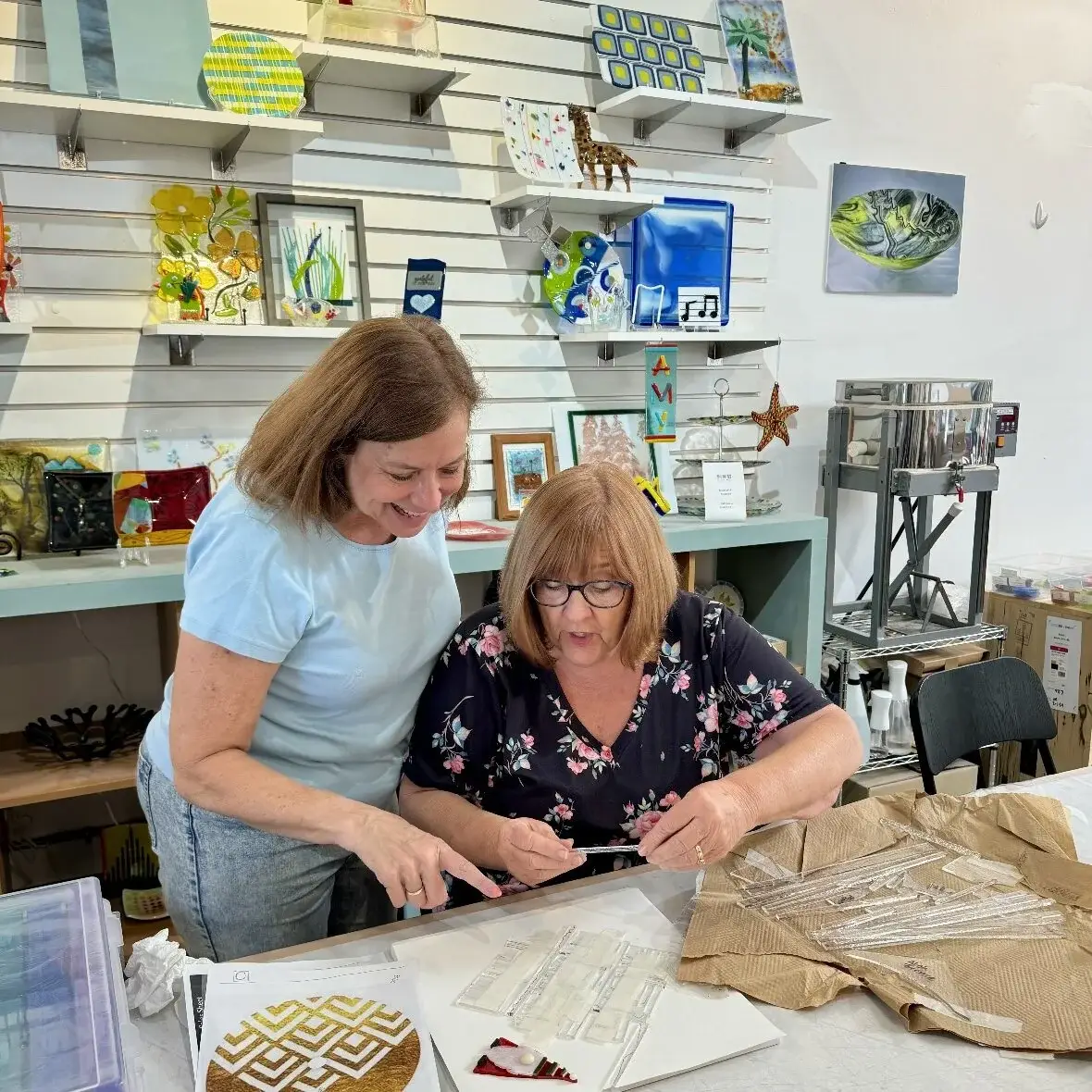
What I do now through Glass Arts Collective is create space—literally and figuratively—for people to have that same experience. We offer workshops and creative experiences that make art feel accessible, not intimidating. Whether someone has never tried anything artistic before or is looking for community, the goal is to help them feel capable and inspired.
What sets this work apart is that it was built from the perspective of someone who didn’t think they belonged in the art world. I understand that hesitation, and everything we do is designed to lower that barrier.
What I’m most proud of is the community that has grown from it—the people who walk in unsure and leave with confidence, connection, and something they created themselves. I’ve had people tell me they didn’t think they were skilled or creative, but after one class, they’re already excited to come back and keep going. That shift—that moment where someone sees themselves differently—is everything to me.
If there’s one thing I want people to know, it’s this: you don’t have to see yourself as creative to begin. You just have to be willing to try.
Can you share a story from your journey that illustrates your resilience?
Opening the studio was already a risk—but the real test came about five weeks later when COVID hit.
I had just signed a lease, invested in the space, and opened the doors to something I believed in, and almost immediately, everything shut down. There was no playbook for how to keep a brand-new, hands-on creative business alive during a global pandemic. The uncertainty was constant—financial pressure, cancellations, and not knowing when or if things would return to normal.
There were many moments I questioned everything. It would have been easy to step back, cut the losses, and walk away. But I couldn’t ignore the reason I started in the first place—I believed in the space and what it could mean for people.
So I adapted. I got creative in ways I hadn’t expected. I found ways to stay connected to the community, to keep the studio relevant, and to keep moving forward even when it felt like standing still might be safer.
What surprised me most was the shift in how I used my time. Throughout my career—and especially as a single mom for much of it—I had always wished for more time. Suddenly, I had it. And instead of letting that time be consumed by fear, I made a conscious decision to use it differently. I leaned into learning, into creating, into developing my own skills in a way I never had before.
That shift became a turning point. What started as survival became growth, and my creative journey took on a whole new level of momentum.
Looking back, that period shaped the business more than anything else. It forced me to be resourceful, resilient, and deeply committed. It wasn’t just about opening a studio anymore—it was about proving to myself that I could build something and see it through, even under the hardest circumstances.
Is there something you think non-creatives will struggle to understand about your journey as a creative? Maybe you can provide some insight – you never know who might benefit from the enlightenment.
I think the biggest misconception is that creative people have always known they were creative.
For most of my life, I believed the opposite about myself. I spent over 35 years in the corporate world and had completely convinced myself that creativity just wasn’t something I had. I thought it was something other people were born with—not something you could discover later in life.
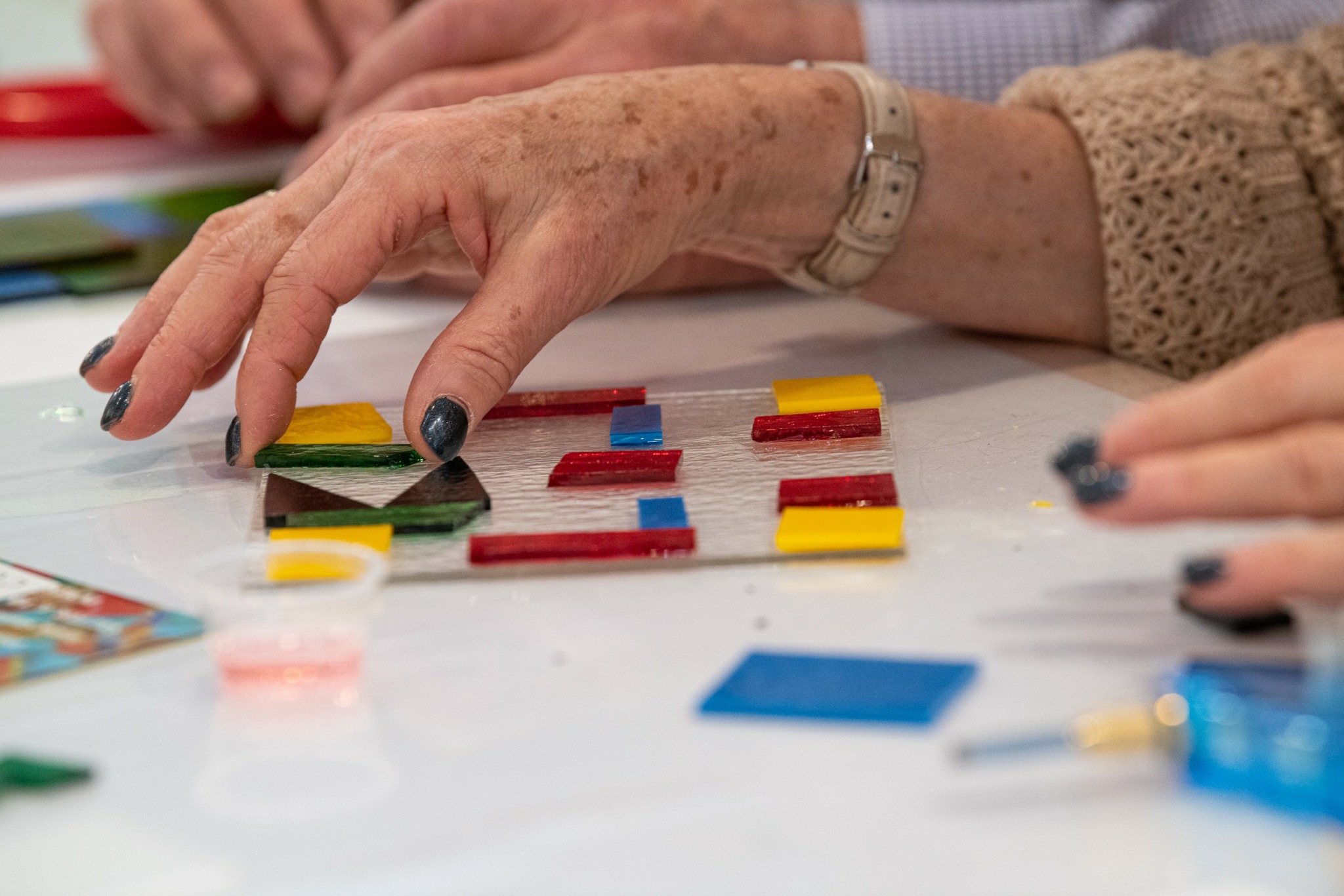
What non-creatives might not realize is that creativity isn’t about talent as much as it is about permission. Permission to try, to be curious, to make something imperfect, and to keep going anyway.
When I first started working with fused glass, I didn’t suddenly become a different person—I just gave myself the space to explore something new. And in that process, I realized creativity had been there all along, just waiting for an opportunity.
That’s why the work I do now matters so much to me. I’m not just teaching techniques or offering workshops—I’m helping people rewrite the story they’ve been telling themselves about who they are and what they’re capable of.
Because I’ve lived that shift myself, I know how powerful it can be.
Contact Info:
- Website: https://www.glassartscollective.com
- Instagram: https://www.instagram.com/glassartscollective/
- Facebook: https://www.facebook.com/glassartscollective/
- Linkedin: https://www.linkedin.com/in/nancymarks/
- Youtube: https://www.youtube.com/@glassartscollective/
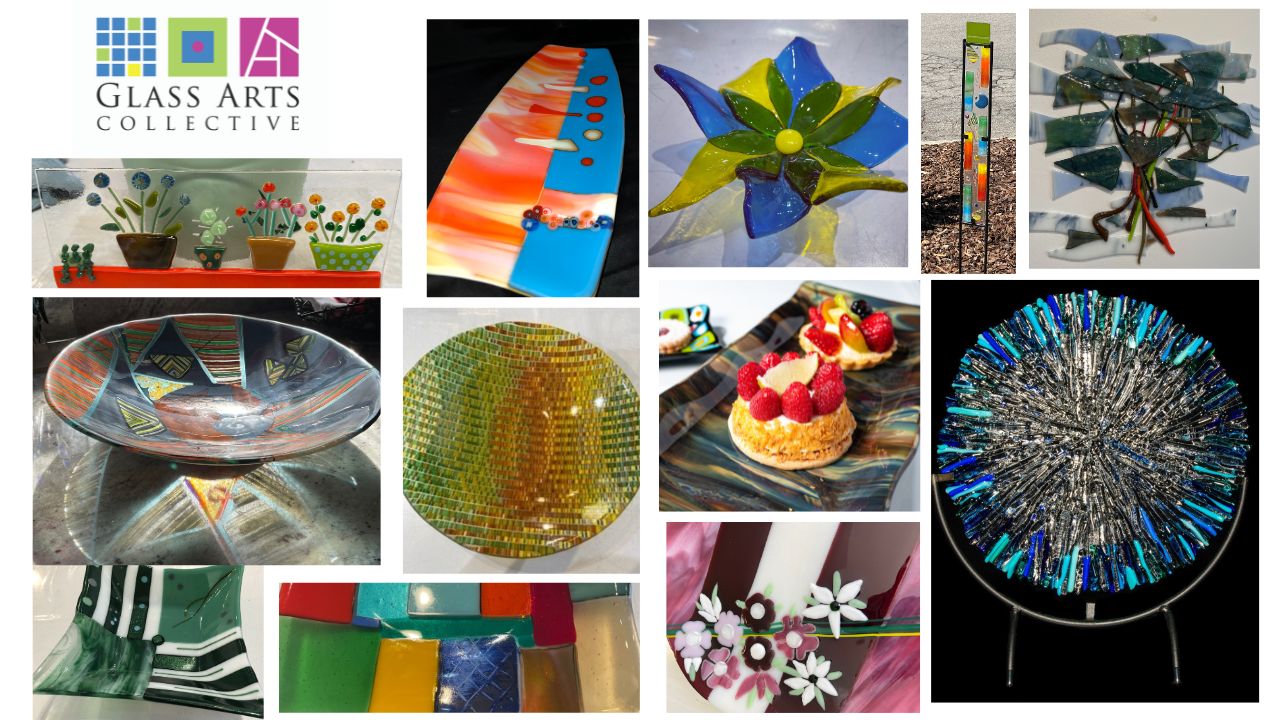
Image Credits
Abby Garner, Carl Turnbull, BJ Fitzgerald, Patty Heinen, Darlene Heusser,