


We’re excited to introduce you to the always interesting and insightful Cassie Link. We hope you’ll enjoy our conversation with Cassie below.
Cassie, thanks for joining us, excited to have you contributing your stories and insights. We’d love to hear the backstory behind a risk you’ve taken – whether big or small, walk us through what it was like and how it ultimately turned out.
There are two risks that I have taken recently that have brought me to where I am today. I finished with my Master of Occupational Therapy (MOT) in Fall 2021 and have been working as an Occupational Therapist (OTR/L) since 2022. Occupational Therapists can work in many settings such as home health services, school services, outpatient clinics, hospitals, and rehabilitation centers for all ages from infants to older adults. OT services can look different for each setting and age group, but they are always focused on what activities are meaningful and occupy a client’s time. I primarily work in outpatient pediatrics, serving children with developmental diagnoses such as Autism or ADHD and their families. For preschool-age children, we often work on play schemes, activities of daily living, such as being able to do fasteners to get dressed, and early school skills like copying shapes and cutting.
One emerging area of Occupational Therapy (OT) is aquatic-based OT services, which is providing therapy in the water! It was a risk for me to try to build an aquatic-based program. There’s a small amount of research to support its effectiveness, which means there are not a lot of best-practice guidelines yet. And honestly, I am still taking risks trying to grow it and not face backlash from insurance due to the unique setting. However, I am very proud of how far I have come, not just as an occupational therapist, but also as the founder of my OTTERS Program.
OTTERS stands for Occupational Therapy Teaching, Engaging, and Regulating through Swimming. Led by an occupational therapist (me!), this program teaches safety awareness, engages brain/body connections, and regulates sensory/behavioral systems through aquatic-based OT services to promote swimming skills necessary for water competency and drowning prevention while advancing basic functional skills used in and out of the water. This is more than basic swim lessons. OTTERS Aquatic-based OT works on developing the functional skills needed before a child is able to learn direct swim skills. Then, children with developmental disabilities can develop a survival swim. Some have transitioned to a community-based program after learning the essential skills as well.
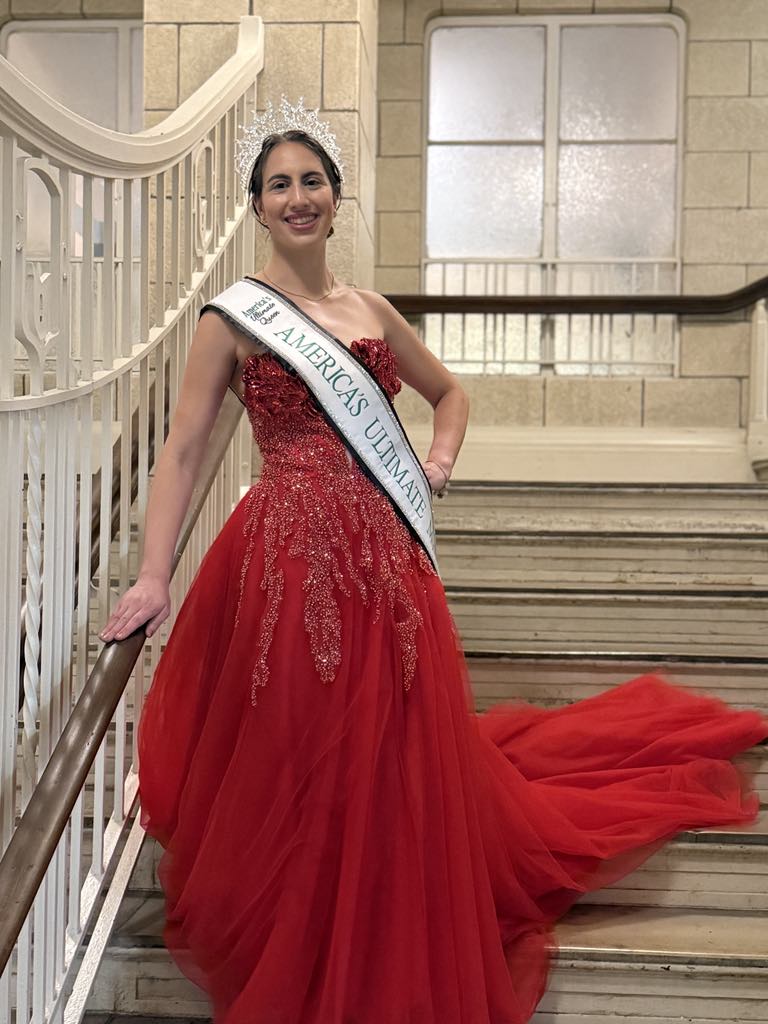
OTTERS ties into my second recent risk. Once I finished college, I returned to my hometown. Being shy throughout most of grade school and high school meant I did not have the same social connections back home as I learned to make in college. I wanted to connect with more local people and ended up doing a local festival’s pageant. As a girl who loves Disney, I thought getting dressed up for the local event would be fun, and I was hopeful I would meet some new people. That was definitely the case! I earned the title of the Norwalk Jaycee’s Miss Strawberry Festival 2024. Taking this second risk brought a whole new adventure! I was led to America’s Ultimate Queen, a National system based on “Be YOUR own kind of BEAUTIFUL”. and earned the title of Ohio’s Ultimate Miss 2025 at the state-level pageant. This led to doing my first-ever national event!
Some pageants are the stereotypical “Glitzy” kind with the major makeup and hairdos, but many festival and national systems are also “Natural”. These systems want to know if you are a good person of good character and can demonstrate confidence on stage too. If you find the right pageant system for your own values, pageantry can actually be a way to gain leadership and professional skills! It is not required, but you can have a platform that is the basis of your passion area, such as advocacy or community services. This is where I learned I could advocate for aquatic-based OT services with OTTERS. I shared OTTERS in my interview and loved being in the spotlight for the national competition of America’s Ultimate Queen. By the end, I earned Miss Congeniality and a spot on our national court as America’s Ultimate Miss 2025!
So these risks came together. I now get to represent America’s Ultimate Miss 2025, which provides me a public platform to share the work that I am doing with OTTERS! In January 2026, I ran a FUNdraiser luncheon and had a nice turnout given that it snowed in the morning. I now hope to make this an annual event but will definitely move it to Spring or Summer when the weather is warmer in Ohio! I am grateful for having the courage to combine my passion for the water and occupational therapy to develop OTTERS and that I was daring enough to try pageantry as something new to get connected to the community. It’s brought me a long way, and I hope to keep going in a direction that allows me to continue to share my passion and make a positive impact on those around me at events or during work
As always, we appreciate you sharing your insights and we’ve got a few more questions for you, but before we get to all of that can you take a minute to introduce yourself and give our readers some of your back background and context?
My name is Cassie Link, and I am an Occupational Therapist (OTR/L) who has loved the water since I was young! Being on swim team in school and working as a lifeguard and Red Cross Water Safety Instructor contributed to this. When I finished college, I wasn’t ready to give up being around the water. Even though I love occupational therapy (OT), I had a desire to still be around the water more often. That’s where diving into the emerging area of aquatic-based OT came in!
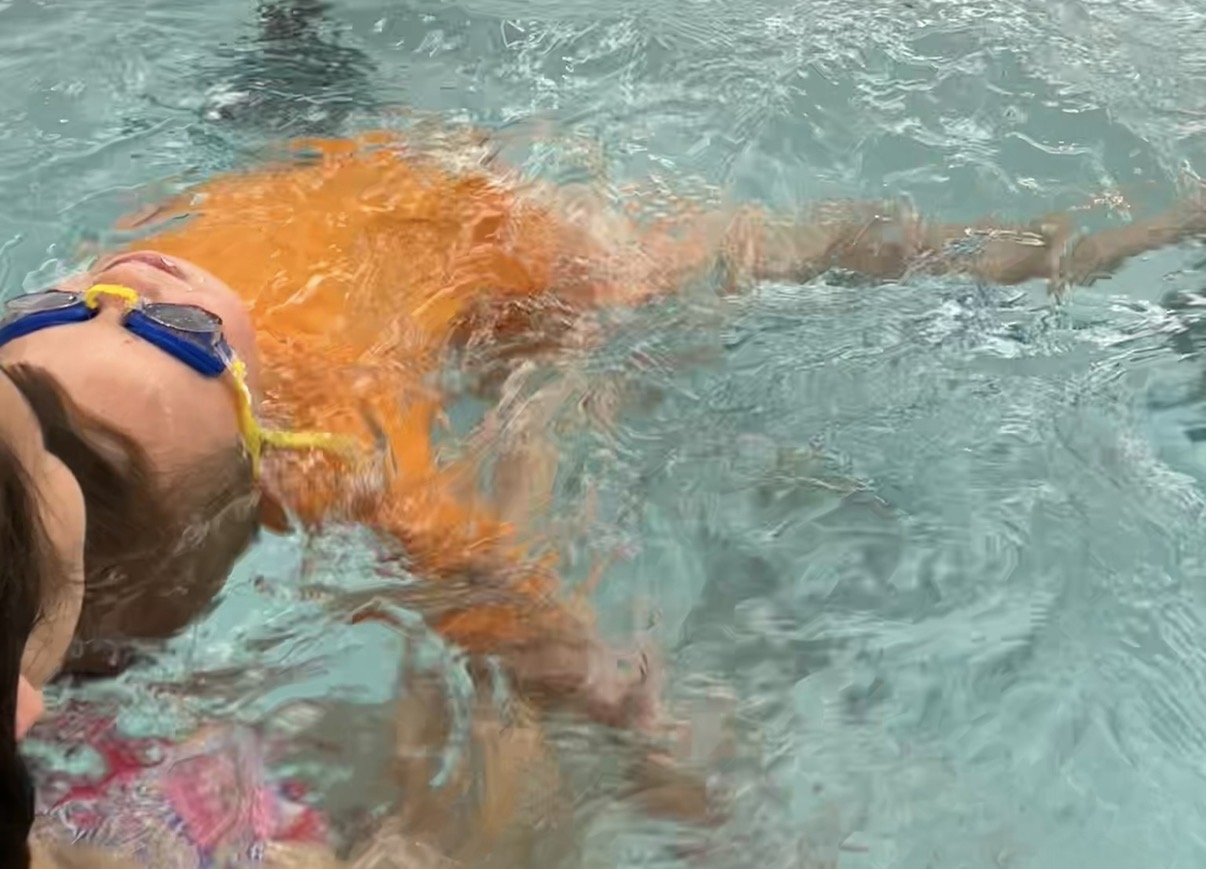
With the support of my current workplace, I founded OTTERS- Occupational Therapy, Teaching, Engaging, and Regulating through Swimming, which is still in its early building phase, serving a few families which children who have developmental disabilities each year with aquatic-based OT services focused on to promoting swimming skills necessary for water competency and drowning prevention while advancing basic functional skills used in and out of the water.
I also have the honor of holding the title of America’s Ultimate Miss 2025 through America’s Ultimate Queen, which has been an amazing experience to continue to get to know others who are showing off their confidence on stage and sharing their passions as they represent AUQ’s motto of “Be YOUR own kind of BEAUTIFUL.”
Let’s talk about resilience next – do you have a story you can share with us?
Part of my time in the MOT graduate program to become an occupational therapist (OT) fell within the time of the COVID-19 pandemic. This was not easy to switch from in-person lectures and labs to all virtual learning and then hybrid learning to finish.
There was a time towards the end of the program that I had a virtual conversation with an OT. Prior to this experience, I looked up to this individual. They were esteemed for their pediatric specializations within the field of OT, which is the age group I wanted to work with, and do work with now. Virtual learning was hard for me. Somehow, we got into a virtual conversation where this OT doubted that I could finish the program. I defended myself, saying that I know I want to help others, and I have enjoyed working with kids as a swim instructor. They then told me that teaching swim lessons is nothing like being an OT.
This is where they were wrong. The OT that I looked up to “ghosted” me, as the modern phrase goes. They did not ever reply back, or address it when we did see each other in person after I earned my MOT graduation. This contributed to why reaching out to my workplace to build OTTERS was a risk for me. I had already had a negative response once before from someone whose professional opinion I had valued.
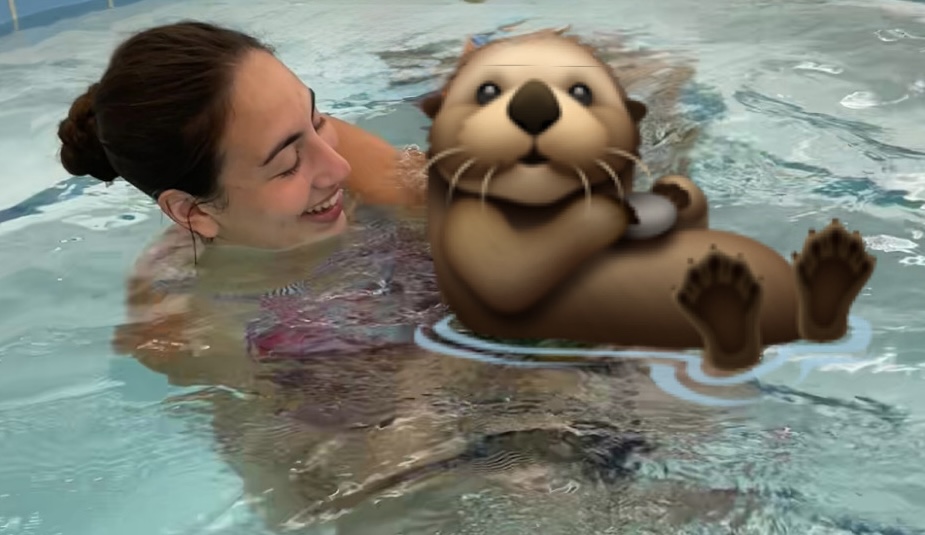
Swim lessons and aquatic-based OT services focused on water competency and drowning prevention are not the same thing. Typically developing peers can follow the directions of swim lessons to learn how to swim. Aquatic-based OT services also works on building skills in and around the water, but do so through building basic functional skills that typically developing peers already have. Before I even had thought of OTTERS, as an OT student, I had explained:
– Teaching group lessons means you have to know how to get and keep a child’s attention
– There are functional skills that make up swim skills, such as coordination
– A child must have body awareness to know where they are in the water
Typically developing kids often do not have a problem learning swim skills in a community-based group setting because they have appropriate attention, coordination, and body awareness. However, for kids who have difficulties in these areas due to diagnoses such as Autism, ADHD, or Cerebral Palsy, there becomes a therapeutic need that can be met by an OT in an aquatic environment. There’s emerging research to support this as well. Of course, not every OT should work in an aquatic environment, but I would love to make sure that anyone eager to explore it does not have to experience the negative response that I did. I didn’t know it then, but I was already thinking like an OT when others doubted it. I am proud of my resilience to not give up during MOT school and to move forward and build OTTERS despite the negative response I got from someone I looked up to as a role-model professional throughout the start of graduate school
We often hear about learning lessons – but just as important is unlearning lessons. Have you ever had to unlearn a lesson?
The lesson that I have had to unlearn ties into my story of resilience. I have had to unlearn having self-doubt about myself and OTTERS. What started as an idea to combine two passions became a name during a drive home from work. It’s such good luck that my favorite animal starts with the first two letters of my professional job- OT! Then what started as a Summer Group became a program where I get to work one-on-one with these kiddos as true, billable OT services within the water as part of my workday!
As an emerging area, there is not a lot of guidance on what is considered “best practice”. I have to be thorough in looking at current evidence, but also trust some of my own experience to guide further building the OTTERS program. I have the honor of being connected to the American Occupational Therapy Association (AOTA)’s Aquatic Community of Practice. We are a water-loving group that is trying to help bridge this gap to increase access to both professionals to provide aquatic-based OT services, and so that children with developmental disabilities can have increased access to opportunities to build water competency and drowning prevention. This has allowed me to continue building my personal experience and build knowledge of the research that is available to support aquatic-based OT. For example:
– Children with adaptive needs are appropriate to work on breath control, submersion, and engagement in the water related to poor body awareness and attention. Difficulty with these skills can also contribute to poor safety and environmental awareness that may make traditional swim lessons in the community unsafe
– Children with adaptive needs may need extra supports to learn how to complete floats and survival swimming. Beyond the extent of traditional swim lessons, these children may need increased cuing and positional supports to build trunk control and balance to remain at the surface of the water for floating. Coordination of arm, leg, trunk, and breath control may also need additional supports to create a survival swim
Autism Society reports that drowning has been the cause of 91% of deaths related to wandering reported for children 14 years and younger with Autism Spectrum Disorder. These accidental drownings are often a result of a child wandering and therefore being alone
Through the OTTERS program, I am hoping to establish the routine of having a child with adaptive needs wait for an adult before getting in the water. In addition, if a child with adaptive needs were to fall into the water, I hope they would be able to return to the surface and reach for a side or keep their head above water long enough to be rescued. I want to be a part of the efforts that reduce the statistics of drownings for children with developmental disabilities.
I could go on and on about evidence and statistics if you let me. Email me if you are interested in any conversation related to adaptive aquatics, especially aquatic-based OT and the development of the OTTERS program at cassie@otters-aquatic-ot.org
Reference
Autism Society. (2024). Safety on the spectrum wandering resource guide. https://autismsociety.org/wp content/uploads/2024/07/Wandering Resource-Guide-PDF-1.pdf
Contact Info:
- Website: America’s Ultimate Queen: https://www.americasultimatequeenpageant.com/
- Instagram: Until July 2026: @americasultimatemiss
- Facebook: Until July 2026: America’s Ultimate Miss
- Other: OTTERS email: cassie@otters-aquatic-ot.org
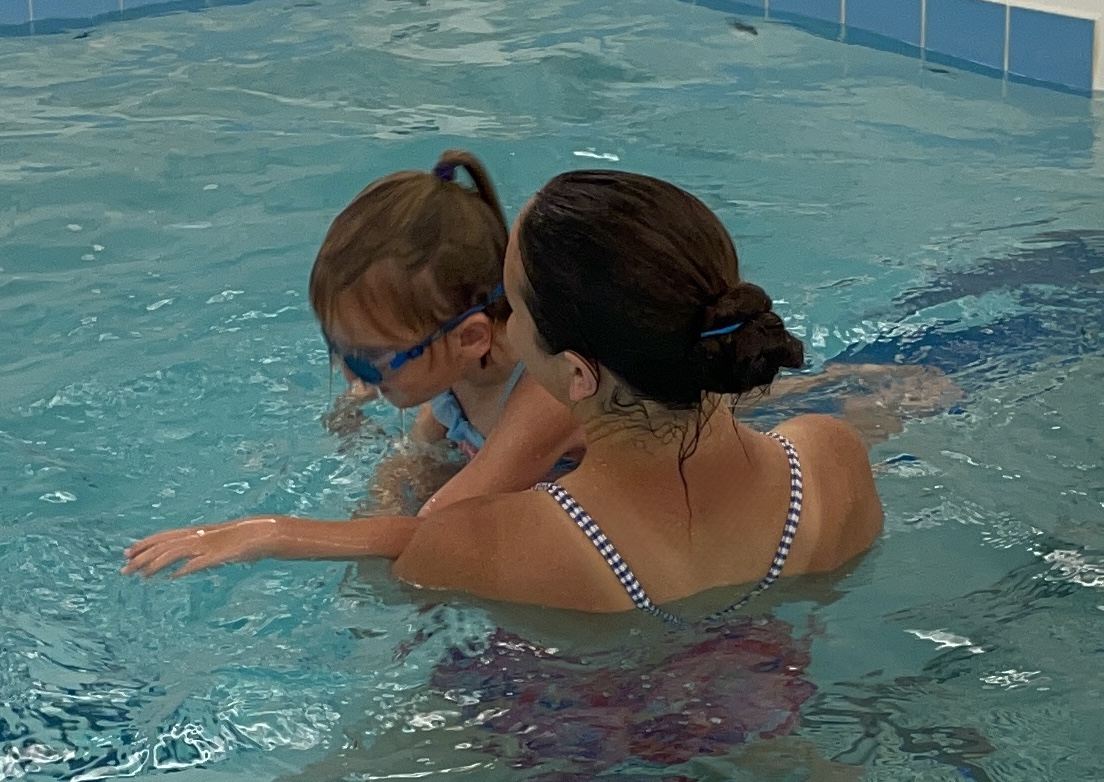
Image Credits
All pictures are personal pictures. OTTERS program pictures include permission from the families. They made so much progress! :)