


We caught up with the brilliant and insightful Rachel Williamson a few weeks ago and have shared our conversation below.
Hi Rachel, thanks for joining us today. What was it like going from idea to execution? Can you share some of the backstory and some of the major steps or milestones?
The idea didn’t start as “I’m going to write a book.” It started as a pattern I couldn’t ignore.
I had spent years developing store managers and frontline leaders, and I kept seeing the same thing over and over—really talented people getting promoted into leadership roles without the tools or guidance to succeed. They had the drive, the work ethic, and the intent… but not always the roadmap. And because of that, many struggled early, which impacted not just them, but their teams and the business. Then there was the opposite issue – managers would get hired and virtually thrown into the role with very little training.
At first, I did what most operators do—I solved it in the moment. I coached, created training materials, built frameworks, and shared what worked. Over time, those notes and conversations started to stack up. I realized I wasn’t just solving isolated problems—I was building a repeatable approach to developing new leaders.
That’s when the idea shifted from “this is helpful for my team” to “this could help a lot more people.”
The next step wasn’t glamorous. I started organizing everything—notes, lessons, real-world examples—into something more structured. Nights, early mornings, and in-between moments became writing time. I had to figure out not just what I believed about leadership development, but how to clearly articulate it in a way that someone brand new to leadership could actually apply.
From there, it became a process of refinement. Writing, stepping away, rewriting. Asking: Is this practical? Is this real? Would this have helped someone on day one in role? I also had to learn the publishing side—how to move from manuscript to an actual book, which meant researching options, understanding timelines, and navigating a completely new space outside of my day-to-day work.
There were definitely moments of doubt—wondering if it was “ready,” or if it would resonate—but I kept coming back to the original problem I was trying to solve. That kept me moving forward.
Launching wasn’t a single moment—it was the result of consistently taking the next step, even when I didn’t have the full picture yet.
Looking back, the biggest shift was treating the idea like something worth building. Once I did that, it became less about having everything figured out and more about staying close to the problem, taking action, and continuing to refine along the way.
As always, we appreciate you sharing your insights and we’ve got a few more questions for you, but before we get to all of that can you take a minute to introduce yourself and give our readers some of your back background and context?
I’ve spent my career in retail leadership, initally working in retail to put myself through school, only then to realize how much I loved retail and that I was actually good at it! From Store Manager to Area Manager, then District Manager, Regional Learning Manager, then the big transition from working in the field to corporate roles. I never forgot where I came from and spent many hours continuing to spend time in stores to ensure the solutions we believed stores needed were actually accurate. Often, we were prioritizing the wrong things – that is what spending time in stores does and why it is so vital for retail executives to be in stores, closest to the customer, working alongside store leaders. This is how you truly understand the needs of the team and the customers. From the start, I focused on developing people and driving results through strong, effective teams. I didn’t start out thinking, “this is my industry”—I grew into it by being in it. Early on, I was drawn to the pace, the accountability, and most importantly, the opportunity to directly impact people—both customers and employees—every single day.
As I moved into leadership roles, what stood out to me wasn’t just the business side, but the people side. I saw firsthand how much influence a leader has on someone’s confidence, performance, and long-term trajectory. At the same time, I noticed a consistent gap—new leaders were often promoted because they were great individual performers, but they weren’t always given the tools to lead others effectively.
That became the core of my work. When I left my corporate role as the Vice President of Transformation, I opened my consulting practice, which is also called Running Great Stores.
Today, my focus is on helping retail brands start, evolve or transform to ensure they can survive the retail landscape. Once inside the brand, I am frequently asked to train new and emerging leaders—especially those stepping into leadership for the first time. Through my book and the frameworks I’ve built over time, I provide practical, real-world guidance on how to lead people, build strong teams, and drive results without losing the human side of leadership.
What sets my work apart is that it’s grounded in reality. Everything I share comes from lived experience—not theory. It’s built from what actually works on the sales floor, in fast-paced environments, with real people and real pressure. I’m not focused on abstract leadership concepts—I’m focused on what a new leader can do on day one, week one, and month one to be successful.
The problem I’m most passionate about solving is the early failure point in leadership. When new leaders struggle, it impacts everything—team morale, performance, retention, and ultimately the customer experience. But when they’re set up well from the beginning, the ripple effect is just as powerful in the opposite direction.
What I’m most proud of is the retail brands and teams I’ve developed along the way—brands and leaders who started unsure and grew into confident, effective managers who now develop others themselves. That multiplier effect is what drives me.
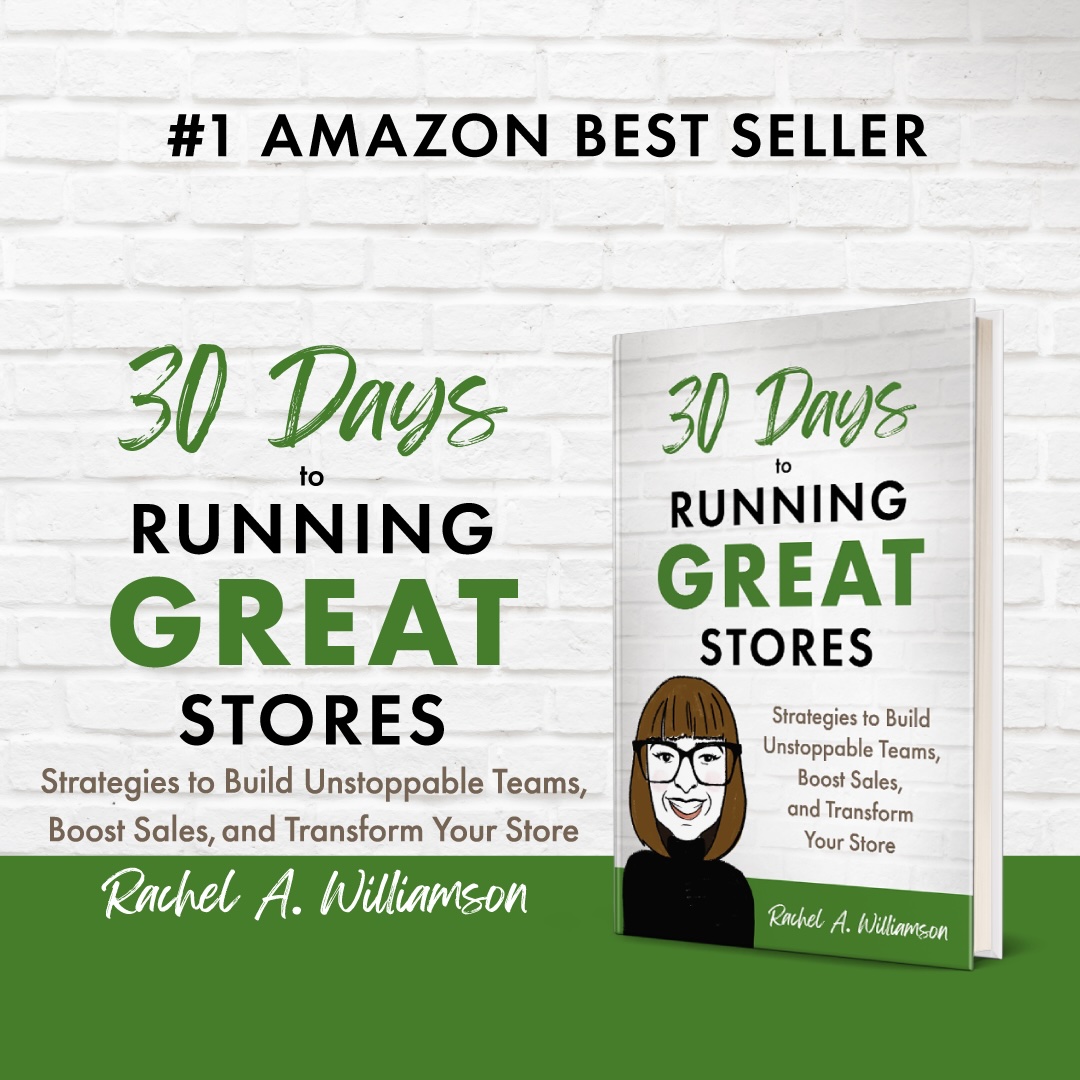
If there’s one thing I want people to know about my work, it’s that leadership doesn’t have to be overwhelming or unclear. With the right approach, it can be practical, learnable, and incredibly impactful—not just for the business, but for the people you lead. My new #1 best-selling book, 30 Days to Running Great Stores allows my work to scale across the globe!
Any advice for managing a team?
Managing a team and maintaining high morale really comes down to consistency, clarity, and care.
First, people need to know what’s expected of them. A lot of morale issues don’t come from people not wanting to perform—they come from confusion. Strong leaders create clarity around goals, standards, and what success looks like. When people know how to win, they’re more confident and engaged.
Second, consistency matters more than intensity. It’s not about occasional big moments of motivation—it’s about how you show up every day. Do you coach regularly? Do you recognize effort and progress? Do you address issues early and fairly? Teams trust leaders who are consistent, and trust is the foundation of morale.
Third, you have to genuinely care about your people. That doesn’t mean lowering standards—it means understanding what motivates them, where they’re struggling, and how to support their growth. The best leaders balance accountability with support. People will work hard for someone who they believe is invested in them.
Another big piece is helping people see progress. Morale increases when people feel like they’re improving and moving forward. Celebrating small wins, giving specific feedback, and showing people their impact goes a long way.
Finally, morale is heavily influenced by the leader’s energy. Teams tend to mirror what they see. If a leader is negative, inconsistent, or disengaged, the team will follow. But if a leader is focused, present, and solution-oriented—even in challenging moments—that sets the tone for everyone else.
At the end of the day, high morale isn’t built through perks or quick fixes—it’s built through strong leadership habits repeated over time. It’s why I build my book at 30 Days to Running Great Stores. Its one habit each day with time to practice, then come back and learn the next one over 30 days or however long you need.
Learning and unlearning are both critical parts of growth – can you share a story of a time when you had to unlearn a lesson?
One of the biggest lessons I had to unlearn was the idea that I needed to have all the answers—and that asking questions might make me look inexperienced.
Early in my career, I had just stepped into a store manager role at The Gap. It was my first big holiday season, and I was determined to prove myself. My district manager came in to help me prepare and said something that sounded simple enough: “Take Wednesday’s deposit and buy change for the weekend.”
I nodded. “Got it.”
What I didn’t do was ask a single follow-up question.
The next day, I walked into the bank and asked them to convert the entire deposit—over $10,000—into small bills and coins. The banker looked at me like I had three heads. They didn’t even have that much change on hand and had to bring it in from another location.
When it finally arrived, my team and I showed up with a dolly to pick it up. We wheeled it through the mall—boxes of coins stacked high, cash strapped down—like we were transporting an armored truck.
Then came the real problem. It barely fit in the safe. Every morning and every night, we spent close to an hour counting it. What was supposed to make things easier actually slowed everything down.
After a couple of days of this, we all looked at each other and said, “This cannot be what he meant.”
And of course—it wasn’t.
He had meant a reasonable amount of change to keep the registers moving—not the entire deposit. But because I didn’t ask any clarifying questions, I turned a simple task into a completely unnecessary production.
We laughed about it later, but the lesson stuck with me.
I had to unlearn the belief that asking questions is a sign of weakness. It’s not. It’s a sign of ownership. Strong leaders don’t assume—they clarify. They make sure they understand not just the what, but the why.
That experience changed how I lead. Today, I encourage new leaders to slow down just enough to ask: Do I fully understand this? What assumptions am I making?
Because sometimes the difference between smooth execution and total chaos… is one simple question.
Pick up 30 Days to Running Great Stores and start implementing the right behaviors with your team—one day at a time. That’s how you build stronger stores, better customer experiences, and become the leader you know you can be.
Contact Info:
- Website: https://runninggreatstores.com/
- Instagram: https://www.instagram.com/runninggreatstores/
- Facebook: https://www.facebook.com/runninggreatstores/
- Linkedin: https://www.linkedin.com/in/runninggreatstores54/
- Youtube: https://www.youtube.com/@rachelwilliamson1823
- Other: Substack: https://runninggreatstores.substack.com