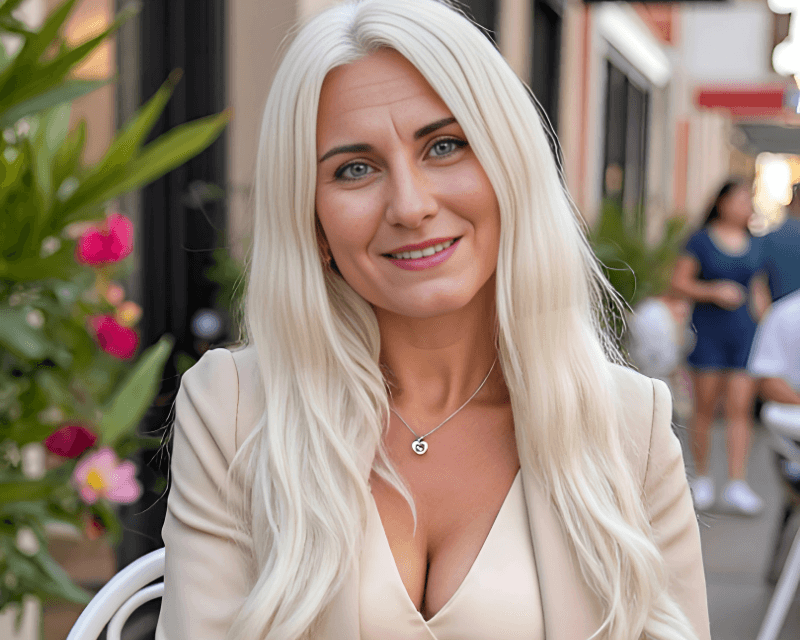

We’re excited to introduce you to the always interesting and insightful Erica Duran. We hope you’ll enjoy our conversation with Erica below.
Erica, looking forward to hearing all of your stories today. Risk taking is something we’re really interested in and we’d love to hear the story of a risk you’ve taken.
Risk: Walking away from an online business model that “worked” + disappearing without an explanation to rebuild the ecosystem.
I took a risk that looks small from the outside but felt massive in real time: I stopped playing a game I was winning.
For years, I had built a highly visible online business. On paper, it was the dream—strong audience, real momentum, paid opportunities, and a lifestyle that looked like freedom. I was the “work from anywhere” girl before that was even a mainstream thing. At one point, resorts sponsored my podcast and I lived full-time at a resort. My life became my marketing.
And it worked… until it didn’t.
Not because I burned out. Not because I couldn’t handle it. I was simply uninterested in where the industry was heading. The online space started rewarding performance over proof—constant output, constant explaining, constant visibility. The strategy didn’t feel like leadership anymore. It felt like feeding a machine.
The risk wasn’t leaving. The risk was leaving quietly.
Most people are taught that if you step away, you’ll lose everything. You’ll lose momentum. You’ll lose relevance. You’ll be forgotten. And for someone whose work had been built in public for years, walking away without a dramatic “rebrand comeback” was terrifying. There was no safety net of announcing my next move. There was no “stay tuned.” I just stopped.
But while I stepped back from the noise, I didn’t step back from building.
I started rebuilding my business as an ecosystem instead of a performance. I refined my offers, my messaging, and the structure behind the work so it could hold my standards without requiring me to constantly prove myself. I began integrating AI in a way that protected presence instead of replacing it—training systems to carry my voice, frameworks, and point of view, so my ideas could travel without demanding my body be online 24/7.
And then I made the second risk: returning publicly with a new standard.
I launched a private podcast, rebuilt my content as a structured series, and brought my work back into the world as something calmer, clearer, and more authoritative. The result was immediate relief—because the business finally fit the way I actually operate. Instead of chasing attention, I built something that compounds.
The biggest outcome wasn’t a metric. It was a shift in how I felt: like I was leading again, not performing. And it reminded me that the most strategic risk you can take is sometimes stepping away from what’s “working” long enough to build what’s right.

Erica, love having you share your insights with us. Before we ask you more questions, maybe you can take a moment to introduce yourself to our readers who might have missed our earlier conversations?
I’m Erica Duran — business mentor, brand strategist, and creator of the Paid For Your Presence® Method, powered by Soulful AI™.
I work with experts, coaches, consultants, and creatives who are done performing for attention and ready to be paid for the value they already bring. My work is for the person who has depth, results, and discernment — but has felt forced into business models built for speed, noise, and constant output. I help them rebuild their brand and business as a premium ecosystem: clear positioning, clean messaging, inevitable offers, aligned sales, and systems that scale without pressure or dilution.
I didn’t enter this industry through a typical path. Before “influencer” was even a mainstream term, I was building a lifestyle-forward content model and negotiating brand partnerships. Resorts and hospitality brands sponsored my podcast and hosted me — I recorded episodes from properties, created content on location, and built demand through presence, not gimmicks. That chapter taught me a powerful truth: visibility can look like freedom and still become performance if the structure underneath isn’t sound.
Over time, I expanded into consulting and strategy work with larger organizations, and I also built a thriving luxury travel agency focused on elevated, transformational experiences — including group travel and long-form travel planning. Travel taught me something I now weave into everything I teach: people don’t just buy information. They buy containers that change how they think, how they decide, and how they see themselves.
That’s the heart of my work now.
The core problems I solve are not “how do I post more” problems. They’re authority problems — or more accurately, structural problems that fail to hold authority.
Many of my clients have already tried the common advice:
• niche down until they feel compressed
• post constantly to “stay visible”
• overshare their personal life to “build trust”
• build funnels that look impressive but feel disconnected
• scale in ways that dilute their standards and exhaust their nervous system
They’re not failing because they aren’t capable. They’re failing because the model is mismatched.
So we build a new model — one that accounts for presence.
I offer a few primary ways to work with me:
• Paid For Your Presence® Signature Program: my flagship container where we build the full presence-led ecosystem — how you command space, how your message creates demand, how your offers carry authority, how sales feels clean, and how you scale without pressure.
• Turning Point Strategy Day™: an intensive designed for clarity and correction — positioning, offers, messaging, and the strategic path forward.
• Circle by Erica Duran: my private community where the ecosystem lives — programs, clients, implementation, and behind-the-scenes builds.
• Paid For Your Presence® Fast Track: a short private podcast series designed to create immediate clarity and momentum without overwhelm.
What sets my work apart is that I’m not interested in performance marketing. I’m interested in structure that makes authority inevitable. I don’t teach people to become trendier or louder. I teach them to become clearer, more anchored, and more recognizable — so the right clients feel the signal immediately.
Soulful AI™ is part of that. I don’t use AI to mass-produce generic content. I teach experts how to use AI as a creative ally and scaling tool without losing their voice — training systems to reflect their tone, frameworks, and point of view so their ideas can travel farther without demanding constant performance.
What I’m most proud of is the outcome my clients experience: relief and elevation at the same time. They stop searching. They stop fragmenting. They start operating from calm command — with offers and messaging that feel like them, and a business that finally supports the life they’re building.
If there’s one thing I want people to know about my brand, it’s this:
You don’t need to try harder. You need a business model that finally matches who you already are.

What’s a lesson you had to unlearn and what’s the backstory?
Lesson I had to unlearn:
I had to unlearn the idea that visibility is the same thing as value — and that being “more online” automatically makes you more successful.
Backstory:
Early in my career, that belief looked like momentum.
I built a brand in a season when online business was still simple enough that real expertise stood out. I learned sponsorships and partnerships before there were playbooks for them. I built an audience, created demand, and had opportunities that looked like “freedom” from the outside — travel, lifestyle, a business that seemed effortless.
But the more the industry shifted, the more that invisible rule tightened:
Post constantly.
Explain everything.
Stay visible or be forgotten.
Turn your life into content.
Prove your value over and over again.
And here’s what I noticed — slowly at first, then all at once:
The work wasn’t the problem.
The container was.
I was succeeding inside a structure that quietly taxed my authority.
It required constant output even when the work didn’t need it.
It rewarded performance over presence.
And it trained smart, capable experts to over-function just to stay “relevant.”
For a while, I thought the answer was discipline — better systems, better branding, better consistency.
But the truth was simpler and harder:
I didn’t need more strategy.
I needed a new standard.
So I stepped back — not dramatically, not as a “burnout story” — but as a correction. I stopped participating in a model that demanded constant proving. I rebuilt my business around what actually creates demand: authority, clarity, positioning, and structure that holds your work without requiring you to perform it.
What I believe now:
Visibility isn’t the goal. It’s a tool.
Authority is the asset.
Structure is what protects it.
And presence — placed properly — is what makes people decide.
That unlearning changed everything: how I create, how I sell, how I lead, and how I teach. Because when you stop equating volume with value, you stop chasing attention — and start building something that compounds.

What do you think helped you build your reputation within your market?
What helped me build my reputation was consistency of standard — not consistency of posting.
Early on, I learned that being “visible” and being trusted are two different games. Visibility can be rented from algorithms. Reputation is earned through outcomes, clarity, and how you hold people inside your work.
A few things specifically built it:
1) Results that speak louder than marketing.
I’ve never wanted a reputation for being trendy — I’ve wanted a reputation for being effective. When clients get clean results and feel like they were held by a real framework (not hype), they talk. That’s where my best opportunities have always come from — referrals, renewals, and people who quietly watched for a while and then decided.
2) A point of view that doesn’t bend.
My work is not “everyone’s welcome.” I’m not interested in performance-based business models — the kind that require constant posting, oversharing, urgency theater, and perpetual explaining. I’ve built my brand around presence-led authority: being chosen because the work is positioned, not because I’m persuasive. That clear POV made my message recognizable — and made the right people trust me faster.
3) Depth over noise.
I don’t dilute my work to be more palatable. I’d rather be remembered by fewer people than forgettable to many. My audience knows I’m not going to regurgitate the same advice in a prettier Canva template. I’m going to name what’s true, even if it’s unpopular — and that’s what builds credibility over time.
4) Clean containers and high integrity.
Reputation isn’t just what you say — it’s what it feels like to work with you. My clients experience structure, discretion, and standards. That matters. People don’t just buy strategies — they buy how you operate.
5) Long-term trust, not short-term attention.
I’ve built across multiple seasons of business — online programs, consulting, travel industry work, and now a new era powered by Soulful AI™. The through-line has always been the same: real expertise, real structure, and an insistence on doing work that holds up.
At the end of the day, I built my reputation the same way I teach it now:
Markets categorize. Leaders make categories irrelevant.
I’m not here to compete in the noise. I’m here to be the reference point.
Contact Info:
- Website: https://www.ericaduran.co/
- Instagram: https://www.instagram.com/ericaduranintl/
- Facebook: https://www.facebook.com/ericaduranintl/
- Linkedin: https://www.linkedin.com/in/ericaduran/
- Twitter: https://x.com/EricaDuranIntl
- Youtube: https://www.youtube.com/@ericaduranintl
- Other: Podcasts: https://www.ericaduran.co/podcasts/
Community: https://www.ericaduran.co/community/