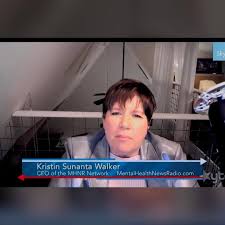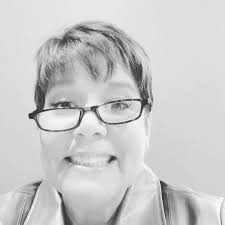

Alright – so today we’ve got the honor of introducing you to Kristin. We think you’ll enjoy our conversation, we’ve shared it below.
Hi Kristin, thanks for joining us today. How did you come up with the idea for your business?
Before I started my podcast and network, I spent decades in technology, specifically in database management and electronic healthcare records. I built systems and databases for large organizations like Perot Systems Healthcare, Learning Care Group, and Assurant Healthcare. I was running a business and working at a pretty high level in that space.
At the same time, a big part of my life was happening outside of that work. I was doing volunteer work in mental health, including working with trained therapy dogs in lockdown and residential facilities. That experience stayed with me in a way that the tech side never fully did.
Eventually I brought those two worlds together and started working with mental health agencies across the country. I helped organizations ranging from a couple million to a few hundred million in revenue choose and implement the right electronic health record systems. It made sense on paper, but I still felt like something was missing.
What I missed was the human side. The stories, the advocacy, the conversations that don’t show up in systems or reports. I have been a speaker and advocate regarding early childhood sexual abuse since I was sixteen years old.
So in 2014, I started a podcast.
At the time, people thought it was ridiculous. I was told more than once that podcasts were a waste of time. But I wasn’t thinking about building an audience. I was thinking about creating access.
I was already speaking at major conferences like the National Council for Behavioral Health and national addiction conferences. So I made a simple offer. If they gave me access to the green room, I would interview their keynote speakers for free. That’s how it started.
I interviewed anyone I could. Neuroscientists, psychiatrists, psychologists, business leaders, advocates, and survivors. I spoke with women who came forward against Bill Cosby, survivors of abuse within the Catholic Church, and people working on the front lines of mental health every day. I just kept going.
The show started to grow over time.
In 2017, a few regular guests asked if I would consider creating a network. My first instinct was no. I was already working too much and it sounded like adding more responsibility. But I said yes anyway.
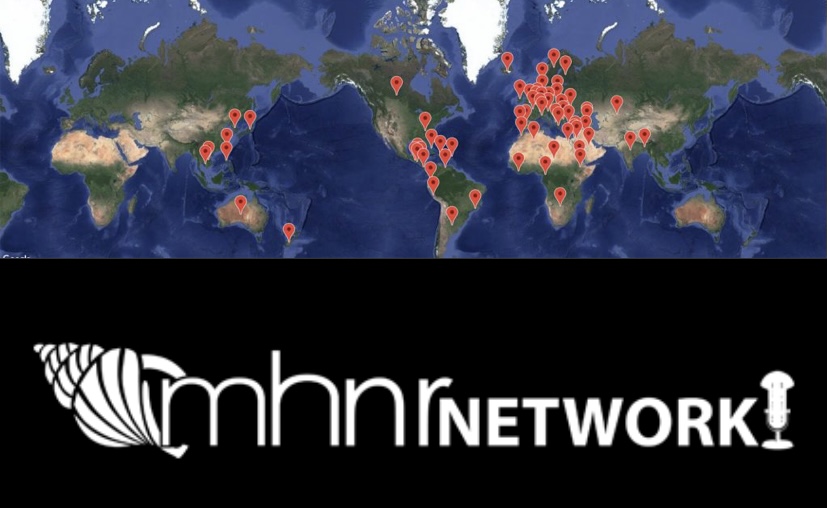
I set a goal of launching five shows by the end of the year. By August, we had eighteen.
That was the moment I realized this was bigger than a podcast.
The problem I felt I was solving was not technical. It was cultural. When I started, mental health was still something people avoided talking about openly. I wanted to create space for those conversations to exist in a real way.
From the beginning, I built this differently. I was never focused on downloads or follower counts. I told people all the time that if their podcast helped one person, even if that person was themselves, that was enough.
What excited me most was watching people find their voice. People who had never used a microphone before, never seen themselves as someone worth listening to, suddenly stepping into that space and owning it.
This was long before it was normal to show up online the way people do now.
I built everything around signal and advocacy, not popularity. And I’ve stayed aligned with that ever since.
Kristin, before we move on to more of these sorts of questions, can you take some time to bring our readers up to speed on you and what you do?
My work has always come from lived experience first.
I am a sexual abuse survivor, and I began speaking publicly about it when I was 16. That put me directly into the mental health world early on, not through academia, but through real life, advocacy, and being willing to say things out loud long before it was socially acceptable to do so.
At the same time, my professional career was in technology. I spent decades building systems, running a business, and working in electronic healthcare records. For a long time, those were two separate worlds. As I got older, I started to merge them.
Podcasting became the bridge.
I saw it as a way to continue using my voice, but in a format that allowed for long-form conversation, nuance, and depth. I also spent time appearing on news programs discussing mental health topics, but the podcast gave me something those formats didn’t. It gave me space.
Over time, that grew into a network where I work with hosts, clinicians, advocates, and creators who want to have real conversations about mental health, neuroscience, and lived experience. I’ve also written two books about my own journey and now work as an author and speaker alongside running the network.
I do not come from a clinical background. I do not have a degree in this field. What I bring is lived experience, pattern recognition, and decades inside both the technology and mental health systems.
One of the biggest shifts in my work came recently. At 54, I was diagnosed with autism and ADHD after years of hosting shows on those very topics without realizing they applied to me.
That set off what many late-diagnosed people experience, which is an unmasking process. You begin to understand how much you’ve been adapting, compressing, and reshaping yourself to fit into systems that were never designed for you. And then you start undoing that.
That process changed everything about how I approach my work.
Now, my focus is on neurodivergence, especially late-diagnosed individuals and particularly women who have been overlooked or misdiagnosed for most of their lives. I am interested in the intersection of intelligence, pattern recognition, trauma, and nervous system adaptation, but without framing any of it as deficit-based.
That is one of the main problems I am working to address.
Too many people are still being told that something is wrong with them when in reality they have been operating inside systems that do not understand how they are wired.
When I started my podcast, the problem I was addressing was the silence around mental health. People were not speaking openly, and I helped create space for those conversations.
Now, I am doing something similar, but in a more specific lane. I am working to shift the language around autism, ADHD, and neurodivergence from deficit to difference, from disorder to pattern, from something to fix to something to understand.
What sets my work apart is that it is not driven by trends, credentials, or performance. It is driven by direct experience and a long history of being willing to say things before they are widely accepted.
I am most proud of the number of people who have found their voice through my platform. Not everyone on my network has large followings, some of these people had never spoken publicly before and realized that their perspective mattered.
That has always been the core of my work.
I am not building for scale in the traditional sense. I am building for signal.
What I want people to understand about me and my work is simple.
I am not here to tell people who they are.
I am here to create space for them to see it for themselves.
We’d love to hear a story of resilience from your journey.
One of the clearest examples of resilience in my journey was choosing to keep going when I was repeatedly told to stop.
When I started speaking openly about mental health and sexual abuse, and later when I built my podcast and network, I was warned over and over again not to do it. I was told not to use “mental health” in my company name. I was told the topics were too controversial, too risky, and that I would limit myself professionally.
What surprised me most was where that resistance came from.
Some of it came from well-known professionals in the mental health space. People with credentials, large platforms, and public authority. I had individuals tell me directly that I was not capable of building something at that level, especially as a woman. I was told I should hand the idea over to someone more established, someone more “qualified.”
I also had people tell me to stop talking about sexual abuse altogether. Not from a place of care, but from a place of reputation management. It didn’t align with how they wanted the field to be seen.
That was a turning point for me.
Because I realized I was seeing both sides of the industry at once. The public-facing side that talks about healing, and the behind-the-scenes reality where certain conversations are still uncomfortable, controlled, or discouraged.
At the time, there wasn’t a roadmap for what I was building. There were only a handful of large podcast networks, and I didn’t have anyone to ask or model this after. I was figuring it out as I went, while also navigating people trying to redirect, reshape, or take over what I was creating before it had even fully formed.
So my resilience looked like continuing anyway.
Not in a loud or reactive way, but in a steady, consistent way. I kept interviewing. I kept creating. I kept building the network. I stayed focused on advocacy, even when it would have been easier to pivot into something more accepted.
And what’s interesting is that I’m now doing it again.
With my focus on late-diagnosed neurodivergence, especially in women, I’m seeing a similar pattern of resistance. There is still a strong deficit-based lens, and many high-functioning, highly capable women are being told that what they have been masking is incompetence.
What they are actually uncovering is the opposite. They have been masking competence.
So once again, I find myself in a position where the work challenges existing narratives, and once again there is pushback.
The difference now is that I recognize the pattern.
I don’t take it as a warning anymore. I take it as confirmation that I’m in the right place.
If anything, I welcome it. I’ve already seen what happens when you stay the course.
What I learned the first time is that when you stay aligned with what you know is true, the right people do eventually find you.
And they did.
That experience is what allows me to keep going now, with even more clarity and confidence than before.
Learning and unlearning are both critical parts of growth – can you share a story of a time when you had to unlearn a lesson?
One of the biggest lessons I’ve had to unlearn is the idea that I should manage other people’s projections.
As my podcast and network grew, so did the range of topics and the level of visibility. I was having conversations about bipolar disorder, addiction, abuse, narcissism, and sexual trauma. These are not neutral topics. They carry a lot of charge, and people bring their own experiences, beliefs, and reactions into them.
What I didn’t expect was how much of that would be directed at me.
I’ve had people criticize, attack, and question both me and my company because of the guests I chose to give a platform to. In many cases, those guests were people speaking honestly about experiences that are still uncomfortable for the public to hear.
At first, I found myself trying to manage that.
I thought about how it might impact listenership, growth, reputation, and even the stability of the network. This wasn’t just about me. There were other hosts involved, other shows, and a business that people depended on. So there was a real moment where I had to ask myself if I needed to pull back, soften things, or make the content more palatable.
That’s what I had to unlearn.
I had to unlearn the instinct to shape the truth so that it would be more acceptable.
What I realized is that if someone is not aligned with telling the truth about what vulnerable populations have experienced, then they are not my audience. And that includes listeners.
I also had to unlearn broader societal expectations about what is considered “appropriate” to talk about publicly. Even though I had been speaking about sexual abuse since I was young, that pressure showed up again in a different way once money and business were involved.
There were moments where that tension created real internal conflict. Not just professionally, but personally. I was building something while also managing my own mental health, and at the time I didn’t yet understand my own neurodivergence.
Since being diagnosed with autism and ADHD later in life, that has shifted.
I have a much clearer understanding of how I operate, what I need, and how to support my own energy and capacity. Putting that foundation in place has changed the trajectory of my work.
I also ran a personal experiment during that time.
My journey as an author started with me writing under a pen name, Joi Sun, because I didn’t want any of my existing reputation or network visibility influencing the response. I wanted to see what would happen if the work stood on its own.
What I watched was a following build purely from the writing itself. No crossover audience, no leverage from what I had already created. Just signal and story.
That has been one of the most fascinating parts of this entire journey.
When I look back, I can see that I built a lot of this while operating at a fraction of my full capacity.
Now I’m approaching it differently.
I’m no longer trying to balance truth with approval. I’m choosing truth, and allowing the right audience to meet me there.
That shift has opened up an entirely new phase of growth, and I’m more interested than ever to see where it leads.
Contact Info:
- Website: https://www.mhnrnetwork.com
- Instagram: https://www.instagram.com/mhnrnetwork
- Facebook: https://www.facebook.com/mhnrnetwork/
- Linkedin: https://www.linkedin.com/company/mhnrnetwork/
- Other: My network email is kristin@mentalhealthnewsradio.com which is probably more appropriate for this venue.
https://mhnrnetwork.substack.com/ is my network Substack.