We recently connected with Josha Cunningham and have shared our conversation below.
Josha, thanks for joining us, excited to have you contributing your stories and insights. What’s the backstory behind how you came up with the idea for your business?
The idea behind my work didn’t start as a business plan. It started as a search for understanding and purpose.
I began studying human trafficking through a program which was designed for veterans dealing with PTSD. The program explored the concept of spiritual trafficking—how manipulation, control, and exploitation can affect the human spirit long before it shows up in physical spaces. Through that work, I began to develop a deeper awareness. It sharpened my ability to see patterns, behaviors, and environments where people were being exploited.
The more I studied, the more I realized that many people were only looking at trafficking from the surface level. But there were deeper systems of influence and control happening around us. I became fascinated with understanding different environments, power structures, and what I call the “jurisdiction of influence” that traffickers use to target vulnerable people.
At that point, the idea wasn’t a business—it was curiosity and compassion.
So I started with small actions.
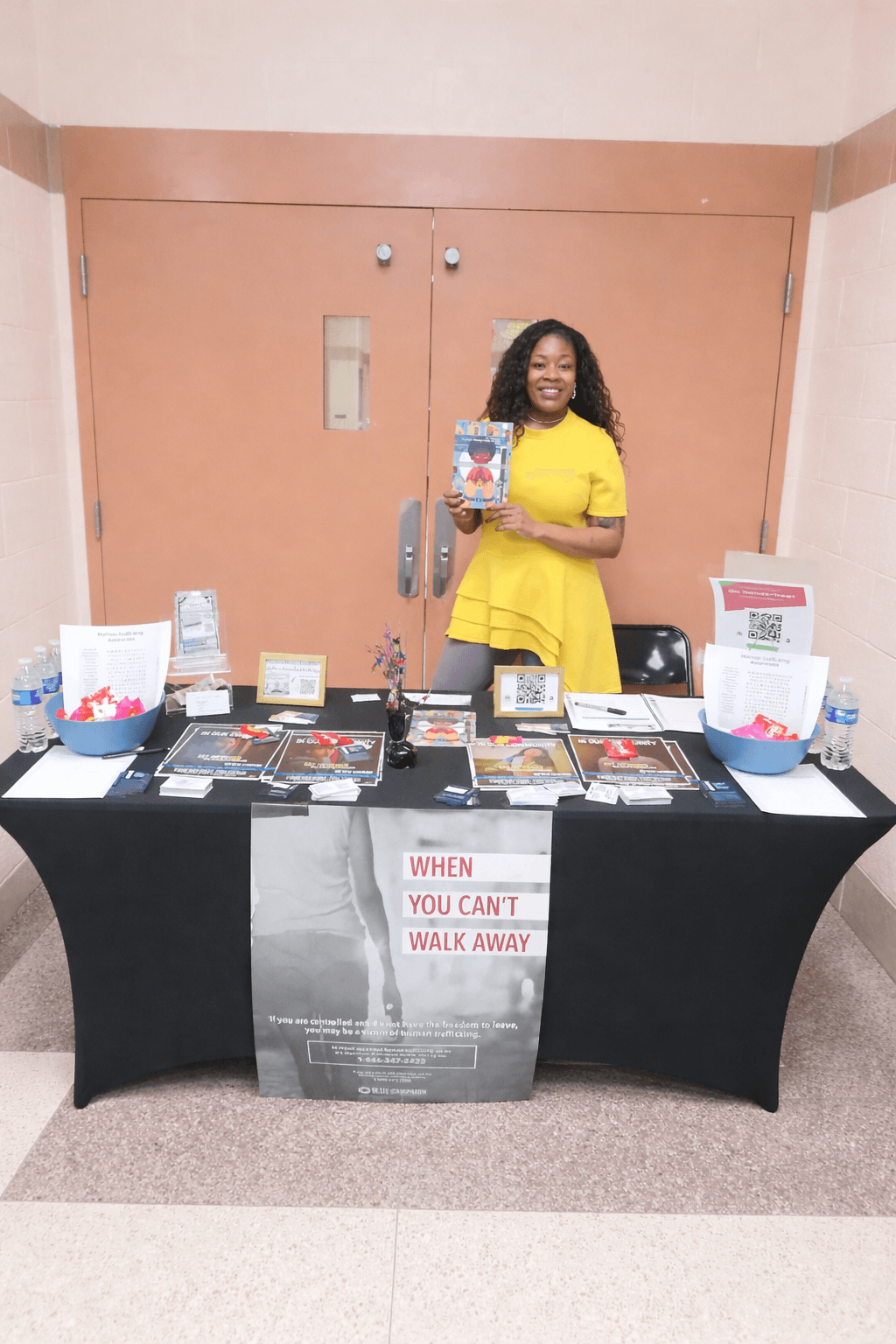
I began creating care packages and taking them directly to women working on the streets. I also volunteered in many service centers helping with the systems that supported vulnerable populations. That experience changed everything for me. It moved the issue of trafficking from something I was studying to something I was witnessing firsthand. Direct outreach showed me how important it was to meet people where they are.
My passion for the work deepened even further when my own family was affected by the issue. My daughter experienced a human trafficking attempt. That moment made it painfully clear that trafficking wasn’t something happening somewhere far away—it was happening right in my own backyard. I couldn’t help but to think ” Did I manifest this”?..or is this a test to see if I am able to enter the spiritual warfield that the traffickers and handlers navigate.
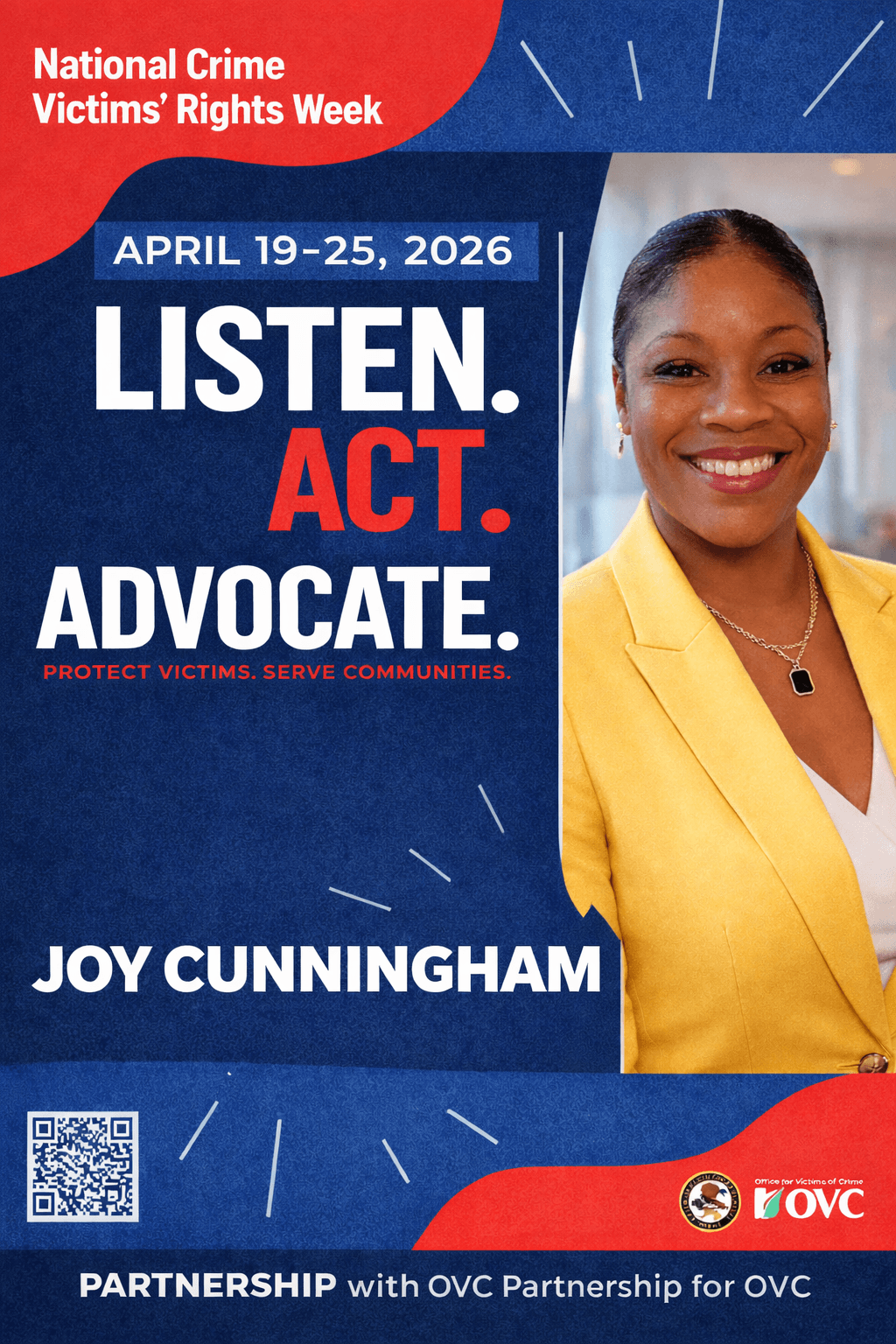
I saw a campaign with OVC on how would you help?
I began to ask myself what skills and talents do you have to help this community and others. I knew my healing and storytelling with lived experience could bring a different type of awareness to a problem that was hidden in plain sight.
That week changed the direction of my life.
Within days, I started speaking publicly about my experience through a podcast. I wanted to raise awareness and start conversations that many people were afraid to have. I began sharing what I had learned through research, outreach, and personal experience.
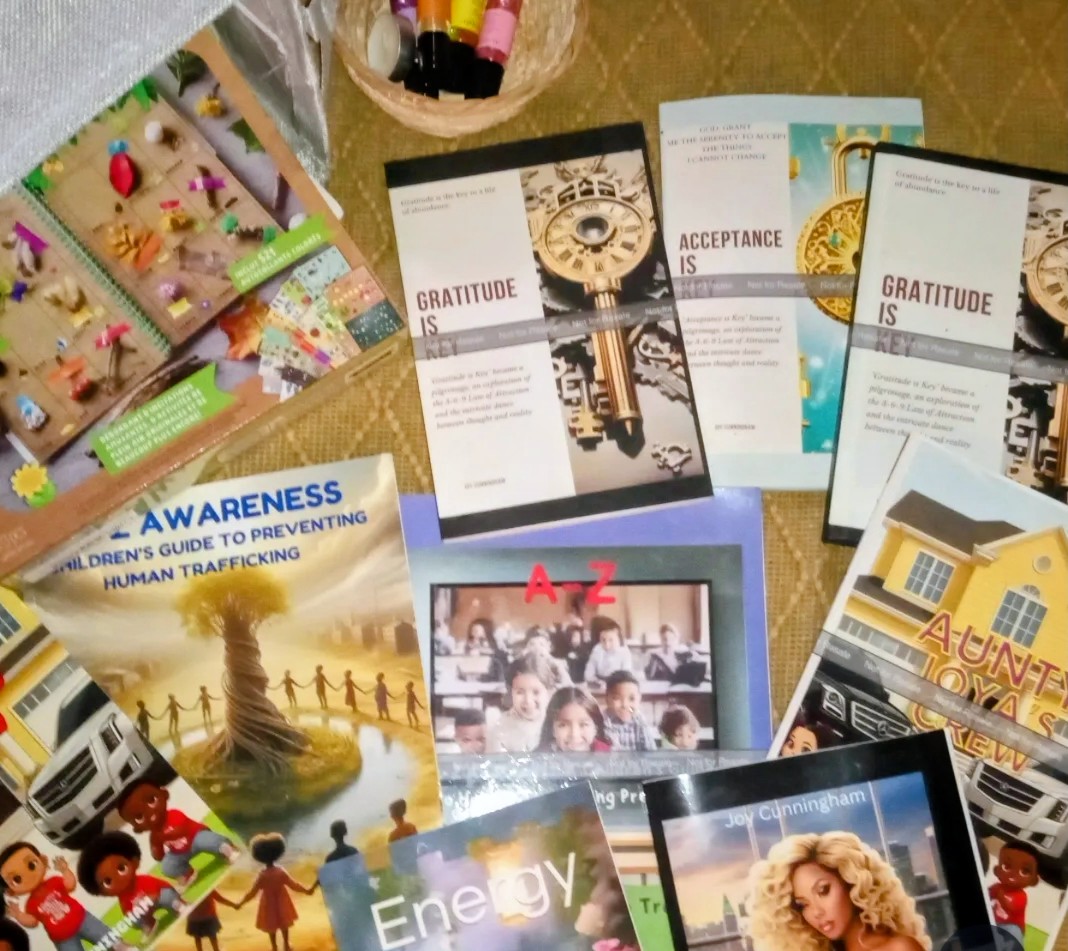
Within a month, I launched my first educational resource—an A-to-Z Human Trafficking Awareness Guide for young men ages 13–18. I realized that young men are often left out of prevention conversations, yet they play a critical role in awareness, protection, and accountability.
As the work continued to grow, I began shaping it into a larger mission. That mission became Joy2theWorld , an initiative focused on awareness, education, healing, and prevention. Through Joy2theWorld, I create journals, educational materials, outreach programs, and speaking engagements designed to empower communities—especially young people—to understand trafficking, protect themselves, and support survivors.
Joy2theWorld is also rooted in principles I teach through my work, including gratitude practices and my *369 manifestation framework, which encourages people to align intention, voice, and action to create meaningful change.
Looking back, the journey from idea to execution didn’t happen through one big launch moment. It happened through a series of small, purposeful steps:
I really had to silence myself and ignite my purpose.
As always, we appreciate you sharing your insights and we’ve got a few more questions for you, but before we get to all of that can you take a minute to introduce yourself and give our readers some of your back background and context?
For those who are just discovering my work, the most important thing to know is that Joy2theWorld is about turning awareness into action. It’s about creating conversations that protect the next generation, supporting survivors with compassion, and reminding people that even in difficult spaces, healing and hope are still possible.
Recently, I’ve been actively involved in campaigns that raise resources and awareness for victim support services, while continuing to develop tools that help communities respond to trafficking in practical ways.
Another layer of my work focuses on healing and empowerment. I create guided journals and personal development tools like Gratitude Is Key and the Joy2theWorld energy journals, which encourage people to practice reflection, gratitude, and intentional living. I also teach my 369 manifestation framework, which focuses on aligning voice, intention, and action to create change—both personally and in the community.
What sets my work apart is that it sits at the intersection of awareness, advocacy, and healing. I’m not only focused on identifying the problem of trafficking; I’m focused on empowering people with the tools to protect themselves, support others, and rebuild after trauma. My approach blends lived experience, grassroots outreach, education, and spiritual resilience.
One of the things I’m most proud of is how this mission has grown from small, direct outreach efforts into a platform that reaches schools, community groups, and advocacy spaces.
Whether I’m speaking at a school, creating educational materials, supporting legislation, or organizing awareness campaigns, my goal is always the same: to make sure people understand that trafficking is preventable when communities are informed and engaged.
For those who are just discovering my work, the most important thing to know is that Joy2theWorld is about turning awareness into action.
At its core, Joy2theWorld is a mission to bring light into places that have too often been ignored—and to empower people everywhere to become part of the solution. 🌍
We’d love to hear a story of resilience from your journey.
One of my more memorable “lessons in resilience” happened during an outreach moment in Baltimore City around 2010″ over on Franklin Street. If you know the area, you know it wasn’t exactly a “let’s take a casual stroll and get a latte” kind of neighborhood. This was the kind of block where you say a prayer before you even park the car.
At the time, I was doing direct outreach. One night I got word that a young woman wanted to leave her situation and needed someone to come get her. In my mind, I pictured a quiet pickup. Pull up, open the door, help the girl into the car, ride off into the night like a low-budget rescue mission.
Reality had other plans.
It was just me, my driver, and another young woman riding with us. No security. No backup. Just determination and a little bit of naïve confidence that good intentions would carry the day.
We pulled up to the house. Now this wasn’t just any house. This was what you might call a “poly household”—meaning multiple partners living together in a shared relationship structure. In this particular case, there were several women connected to the same man, operating very much like a tight-knit sisterhood.
And apparently… they were not taking applications for new exit strategies.
We approached the door and tried to explain we were there to help the girl who wanted out. Next thing I know, one of the “sister wives” steps forward with the confidence of someone who has already decided how this conversation is going to end.
Before I could even finish my sentence—
“WHOOSH.
Bear mace.
Right in my face.
Now let me tell you something about bear mace. It is not the cute little pepper spray people keep on their keychains. Bear mace is designed to stop a full-grown charging animal”
And apparently, that night, I was the animal.
Instant blindness.
My eyes slammed shut like the power got cut off in my head. Tears pouring. Face on fire. Every instinct in my body wanted to start yelling every word I learned growing up on Poplus” dirt road.
But instead, I took a deep breath and remembered two important things:
1. I was there to help people.
2. Escalating the situation would help absolutely no one.
3. I am here for change not a charge.
So instead of arguing, fighting, or trying to prove a point, I did the most dignified thing a temporarily blinded outreach worker could do.
I slowly turned around… found my way back to the car… and got inside with my eyes still squeezed shut like I was playing the world’s worst game of Marco Polo.
The whole ride home, I kept my eyes closed and prayed. I mean seriously prayed..Because at that point, prayer and the hope of dairy products were my only strategy. I needed somemilk!
If you’ve never had mace in your eyes, let me share a fun survival tip: milk helps.
So I rode home blind, trusting the driver, praying the whole way, and refusing to open my eyes until we found some milk. By the time relief finally hit, I had gone from furious to humbled.
I was mad at myself for being a little naïve. I had walked into a volatile situation without fully understanding the dynamics or the risks. But I was also proud that I chose “discipline over ego” I didn’t argue. I didn’t escalate. I backed down when safety called for it.
And that became an important lesson in my outreach work.
Sometimes resilience doesn’t look like winning the fight.
Sometimes resilience looks like choosing wisdom over pride.
And if you’re doing this kind of work, remember this:
COMPASSION IS POWERFUL —but safety has to come first.
That night on Franklin Street taught me that even when your heart is in the right place, you still need strategy, awareness, and backup.
Also… maybe a gallon of milk in the trunk.
Just in case. 🥛✨

Learning and unlearning are both critical parts of growth – can you share a story of a time when you had to unlearn a lesson?
One of the biggest things I had to unlearn in my work was being a “social butterfly”
Naturally, I’m a people person. I’m the type of person who smiles, talks easily with strangers, and believes connection can open doors. That personality has helped me build community and relationships throughout my life. But when I started doing street outreach and human trafficking advocacy, I realized that the same openness that works in everyday life can actually be ..dangerous in certain environments..
Early on, I approached outreach the way I approached everything else—with warmth, conversation, and trust in people’s intentions. I believed that if you showed up with a genuine heart and respect, people would respond the same way.
The night on Franklin Street taught me that wasn’t always true.
When we went to pick up the young woman who wanted to leave her situation, I approached the house the way a social butterfly does—open, direct, and assuming we could talk things through. I didn’t fully consider the power dynamics inside the house, the loyalty among the women there, or how threatening my presence might look to them.
Instead of a conversation, I got bear maced.
That moment forced me to learn something difficult: ~friendliness does not equal safety.
In certain spaces—especially where exploitation, control, and survival dynamics exist—being overly approachable can make you vulnerable. People may see kindness as weakness, or they may see your presence as interference.
So I had to unlearn a little bit of my natural instinct to walk into every room as the friendly connector.
I didn’t lose my compassion, but I learned to balance it with “discernment”
I learned to observe first, move strategically, understand group dynamics, and protect myself and others before engaging. Outreach still requires empathy and humanity, but it also requires awareness, boundaries, and sometimes stepping back instead of stepping forward.
That lesson became an important part of my work with Joy2theWorld. When I teach about prevention and advocacy, I often tell people that kindness alone isn’t enough. You also need wisdom about the environments you’re entering and the systems people are operating within.
Being a social butterfly isn’t a weakness—but in this work, I had to learn how to
“fold my wings when the situation called for caution”
And sometimes the lessons that teach you that come the hard way.
“I didn’t stop being a social butterfly. I just learned when to fold my wings.”
Thanks so much for listening.
Joy2theworld 🌎
If you would like to donate to our efforts please do so at :
give.classy.org/2026-mcvrc-walk-and-resource-fair
Contact Info:
- Website: https://tr.ee/ggu_OnhjAi
- Instagram: @Divine
- Facebook: https://www.facebook.com/joy.cunningham.33483/?utm_source=ig&utm_medium=social&utm_content=link_in_bio&fbclid=PAZXh0bgNhZW0CMTEAc3J0YwZhcHBfaWQPNTY3MDY3MzQzMzUyNDI3AAGnJZkB21cdzbsrdTP2zxB2kM8etd0GISX_tKTw5oC_csWKdJJsDFQIppzf9rY_aem_rwwhrQDf-3sQx3MLynh9dw
- Linkedin: https://www.linkedin.com/in/josha-cunningham-898457109