

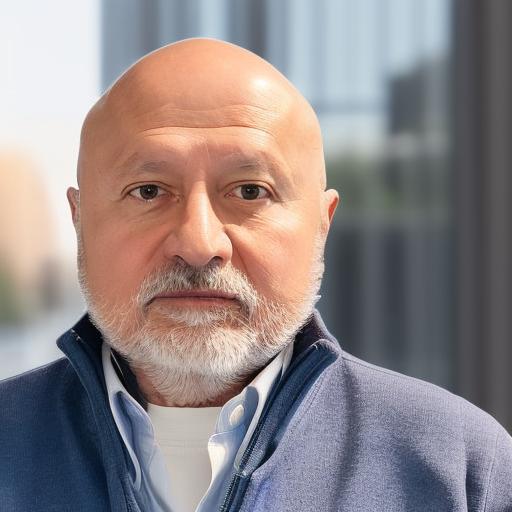

We were lucky to catch up with Armando Viteri recently and have shared our conversation below.
Armando, looking forward to hearing all of your stories today. Can you recount a story of an unexpected problem you’ve faced along the way?
One of the most unexpected challenges in deploying AI inside large organizations has not been technical at all—it has been organizational. In many cases the real resistance comes from the middle layers of management. While senior executives often see AI as a strategic imperative, middle managers sometimes perceive it as an existential threat to their roles.
This reaction is understandable. AI systems often automate reporting, forecasting, and decision-support tasks that historically defined much of middle management’s value. When those capabilities suddenly become available through intelligent systems, people understandably worry about what their role will look like in the future. In fact, surveys show that more than half of workers are concerned about how AI could affect their jobs, which can create real friction when companies attempt to deploy new tools.
What I’ve learned is that successful AI adoption requires as much attention to change management and communication as it does to algorithms or infrastructure. When leaders frame AI as augmentation—helping managers make better decisions rather than replacing them—the conversation changes dramatically. In organizations that get this right, middle managers often become the strongest champions of AI, because they realize the technology allows them to lead more strategically instead of spending their time compiling spreadsheets and reports.
In other words, the hardest problem in AI adoption is rarely the AI. It’s helping organizations navigate the human side of transformation.

Armando, before we move on to more of these sorts of questions, can you take some time to bring our readers up to speed on you and what you do?
I’m the CEO and President of Neubloc, a San Diego–based AI consulting and implementation firm that helps large organizations move from being merely AI-enabled to becoming truly AI-at-the-core. My background is in computer science and electrical engineering, and I’ve spent most of my career at the intersection of enterprise software, emerging technologies, and entrepreneurship. I was fortunate to study at MIT and later work at companies like HP and Sun Microsystems during the early growth of the modern technology industry. Those experiences exposed me to how transformative new technologies can be when they move from research into real-world production environments.
Over time I became an entrepreneur and investor, working on a variety of technology ventures. Through that journey I experienced both significant successes and major failures. One of the most formative lessons I learned was that failure is often the most valuable teacher in business. A venture I was involved in raised more than $40 million and ultimately collapsed. It was a painful experience, but it forced me to rethink how companies should evaluate markets, build teams, and execute strategy. That experience shaped the way I approach leadership today—with a strong emphasis on humility, rigorous thinking, and learning from others.
Today my primary focus is Neubloc, where we help companies deploy artificial intelligence in practical ways that deliver measurable business value. Our work spans the entire lifecycle of AI adoption—from strategic planning and architecture all the way to implementation and operational deployment. We work with organizations ranging from startups to Global 1000 enterprises, helping them identify the highest-impact use cases and then build the systems that make those capabilities real.
What differentiates our firm is that we combine strategic consulting with deep technical implementation. Many companies receive high-level AI advice but struggle to actually deploy it. Our philosophy is that strategy without execution is just theory. We therefore operate as a hybrid between a strategic advisory firm and a hands-on engineering organization. Our teams design architectures, build machine learning systems, integrate them into enterprise infrastructure, and support them in production.
We have worked on projects across a wide range of industries—from healthcare and enterprise software to manufacturing and transportation. In one manufacturing case, for example, AI models were able to reduce a costly hardware testing process from 72 hours to roughly three hours, dramatically improving production efficiency. In another case we used AI to analyze enterprise communication data to identify operational bottlenecks in large organizations. These types of deployments illustrate something important: AI is not just about chatbots or flashy demos. It’s about fundamentally improving how businesses operate.
One of the things I’m most proud of is that we began investing heavily in AI long before the current hype cycle. Around 2017 we made a deliberate decision to reinvest in artificial intelligence capabilities because we believed the technology was approaching an inflection point. That decision has proven incredibly important as generative AI and advanced machine learning have entered mainstream business adoption.
Beyond my work with Neubloc, I spend a lot of time speaking and mentoring within the technology and startup community. I’m passionate about helping entrepreneurs and organizations understand how AI will reshape nearly every industry over the next decade. My view is that the companies that thrive in the future will not simply “use” AI—they will redesign their products, processes, and business models around it.
If there is one message I want people to understand about our work, it is that AI transformation is ultimately a strategic leadership challenge, not just a technical one. The hardest part is not writing the algorithms—it is helping organizations rethink how they operate and how humans and intelligent systems work together.
At the end of the day, what motivates me is helping companies successfully navigate that transition. We are living through one of the most important technological shifts of our lifetime, and it is incredibly rewarding to help organizations adapt and thrive in that new world.
Can you tell us about what’s worked well for you in terms of growing your clientele?
In my experience, the most effective strategy for growing a client base—particularly in a consulting or technology services business—is building trust through demonstrated expertise rather than traditional sales tactics. Consulting is not a transactional business where customers simply buy a product. Clients are effectively hiring your judgment, your experience, and your ability to solve complex problems. That means credibility becomes the primary driver of growth.
For us, the most powerful growth engine has been thought leadership combined with real-world execution. When you consistently publish ideas, speak at conferences, and share insights about how industries are changing, people begin to see you as a trusted authority. Research shows that about 71% of decision-makers actively consume thought-leadership content when evaluating potential advisors or consulting firms, which makes it one of the most powerful ways to attract clients.
But thought leadership alone is not enough. The real differentiator comes when that expertise is backed by the ability to actually implement solutions. Many firms are good at strategy, and many are good at engineering. What clients value most is when those capabilities are combined. When organizations see that you can both identify strategic opportunities and then build the systems that make them real, trust builds very quickly.
Another critical factor in growing clientele is relationships and referrals. In professional services, your reputation spreads primarily through networks. Studies consistently show that people trust recommendations from people they know far more than traditional marketing—over 90% of consumers say they trust referrals from people they know, which illustrates how powerful word-of-mouth can be in business development.
Because of that dynamic, many of our best engagements have come not from marketing campaigns but from long-term relationships. When you deliver exceptional results for one client, they tend to introduce you to others in their network. Over time this creates a kind of compounding effect where trust and reputation drive growth.
Finally, one strategy that has become increasingly important is leading conversations with insight rather than waiting for a client to define their problem. The most effective advisors often approach organizations with a perspective on emerging risks or opportunities that the client has not fully articulated yet. When you can say, “Here is what we are seeing across your industry, and here is what we think it means for you,” the conversation shifts immediately from vendor to trusted advisor.
Let’s talk about resilience next – do you have a story you can share with us?
One of the most formative experiences in my career came from a venture that, at the time, looked incredibly promising. The company raised more than $40 million in venture funding, had an outstanding team, and was pursuing a market opportunity that seemed very compelling. From the outside, everything looked like a success story in the making.
But the reality of entrepreneurship is that markets do not always behave the way you expect. Despite the capital, the talent, and the effort that went into the venture, the company ultimately failed. That experience was difficult—not just financially, but emotionally. When you build something with a team of talented people and it doesn’t work, you carry a deep sense of responsibility for the outcome.
However, that failure turned out to be one of the most valuable experiences of my career. It forced me to examine how companies evaluate markets, how teams make strategic decisions, and how leaders respond when things begin to go off track. I learned that resilience in business is not simply about persistence; it’s about learning faster than the problems evolve.
After that experience, I approached entrepreneurship very differently. I became much more disciplined about understanding market timing, validating assumptions early, and building organizations that can adapt quickly when conditions change. Those lessons became foundational in how I later built companies and advised clients.
In many ways, that setback also strengthened my perspective as a leader. It reminded me that entrepreneurship is rarely a straight line. Success is often built on top of previous failures, because each difficult experience gives you insight that you simply cannot learn any other way.
Today when I work with founders or executives navigating major technological shifts—particularly around AI—I often draw on those lessons. The companies that ultimately succeed are not the ones that avoid mistakes entirely. They are the ones that learn from adversity, adapt quickly, and keep moving forward with clarity and determination.
Contact Info:
- Website: https://www.neubloc.ai
- Linkedin: https://www.linkedin.com/in/armandoviteri/