



We caught up with the brilliant and insightful Thomas Wing a few weeks ago and have shared our conversation below.
Hi Thomas, thanks for joining us today. Going back to the beginning – how did you come up with the idea in the first place?
I’ve always been an avid reader. I remember living the stereotype: using a flashlight under the covers because my folks could see the light on in my room reflecting off the trees near the house. My parents had perhaps 5000 volumes in the house, and there were no restrictions on what we could read. I read Herman Wouk’s Winds of War and War and Remembrance, all of the Hornblower novels by C. S. Forester, and lots of historical fiction and non-fiction about World War II – my father was a veteran of that conflict.
Couple that reading with an active imagination, telling myself stories where I featured as the hero, and writing came naturally. I enjoyed writing poetry in grade school, and that transitioned to creative writing as I got older. I grew up in an area where knowledge and education were, shall we say, not respected. So reading and creating my own stories were a means of escape, as well. However, my natural lack of self-confidence led me to hide my writing for decades. (Thirty-two years of naval service also kept me busy!!) So until I shared my first novel with my cousin’s husband, who’d written and published some twenty-eight books, and he told me it was good, that I gained the confidence to think I could succeed.
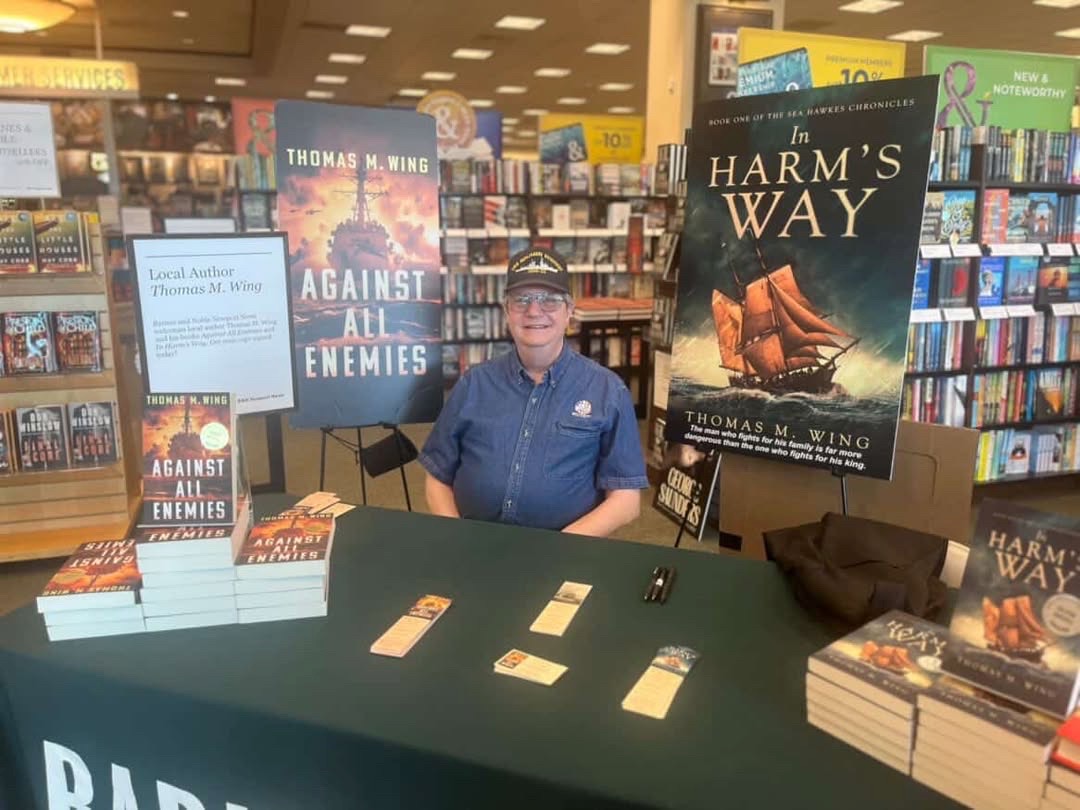
Great, appreciate you sharing that with us. Before we ask you to share more of your insights, can you take a moment to introduce yourself and how you got to where you are today to our readers.
I think most of the “why I got into the writing business” is in my previous answer. What I’ll say here is that my naval service and my love of the sea provide me the inspiration for my stories, and lead to the kinds of stories I write. I’ve also read Patrick O’Brian’s Aubrey/Maturin series, and those, along with Hornblower and Tom Clancy, gave me focus on the area that I wanted to write in.
The other element that helped me narrow the field was my distaste for “bad history.” I’m sorry, but if you have to completely rewrite history to fit your story, and still don’t call it “alternative history” then it really isn’t historical fiction. I want folks to learn about historical events that aren’t well known. I do that by taking my main characters and dropping them into real events to see what happens, what the impact is on ordinary folks, and how they have to change to survive. Even my modern military thriller does that: I dropped my character into an imaginary (and I hope it stays that way!) naval war with China to see how he’d react.
I also value authenticity. It frustrates me when I read a novel set aboard a navy ship, and see the author didn’t do basic research to see how a ship is organized, or has it or its crew doing things that are fantastical and impossible. So, for example, I do not write scenes set aboard submarines. My total familiarity with boats is the two weeks spent aboard subs as a midshipman. So, I won’t write scenes aboard subs. I can’t, not and be authentic.
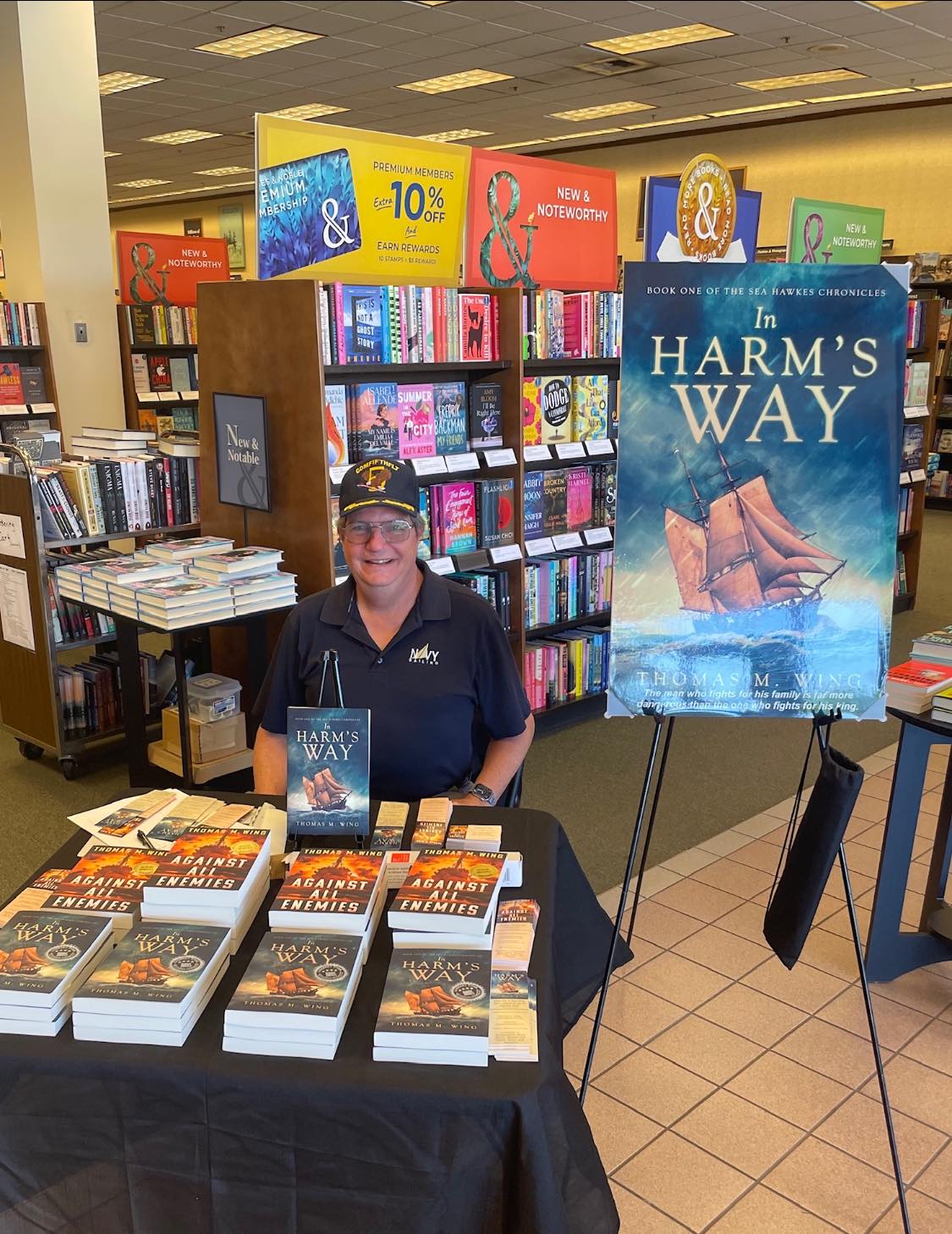
Is there mission driving your creative journey?
Yes, there is. I want readers to experience maritime history in an accurate and authentic way, and learn history from my books. I want them to see how historical events impacted everyday people, and forced them to change to survive. And I want readers to learn about events that aren’t taught in history books, but are nonetheless important to where we are today as a global community.
For example, there is little fiction set during the fighting in North Africa during World War II. Thus, one of my works in progress is a novel (or two) with a main character in the US Army landing at Casablanca and fighting his way across North Africa, into Sicily (also not well covered in fiction), and into the boot of Italy.
I also want a reader to experience what it is like in, say, the Combat Information Center of a modern destroyer at war, or in the boiler room of an old destroyer about to face the Japanese navy in the Solomon Islands campaign. I want them to finish reading and think “wow, those folks are amazing, yet they’re just like me.”
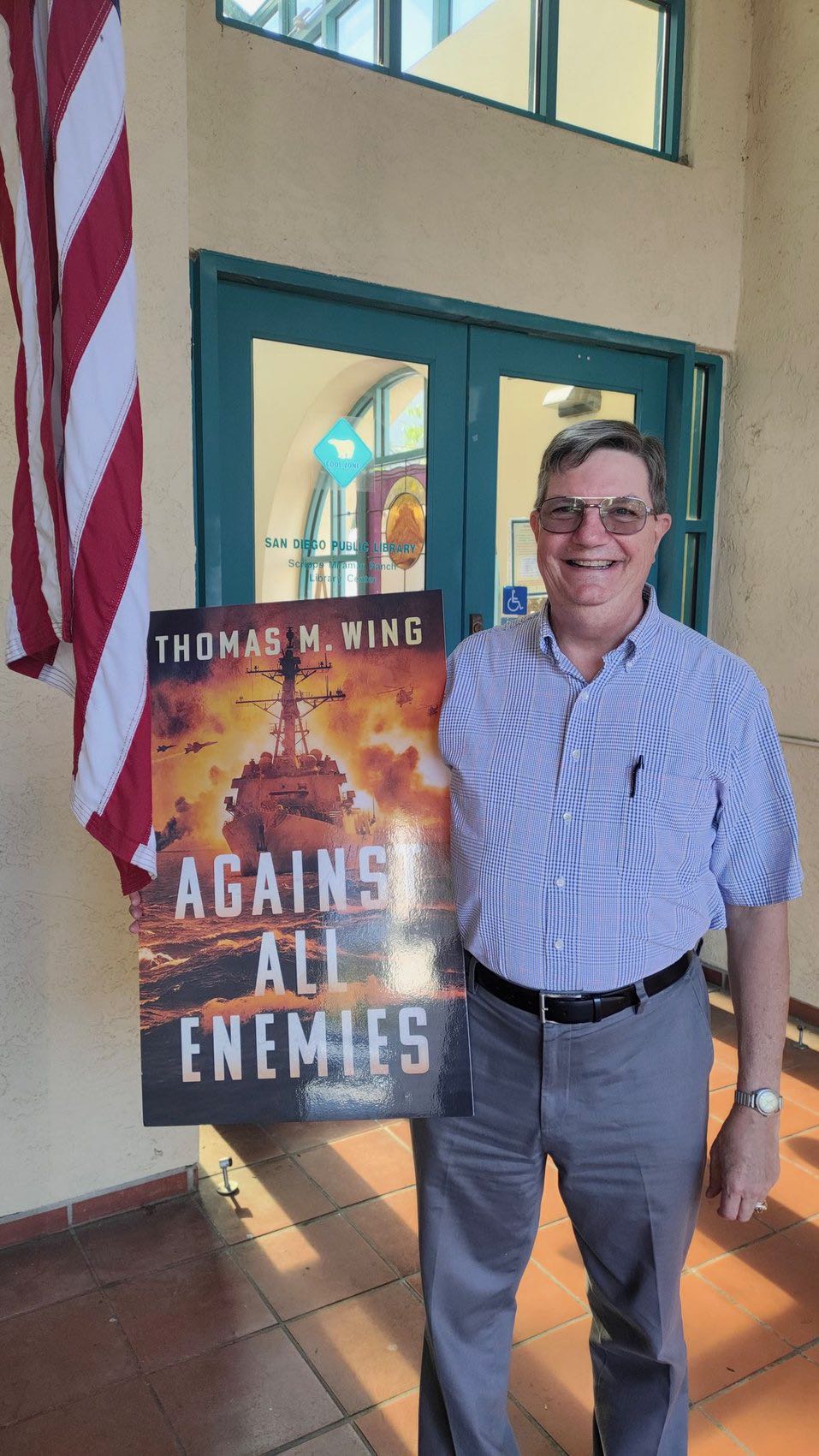
For you, what’s the most rewarding aspect of being a creative?
I’m most gratified by meeting readers who say they enjoyed my story, or connected with my main characters. Reviews that say things like “I could smell the stale coffee and cigarette smoke in CIC while I was reading” make my day. Heck, my week! If my writing takes them back to a time in their life they look upon fondly, that is exciting.
I write for my readers to connect to the fictional people I’ve created, and to experience as viscerally as possible the events my characters are going through.
Contact Info:
- Website: https://www.thomasmwing.com
- Instagram: https://www.instagram.com/thomas.m.wing.writer/
- Facebook: https://www.facebook.com/ThomasMWingWriter/
- Linkedin: https://www.linkedin.com/in/thomasmwingwriter/
- Twitter: https://twitter.com/ThomasMWing1
- Other: Goodreads: https://www.goodreads.com/author/show/43915651.Thomas_M_Wing
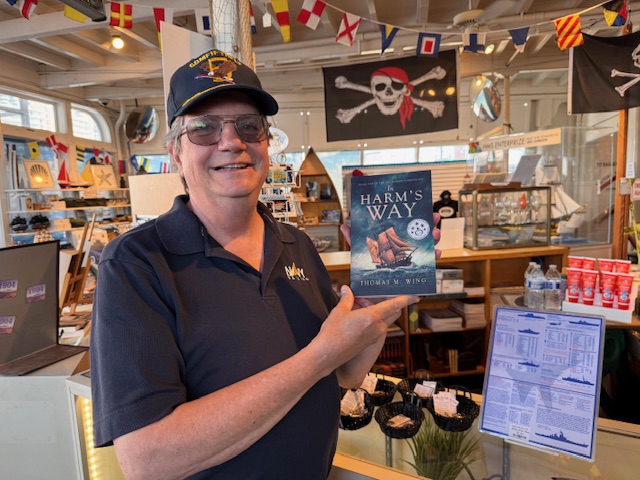
Image Credits
For author photo: Lana at PicMe Headshots, Brooklyn, New York.
For Scripps Ranch Library Photo: Michelle Sund