



We were lucky to catch up with Chris Cragin-Day recently and have shared our conversation below.
Alright, Chris thanks for taking the time to share your stories and insights with us today. Learning the craft is often a unique journey from every creative – we’d love to hear about your journey and if knowing what you know now, you would have done anything differently to speed up the learning process.
My primary creative role in this stage of my life is as the Artistic Director of Mile Square Theatre in Hoboken. The route that has brought me here is fairly traditional in that I studied theater in both undergraduate and graduate school. My MFA is in Stage Directing, which is true for a lot of Artistic Directors. After graduate school, I moved to NYC and worked as the Assistant to a Theater Producer where I learned much of the day to day work of running a theater. Pretty immediately after moving to NYC, I was also accepted into the Emerging Writers Group at The Public Theater. My artistic focus shifted sharply toward writing. For the past fifteen years, I’ve taught theater on the college level and written plays and musicals. All of these things prepared me for the work I’m doing now.
A big part of being an Artistic Director is understanding what theater is, why it’s important, and how to transmit that understanding to others in a way that inspires them. I did this every day as a college theater professor. I studied others who did this, from the Ancient Greeks to Contemporary Artistic Leaders. I worked hard to understand the landscape and impact of the American Theater so that I could help my students understand their role in it. Those years formulating the words to deepen another person’s understanding of the art form are priceless to me now as an Artistic Director.
Another big part of my work as an Artistic Director is engaging and supporting every single artist involved in every show, whether it’s a writer, director, designer, musician or actor, I offer guidance. And that guidance needs to take different forms for the different kinds of artists I’m working with. As a playwright, I’ve been at the table with all of the different artists as they worked on my own plays and musicals. These collaborations taught me to understand and appreciate all of the different perspectives so that I can offer my leadership in a way that moves the work forward rather than creating unnecessary obstacles.
I’m not a big fan of the idea of “speeding up” the learning process. When it comes to the arts, I don’t believe that faster is better. Deep learning takes the time it takes. I’m not sure it’s possible to speed it up. If there is one way, I’d say it might be going to see as many shows as possible can–in person, not online or on Zoom; volunteering for the jobs others don’t want; showing up everywhere you can.
As always, we appreciate you sharing your insights and we’ve got a few more questions for you, but before we get to all of that can you take a minute to introduce yourself and give our readers some of your back background and context?
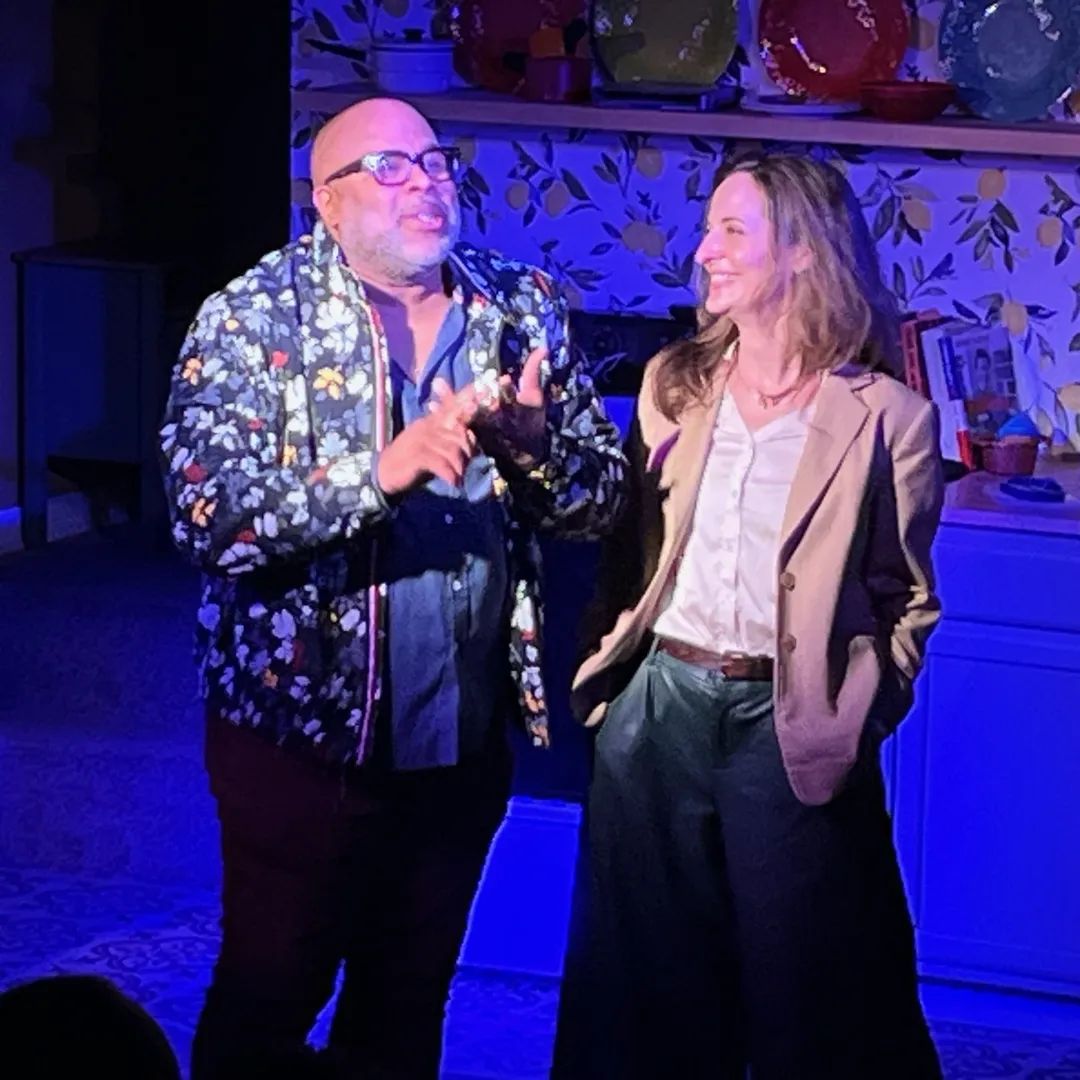
I am the Artistic Director at Mile Square Theatre in Hoboken, the only professional Equity theater in Hudson County that produces a full season of shows. I am also a working playwright–my plays have been produced all around the country. Both as a writer and Artistic Director, I’m focused on small cast plays and musicals that center on human relationships and how those relationship share our identity, our experience of truth, and our society.
How can we best help foster a strong, supportive environment for artists and creatives?
People have to get off their screens and go to the theater. Today, that’s asking more than it ever has. But it’s vital for individual mental health and for the healthy functioning of our society. Theater puts you in a chair next to someone you’ve never met and takes you on an emotional journey with them. Though you may never see that person again, you’ve experienced something meaningful together. Maybe you’ve laugh together, or cried together, or felt guilt together, or felt inspired together. It reaffirms the humanity of strangers and exercises the mental and emotional muscles that help us see the humanity in each other.
Is there something you think non-creatives will struggle to understand about your journey as a creative?
I think that what “non-creatives” don’t understand is that there isn’t such a thing. All humans are creative. All humans thrive most when they are engaging in creative activities. I don’t believe in the separation between “creative people” and “non-creative people”. We are all just people. Some of us invest more time and energy into nurturing our creativity and while others have convinced themselves that that part of them is not valuable of important. They are wrong. It’s important for them, and it’s important for all of us for ALL of us to value both our own and others’ creativity.
Contact Info:
- Website: https://www.chriscragin-day.org
- Instagram: @chriscraginday
- Facebook: chriscraginday
- Linkedin: chriscraginday
- Other: https://www.milesquaretheatre.org
Image Credits
Chris Cragin-Day