

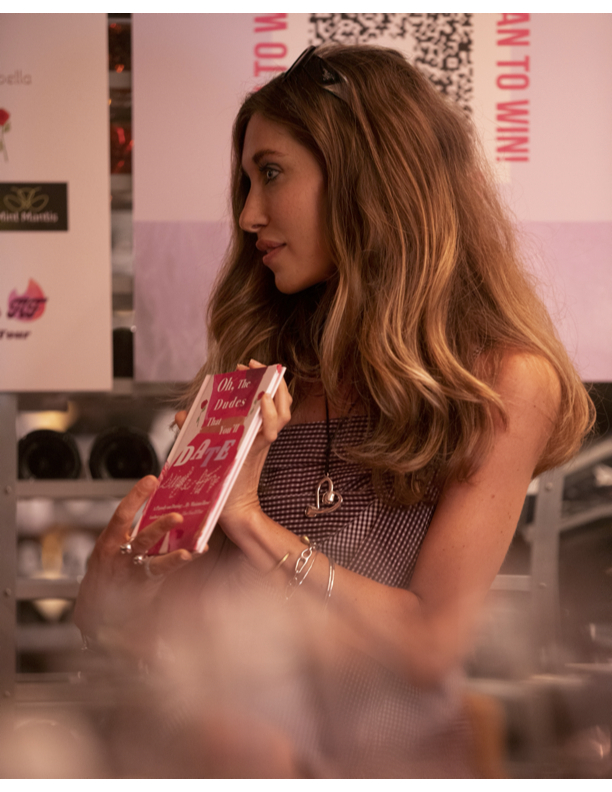

We recently connected with Maiana Rose and have shared our conversation below.
Maiana, thanks for joining us, excited to have you contributing your stories and insights. Can you open up about a risk you’ve taken – what it was like taking that risk, why you took the risk and how it turned out?
Taking a risk is not a story… from my perspective, risk is a lifestyle, and I am living it. Becoming an author felt accidental, but it wasn’t. Committing to a year-long book tour for my second book, Oh, The Dudes That You’ll Date!, and integrating it with my personal life and brand was a risk. My first book had lived purely in the Drawlaland illustrated world I had built, keeping my personal life separate. This time, I was stepping into a new dimension.
Today, I am in London for the London Book Fair, working on a third book and expanding my creative vision on a much larger scale than before. Risk-taking has become a consistent part of my life, but I don’t see risk as reckless. I see it as intentional discomfort. Without stepping outside the predictable, you don’t build anything meaningful. The key is making sure the risk aligns with what you genuinely want, not just what feels exciting in the moment.
After publishing my first two illustrated parody books, I realized my third project needed to be different. It was not just another book. It required expanding into a new format, developing a TV pilot screenplay, creating supporting materials, documenting the journey in real time, and building the brand ecosystem around it before release. It also meant collaborating with the right people and thinking internationally about audience and reach. That was the risk—not just writing another book, but elevating the entire platform around it.
Instead of approaching it chaotically, I retreated to Santa Fe, New Mexico. My life had felt scattered, and if I was going to take a big swing, I needed a strong foundation. Santa Fe gave me fewer distractions and the space to focus deeply on the manuscript, the visual world, and the long-term strategy.
To me, risk is not messy. It is about being as prepared as possible while accepting that you only control a small portion of the outcome. You can control the quality of your work, the collaborators you choose, and the clarity of your vision. You cannot control how big it becomes or how the market responds.
This risk also required patience. I had to resist the urge to rush momentum or make the entire process public. I had to allow creativity to evolve instead of forcing it. That was uncomfortable, especially in a world that rewards speed and constant visibility.
The outcome is still unfolding, but the biggest result so far is clarity. I know I am building something aligned and scalable. I also know that until I fully see this through, I would not be satisfied choosing something safer. If I am going to do something, I want to do it properly—with the right collaborators, aesthetic, and infrastructure.
For me, a risk is not a rash decision. It is a calculated commitment to growth, even when the outcome is not guaranteed.
Maiana, before we move on to more of these sorts of questions, can you take some time to bring our readers up to speed on you and what you do?
As of late, I like to say I am a creatress. It’s not technically in the English dictionary, but it’s in mine, meaning someone who creates across formats and mediums without feeling confined to one identity or container. From that title, I can be a writer, producer, actor, and illustrator.
My background is in fine art and television and film development, where I learned how ideas are built, packaged, and positioned. That training gave me structure, but the reason I create has always been more personal than strategic. At its core, my work is about stepping out on a limb so other people don’t feel alone on theirs.
Whether through satire like my books Oh, the Pics That You’ll Post! and Oh, The Dudes That You’ll Date!, storytelling, painting, or developing a narrative IP, I aim to express the uncomfortable, funny, messy parts of ambition, relationships, reinvention, and identity. My goal is not simply to produce content, it is to articulate something people are already feeling but haven’t quite put words to yet.
My first two books grew out of illustrated satire, allowing readers to laugh at dating culture and millennial ambition while recognizing themselves in it. What surprised me most was not the humor landing, it was hearing people say, “I feel seen.” That is the through line.
From there, new worlds emerged. Single AF evolved into more than a book title, it became a space for conversation through a book club, a developing series, and a third book in a new format. The intention is not just to comment on modern love, it is to create a platform where vulnerability and self-reflection coexist with wit and independence.
Recently, I returned to painting after feeling creatively stagnant in digital work. That shift opened another door, reimagining public domain literature with original artwork and design, starting with a new visual interpretation of Wuthering Heights. It is less about redesigning a classic and more about creating an emotional bridge between old texts and contemporary readers, making something timeless feel intimate again.
The common thread in everything I build is emotional access. I am willing to say the awkward thing first, admit uncertainty, and explore ambition without pretending it is perfectly curated. If I can express something honestly, it creates space for someone else to feel through their own version of it.
What sets my work apart is that it balances vulnerability with structure. I care deeply about craft, longevity, and building intellectual property that can expand across mediums, but none of that matters if the emotional core is not real.
Who do I serve? People navigating reinvention. People who are ambitious but self-aware. People who want to laugh at their lives and also examine them. My audience tends to be thoughtful, culturally aware, and unafraid of complexity.
What I am most proud of is not simply building multiple brands. It is building spaces where honesty feels safe and humor feels intelligent. Creation, for me, is not about visibility for its own sake, it is about resonance. If something I make helps someone articulate what they are feeling, then it has done its job.
Is there something you think non-creatives will struggle to understand about your journey as a creative?
I think what non-creatives struggle to understand is that a creative life is not linear. At all.
From the outside, it can look scattered. One project becomes a book. A book becomes a brand. A brand evolves into something else entirely. But not everything you build is meant to be the final destination. Sometimes you create something purely to gain clarity. Its job is to sharpen you, not to last forever.
Abandoning a project does not always mean it failed. Sometimes it means it did exactly what it was supposed to do.
There is also this myth that creativity is constant inspiration. It is not. It is cyclical. There are seasons where you feel electric and unstoppable, and seasons where you feel dry, tired, or unsure. Burnout is not proof you are not creative. It is proof you are human.
At the same time, creativity is not just waiting around for a mood to strike. It requires extreme resilience. You have to tolerate rejection. You have to risk being misunderstood. You have to accept that not everything will land. You have to separate your identity from the outcome.
And discipline is non-negotiable. Most creatives who actually sustain careers have routines. They show up. They build containers around their time. The difference is that discipline in a creative life does not always look like doing something flashy every day. Sometimes it looks like sitting with the same idea until it deepens. Sometimes it looks like resting so you do not resent your own talent.
The biggest misconception is that creativity is chaotic. It is not. It is structured risk. It is emotional exposure paired with practical systems.
The finished work is only the visible tip. Underneath it is resilience, recalibration, self-doubt, reinvention, and a lot of quiet discipline.
If anything, I would want people to understand that the detours are not distractions. They are part of the design.
What’s the most rewarding aspect of being a creative in your experience?
The most rewarding aspect of being a creative is resonance.
It’s that moment when something deeply personal stops being just yours. When you say the vulnerable thing first, or paint the uncomfortable truth, and someone responds with, “I thought I was the only one.” That exchange never gets old.
But there is another layer that feels just as powerful.
There is something transformative about becoming fully comfortable putting yourself out there. Whether it’s a painting, a book, or a new concept, you are essentially sharing your inner private world with the public. At first, that feels like anxiety. It feels exposed. You question yourself. You wonder if it’s too much, too honest, too strange.
And then, if you push through that discomfort, something shifts.
On the other side of that anxiety is freedom. There is a kind of acceptance that happens when you realize you can survive being seen. You can survive not being perfect. You can survive people interpreting your work in ways you did not intend.
That process brings you closer to your own authenticity. It forces you to let go of perfectionism and shame. You stop creating to be approved of and start creating to be honest.
That is the best feeling. Not the launch, not the applause, not even the outcome. The moment where you think, “This is exactly who I am, as I am,” and you are no longer negotiating that truth.
The work becomes less about performance and more about alignment.
And when alignment meets resonance, that is the real reward.
Contact Info:
- Website: https://www.drawlaland.com
- Instagram: @maiyonce_ @singleafbookclub
- Facebook: https://www.facebook.com/maiana.rk
- Linkedin: https://www.linkedin.com/in/maiana-rose-85a37753/
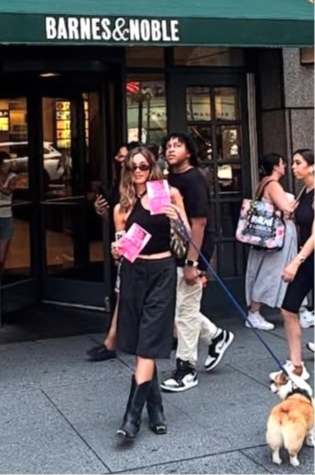
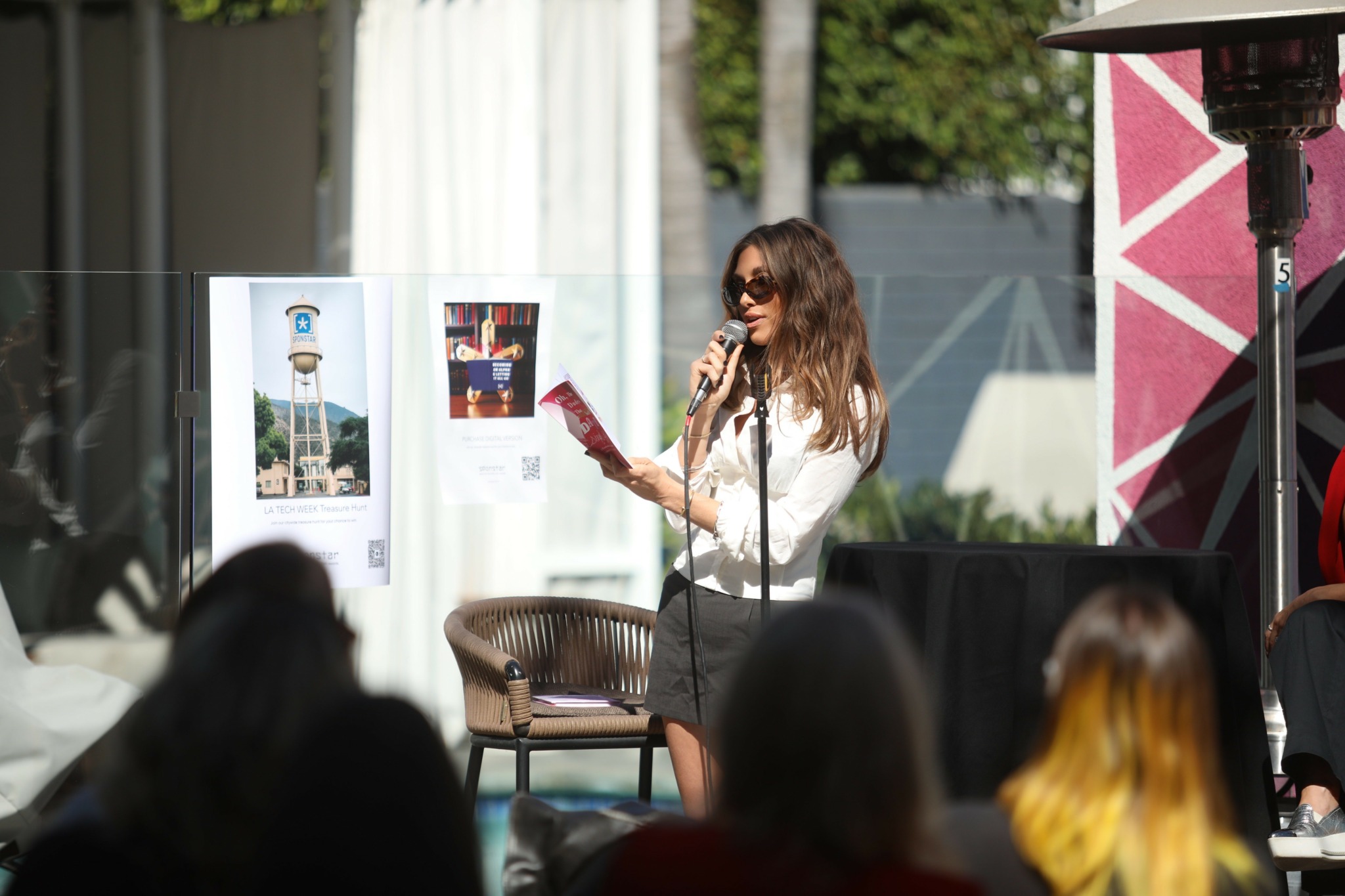
Image Credits
Photo of me reading – Muita Muthee
The rest are by my mom, no need to credit.