


Alright – so today we’ve got the honor of introducing you to Susan. We think you’ll enjoy our conversation, we’ve shared it below.
Susan, thanks for taking the time to share your stories with us today Was there a defining moment in your professional career? A moment that changed the trajectory of your career?
When I entered graduate school to study social work, one of the many books I was required to buy was the Diagnostic and Statistical Manual of Mental Disorders, otherwise known as the DSM. The DSM is a handbook published by the American Psychiatric Association, and it is filled with guidelines, descriptions, and symptoms that health care professionals reference when diagnosing patients. I had referred to the DSM many times while working with clients as a social worker, but I never had to use this book to investigate my own well-being.
One night, sweaty and shaking after being jolted awake from another intense nightmare, I scanned the DSM pages marked Post-Traumatic Stress Disorder. I had all the persistent symptoms of PTSD. I needed help. A week later I found myself sitting in an exam room at the Center for Integrative Medicine, a medical facility where Eastern practitioners meet Western doctors to provide comprehensive care to patients with a wide array of health issues. When the doctor entered the room, I was somewhat taken aback. He had an uncanny resemblance to Dr. Derek Shepherd from Grey’s Anatomy. But this doctor was not Patrick Dempsey, and this was not prime-time television although I did feel like I had been thrust into the starring role on a tragic reality show.
The doctor sat down.
“So what brings you in today?”
I sighed. “Well, would you like the long version or the short version?”
“Whichever version you would like to give me,” he answered, glancing curiously at the DSM held in my hands.
“Ok,” I started. “The short version. My husband died in a car accident a few months ago. He was missing for weeks before they found his body. We have a five-year-old son. I am a social worker. I have PTSD. I have insomnia, nightmares, and flashbacks, and I wake up nightly in a cold sweat with my heart pounding. My neck hurts. My back hurts. My jaw hurts. My head hurts. I have a constant eye twitch. I can’t breathe. I’ve been constipated for seven months. I have no appetite. I am agitated, jumpy, irritable, unfocused, and my startle response is through the roof. I cannot get into a car without wanting to vomit and I am now prone to anxiety attacks, which I’ve never had before. So. Here is a highlighted photocopy of my PTSD symptoms from the DSM. I’ve printed a list of the medical services offered at your center. I would like to sign up for all of them.”
The doctor stayed silent for what seemed a long time, having no idea what to say to me. He finally scanned my DSM photocopy, then sighed empathetically.
“I’m just so sorry,” he said. “Let’s see what we can do for you.”
We spoke for another forty-five minutes—about trauma in the body, about the nervous system, about sleep aids, about options at the Center for Integrative Medicine— and came up with both short-term and long-term game plans.
It was then I decided that if I ever made it through my own grief and trauma experience, I was going help others going through the same thing. I would somehow use my professional degree as a social worker and personal experience as a young widow to assist others as they navigated the process toward hope and healing. It was the only thing that made sense for the next chapter of my life.
Awesome – so before we get into the rest of our questions, can you briefly introduce yourself to our readers.
I am a social worker, educator, and author who holds a Masters in Social Work, a Bachelors in Education and credentials as a teacher and school social worker.
In 2012, my life took an unexpected turn from working with at-risk youth to the world of grief and trauma, after the sudden death of my bagpiper-surfer-professor husband. The path that I walked for the following years—as a young mother, widow, and social worker—led me to create the A2Z Healing Toolbox® workshops. I found that the tools and resources I was using to help and heal my son and I were also helping others along their journey.
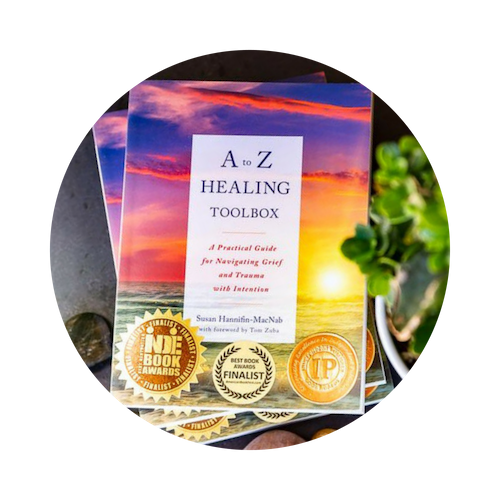
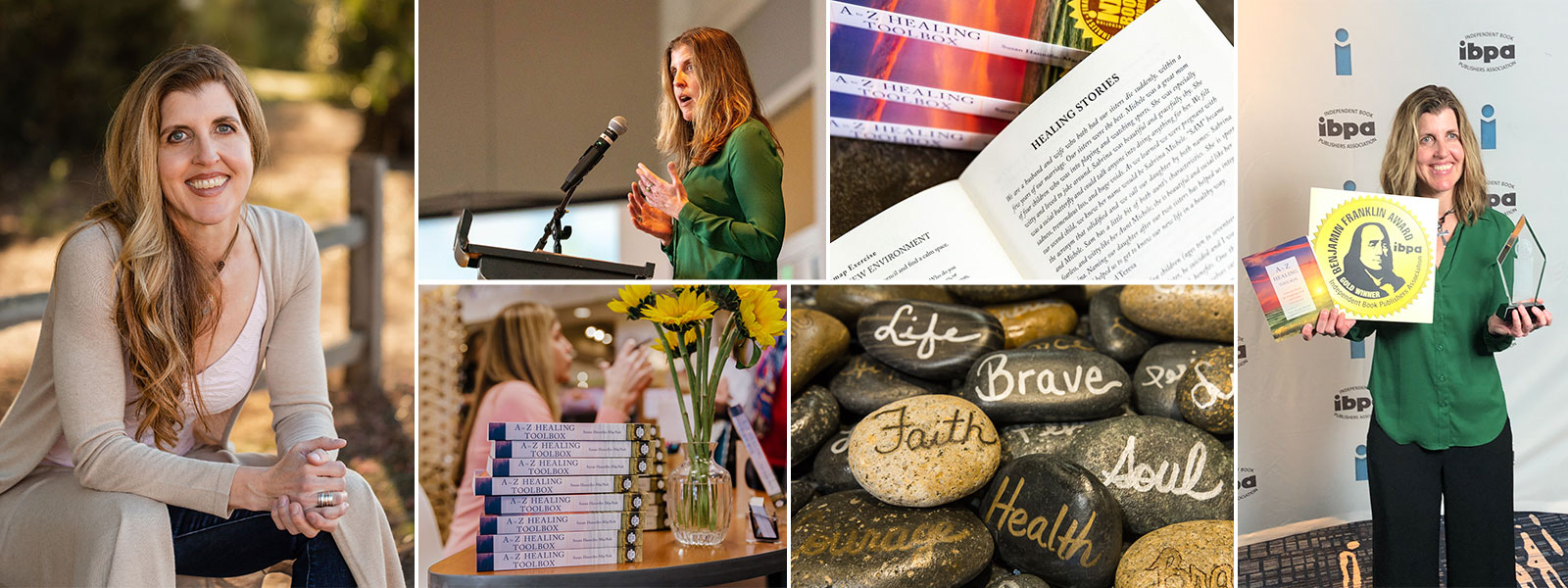
Both personally and professionally, I began emphasizing healing with intention, education through action and envisioning post-traumatic growth. The A2Z Healing Toolbox® is full of positive and practical tools and resources that have been studied, researched, recommended by professionals, I wanted to share the A2Z tools beyond my workshops, so I wrote A to Z Healing Toolbox: A Practical Guide for Navigating Grief & Trauma with Intention (2018). This guidebook is now used by mental health professionals worldwide and received five prestigious publishing awards: 2018 IPPY Bronze Award in Psychology and Mental Health; 2018 INDIE Finalist Award in Health & Wellness; 2018 American Book Fest Finalist Best Book Award in Health, Psychology & Mental Health; 2019 Benjamin Franklin Gold Medal in Psychology; 2019 Living Now Gold Medal Winner in Grieving/Death & Dying.
My current work as a social worker, educator and author focuses on assisting the bereaved in integrating authentic, practical, action-based tools into their lives while healing with intention. I offer conference workshops, individual healing sessions, virtual healing communities, professional development trainings, psycho-educational retreats, and keynote speaking presentations. National and local community partners include universities, hospitals, hospices, mortuaries, nonprofits and medical centers. I serve as the Programs and Education Manager for Soaring Spirits International- a 501c3 that provides programming, support and hope to the global widowed community- and work in support of surviving military spouses and first responder families through The Sugar Bear Foundation and The National Fallen Firefighters Foundation, respectively.
We’d love to hear a story of resilience from your journey.
After the atomic bomb of sudden death blasted into my life, I poured myself into reading. My brain wasn’t functioning well at all—horrible concentration, inability to focus, extreme difficulty retaining information—so I read material in small doses. I got my hands on every published book, article, journal, brochure, handout, and online blog that reviewed the effects of grief and trauma to help me understand what was happening to my internal and external worlds. Everything had shifted—physically, emotionally, behaviorally, socially, mentally, and spiritually—and I somehow had to wrap my brain around it, little pieces at time. When I eventually stumbled upon the theory of post-traumatic growth, I felt the tiniest bit lighter—like I might, in fact, be able to survive the destruction and despair of my new life. I didn’t believe it was possible, but I hoped it was. Hope was all I had left. So I kept reading. I learned that post-traumatic growth (PTG) can be the result of a life-changing incident that initially causes post-traumatic stress. PTG refers to the positive changes experienced resulting from a person’s internal struggle with a major life crisis or traumatic event. I began to internalize that if I was somehow able to rebuild a new life instead of trying to force the pieces of my old life back together—that I might have a chance of not only surviving, but thriving. Thriving? How could that even be possible?
“When adversity strikes, people often feel that at least some part of them— their views of the world, their sense of themselves, their relationships— has been smashed. Those who try to put their lives back together exactly as they were remain fractured and vulnerable. But those who accept the breakage and build themselves anew become more resilient and open to new ways of living. Focusing on, understanding, and deliberately taking control of what we do in our thoughts and actions can enable us to move forward in life following adversity.”
—Dr. Steven Joseph, What Doesn’t Kill Us: The New Psychology of Post-traumatic Growth
According to the PTG Research Group at University of North Carolina– Charlotte, a person’s growth following adversity tends to occur in the five general areas below. I have discovered through lots of intentional healing work that I have grown in each of these areas:
1) New opportunities emerge from the crisis, trauma, or struggle.
2) Relationships with others change (e.g., “I feel closer to others who suffer”).
3) There is an increased sense of personal strength (e.g., “I can do anything now!”).
4) There is a greater appreciation for life in general.
5) There is a deepening of one’s spiritual or religious life or a significant change in one’s belief system.
Other than training/knowledge, what do you think is most helpful for succeeding in your field?
To succeed in the field of social work and bereavement, one must do two things:
1) Be humble.
2) Be willing to share your personal story of profound loss.
A2Z Healing Toolbox® is the result of my personal experience, professional knowledge, and humble desire to make a devastating time in life just a little bit easier. My humble hope is that the powerful A2Z resources can be a guide and roadmap—a lantern to light the pathway of active, intentional healing—as folks gather appropriate resources for their own journey. My humble hope is that individuals and families don’t spend copious amounts of time and energy discovering what can assist them because there are so many grief and trauma resources already available in the wider community.
Over the past five years, I have been invited to live and work with a remarkable community of friends, peers, mentors, supporters, and colleagues, all of whom are tackling the hard work of intentional healing while living with profound grief and trauma. Collectively we grieve our spouses, partners, children, parents, siblings, extended family members, best friends, lives, and former selves. We have experienced trauma by accident, illness, stillbirth, suicide, addiction, murder, war, abuse, assault, terrorist attack, natural disaster, serious medical condition, occupational duty, and other life-altering circumstances.
We share our personal stories and lift each other up.
Perhaps you are now, unexpectedly, part of our community?
We are here to walk beside you.
Contact Info:
- Website: https://www.a2zhealingtoolbox.com
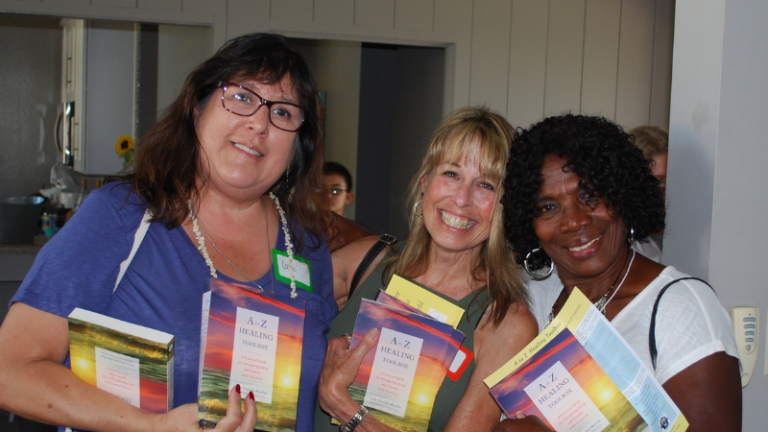
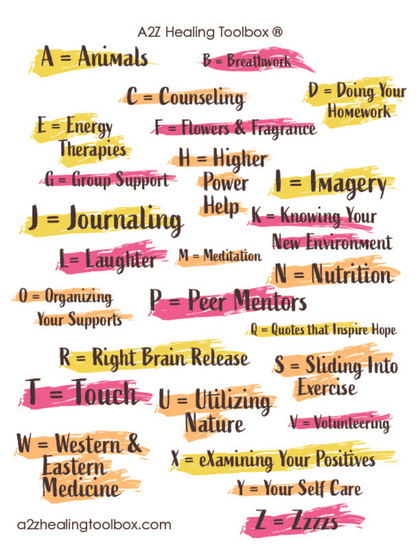
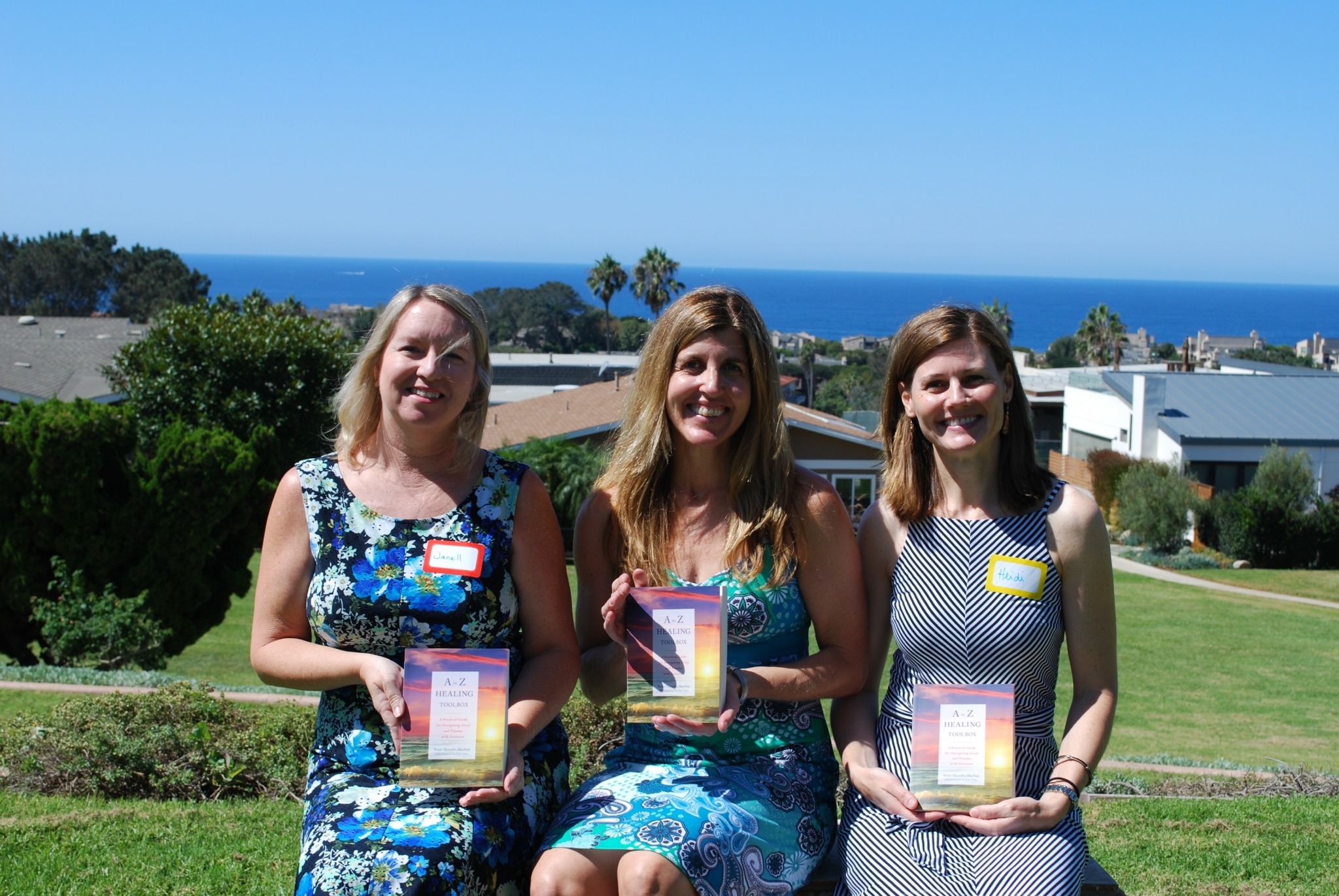
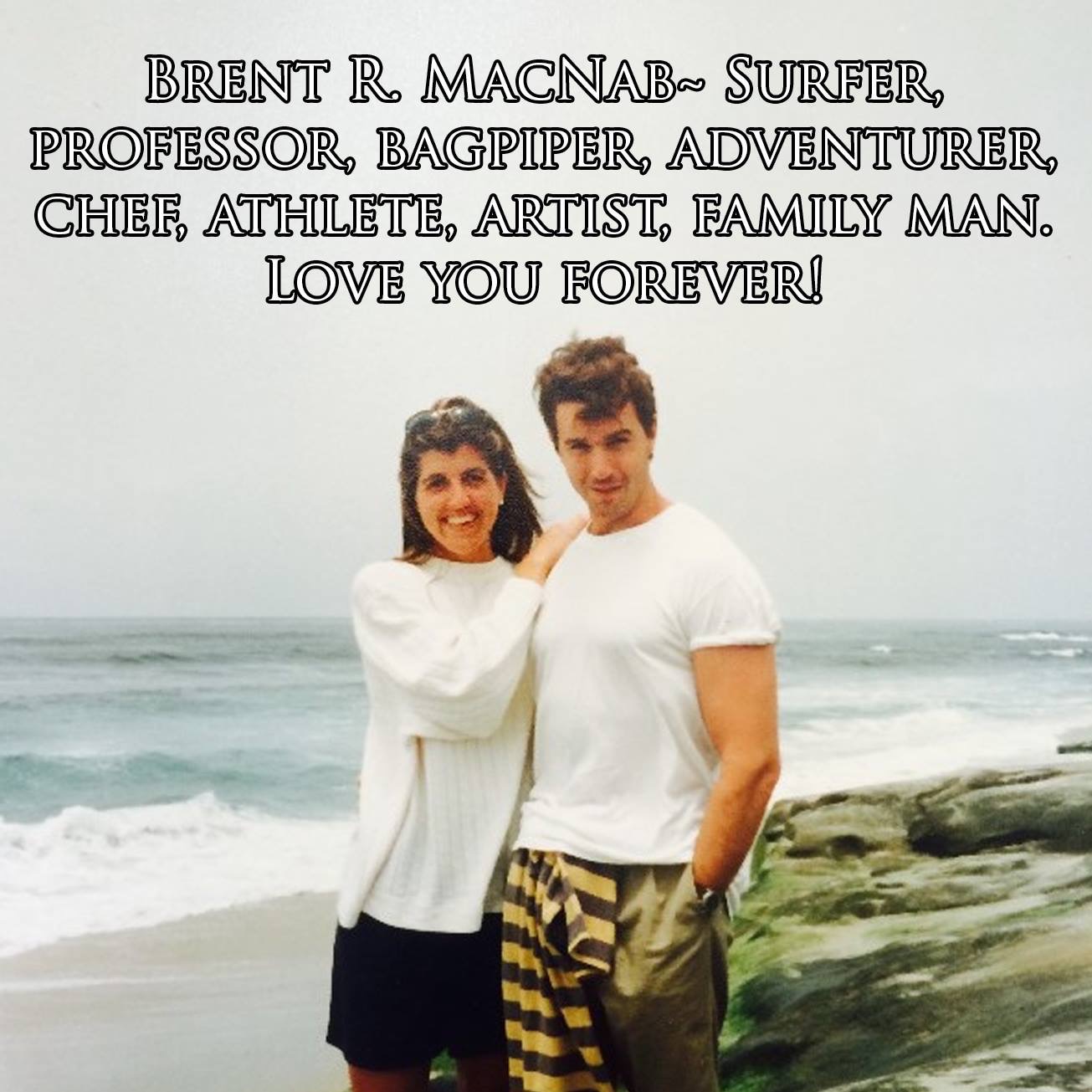
Image Credits
Robin Litrenta Photography