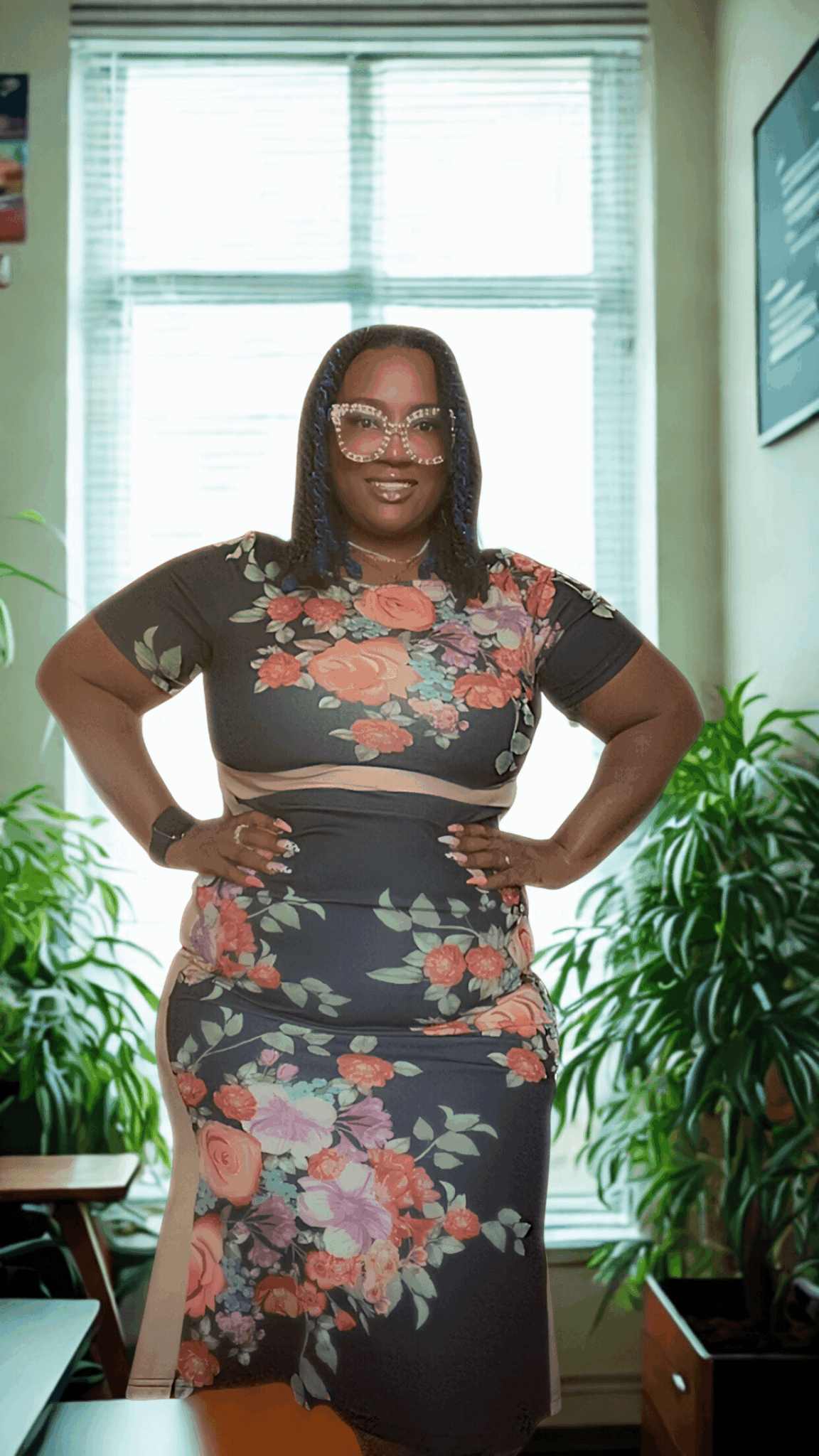

Alright – so today we’ve got the honor of introducing you to Eryka Sandridge. We think you’ll enjoy our conversation, we’ve shared it below.
Alright, Eryka thanks for taking the time to share your stories and insights with us today. We’d love to hear the backstory of how you established your own practice.
When I left the psychiatric hospital setting, I had no intention of starting a private practice. I thought I would simply become an independent contractor and keep things simple. But life had other plans. My children needed me home more, and that was the driving force behind everything. Staying in the traditional workforce just wasn’t sustainable for my family at that time.
I also realized something important while working in acute care. The goal there is to stabilize patients, to get them out of the “red” and then discharge them. There is absolutely value in that work, but my heart was in the maintenance phase. I wanted to walk with people long-term. I wanted to help break generational trauma patterns, not just manage crises. That realization changed everything.
So I took the leap.
I started my practice with $150 in my bank account and a whole lot of faith. I searched the name I wanted, formed my LLC, obtained my EIN (thankfully free), opened a business bank account, and eventually hired a registered agent. I stayed up some nights until 4 or 5 a.m. building my website myself because I couldn’t afford to outsource it. Everything was self-taught, research, trial and error, YouTube University. I transitioned quickly because I’m a mom of two. That meant my income dropped to less than half of what it had been. As a first-time homeowner, that financial instability was the hardest part. It was mentally demanding in ways I wasn’t prepared for. I never doubted my ability as a clinician, but I absolutely doubted the process. I questioned whether I had made a mistake.
But I believe in my mission. I believe in changing generational trauma one person at a time. That belief carried me when the numbers didn’t make sense yet.
My first clients came from Psychology Today. From there, I’ve tried to learn everything I can about marketing and brand-building. That’s been one of the biggest logistical challenges, building something that will still exist in 20 years. Every decision I make, I ask: How does this impact my clients? How does this impact the longevity of my company? What surprised me most were the small components no one talks about, the policies that differ by state (especially when I expanded into Washington State), building business credit, establishing funds, understanding marketing budgets. Starting a business is far more than filing an LLC and getting an EIN.
Would I have done anything differently? Honestly, I’m not sure. More capital would have made things easier, yes. But the urgency behind my decision was real. Waiting to feel “ready” financially might have meant never starting at all. Sometimes you leap because you have to, and you build your wings on the way down.
If I could give advice to a young professional considering private practice, I would say this:
First, discipline and ambition matter just as much as clinical skill. No one is coming to clock you in or push you. You have to push yourself.
Second, budget for marketing. That conversation is rarely had openly, but it’s essential. Third, you will mess up branding. You will tweak your communication style. You will evolve. That’s normal.
And finally, don’t start a private practice just for control or money. In the early years, you will likely spend more than you make while building something sustainable. You must genuinely care about the people you serve and the mission you’re building.
Interestingly, my long-term vision, books, therapeutic products and resources for families, didn’t come until after my practice was established. Once I realized how many people would never step into a therapy office, I wanted to create tools that could reach them anyway. I wanted to spark conversations in homes that are too busy, too overwhelmed, or too hesitant to seek formal therapy.
Starting my practice wasn’t just about autonomy. It was about impact.
And I’m still building.

As always, we appreciate you sharing your insights and we’ve got a few more questions for you, but before we get to all of that can you take a minute to introduce yourself and give our readers some of your back background and context?
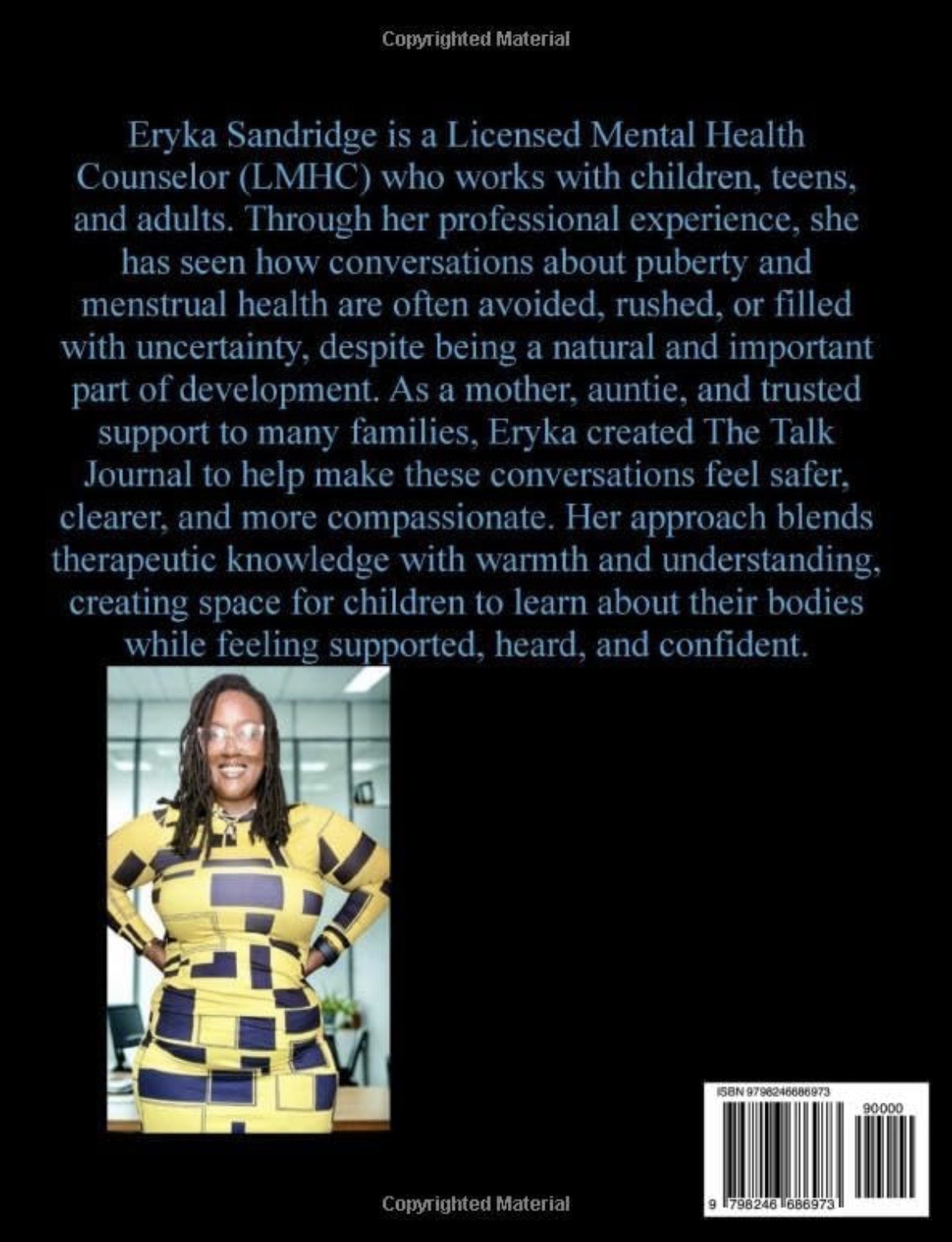
I’m Eryka Sandridge, a Licensed Mental Health Counselor, entrepreneur, author, and mother of two. But before any title, I am someone deeply committed to breaking cycles, personally, professionally, and generationally.
I didn’t get into mental health for prestige or convenience. I got into this field because I’ve always been curious about behavior, about why people do what they do, why trauma repeats itself in families, and why some people heal while others stay stuck. Over time, that curiosity turned into purpose.
Early in my career, I worked in acute psychiatric settings where the focus was stabilization. That experience shaped me in powerful ways, but it also clarified something: I wanted to be part of the long-term transformation process. I didn’t just want to help people survive crisis, I wanted to help them build sustainable emotional wellness.
That desire led me to create Therapeutic Services, LLC. My practice focuses on helping individuals identify and disrupt generational trauma patterns, improve emotional regulation, build self-awareness, and strengthen their sense of identity and purpose. I work with clients navigating anxiety, depression, relationship challenges, life transitions, and deeply rooted family dynamics. My approach is direct, compassionate, and accountability-driven. I believe therapy should feel safe, but it should also move you forward.
What sets me apart is that I blend clinical depth with real-life practicality. I’m not just focused on insight; I’m focused on application. Healing is not just understanding your trauma, it’s learning how to respond differently in real time.
Beyond therapy, I’ve expanded into therapeutic products and creative resources. I develop mental health-focused activity and affirmation books designed for children, adolescents, and adults. My goal is to make mental health conversations accessible in everyday spaces: homes, classrooms, therapy offices, and community events. Not everyone will walk into a therapy office, but everyone deserves tools to better understand themselves. I am especially proud of building my practice from the ground up with limited resources and unwavering belief. Starting with little more than faith and discipline, I created a brand rooted in longevity, integrity, and impact. I’m also proud that my work extends beyond sessions. Through publications, products, and community engagement, I’m creating multiple pathways for healing.
What I want potential clients and supporters to know is this: my brand is not about perfection, it’s about progression. I believe healing is possible, but it requires intentional work. I believe cycles can be broken, but someone has to decide to be the pattern interrupter.
My mission is simple but bold: change generational trauma one person at a time.
And whether that happens in a therapy session, through a book, or through a conversation sparked by one of my resources, I consider that impact.
Let’s talk about resilience next – do you have a story you can share with us?
One of the clearest moments of resilience in my journey was the very beginning.
When I decided to start my private practice, I had $150 in my bank account. Not $1,500. Not a six-month savings cushion. Just $150 and a decision.
At the time, I was transitioning out of a stable position, my income dropped to less than half, and I was raising two children while navigating life as a first-time homeowner. On paper, it didn’t make sense. Financially, it was uncomfortable. Mentally, it was heavy.
There were nights I stayed up until 4 or 5 a.m. building my website because I couldn’t afford to hire anyone to do it. I was teaching myself business structures, marketing, branding, all while still showing up as a present mother. During the day, I had to be strong and steady. At night, I was figuring out how to build something from scratch.
I remember looking at my bank account and thinking, “What have I done?” But what stands out most is this: I never questioned my ability. I questioned the process. I questioned the timeline. I questioned whether it would work fast enough. But I never questioned whether I was capable.
Resilience, for me, wasn’t loud or dramatic. It looked like continuing to show up when the numbers didn’t reflect the vision yet. It looked like believing in the mission to break generational trauma, even when the business side felt overwhelming. It looked like choosing long-term impact over short-term comfort.
That season taught me discipline. It taught me how to operate without immediate validation. It taught me that faith without execution is just a wish, and execution without faith burns you out.
Today, when I face challenges, expanding into another state, launching new products, navigating growth, I go back to that version of me with $150 and a laptop at 2 a.m. If she didn’t quit, neither will I.
That’s resilience.

Do you think you’d choose a different profession or specialty if you were starting now?
Yes, and I would have chosen it sooner.
My undergraduate degree wasn’t in mental health, and if I’m being honest, I didn’t fully understand how aligned I would eventually feel in this field. If I could go back, I would step into psychology earlier and with more clarity. I would also challenge myself to go even further, most likely into psychiatry, because I’ve always been deeply curious about the biological and neurological components of behavior, not just the emotional and environmental ones.
Mental health isn’t just a career for me; it’s an intellectual and personal calling. I’m fascinated by why people think the way they do, how trauma reshapes the brain, how family systems influence identity, and how intentional intervention can literally change the trajectory of a life. If I had understood that sooner, I would have committed to this path earlier and more aggressively.
That said, I don’t regret the route I took. Every detour gave me perspective. Every shift sharpened my conviction. And today, I feel deeply aligned with the work I do, helping individuals break generational trauma patterns and build sustainable emotional wellness.
If anything, my journey taught me this: sometimes you don’t discover your true lane immediately. But when you do, you lean in fully.
And that’s what I’ve done.
Contact Info:
- Website: https://www.therapeuticservicesllc.org
- Instagram: @therapeuticservicesllc
- Facebook: https://facebook.com/therapeuticservicesllc
- Linkedin: https://www.linkedin.com/in/eryka-sandridge