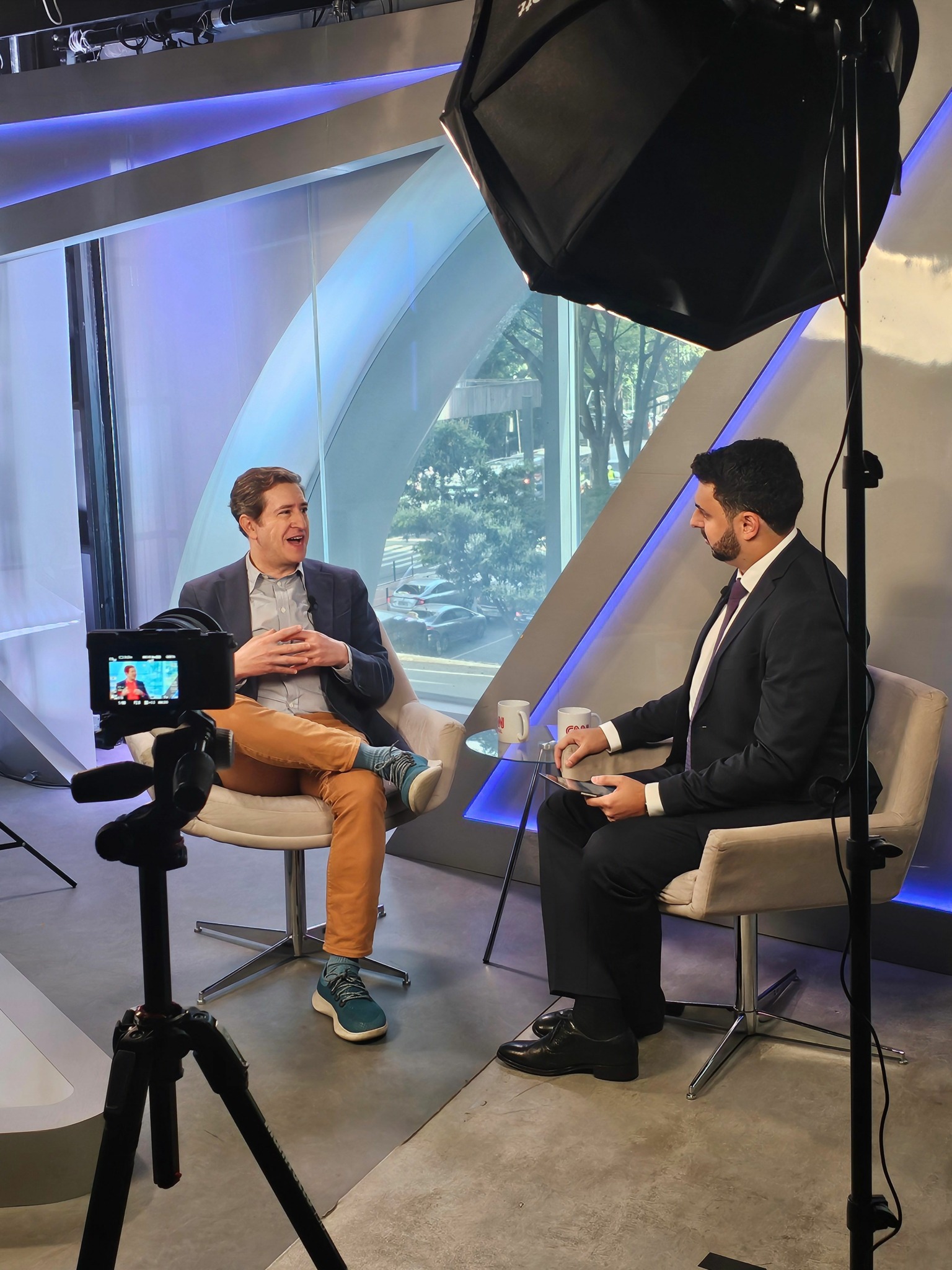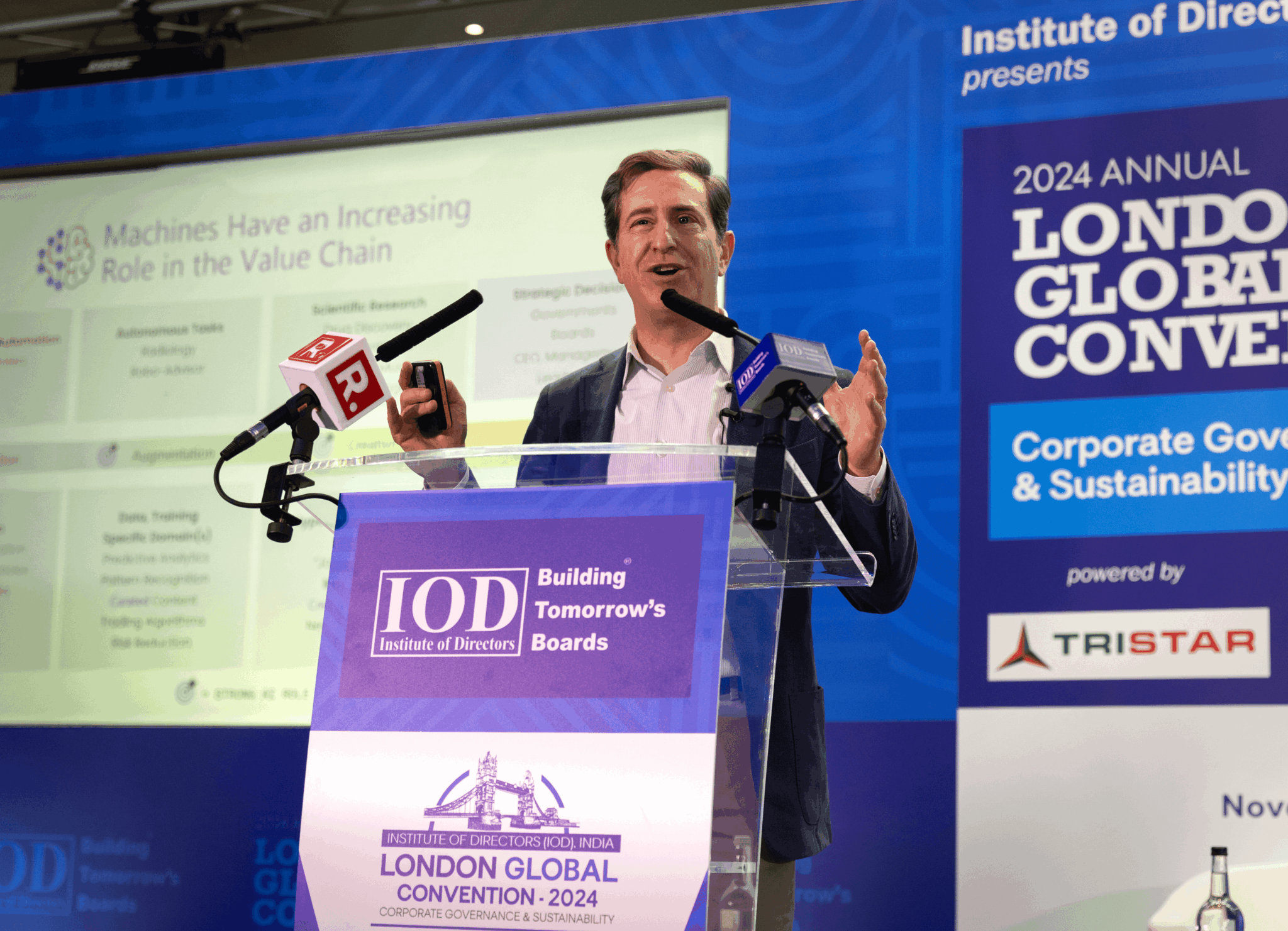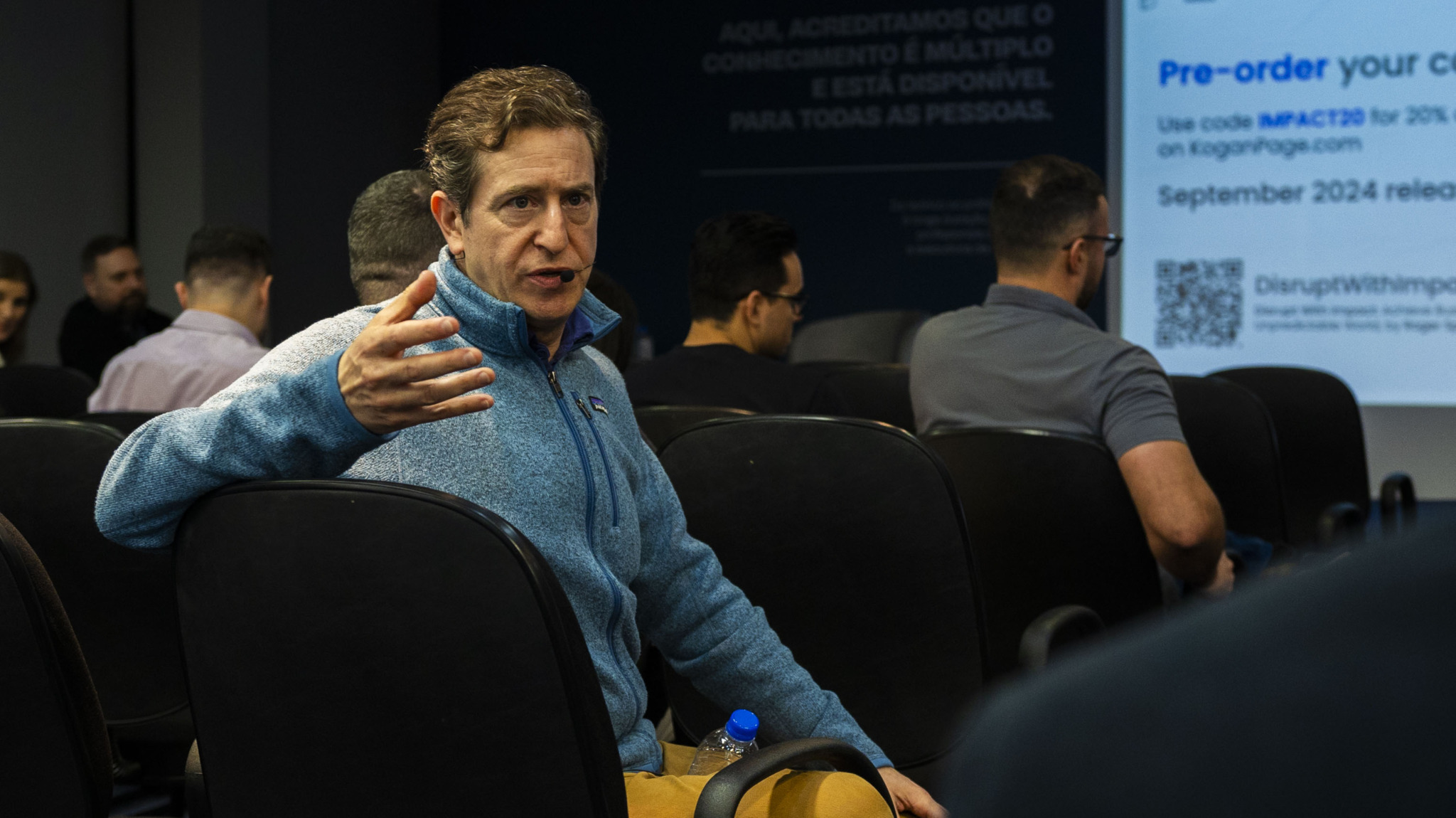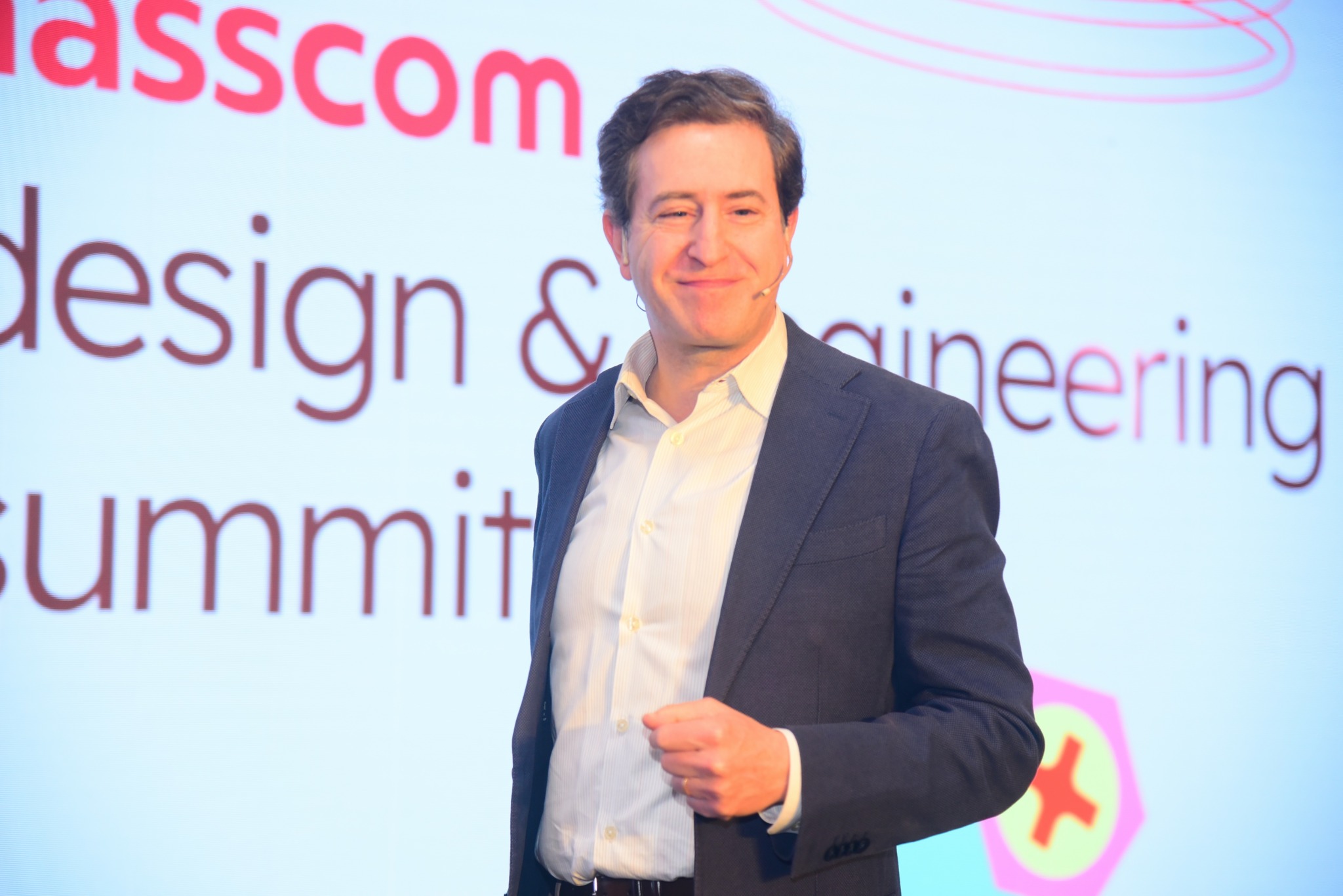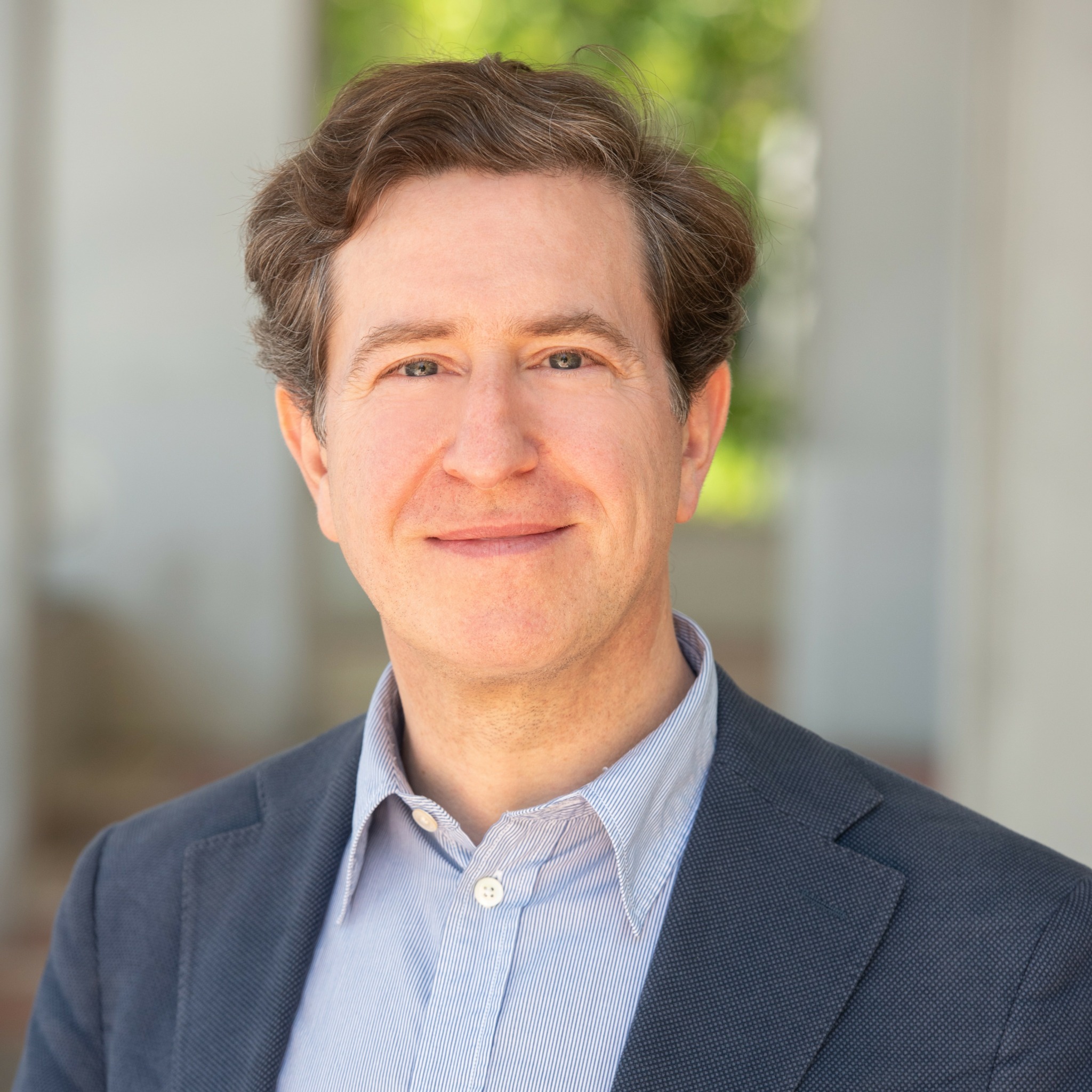

We were lucky to catch up with Roger Spitz recently and have shared our conversation below.
Alright, Roger thanks for taking the time to share your stories and insights with us today. Risk taking is something we’re really interested in and we’d love to hear the story of a risk you’ve taken.
The most significant risk I’ve taken was not a single financial bet, but the decision to dismantle a “steady state” career to pursue a completely unknown path. After two decades in investment banking – serving as Global Head of Technology Mergers & Acquisitions (M&A) at BNP Paribas and advising on over 50 transactions totaling $25 billion – I had reached a level of professional stability that most would consider the finish line.
I remember a specific moment in late 2018, standing in a sleek boardroom after closing a major deal. While the room celebrated the closing of a transaction, I found myself looking at the five-year projections and realizing they were built on the flawed assumption of a stable, linear, predictable, and controllable world. I felt a profound misalignment between such assumptions of “certainty” which the world relied on and the complex, nonlinear reality I saw emerging.
The real risk came in 2020 when I decided to step away from the comfort of that world to found Techistential (a strategic foresight practice) and the Disruptive Futures Institute (a Think Tank). There was no “instruction manual” for this. I moved from a world that measured and rewarded certainty to one that demanded I embrace the unpredictable nature of our reality. It was an exercise in building an Antifragile life – one that doesn’t just withstand shocks but actually improves because of them. I was essentially betting that the world needed a new language for disruption, a new operating system for change, that blended existential philosophy for agency with strategic foresight for futures thinking.
As always, we appreciate you sharing your insights and we’ve got a few more questions for you, but before we get to all of that can you take a minute to introduce yourself and give our readers some of your back background and context?
My background sits at the intersection of high-stakes investment banking with existential philosophy and futures studies. Over twenty years, I built technology investment banking advisory practices in London and Paris before launching the U.S. technology M&A practice in San Francisco. While that career offered stability, I was increasingly drawn to questions of agency and contingency – ideas I first encountered while studying Heidegger, Kierkegaard, and Sartre.
Arriving in San Francisco in 2017 was a turning point. I remember my first few weeks, intentionally stepping away from the “Silicon Valley hype” to sit in think tanks and research centers, immersing myself in complexity science, systems thinking and futures studies. I was “unlearning” the habit of looking at the world through a spreadsheet and “relearning” how to see it as a living adaptive system.
Today, part of my work centers on Artificial Intelligence, through Techistentialism, a concept I developed to explore the interplay between technology and the nature of human existence. Techistentialism studies the nature of human beings, existence, and decision-making in our technological world. Today, we face both technological and existential conditions that can no longer be separated.
I serve as President of Techistential and Chair of the Disruptive Futures Institute. I’ve written five books, including The Definitive Guide to Thriving on Disruption and Disrupt With Impact: Achieve Business Success in an Unpredictable World. My practice is dedicated to building the capacity for Anticipatory leadership and Strategic Agility, ensuring that humans retain their agency in an increasingly autonomous technological world.
Ultimately, our work (publications, executive education, keynotes, foresight practice) seek to help build capacity for futures intelligence, resilience, and futures-prepardeness.
Any advice for growing your clientele? What’s been most effective for you?
In an increasingly unpredictable world, the value of traditional recommendations is rapidly decreasing. Systemic disruption has devalued “ad-vice”; instead, I offer my best UN-VICE. UN-VICE is an updated way of capturing the state of the world, the changing context. Framing the dynamics of systemic disruption as UNknown, Volatile, Intersecting, Complex, Exponential enables an empowering response. We are not helpless victims unable to make decisions. With UN-VICE, we have the power to shape our own futures. Client growth has come from deliberately moving away from transactional engagements and legacy playbooks, and toward building Business Models-as-a-System (BMaaS). BMaaS represents a systems innovation approach that intentionally blurs the boundaries between partners, customers, suppliers, and even competitors. This is how organizations and changemakers should respond to our UN-VICE world.
For the mindset, I focus on my 6 i’s Toolkit to differentiate my approach and attract partners who are willing to look “below the iceberg”. The language of disruption is rooted in action. Unlock the mindsets necessary to embrace uncertainty with the 6 i’s – keys to not just surviving, but thriving:
Intuition: Explore ambiguous environments without straightforward answers by tapping into curiosity, avoiding preconceptions.
Inspiration and Imagination: Encompassing broader futures, be inspired by asking profound questions and breaking from the present.
Improvisation: Experiment through improvisation, mistakes, and ambiguity, seeking authenticity.
Invention: Nothing is predetermined. We have an open canvas to create our futures.
Impossible: With the courage to wander and fail, you can stumble upon – and achieve – the impossible.
With the right mindset (6 i’s) for systems innovation / BMaaS, what has been most effective as an “execution framework” is applying our AAA Framework (Antifragile, Anticipatory, Agility) to specific, real-world client situations. The AAA Framework offers the tools to build Antifragile foundations, develop the capabilities to be Anticipatory, and use emergent and strategic Agility to bridge the short-term with long-term decision-making. By working with organizations to build foundations that benefit from volatility, you move from being an advisor to a changemaker.
Our collaboration with LuxCS in Brazil is a prime example. We worked to transform the voluntary carbon market (VCM) by applying anticipatory governance, cultural and regulatory levers. This journey reached a milestone with Brazil’s Bill 182/2024, which introduces stricter requirements for carbon credit integrity – principles we’ve long advocated for. By democratizing market access and ensuring additionality, we help create sustainable futures of higher integrity.
Let’s talk about resilience next – do you have a story you can share with us?
I often think of Nelson Mandela’s quote from Long Walk to Freedom: “I have discovered the secret that after climbing a great hill, one only finds that there are many more hills to climb.” Building the Disruptive Futures Institute has been a series of such hills.
There was a moment shortly after I left investment banking when the silence of my home office felt deafening compared to the flurry of global trading floors. I remember sitting with a draft of what would become a four-volume collection on systemic disruption, wondering if anyone would actually care about the philosophical framing of adaptive strategies and new frameworks for unpredictability. That doubt was my first real “hill.”
Resilience, in that context, was about the endurance required to curate a guide for the 21st century when the world’s existing strategies were – and are – outright ineffective. I had to embrace Shoshin (a beginner’s mind) and accept the unknowability of the outcome. We practiced what I call Failovation – capitalizing on small failures to generate innovation.
True resilience isn’t just about “bouncing back” to where you were; it’s about Agility – the ability to emerge in the “here and now” with relevance. By treating uncertainty as an underpinning to my own agency rather than a source of fear, I was able to turn my own version of a “Long Walk” into a series of successful, iterative leaps. I realized that the lack of a predetermined path was exactly what allowed for the freedom to invent a future that didn’t yet exist. For me, “uncertainty is a prerequisite to our agency and freedom.” If the future were predictable or determined, our choices would be illusions. We would simply be executing a script coded by past data. Agency requires the unknown, uncertainty, unpredictability. Jean-Paul Sartre captured this best: existence precedes essence.
Contact Info:
- Website: Disruptive Futures Institute Homepage
- Instagram: @disrupt_futures
- Linkedin: Disruptive Futures Institute LinkedIn
- Twitter: @disrupt_futures @rogerspitz
- Youtube: Disruptive Futures Institute Youtube Channel
- Other: Disruptive Futures Institute Substack/Disrupt With Impact Webpage/Roger Spitz: World Economic Forum advisor