

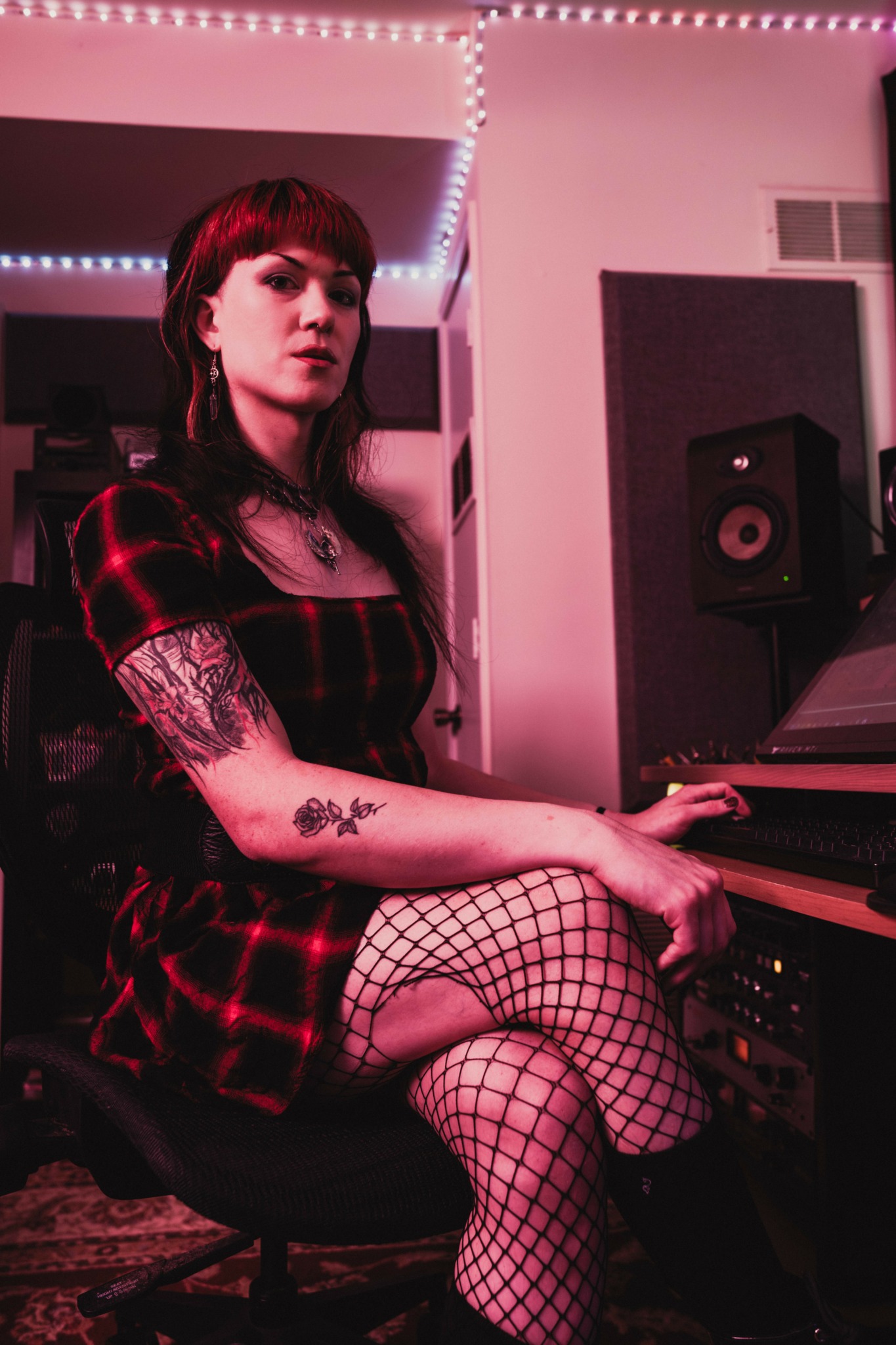

We caught up with the brilliant and insightful Aki McCullough a few weeks ago and have shared our conversation below.
Aki , thanks for joining us, excited to have you contributing your stories and insights. We’d love to hear the backstory behind a risk you’ve taken – whether big or small, walk us through what it was like and how it ultimately turned out.
The risk I will talk about first is the decision I made to quit my job in 2021 and go full time into running Nu House. I had a very comfortable job at an audio tech company since graduating college in 2015; it paid well, had good benefits, and was very predictable. But I was not built for that lifestyle. I thrive on laser focusing on one project, pushing hard to the end of it, taking a little break, and then jumping into something completely different. The thought of sitting at the same desk and doing the same job for the same hours for the rest of my healthy adult life sent me spiraling into depression. I worked in “premium audio” – technology for rich people with a passing interest in audio to show off to their rich friends. What problem was this solving, who was this actually helping besides a small group of people who were already more well off than the average person? I had what many people consider the dream but I was incredibly unhappy.
I know for certain that I would not have had the mental clarity and strength to make this decision had I not begun socially and medically transitioning as a trans woman the year before in 2020. I was in a much similar place, doing something that was supposedly “right” but felt so innately, inexplicably wrong. But I had so many doubts about whether my feelings were “real” or not, especially living in a society that tries to push you into a box. Eventually what allowed me to separate my intuition and my true path from my doubts was being unable to see a future on the path I was on. When I made the decision to begin transitioning, the path forward lit up again, despite the countless challenges I knew I would face. In the face of potentially losing friends & family (they have all been very supportive!), discrimination and violence, the light of a future was brighter than all.
And so 14 months after I made an appointment to start hormones and begin transitioning, I found myself staring at the ceiling after a particularly fruitless work meeting, unable to imagine 6 more hours of going through the motions of something I didn’t believe in because it was the comfortable path, much less 40 more years. I recognized that same feeling the day before I made that call to the doctor and I knew it was time. So I spent that weekend writing both my resignation letter and my plan to scale up Nu House to be a full time business. Being able to trust my intuition, to be in touch with my guiding voice, and understand what I was put on the earth to do has helped me know when it’s the right time to take a big risk. I don’t make big risky changes just because things got difficult, but because something is fundamentally wrong on the path I’m on. Since then, I’ve followed that same voice to start new projects, leave other projects behind, and most recently, to uproot my life and make the cross country move from Boston to Chicago, studio gear and all. When you’re taking the correct risk, despite any fears, you should also feel at peace.
Aki , love having you share your insights with us. Before we ask you more questions, maybe you can take a moment to introduce yourself to our readers who might have missed our earlier conversations?
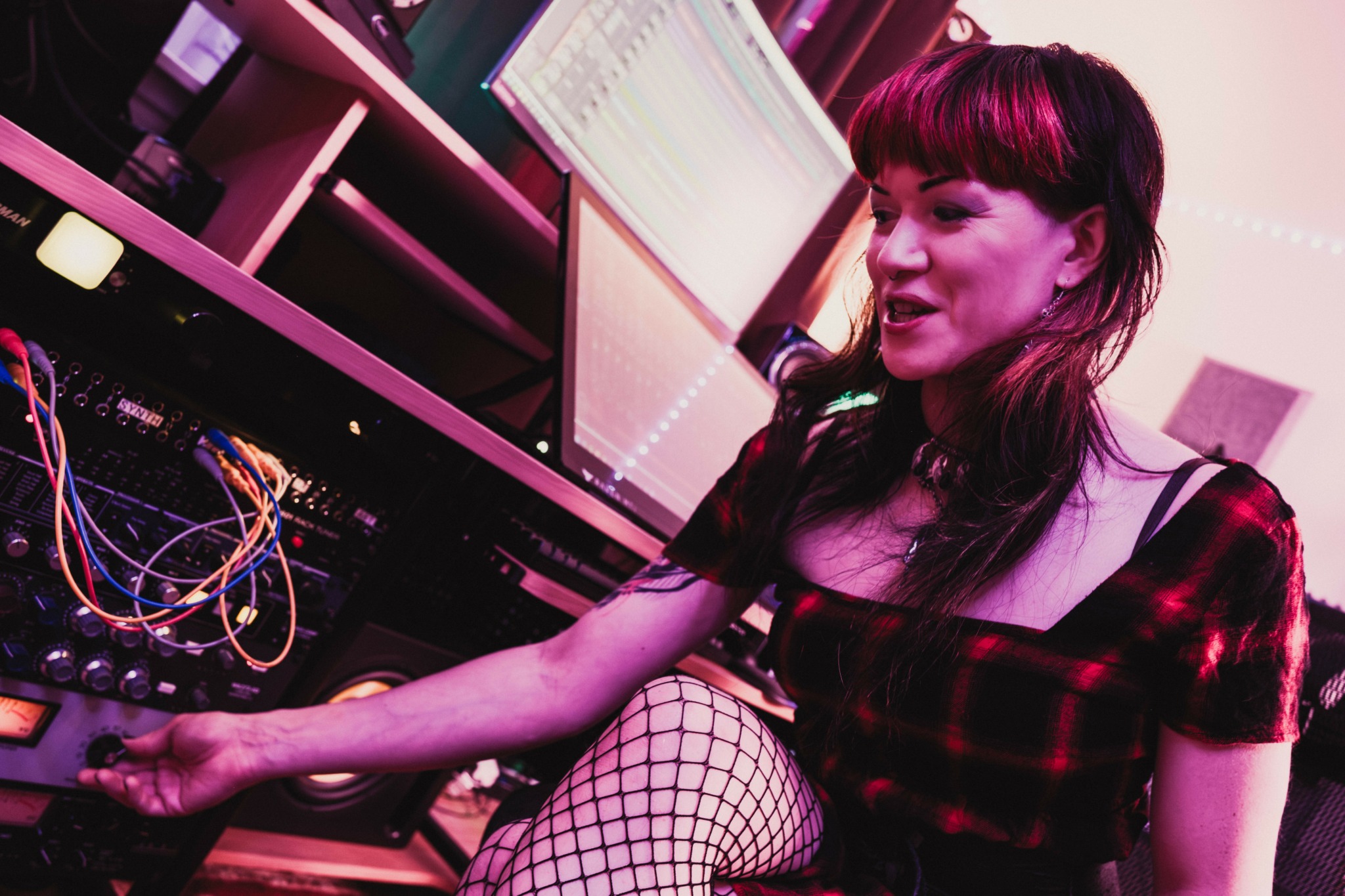
My name is Aki! I first started learning about recording and mixing music when I was 16, almost 20 years ago now. I’ve always been a musician and a creatively minded person and recording/mixing were a means for me to try to get my musical ideas to sound as impactful as they did in my head. I started Nu House Studios with my longtime friend and bandmate James Goldmann around 2019/2020. At the time living in New England, an area rich with talented musicians and audio engineers I asked myself: “why does the world need another audio engineer?”. For years, that question kept me from making the jump into professional audio engineering.
2020 was also the year that I began socially transitioning as a trans woman, and as I began navigating the world as a woman and meeting other musicians like myself, the question answered itself: the audio engineering world is overwhelmingly cisgender, male, and white. Creating a record is a time where you lay bare your soul, where you have to completely trust and feel comfortable with the engineer you’re working with. This can be difficult for marginalized people who feel a fundamental disconnect with the lived experiences of the people they are collaborating with. After recording with a friend who is a trans musician, she told me it was the first time she actually felt comfortable and able to perform well in a studio environment. From that moment, our goal was to make Nu House Studios a space where trans and queer people could feel comfortable to make the truest possible version of their musical vision.
A couple years into running the studio, we came up against a fundamental problem: trans people make 70 cents for every dollar a cisgender person makes. Many clients we were working with were struggling to pay despite their best efforts. More importantly than a financial problem, this was a moral problem: Did we feel okay running Nu House solely with the money of trans artists struggling to make ends meet? Many people told me we would have an easier time if we stopped promoting ourselves specifically to trans people, but instead we doubled down. In 2022 we introduced the Trans Musician Fund: a fund to help cover production costs of trans artists so they could work with us for free or at reduced cost. We opened a Ko-fi page to accept donations but also introduced several other fundraising ideas that have become core to what Nu House is: music compilations, merch printing, and live streaming; from which all profits go to the Trans Musician Fund.
Nu House Studios is more than just an audio recording/mixing business, it’s a community. And it IS a brand, in the sense that we know who we are and what we’re about, and we’re not afraid to show that to the world. We’re not a studio for everyone, we don’t make music for everyone. We work on records that are heavy, weird, abrasive, defiant, gut wrenching, and unapologetically human, in all the joy, pain, and ugliness that humanity brings. If you want to make dad rock, stomp clap, or something that sounds like AI slop there’s plenty of other studios you can do that at. There’s countless studios that work with “bigger” artists, that have more label backing, or are more mainstream household names. But I would be very surprised to find a studio that has more of a community than Nu House. We make compilation albums with artists we have worked with for years and have become close friends with. We sponsor and provide audio services for music festivals that share our values and vision. People who support us can proudly wear our shirts with trans colors and “TRANS RIGHTS OR ELSE” printed across them. Our community doesn’t end when we send out the final masters, and our supporters include people who aren’t even musicians but still see the value in music made by and for the marginalized.
Is there a particular goal or mission driving your creative journey?
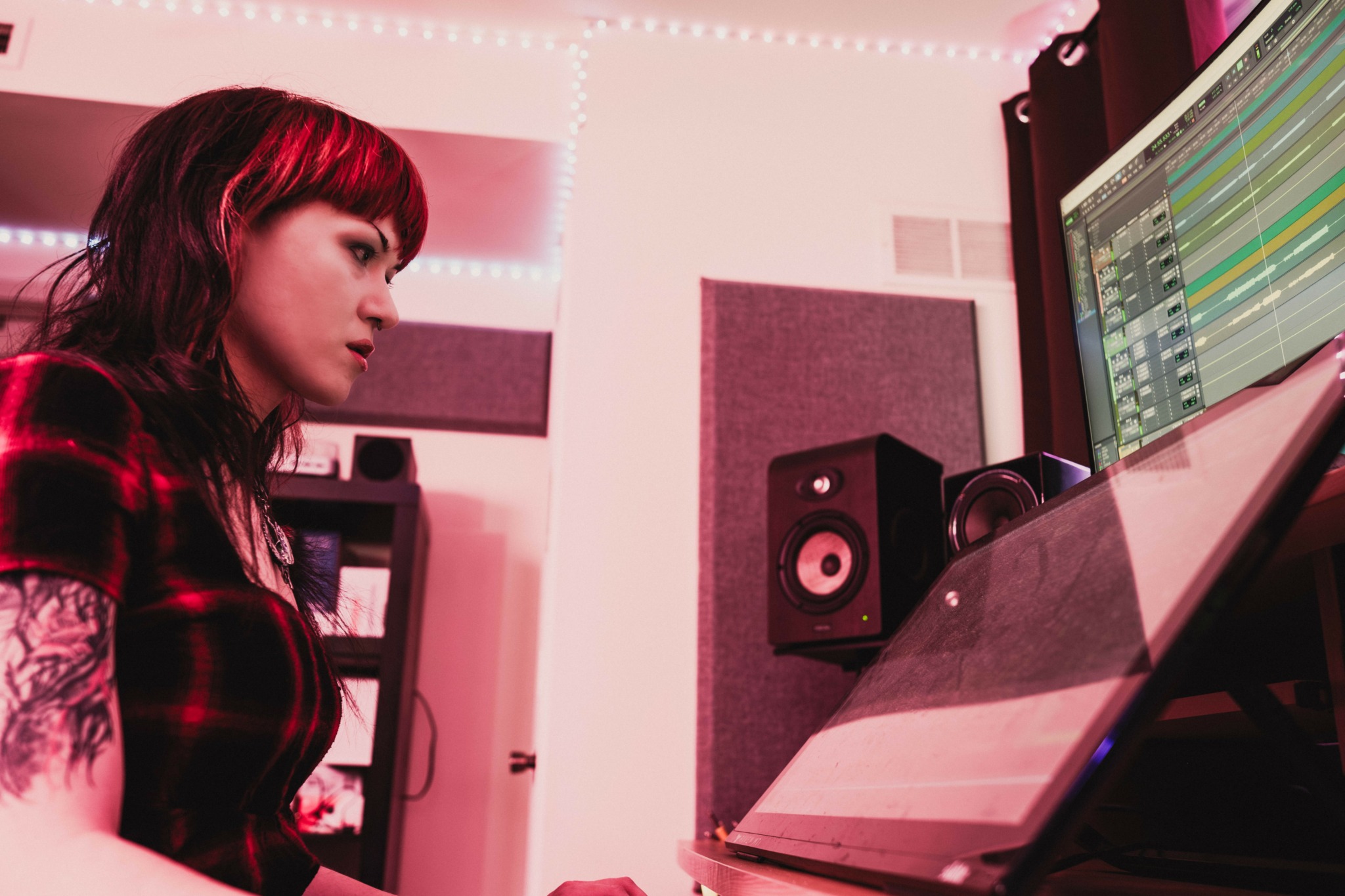
The goal that drives Nu House is to solve an existential problem: music and art are core components of our humanity, of our ability to connect with others in our shared experiences, to inspire each other to accomplish feats we didn’t think were possible. Throughout history, music has inspired social change and even revolution. However, the voices we need to be hearing most are the ones with the most limited access to music production and engineering services. There are barriers to marginalized people accessing high quality recording studio productions, whether it be financial or record company gatekeeping. Nu House exists to help eliminate those barriers and elevate the voices of artists that our world desperately needs to hear the most: those of us who have been the most beaten down and broken by this world.
We believe in eliminating gatekeeping both in access and knowledge. I’ve made a point to try to teach other aspiring trans audio engineers more about recording, mixing, and mastering: through our Q&A’s, mix tutorials, mix feedback and consults. I’m even writing a book on low cost DIY recording. I’m a big believer in “a rising tide lifting all boats” with audio engineering. More educated peers means not only do I receive better recordings for the albums I mix, but it also means a more vibrant and connected musical community. A good engineer cannot possibly teach someone to replace them, they’re hired not just for their toolbox, but for their taste, experience, wisdom, and guidance. Not only do I want to offer my mixes that are uniquely mine, but I want to inspire other aspiring marginalized engineers to learn to mix like themselves.
Any advice for growing your clientele? What’s been most effective for you?
I like this question not because I lie awake at night thinking about growth and numbers but because of one of our previously stated goals: helping other aspiring trans engineers get off the ground and make a living for themselves without a boss.
The best strategy for us has been multiple channels of growth, not putting all our eggs in one basket. Recording and mixing are unique in that even in 2025, word of mouth and looking up a credit on the back of a record/online are still some of the most effective ways to find new clients. I have noticed there’s two main types of potential clients: Ones that have heard a record you worked on and are so blown away by it that they know they HAVE to work with you, and clients who have a project to work on but are not super picky about who they want to work with.
It’s incredibly important to give my all on every single project I do, even if it’s taxing or inconvenient. If you’re not making a mix that blows people away, first of all what’s the point? Second, it leads to artists who say “holy s*** who mixed this I gotta look them up”. It also leads to artists that are blown away by their mix and their experience working with us, go on tour and tell their tourmates and people they talk to about us. And above all it leads to emotionally impactful records that lots of people listen to and tell their friends to listen to, with your name on it. It’s 100% possible to check all the boxes and complete all the mix notes and STILL not inspire artists/listeners to care about the album you helped make or who you are. You truly have to live in the world of the artist and become as obsessive about their album as they are to get to that point.
The second type of client is why we also strive to have a strong presence on social media. These are usually people I have mutual friends with, who might be aware that I am a mix engineer and some of the things I’ve worked on. But with our attention spans/memories shorter than ever, they need reminders that I exist and am indeed still doing what I do. And to do this, I make myself as visible as I can on social media: I do stories/posts for every release I have worked on that comes out, I post about projects I’m working on, new gear I get. I do Q&A sessions about mixing & mastering, I stream, and we also post about our fundraising. And I do all of that multiple times because social media algorithms throttle your views and anyone who has the potential to want to work with you won’t get annoyed about seeing you too much. Sometimes people will respond “oh I have something for you to work on soon” on Instagram stories I post that are completely unrelated to music. With audio work, there’s enough back and forth discussion that people need to know you well enough to trust that you’re not going to be a pain in the ass or a weirdo. I will notice when I’m unable to be as much of a presence on social media/in real life, I’ll have a slight drop off in business 1-2 months later. When I am on top of being an active presence, there will be an influx of new projects 1-2 months later. It usually leads to a bit of a boom/bust cycle of focusing more on seeking clients vs focusing on finishing my current commissions. Things have looked extremely bleak more times than I can count, and the second I’m ready to start job searching 5 new clients will message me. It’s definitely not for the faint of heart.
I mention “in real life” too because yes, even in the age of social media this matters!! I go to shows because I love live music and I love my friends, but also it’s a space where you hang out with musicians and learn about what they’re doing and talk about what you’re doing. If someone is choosing between two engineers of equal skill, they’ll choose the one they know personally that has shown active interest in their music. I’ve seen people complain about not getting clients and not only do they not “play the game” on social media, but they’re not going to shows or out in their communities!! That’s literally the fun part, you get to hang out with people you like, support artists, AND know you’re doing something positive for your clientele growth.
Contact Info:
- Website: https://nuhousestudios.com
- Instagram: https://www.instagram.com/nuhousestudios
- Linkedin: https://www.linkedin.com/in/aki-mccullough-aa5b2344
- Other: Soundbetter: https://soundbetter.com/profiles/565779-nu-house-studios
Image Credits
All photos credited to Matty Gagui