

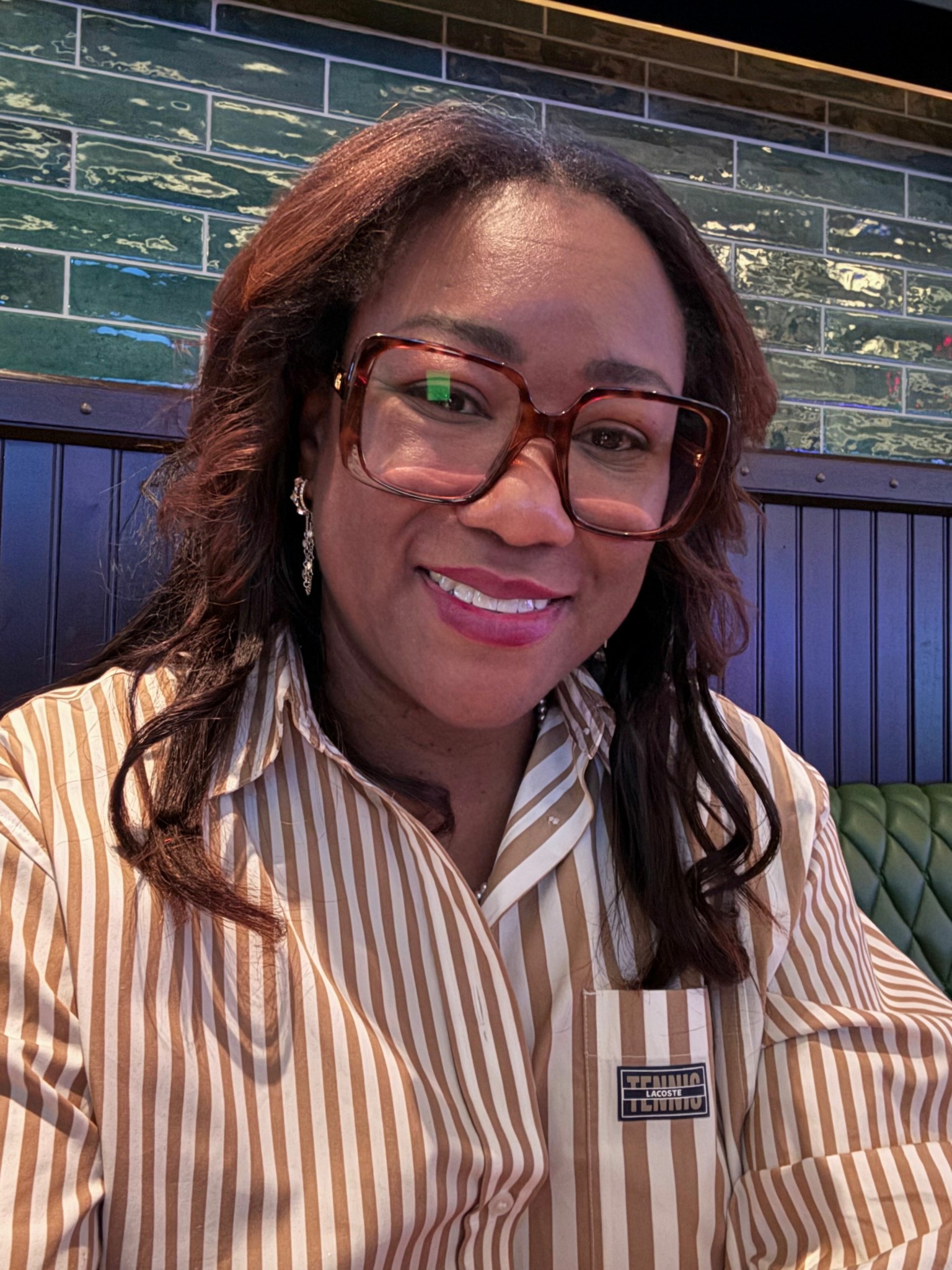

Alright – so today we’ve got the honor of introducing you to Tanesha Deane. We think you’ll enjoy our conversation, we’ve shared it below.
Hi Tanesha, thanks for joining us today. What’s the backstory behind how you came up with the idea for your business?
It wasn’t a lightning bolt moment. It was my friends’ exhaustion that sparked the idea.
I watched them do it all—juggling the 9-to-5 that paid the bills while pouring every ounce of energy into their own businesses after hours. And then came the events: the product launches, the retreats, the gatherings meant to celebrate their milestones and build their communities. But instead of celebration, I saw stress. I saw my friend overwhelmed trying to source the perfect swag bags. Another friend driving herself ragged finding the right venue. Another coordinating alone late into the night.
So I did what came naturally to me—I showed up. I helped plan a perfume launch. I curated swag bags. I coordinated a women’s retreat. And every time, I watched my friends exhale. I watched them refocus on what actually mattered: their business, their vision, their growth.
My friends kept saying the same thing: “You should do this for other people.”
For the longest time, I hesitated. I kept asking myself: *Are you ready? Do you actually have the time?* But the opportunities kept presenting themselves. And I realized something—there’s a gap that nobody’s filling.
The event planning world caters to the already-established. The companies with deep pockets who can afford the elaborate venues, the expensive “curated” experiences, the $500-a-head swag bags. But what about the up-and-coming entrepreneurs? The ones working 9-to-5 while building their empire? The ones with vision but not unlimited budgets? *They’re invisible in this market.*
That’s where I come in.
My background in Logistics and Operations isn’t coincidental—I’m a natural problem-solver. I see systems and I make them better. I reorganize. I optimize. I create order from chaos. At MBLC, I do this in procurement and contract management. In my family, I’m the one orchestrating trips that are unforgettable *and* affordable. In my sorority, I’m building systems that work.
But more importantly: I understand *your* world. I know what it feels like to wear multiple hats. I know what it means to make every dollar count. And I know that a limited budget doesn’t mean limited impact.
My approach is about creating carefully constructed, budget-friendly ideas that still deliver the *wow factor*. It’s about understanding that you don’t need to spend lavishly to leave an impression. You need strategy. You need creativity. You need someone who understands your vision and brings it to life in a way that *ignites* the creative potential your guests didn’t know they had.
That’s what Spark & Celebrate Curator does. We spark the conversation. We celebrate the milestone. We unlock the creativity.
And that’s why I’m ready to bring this to the entrepreneurs in Boston.
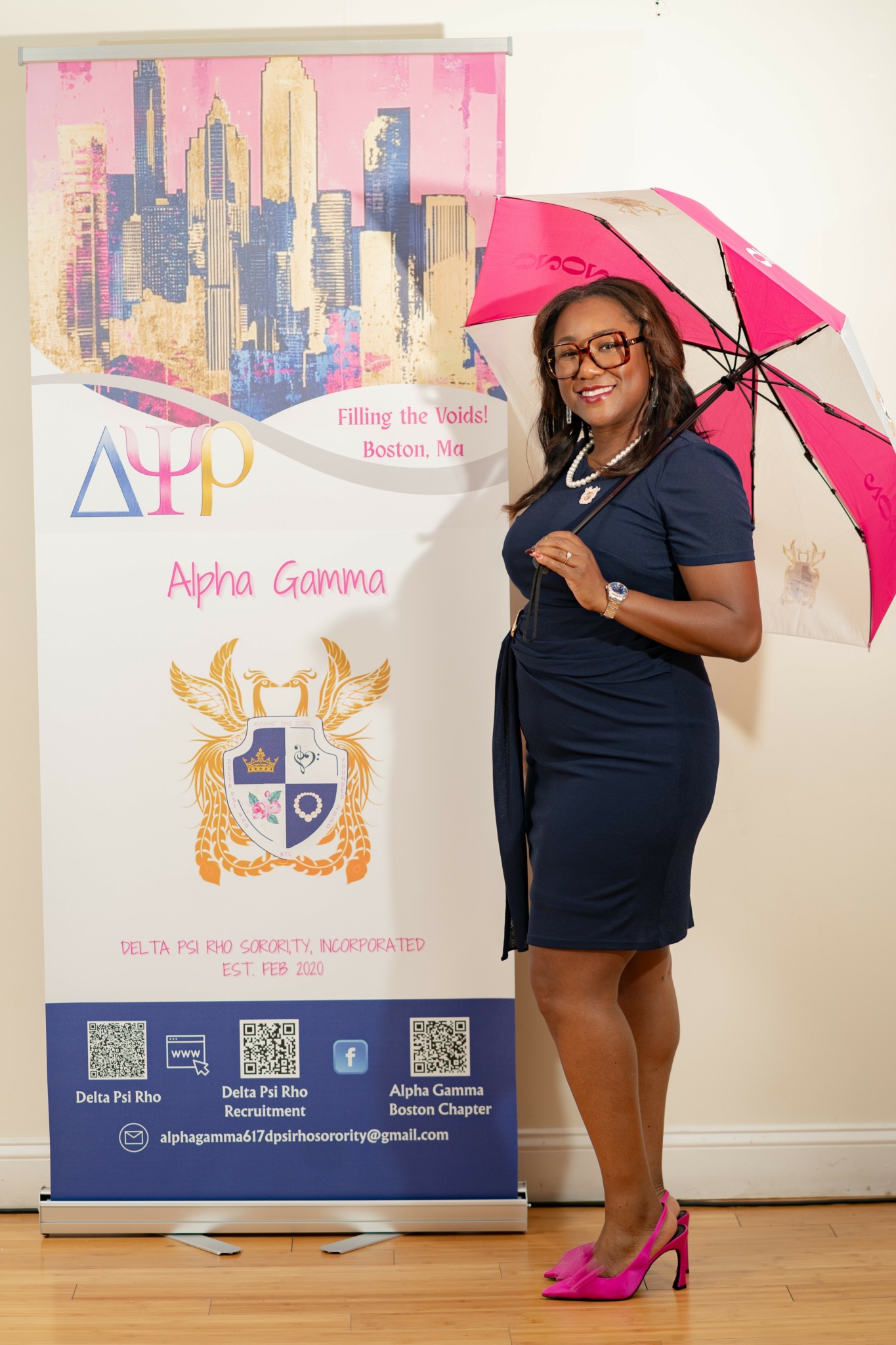
Tanesha, before we move on to more of these sorts of questions, can you take some time to bring our readers up to speed on you and what you do?
My name is Tanesha Deane. I wear multiple hats—I work for a state agency in Massachusetts, I’m the founder of Spark & Celebrate Curator, and I serve as Grammateus (Secretary) for the Alpha Gamma Chapter of Delta Phi Rho Sorority. What connects these roles is the same core value: creating order, meaning, and impact out of complexity.
I hold a degree in Logistics and Operations, which fundamentally shapes how I see the world. I’m someone who looks at systems and asks: “How can this work better?” I’m detail-oriented, creative within constraints, and genuinely invested in helping others succeed.
**How did you get into this business?**
It wasn’t a straightforward path—it came from watching my friends struggle.
Around 2023-2024, I started noticing something consistent among entrepreneurs in my network. They were grinding: working 9-to-5 jobs while pouring themselves into their own businesses at night and on weekends. When it came time to host an event—a product launch, a client gathering, a milestone celebration—they’d add “event planner” to their already-maxed-out list. They were so focused on logistics that they couldn’t focus on their vision.
So I started helping. I planned a friend’s perfume launch. I curated swag for another’s networking event and aCabaret-themed events. I co-coordinated a women’s retreat. Every single time, my friend could finally breathe. The stress lifted. They could refocus on their business.
After the fifth or sixth time, people said: “You should charge for this.” I hesitated—*Do I have the bandwidth? Is this viable?*—but the opportunities kept showing up. Potential clients kept reaching out. I realized there was a massive gap in the market: nobody was serving up-and-coming entrepreneurs who needed professional events on realistic budgets.
That’s when Spark & Celebrate Curator became a real business.
**What services and creative works do you provide?**
I offer comprehensive event planning and coordination specifically designed for up-and-coming entrepreneurs. This includes:
**Strategic Planning & Consultation** — We dive deep into your vision, values, and what success looks like. What story are you telling? What should attendees feel?
**Venue Sourcing & Negotiation** — I know Boston and South Shore venues across all budgets and negotiate terms that work for emerging businesses.
**Budget Development** — I create realistic, transparent budgets where every dollar works hard.
**Vendor Coordination** — I manage all vendor relationships, leveraging my network to get you better rates and access.
**Swag Bag Curation & Design** — Thoughtfully curated, on-brand swag that attendees will actually use and remember.
**Event Day Coordination** — Detailed timelines, vendor management, setup, and logistics so you can be present with your guests.
**Post-Event Follow-Up** — Thank-yous, feedback collection, and documentation to measure impact.
**Professional Documentation** — Service agreements, NDAs, and intake processes for clients building service-based businesses.
**What problems do you solve?**
**Time scarcity** — You’re working full-time and building your business. I take event planning completely off your plate.
**Budget constraints** — I prove that small budget doesn’t mean small impact through creative problem-solving and strategic thinking.
**Decision paralysis** — I ask the right questions and make clear recommendations so you move forward with confidence.
**Lack of event experience** — I navigate vendor negotiations, timelines, and professional standards so you don’t have to.
**The stress of doing it alone** — I’m your partner who says “I’ve got this” so you can focus on your actual business.
**Logistics vs. vision disconnect** — I manage logistics thoroughly so you can stay connected to your vision and actually enjoy your event.
**What sets you apart?**
**I specialize in your market.** Most event planners are generalists. I specialize in up-and-coming entrepreneurs, which means I understand your constraints and reality in a way others don’t.
**I live the hustle.** I’m building a business myself while working full-time. I know what it feels like to be stretched thin and need support.
**My background is operations, not just aesthetics.** I see workflows, timelines, dependencies, and inefficiencies. I create systems that are smooth and transparent.
**I treat budget constraints as creative challenges.** How do we achieve premium-feeling impact on a realistic budget? That’s genuinely exciting to me.
**I focus on creating sparks, not executing checklists.** My goal is to create an experience that ignites something in your attendees—something they remember, something that energizes your community.
**What are you most proud of?**
The relief on clients’ faces when they realize they don’t have to carry this burden alone. Events that people still talk about months later—not because they cost a fortune, but because they felt special and perfectly aligned with the founder’s vision. Helping my friends succeed by taking the stress off so they could flourish. Building a business that solves a real problem I actually cared about.
**What you should know about my brand:**
**You don’t have to choose between professional and affordable.** This is the core message. You can have both.
**Your event should reflect your actual vision, not a template.** I don’t do cookie-cutter events. I create experiences that feel like you.
**You deserve to enjoy your own event.** I handle the logistics so you can be present and actually celebrate.
**I know Boston and the South Shore intimately.** I’m leveraging local knowledge and relationships, not applying a generic approach.
**Service is at the core of what I do.** I’m invested in your success, not just executing a transaction.
**The ultimate goal is to create a moment that matters.** Something people remember. Something that sparks conversation and makes attendees feel part of something meaningful.
This is what I do. This is who I am. And I’m ready to help you celebrate your growth.

What’s a lesson you had to unlearn and what’s the backstory?
**The Backstory**
I got my degree later in life. And I spent *years* letting that fact define how I saw myself.
Here’s the thing: I had the skills. I had the experience. I had an elevated mindset and a work ethic that showed up in everything I did. But I didn’t have the piece of paper that said “certified.” And I was *obsessed* with that missing piece.
I’d walk into rooms and think: *They’re going to figure out I don’t have my degree. They’re going to question my credibility. They’re going to wonder how I got here without the traditional credentials.*
So I spent more energy worrying about what people thought of my lack of a degree than I spent actually *demonstrating* my skills. I was so focused on the perceived gap that I couldn’t see the actual strength I was bringing. I was living in this strange contradiction: capable but insecure. Experienced but doubting. Elevated in mindset but diminished in self-belief.
**The Turning Point**
When I decided to pursue my second degree, something shifted. I didn’t just enroll and show up to class. I got *intentional*. I read books. I pursued certifications related to my procurement work. I invested in building my knowledge systematically. I showed up at my job and let my performance speak for itself.
And here’s what happened: my work ethic and performance became undeniable. I wasn’t arguing my case; I was *demonstrating* it. Day after day, project after project, my actual capabilities became the conversation—not my credentials.
Somewhere in that process, I started believing myself. Not because I suddenly got the degree or the certifications—those were tools—but because I saw the tangible proof of what I was capable of. The imposter syndrome didn’t disappear overnight, but it lost its grip.
**The Real Unlearning**
The lesson I had to unlearn wasn’t about getting a degree. It was about unlearning the belief that my worth was determined by external validation. It was about unlearning the habit of listening to the voice in my head—and the naysayers around me—who said I needed to have everything “certified” before I could believe in myself.
I stopped surrounding myself with people who made me feel small. I started hanging with go-getters—people who were building things, taking risks, solving problems. And I surrounded myself with people who were honest with me, not just nice to me. People who could say “Yes, you can do that” *and* “Here’s what you need to work on.” That combination was powerful.
I started telling myself a different story: *I am capable of greater and grander things.* Not because I felt it immediately, but because I acted as if it were true until I actually believed it.
**What This Means for My Business & My Clients**
This lesson lives in everything I do with Spark & Celebrate Curator.
I work with up-and-coming entrepreneurs who are doing the exact same thing I was doing: doubting themselves because they don’t have the “proof” yet. They’re thinking: *I’m new to this. I don’t have the years of experience. I don’t have the track record. Who am I to launch a business? Who am I to ask people to pay for my services?*
And I see myself in them. I know that feeling intimately.
So when I work with clients, I’m not just planning their event. I’m also saying, through my actions and my presence: *You belong here. Your vision matters. Your business is legitimate. And I’m going to help you create an experience that proves it.*
I stopped asking people for permission to exist in my own space. And I help my clients do the same.
**The Takeaway**
Here’s what I want people to know: imposter syndrome is real, and it’s especially real for people building something without a safety net. For people who took a non-traditional path. For people who are doing something before they feel “ready.”
But feelings aren’t facts. Your doubt doesn’t determine your capability.
The antidote isn’t just positive thinking. It’s *action*. It’s getting intentional about building knowledge. It’s surrounding yourself with people who believe in you and who will be honest with you. It’s letting your work speak louder than your fears. And it’s telling yourself a different story—not because you’re delusional, but because you’re willing to act on that story until it becomes true.
I had the skills all along. I just had to stop letting the absence of a credential convince me otherwise.
And that’s exactly what I see in the entrepreneurs I work with. They have something real to offer. They just need someone to help them get out of their own way.
Can you talk to us about how you funded your business?
**The Financial Reality**
Here’s the unglamorous truth: I funded Spark & Celebrate Curator with my personal savings and money from my own pocket. No angel investors. No business loans. No family handout. Just me, my savings account, and a belief that this needed to exist.
I didn’t have a massive capital requirement because I was starting a service-based business, not manufacturing a product. My initial costs were lean: business registration, basic branding, a website, some initial organizational tools and software. Nothing fancy. Nothing that required a six-figure investment.
But here’s the timing that made it complicated: I was launching this business *right after getting engaged*.
So while I was trying to fund a new business venture, I was also planning a destination wedding. I was stretching my personal finances in two directions simultaneously—building the business I believed in while preparing for one of the biggest personal moments of my life. It required careful prioritization and honest conversations about what mattered most and when.
**The First Gig Changed Everything**
My first official paid event came through, and I made a deliberate choice with that money: I didn’t use it to line my pockets or splurge on myself. I reinvested it *strategically* back into the business.
Every dollar from that first gig was deployed thoughtfully. I used it to source better materials for future swag bags. I invested in tools that would make me more efficient. I built inventory. I created templates and systems that would serve my next clients better. I was literally showing myself—and proving to potential clients—that I understood how to make money work hard.
That first gig became a case study in what I actually do: taking limited resources and creating something that *looks and feels* like it cost significantly more than it did. I wasn’t just planning events; I was demonstrating my philosophy in real-time, with my own business.
**The Support System That Made It Possible**
But here’s the part that matters most: I didn’t do this alone.
My fiancé saw my passion for this work. He understood that this wasn’t just a side hustle or a way to make extra money—this was something I genuinely believed in. He watched me help my friends. He saw the impact I was creating. And he *got it*.
So he made an investment in my dream. He bought me things I needed to elevate this work—tools, equipment, items that transformed what started as a hobby helping friends into a legitimate, professional business. He didn’t just say “that’s nice, babe.” He *showed up financially* and said “I believe in this, and I’m investing in it too.”
That support—both emotional and financial—was the difference between this being a fun side thing and it becoming an actual business. Having a partner who believes in your vision enough to back it up is invaluable. And I’m grateful every single day.
**What This Taught Me About Bootstrapping**
Funding Spark & Celebrate Curator on a shoestring budget taught me something critical that I now share with my clients: constraints breed creativity.
When you don’t have unlimited capital, you get strategic. You ask harder questions. You say no to things that don’t matter and yes to things that do. You find creative solutions instead of throwing money at problems. You understand the actual value of every dollar.
That’s not a weakness—that’s a superpower. And it’s exactly what I bring to my clients who are bootstrapping their own businesses.
**The Honest Truth**
Starting a business while working full-time, getting engaged, and planning a wedding stretched me thin. There were moments of financial stress. There were times I had to choose between investing in the business and investing in my personal life. There were nights I wondered if I was being smart or reckless.
But I also knew something that kept me going: I wasn’t funding this business because I was chasing some get-rich-quick scheme. I was funding it because a real problem existed, and I had a real solution. I was funding it because my friends needed help, and entrepreneurs in my community needed support. I was funding it because it felt right.
**What I Want Other Entrepreneurs to Know**
You don’t need a massive capital injection to start a service-based business. You don’t need outside investors or bank loans. You need clarity about what you’re solving, willingness to sacrifice upfront, and the discipline to reinvest your early earnings wisely.
You also need your people—the ones who believe in your vision enough to support it, whether that’s emotional support or financial backing. Don’t underestimate the power of having someone in your corner who says “I believe in this too.”
And finally: your constraints aren’t your limitation. They’re your competitive advantage. They force you to be smarter, more creative, more intentional. That’s what will differentiate you.
Spark & Celebrate Curator exists because I invested my own money, my fiancé believed in the vision, and I’ve been obsessive about making every dollar count. That same approach is what I bring to every client event.
Contact Info:
Image Credits
3rd picture – Brands to Profit Consulting
4th picture – House of Bukenya