

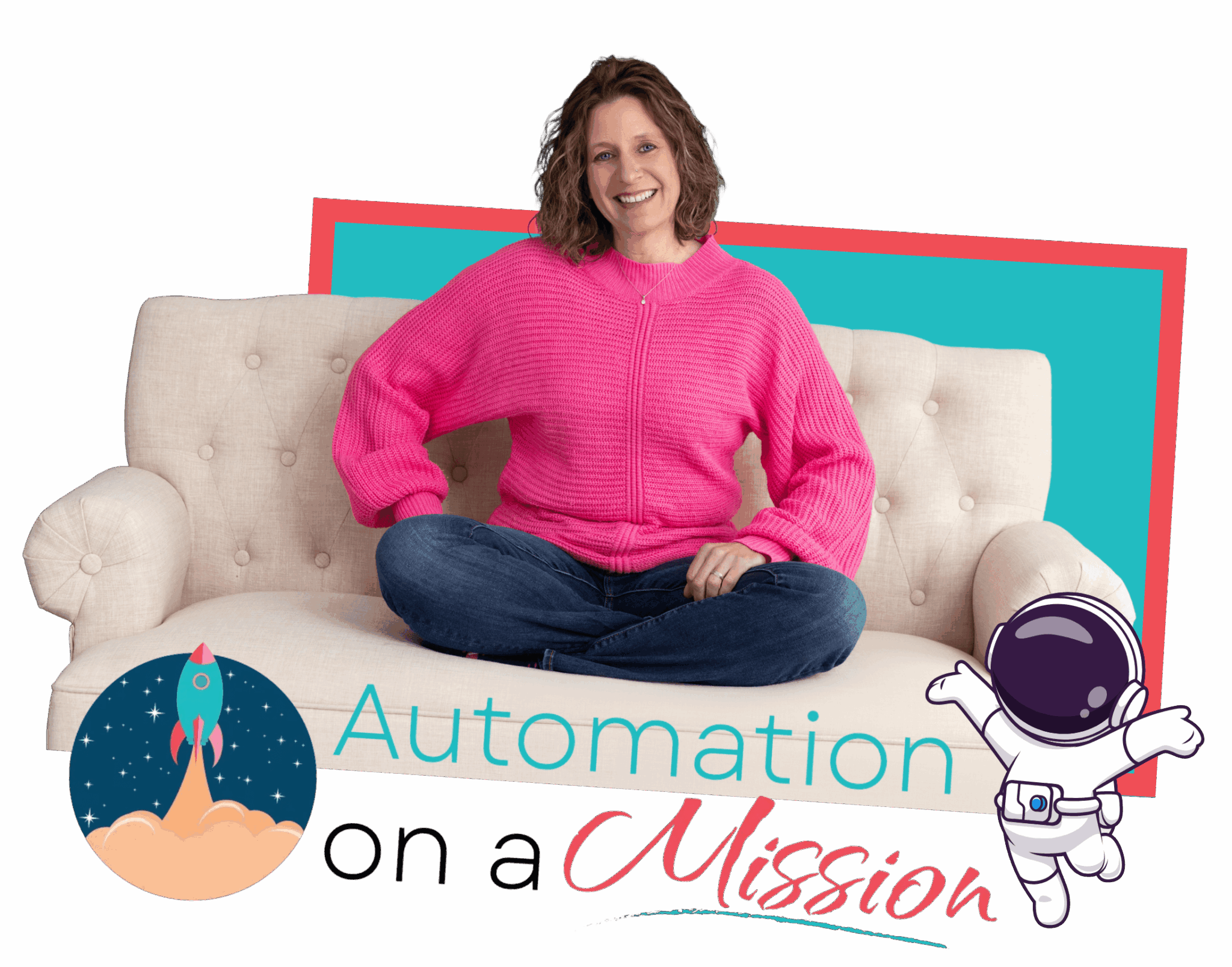

We were lucky to catch up with Christi Stafford recently and have shared our conversation below.
Christi, appreciate you joining us today. Folks often look at a successful business and imagine it was an overnight success, but from what we’ve seen this is often far from the truth. We’d love to hear your scaling up story – walk us through how you grew over time – what were some of the big things you had to do to grow and what was that scaling up journey like?
I didn’t scale by building funnels. I scaled by getting punched in the face—repeatedly—until I figured out how to stop walking into the same right hook.
When I started, I was a solo act doing sales and marketing automation work on Upwork. It was high-risk, high-effort, and wildly unpredictable. It gave me access to a wide range of clients across different industries, but that was also the problem—every project was a reinvention. No standardization. No repeatable systems. And absolutely no margin to breathe, let alone grow.
I tried to scale the obvious way—by hiring. I looked for people who had the technical chops to help with the work, but I kept getting it wrong. Over and over again. They could “do the job” on paper, but they couldn’t connect with our clients. They didn’t have the empathy, intuition, or adaptability that our work requires. They lacked heart. And heart is not optional when your business is built around helping overwhelmed small business owners find clarity and momentum.
Then I found Amber. She wasn’t someone I was looking to hire—she was working as a VA for someone who was considering signing on with Automation on a Mission. She happened to be on a sales call and partway through, she cried. She was so moved by what we were doing and who we were doing it for. That moment told me everything I needed to know.
She didn’t have a background in CRMs or automation, but she had a deep sense of care and a strong desire to learn. I hired her because of that. Because I finally understood: you can teach someone how to build a workflow, but you can’t teach them to care about people.
That decision—hiring for alignment instead of skill—changed everything. I slowed down long enough to get clear on one audience, perfected how we serve them, and trained Amber on that specific process. When I stopped trying to make her “another me” and instead equipped her to serve in a focused, client-centered way, training got easier. Delegation got easier. Results got better. That was the moment we started actually scaling.
The real turning point came when I read Clockwork by Mike Michalowicz and discovered the idea of the Queen Bee Role—the one core function that keeps your business alive. For us, that was clear: implementing and maintaining automations that power the customer journey. Everyone on the team now knows what that role is, and they know exactly how their work contributes to protecting and prioritizing it.
Today, Automation on a Mission isn’t just a platform or a tool. It’s a tightly run operation built on empathy, clarity, and systems. We didn’t scale by doing more. We scaled by doing less, better. By focusing on what matters most, teaching others how to protect it, and building from there. There was nothing overnight about it—but every painful lesson built a business that’s now designed to last.
Christi, love having you share your insights with us. Before we ask you more questions, maybe you can take a moment to introduce yourself to our readers who might have missed our earlier conversations?
I’m Christi Stafford, founder of Automation on a Mission. We’re a sales and marketing automation company, but more than that—we’re a lifeline for small business owners who are tired of duct-taping together tools, losing leads, and wondering why growing a business has to feel so hard, so lonely and so overwhelming.
When I started my business back in 2014, I didn’t set out to be an entrepreneur. I had just finished my master’s degree and wasn’t totally sure what I wanted to do. I had joked for those two years in school that I was going to leave my nonprofit job and push the coffee cart for google and double my salary. Turns out that wasn’t the best use of my mental energy. I reached out to my university for ideas and someone there suggested consulting. One thing led to another, and I ended up starting a business that merged my obsession with systems, my love of helping people, and my complete inability to leave broken things alone.
At the time, the tools that existed for small businesses were clunky, expensive, and hard to use. I used them anyway. I bootstrapped and Googled my way through things and struggled a lot. I learned the hard way what worked and what absolutely didn’t. And through it all, I became obsessed with one question: Why is there no easier way to do this? And a commitment to make it easier for others.
That question turned into a mission: to reduce the number of small businesses that fail and to make entrepreneurship less lonely. That’s where Automation on a Mission was born.
Today, we offer an all-in-one platform that combines the tech, the strategy, and the support to help small businesses automate their entire customer journey. It’s built on GoHighLevel (white-labeled as our own), but what sets us apart isn’t the software—it’s what we do with it. We don’t just hand you a tool and say “good luck.” We build it with you. We help you understand how to generate leads, follow up, close sales, and stay in touch with your audience consistently. We show you the roadmap and walk it with you. And when we’re done, you’ve got the SOPs, the automations, and the confidence to keep going—with or without us.
We serve solopreneurs and small teams—primarily women—who are sensitive, intuitive, wildly gifted at their craft… and completely exhausted trying to hold it all together behind the scenes. Coaches. Creatives. Service pros. Wedding planners. They’re not “tech people,” but they’re smart and capable—they just need tools that don’t require a PhD to figure out.
What I’m most proud of? That our clients feel seen. That we’ve created a space where asking questions isn’t embarrassing. That we’ve helped people save thousands of hours, close more clients, and—honestly—feel excited about their business again.
What sets us apart is that we’re not here to sell you on hype. We’re here to build something that works. We’re strategic, honest, and obsessed with follow-up (because that’s where the money is). We believe in automation with heart. In teaching you how to build a business you don’t have to escape from. In making entrepreneurship easier, more human, and a whole lot less lonely.
That’s the work I care about. That’s the brand I’ve built. That’s what we’re on a mission to do.
We often hear about learning lessons – but just as important is unlearning lessons. Have you ever had to unlearn a lesson?
When I was just starting out, I had the opportunity to work behind the scenes with a coach on her sales, marketing, and automation strategy. She was well-known, successful, and constantly teaching women to “charge what you’re worth” and “never give advice for free.” I heard her say—over and over again—that good advice costs money, and that if someone isn’t paying, they’re not valuing you.
And here’s the thing: I didn’t totally agree with her—but I still absorbed the message.
At the time, I was broke. Like, really broke. I didn’t come into entrepreneurship with a trust fund or a 6-month runway. I was just trying to figure it out. But because I believed her, I also believed that asking for help without money was wrong. That no one would help me unless I paid. That the only way to access real support was to buy it. And since I couldn’t afford it, I stayed stuck.
That mindset haunted me. It kept me isolated. It made everything feel harder than it had to be. And it wasn’t until years later that I realized: I had to unlearn the belief that generosity was bad business.
Today, my entire brand is built on the exact opposite idea.
I believe help should be available before it’s profitable. I believe people should feel safe asking questions without having to open their wallet first. I believe you can build a thriving, scalable business without exploiting someone else’s vulnerability.
And I’ve built Automation on a Mission with those values baked into everything we do—from our transparent pricing to our member community and trainings, to the way we overdeliver in our support. Yes, we make money. Yes, we value our time. But we also remember what it felt like to be on the other side of that conversation—desperate for clarity, and made to feel like you didn’t deserve it unless you paid in heaps first.
That coach taught me a lot—but not all of it was worth keeping. Unlearning that lesson made me a better business owner, a better leader, and honestly, a better human.
Do you have any stories of times when you almost missed payroll or any other near death experiences for your business?
I’ve been in business for almost 12 years, but Automation on a Mission officially launched about four years ago. From day one, I was clear on our mission: to be a safety net to prevent entrepreneurs from failing and our promise to has been to make entrepreneurship easier and less lonely for small business owners. I wanted to create a solution that gave them everything—all the tools, training, and support they needed to automate their sales and marketing without going broke.
So I created what I thought was the perfect entry point: an affordable, all-in-one platform + a self-guided course that walked them through how to automate their customer journey. I hosted weekly live calls and trainings. I poured everything into it.
But after about a year and a half, I did something most business owners avoid: I audited the results. I looked hard at what was actually happening—not just the signups or revenue, but outcomes. And what I saw hit me hard.
Clients were leaving. Not because they didn’t believe in what we were doing—but because they hadn’t implemented it. The ones who did show up to our trainings were often taking notes like it was the first time they’d heard the message… even though I’d taught it six months earlier. They weren’t progressing. They were stuck. And I realized:
I hadn’t made entrepreneurship easier. I’d given them another job.
Now they had to become not just marketers and salespeople—but also tech experts. And for most of them, that was just too much. They didn’t build their customer journeys. They didn’t get the transformation we promised. And that meant we were out of alignment with the very mission that started it all.
So we did something that felt unthinkable at the time: we stopped selling.
We turned it all off. No new enrollments. No new sales. We went quiet and completely rebuilt the offer from the ground up.
Today, no one can come into Automation on a Mission without us doing the heavy lifting first. We build their website. We set up their automations, emails, products, services, calendars—all of it. We teach them how to use the system and why it matters as we go. And yes, we still offer live trainings and support… but now, they’re showing up with systems already working. They’re using it. They’re getting results. They’re building momentum.
Was it scary? Yes. Was it expensive? Absolutely. But it was also the best decision we could have made. Because now, when clients come in, they actually succeed. We didn’t just fix the offer—we protected the mission. And we came out stronger because of it.
Contact Info:
- Website: https://automationonamission.com/
- Instagram: https://www.instagram.com/automationonamission
- Facebook: https://www.facebook.com/automationonamission
- Linkedin: https://www.linkedin.com/in/christinorfleetstafford/
- Youtube: https://www.youtube.com/channel/UCktFpyxuazhs6geMyKgiziw