

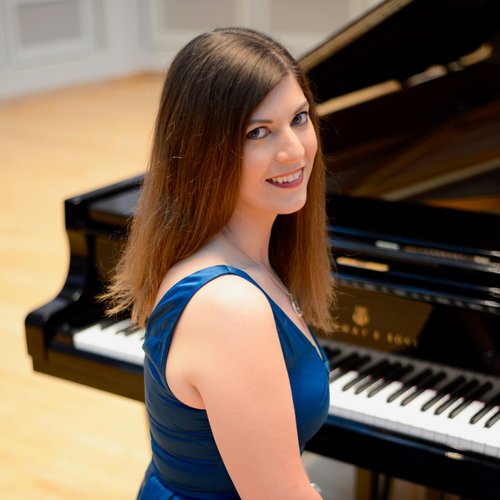

We were lucky to catch up with Nicole DiPaolo recently and have shared our conversation below.
Nicole, thanks for taking the time to share your stories with us today Did you always know you wanted to pursue a creative or artistic career? When did you first know?
My first taste of a potential professional life in music came at the first piano studio recital in which I played. I was 6. Of course, this is not necessarily a pre-professional occasion for most piano students. However, we’d run out of time to learn London Bridge as my 2nd piece, so my teacher decided I could play a little piece I’d written. My piece’s warm and welcoming reception from the audience got me hooked, so to speak! (I’m sure it was more interesting for them to hear something new than yet another Mary Had a Little Lamb, to be fair.) From that moment, I knew music composition would be a big part of my professional life, and certainly playing as well, although it took much longer for me to discover collaborative piano as a performance career path.
Awesome – so before we get into the rest of our questions, can you briefly introduce yourself to our readers.
I am a classical pianist (and sometimes harpsichordist), composer of concert and educational music, fully online teacher, teacher educator, competition judge, and conference presenter currently based in Nashville, TN. My online studio, Studio DiPaolo, is focused on teen and adult learners of all levels and offers one-on-one lessons through Google Meet in classical piano performance, collaborative piano (that is, accompaniment), modern and historical composition, music theory from beginner to PhD level, and even marketing/business consulting for fellow music teachers looking to move their studios online.
My specialties as a teacher include adult students, teaching students with hypermobility conditions like Ehlers-Danlos Syndrome and Marfan Syndrome, teaching neurodivergent students using methods that honor their neurotypes rather than attempt to change them, rehabilitating poorly learned physical technique, teaching very high-level music theory, and teaching historical composition using authentic materials handed down from 18th-century masters in Italy, called partimenti. I also speak Spanish and am happy to teach in Spanish if the student is more comfortable with that.
The field of adult-student pedagogy, or andragogy, is particularly neglected in piano teacher training and in educational composition, and my studio fills that gap by teaching adults in the ways they learn best, using repertoire they are passionate about, and by writing music that speaks to the adult heart and mind while also teaching fundamental musical skills. Hypermobility is also a sadly under-studied problem among musicians, and the teacher training courses I’ve developed for working with hypermobile students have been warmly received—and even attended by non-pianists whose own instrumental teaching fields simply haven’t addressed hypermobility issues yet.
Some of the things I’m most proud of are my pedagogical music collections: Venturing Beyond, a set of twenty early-intermediate piano pieces in keys that have 3 or more sharps/flats in the signature and challenge adult students’ usually strong reading skills while easing them into technical challenges with genuinely serious-sounding and attractive music; Vignettes, a set of five late-intermediate Impressionist-style piano pieces that prepare students to meet the challenges of Maurice Ravel’s music; and my Nocturne in G# minor, which earned publication in EVC Music’s collection 22 Nocturnes for Chopin and has since been performed and recorded throughout the US and Europe.
I’m additionally proud of the awareness I’ve brought to the unique technical and cognitive development needs of students with hypermobility conditions like Ehlers-Danlos Syndrome, and how many teachers have remodeled their approach toward this student demographic after attending my “Teaching the Hypermobile Piano Student” Zoom courses. As someone with hypermobility issues myself, and as someone who needed a full technique rebuild starting at age 18, I know how important a hypermobility-friendly technical approach is for injury prevention and longevity in one’s playing career (or hobby). There’s simply no room for error because a hypermobile student will get injured nearly immediately if the technical approach isn’t 100% sound from Day 1. Our bodies are simply less durable than a typical person’s.
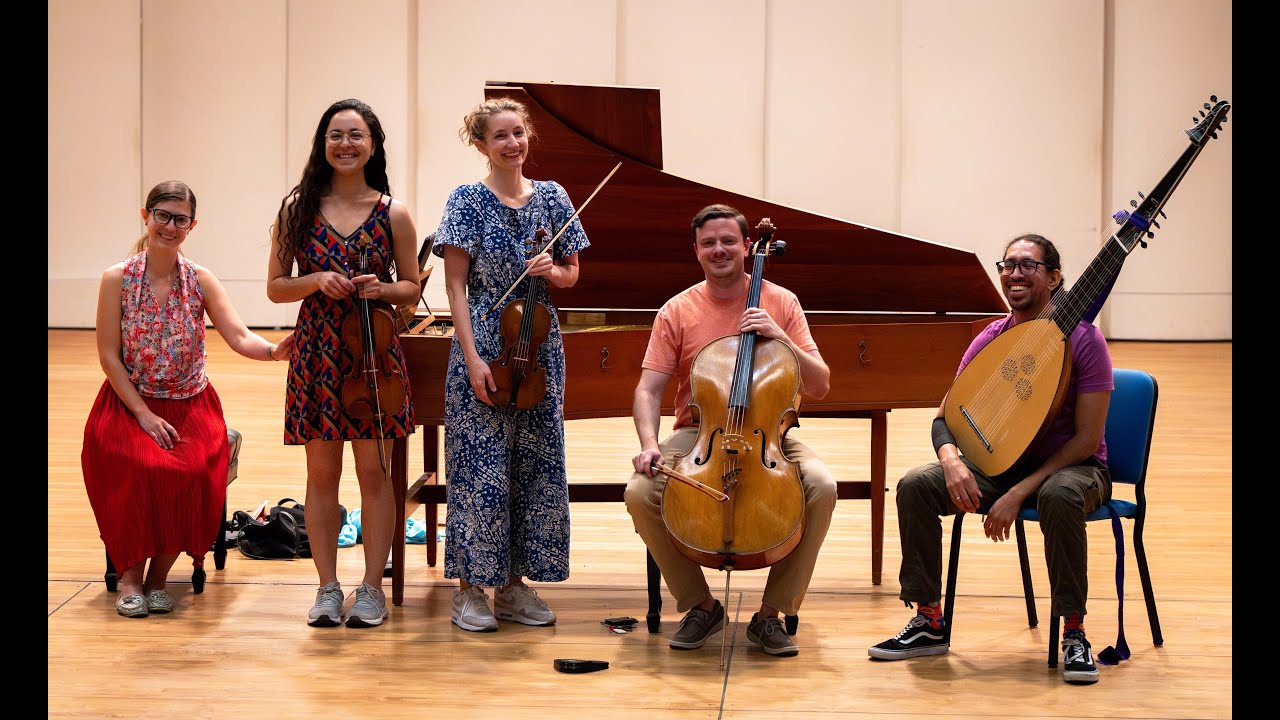
As a performer, I’m proud of my ability to step in on short notice and make musical events successful and meaningful. A few years ago I was asked to step in on about 30 minutes’ notice to replace an indisposed friend and accompany a cellist on part of the Dvorak Cello Concerto, which is known to be a rather beastly project. The cellist was fantastic, we put it together in a couple run-throughs, and he won the competition in his division. Last year, I was also asked to replace a harpsichordist on about 10 days’ notice for a set of Baroque music concerts in New Mexico and in El Paso. I was able to put the music together quickly and help create a fulfilling musical experience—and it didn’t hurt that my husband and I turned it into a vacation and had a blast! (I was also very excited to see a cactus in person.)
Finally, I am proud of my students! For just one example, earlier this year I worked with a prospective graduate student in music theory who realized that the grad school offerings in her home country didn’t meet her needs, and she wanted to apply to some music theory PhD programs in the US. Thanks to our work together, which culminated in a seminar-length analytical paper and a successful music theory conference talk, she gained admission to 7 excellent PhD programs with full fellowships. She is now attending a highly respected institution for her PhD, even as a nonnative English speaker who had no previous experience studying at predominantly English-speaking institutions. I’ve had other music theory and composition students go on to top graduate programs, write important books, and establish their own studios, but I’m equally proud of those students who are experiencing pain-free piano playing for the first time with their elementary-level literature because we have successfully reformed their physical technique.
Overall, my goal is to find underserved facets of piano/composition/music theory pedagogy and fill those gaps as a teacher as thoroughly as my knowledge and skills allow.
We’d love to hear a story of resilience from your journey.
As you might have gathered from my biographical question, I had to have my piano technique completely rebuilt from the bottom up starting at age 18. I’ll back up a few years and provide a little background as to why that needed to happen and how I navigated my undergrad and graduate degrees in music thereafter.
From the beginning of my piano studies (just under age 6) through high school in suburban Detroit, I worked with various teachers, but at that time hypermobility was not a very well-known phenomenon, and even high-end teachers would not necessarily have known that hypermobile students need a totally different approach to piano technique. So even when a teacher did address technique with me (not all did), I was always being told that I needed to “curve my fingers” and “hold an apple/lemon/egg/insert-produce-item-here” for healthy technique. Teachers at the time were largely unaware that hypermobile hands will simply look different at the piano and that there is no single static hand shape in good piano playing more generally. There was also no awareness that people with hypermobility disorders often experience dyspraxia, which impacts our ability to feel where our various body parts are occupying space. This can place obstacles on technique development because it impacts the ability to play without looking at one’s hands, and it can even worsen with time, requiring increasingly creative accommodations like compression-tight clothing on the arms and lowered music racks that allow the pianist’s peripheral vision to track the hands while playing.
The first time I really gained an awareness of the need for a technique rebuild was at age 15 in 2001, when I was studying with a respected graduate student instructor at Michigan. He said my technique skills would need to double in order for me to gain admission to the piano performance degree programs I’d been eyeing. But he had not been trained in hypermobility-honoring technique either, because such a thing did not yet exist except among a very few people. Realizing that I didn’t have a very realistic shot of gaining performance degree admission, I turned my college degree program preparation efforts toward composition and theory. I had been composing since my first year of lessons and had been encouraged in these efforts by several important people, including (long story) the young pop star Britney Spears.
At the age of 18, I graduated out of the precollege program and was connected with Michele Cooker, a technique specialist who had worked with Gyorgy Sandor, himself a great-grandstudent of Franz Liszt. Since she was also local to Ann Arbor, I was able to work with her while pursuing my degree in music theory at the University of Michigan’s School of Music, Theatre, and Dance, and I additionally studied with Prof. Louis Nagel on the faculty there. While they are very different personalities, they ended up forming the “dream team” that allowed me to play increasingly high-level repertoire while rebuilding my technical approach.
Lured by the possibility of a stable tenure-track college teaching career, the ability to engage with beautiful 18th and 19th-century music all the time, and (full disclosure) a fat scholarship/fellowship offer, I pursued graduate degrees in music theory at Indiana University’s Jacobs School of Music, figuring that I could continue learning solo piano repertoire and apply that knowledge in the classroom. But as the 2nd or 3rd largest music school in the nation, IU is such a huge and wonderful place to explore various musical opportunities, and fairly soon I was discovered by the voice department. Turns out my particular skill sets as a composer, arranger, music theory and ear-training TA, and small-handed pianist already needing to alter my repertoire all the time set me up to become a skilled accompanist for singers. As I like to joke, the voice department adopted me!
After I finished my PhD coursework in music theory, I jetted off to a yearlong pair of cruise ship performing contracts as half of the violin-piano Duo del Mare with my friend Amy Lee, replacing a pianist who decided to attend grad school instead. It was during these contracts that I realized that I could actually make a go of a performing career. We had a blast, I learned a ton of violin/piano repertoire, and I returned to Bloomington with a renewed confidence in pursuing piano accompaniment, or as it’s often called in the US, collaborative piano. Since IU had not yet established its own collaborative piano degree program (they since have), I continued to freelance widely for a few more years while building a private piano studio for teens and adults, the demographic I’d gotten most comfortable with as a college music theory TA.
And as they say—the rest is history. My husband’s teaching posts as a music theory professor have since taken us to Cleveland and now Nashville, and in both areas I’ve enjoyed some wonderful performing opportunities as a professional collaborative pianist. I’m not sure Michele or Dr. Nagel would’ve predicted this for me when I came in as an undergrad badly needing a technique overhaul, as much as it’s a running joke that Dr. Nagel’s piano students seemingly always become successful accompanists! I hope my story reinforces the idea that sometimes a path to a performing career can be a winding one, and we never know which of our young/new piano students will end up pursuing music professionally—therefore, we must offer each student our absolute best, as if we know they are on their way to Curtis, Eastman, or Juilliard. Who knows—they might be!
How did you build your audience on social media?
This discussion may look a little different since I don’t use social media in quite the same way that readers might be thinking of. I don’t even have a Tiktok account! But I’ll detail my strategy below.
As an incoming student at Michigan in 2004, I was in the earliest cohort to be able to sign up for Facebook (back then “thefacebook”!) with my .edu email address. I literally signed up on a desktop computer in my high school’s computer lab during yearbook staff time! Therefore, when Facebook groups were rolled out and began to allow members from various universities, I was able to join a lot of great ones right away.
One of the first groups I stumbled upon had the cheeky title “We Bang Steinways!”—a group for fans of Steinway pianos. It evolved into the premier online gathering place for serious collegiate and other young pianists, and it was an important resource for professional development when I hadn’t had too many opportunities for that in the past (my parents are not musicians and really had no idea how to connect me with professional development resources). The friends I made in that group in 2005 have remained some of my closest “piano friends” and colleagues, and one such friend, Charles Szczepanek, even featured and recorded my Nocturne in G# minor on his Youtube channel last year.
In addition to “WBS,” I got involved in administrating and even establishing my own music-related Facebook groups. One of my group “babies” is The Collaborative Pianists’ Community, to date the premier group for piano accompanists on Facebook and an important professional development resource within the field on a larger scale. Administrating this group has made my name more prominent in the collaborative piano field than it would have been, and I’ve met innumerable friends and colleagues through it. I am also a co-administrator or moderator of groups like Composers for Performers, Performers for Composers (effectively a composer-performer matchmaking service), Adult Piano Learners (a group for adult piano students of any level), and The Art of Schemata (a group dedicated to specific mid-18th-century ways of teaching composition and improvisation). By participating actively in these and other groups, I’ve established myself as a trusted voice of authority, good advice, and fair administration practices. This means that when these groups’ members, and perhaps those members’ friends, see my name, they automatically associate it with something trustworthy and knowledgeable. That branding, built over years of trust-building, is more powerful and enduring than even the slickest ad campaign.
I admit that I barely dabble in Instagram and X, and I don’t even use Tiktok at all. My YouTube channel is active but small. However, the type of generous information-sharing that draws people into my studio is much more difficult to maintain on these less text-based platforms, so I don’t currently feel the need to lean into them.
As I mentioned in my biographical discussion, I also find that one of the most compelling ways to grow an audience is to figure out where there are holes in your industry that you can fill. I love finding and then filling odd niches that I’m qualified to fill, like andragogy, hypermobility-friendly pedagogy, and historical improvisation. Simply becoming among the best in the world in an odd subfield can be a powerful business booster, provided you have the ability to reach clients/students around the world. I certainly couldn’t fill an entire local-only studio by teaching exclusively hypermobile adults who are also interested in historical improvisation. But it helps to be the authority in a given field so that anyone who is interested in that field will automatically consider your name when looking for instruction in it. Then you just need a decent social media presence and a website with decent SEO.
Contact Info:
- Website: http://studio-dipaolo.weebly.com
- Instagram: studio.dipaolo
- Facebook: https://www.facebook.com/dipaolopiano
- Linkedin: https://www.linkedin.com/in/nicole-dipaolo-3b8a1147/
- Twitter: https://x.com/n_elyse
- Youtube: https://www.youtube.com/user/DiPaoloPiano
- Other: artist website: http://ndipaolo.musicaneo.com
Accessible Accompaniments playable opera aria reductions for auditions and recitals: http://accessibleaccompaniments.weebly.com
Image Credits
Headshot – Julian Morris PhotoTwo harpsichord shots – Daniel Vega-Albela