

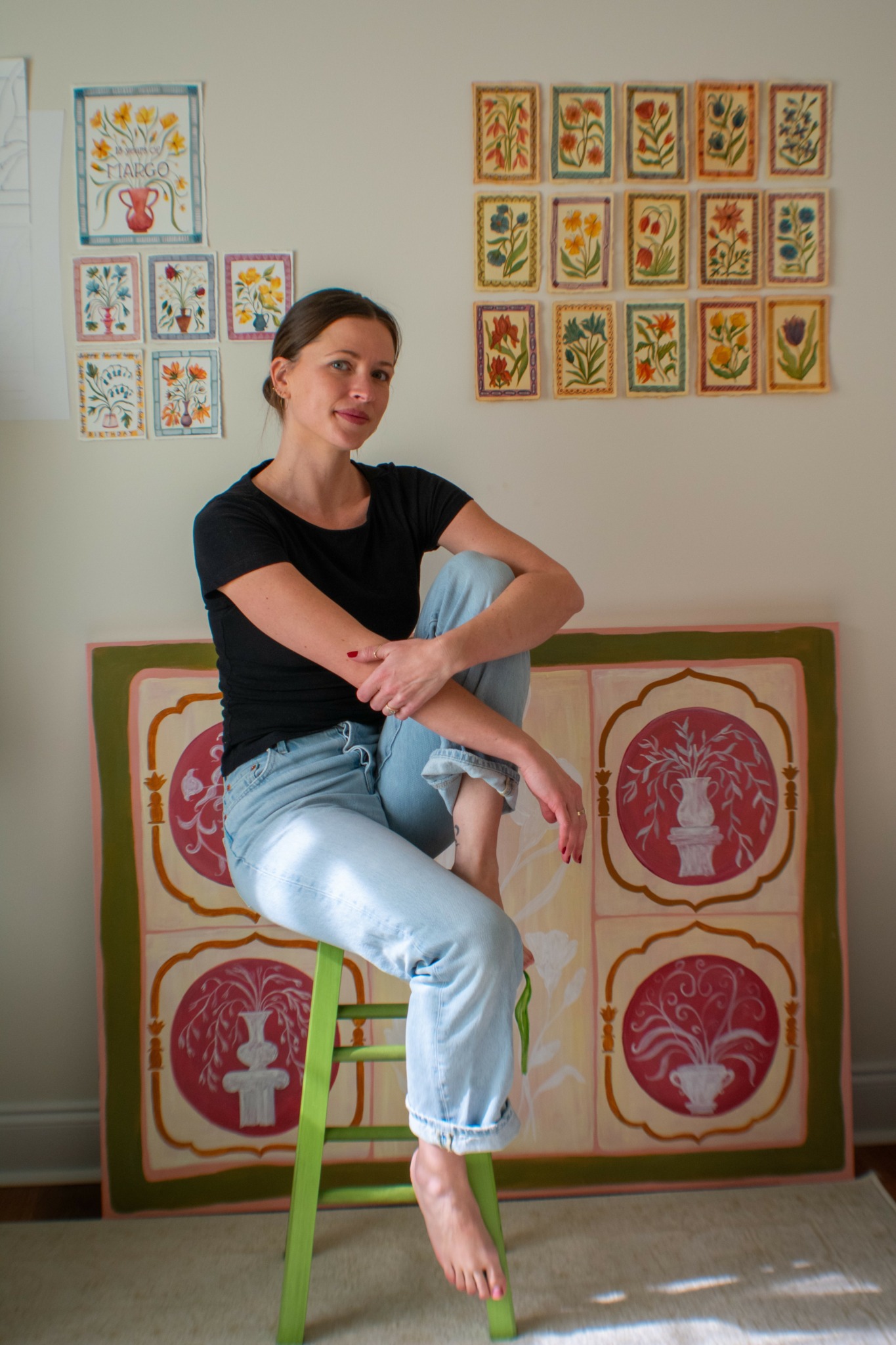

Alright – so today we’ve got the honor of introducing you to Morgan Koewler. We think you’ll enjoy our conversation, we’ve shared it below.
Morgan, thanks for taking the time to share your stories with us today Did you always know you wanted to pursue a creative or artistic career? When did you first know?
I actually came into the profession of teaching elementary art a bit unconventionally. I knew I wanted to be a teacher from the minute I understood what school was. I was that kid who made everyone play school with me – my sweet grandma would be my “student” for hours when I was a little girl.
When it came time to choose a college path, I briefly considered nursing because people told me I’d never be happy in education. A couple of days of shadowing nurses showed me very quickly that health care wasn’t the best fit for me; I cried anytime someone was sick.
At some point, I ended up asking my high school art teacher if she thought I could be an art teacher. I’m still not sure why I did this, because I had no experience with art before high school, and I really only took the class because I needed the credit. Her answer was, “You wouldn’t be the worst, you wouldn’t be the best.” Oddly enough, that was all the encouragement I needed to pursue an Art Ed degree.
After college, I had convinced myself I wasn’t good enough at art to teach it, so I waited tables, bagged groceries, and traveled until I couldn’t take it anymore; I needed something more fulfilling. Eventually, I connected with a former colleague who gave me a pep talk and all the resources I needed to take a chance on teaching. At my very first interview, I was offered the job on the spot.
Those first two years teaching elementary art in College Park, Atlanta, were so incredibly challenging. Even with my education behind me, I had no idea what I was doing and was trying to connect with a community I had no experience with. I read every book, listened to every podcast, watched every video, and reached out to any art teacher willing to share advice. I took every small win as fuel. Slowly, day by day, I became the kind of teacher I had hoped I could be, and I realized I couldn’t imagine doing anything else.
It wasn’t until my fourth year in the classroom that I finally found the confidence to start making and sharing my own work. And honestly, it’s only been within the last seven months that I’ve really taken myself seriously as an artist. It’s incredible how the universe starts supporting you when you get grounded in your intentions. I began dedicating all of my spare time to painting and learning how to share my work with people. I devoured articles, watched hundreds of YouTube videos, listened to every podcast I could find, and asked questions to any artist willing to talk to me.
I’ve applied to markets and galleries, been denied, refined my approach, applied again, and eventually started getting yeses. The momentum hasn’t stopped since. Now I get to do this meaningful, overlapping work: serving my community and feeding my soul through teaching my students and my personal work. I feel genuinely inspired and grateful every day.
Awesome – so before we get into the rest of our questions, can you briefly introduce yourself to our readers.
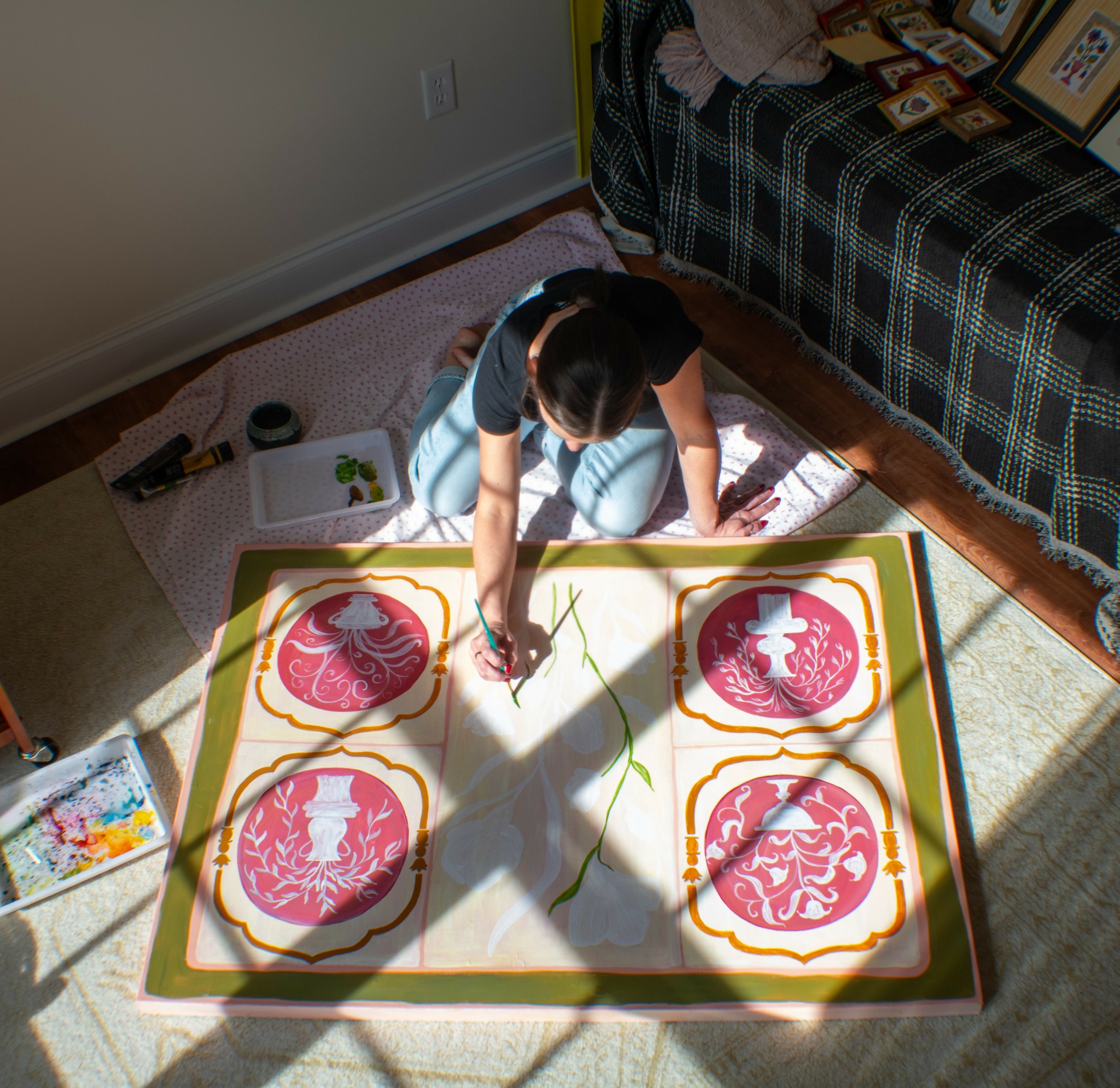
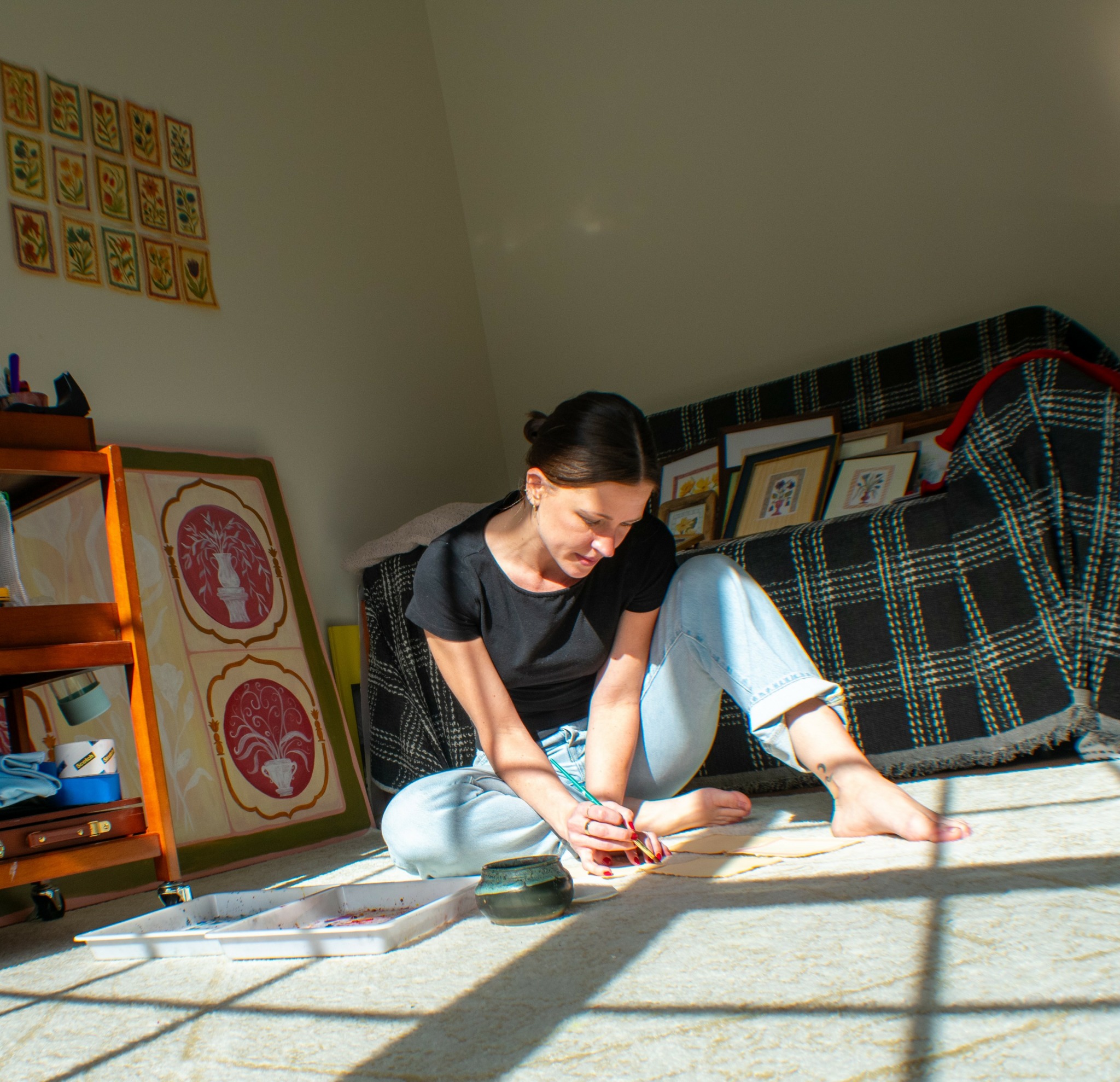
As I mentioned previously, I’m a visual artist and elementary art teacher in Charleston, SC. I’ve been teaching for seven years, and about seven months ago, I started sharing work under the name Dream Field Studio. What started as casually painting when I got home from school has become a space I don’t feel like I can live happily without. Dream Field Studio has grown into my haven – where I can cope, explore, study, learn, meditate, and lean into my intuition and personal narrative. I’ve learned so much through the paintings that I’ve been making, not just about the materials and application, but about myself, as well.
In my classroom, I am constantly inspired by my students; by their ideas and the work they create, their excitement and wonder at the processes we explore, and by how they just absorb information. Sometimes I can’t believe that my job is to spend all day hanging out with the coolest kids, making art, learning new things with them, and seeing how far we can grow and challenge ourselves together. The kids push me to keep expanding who I am as a person; I bring this with me to my personal art-making practice.
At its core, my work is about capturing feelings and memories – nostalgia, daydreams, and experiences I need to process. In my mind, Dream Field Studio feels like that moment in a coming-of-age movie when the main character realizes she has finally found her group of outcasts who understand and accept her, or finally feels like she understands who she is and what her place is. I’ve been navigating some health-related challenges recently that feel really unfair and discouraging, and having this creative space has been pivotal in my understanding of the world and my place in it.
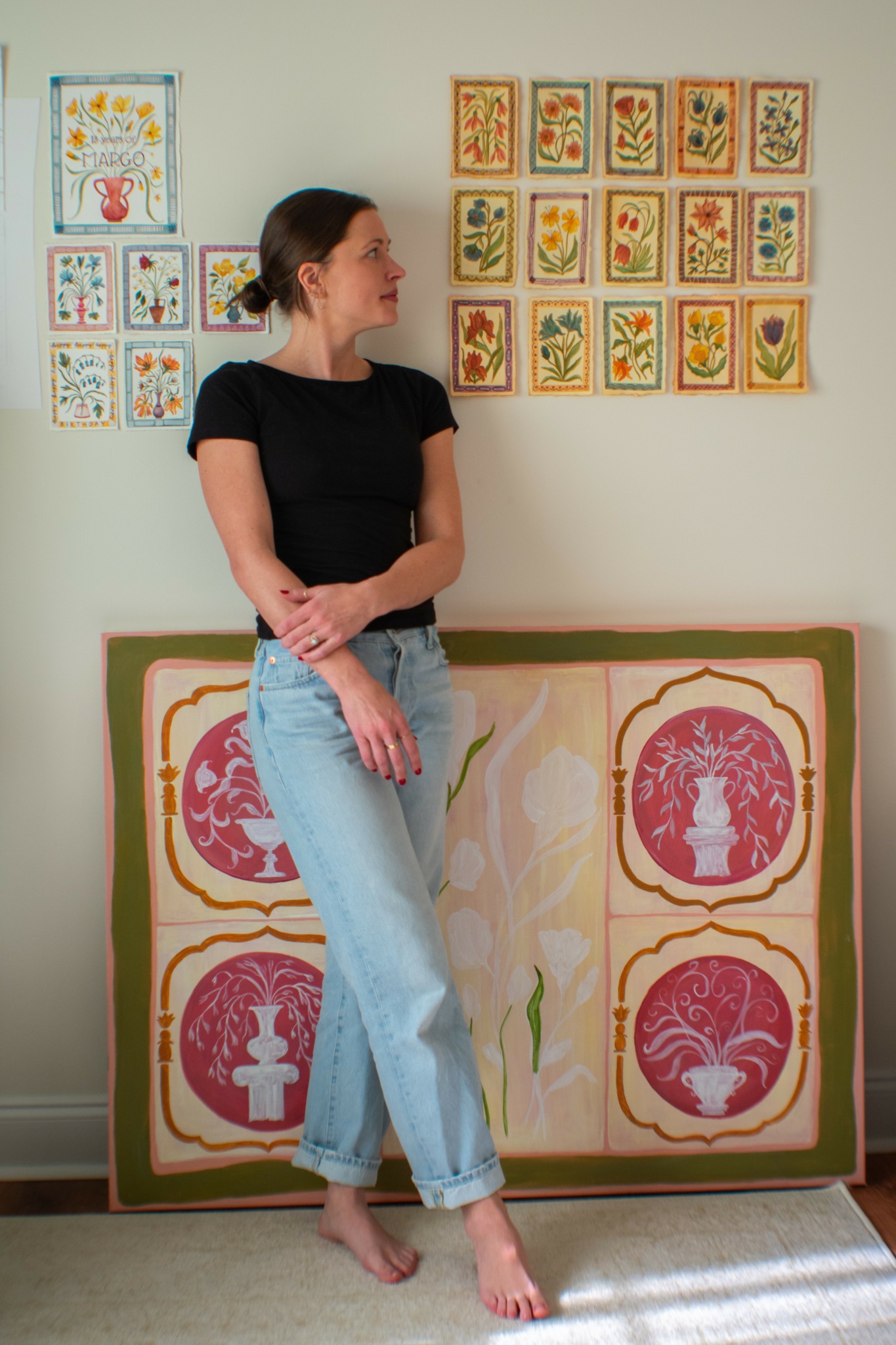
I’ve always been captivated by flowers. Obviously, because they are beautiful, but also because they’re a comforting metaphor for life. They bring joy, hold pain, celebrate, and mourn. They germinate, grow, bloom, their season ends, and the cycle continues. They make the perfect “subjects” to meditate on. I often include vessels in my paintings when it intuitively feels right; the vessels symbolize the flowers’ home – their environment, support systems, families, friends, or simply the Earth that holds them.
My hope is that my work finds the people who need it most. People who need something interesting to look at, something that brings them peace or joy or curiosity. People who need a gift that says “I’m so sorry this happened,” or “I love you,” or “Congratulations.” I want them to look at my work and feel a sense of home, no matter what is happening in their lives.
I’m most proud of the journey that has led me to where I am today. I’m proud that I jumped into this teaching career despite all my doubts, and that I decided to share Dream Field Studio with others despite my anxiety around being seen. A colleague who encouraged me to try teaching once said something so simple that I still repeat in my head. I was worried that being the school art teacher would mean building sets for plays or decorating the school – things that would feel like they were “my work,” which I definitely didn’t feel confident in at that time. I said, “But what if I have to like… build a boat or something?!” And she replied, “Then we’ll build a boat.”
You just do it. And you rely on your community to help you.
I really believe we’re here to take care of each other and to create. I’m so grateful that I get to do both of those things full-time.
What can society do to ensure an environment that’s helpful to artists and creatives?
I want to start by saying that art is for everyone. Art strengthens the ecosystem because it promotes connection and community. Some art speaks to social or political issues, some is a call to action, some challenges you, and some exists simply to bring a sense of peace or to help you feel seen and understood. When artists share their work, they’re calling a community together and giving people a chance to find their own sense of belonging, even if that commonality comes from our differences. By supporting artists, you’re supporting the people who are actively working to build and shape our communities. That’s important work.
Supporting artists can look like buying from small businesses instead of large corporations, attending shows, encouraging young artists, or simply telling someone that their work made you feel something. On a larger scale, it can look like funding public art programs, prioritizing arts education, creating affordable community spaces to gather and create, or hiring local artists to paint murals and contribute to the visual identity of your town.
I also believe that supporting artists, and thus supporting the ecosystem, includes creating in your own way, even if you never share it or only share with a few people. I truly believe we’re all here to create. Keeping a journal of your thoughts, trying a new hobby, cooking a new recipe, studying something new, joining a book club – each of these things helps you feed your soul and show up more authentically in the world. When you create and share pieces of yourself with others, you are an artist! You are doing exactly what artists do – bringing people together, fostering connection, and contributing something meaningful to the world around you.
For you, what’s the most rewarding aspect of being a creative?
The most rewarding part of being an artist, for me, is the connection it creates, both with myself and with others. Making art helps me process my feelings, make sense of my experiences, and slow down enough to really study and absorb the world around me. I found myself getting so caught up in things I cannot control and assigning meaning and emotions to them; making art has really helped shift my perspective and re-center my priorities.
What I didn’t expect was how I would feel when I started sharing my art with others. It’s a feeling I’d never felt before and is honestly hard to describe. Recently, people have told me they’ve gone out of their way to see my work in person, that they’re starting collections of my pieces, that my paintings make them feel happy or comforted, or that they have a friend who would “just love this piece.” The honor and gratitude I feel are unlike anything I’ve ever experienced. To feel as though my art resonates with people makes me feel so much less alone, so connected to people I may or may not have even met. So, in short, it’s the connection that is the most rewarding aspect.
Contact Info:
- Website: https://studiodreamfield.com
- Instagram: @dreamfieldstudio
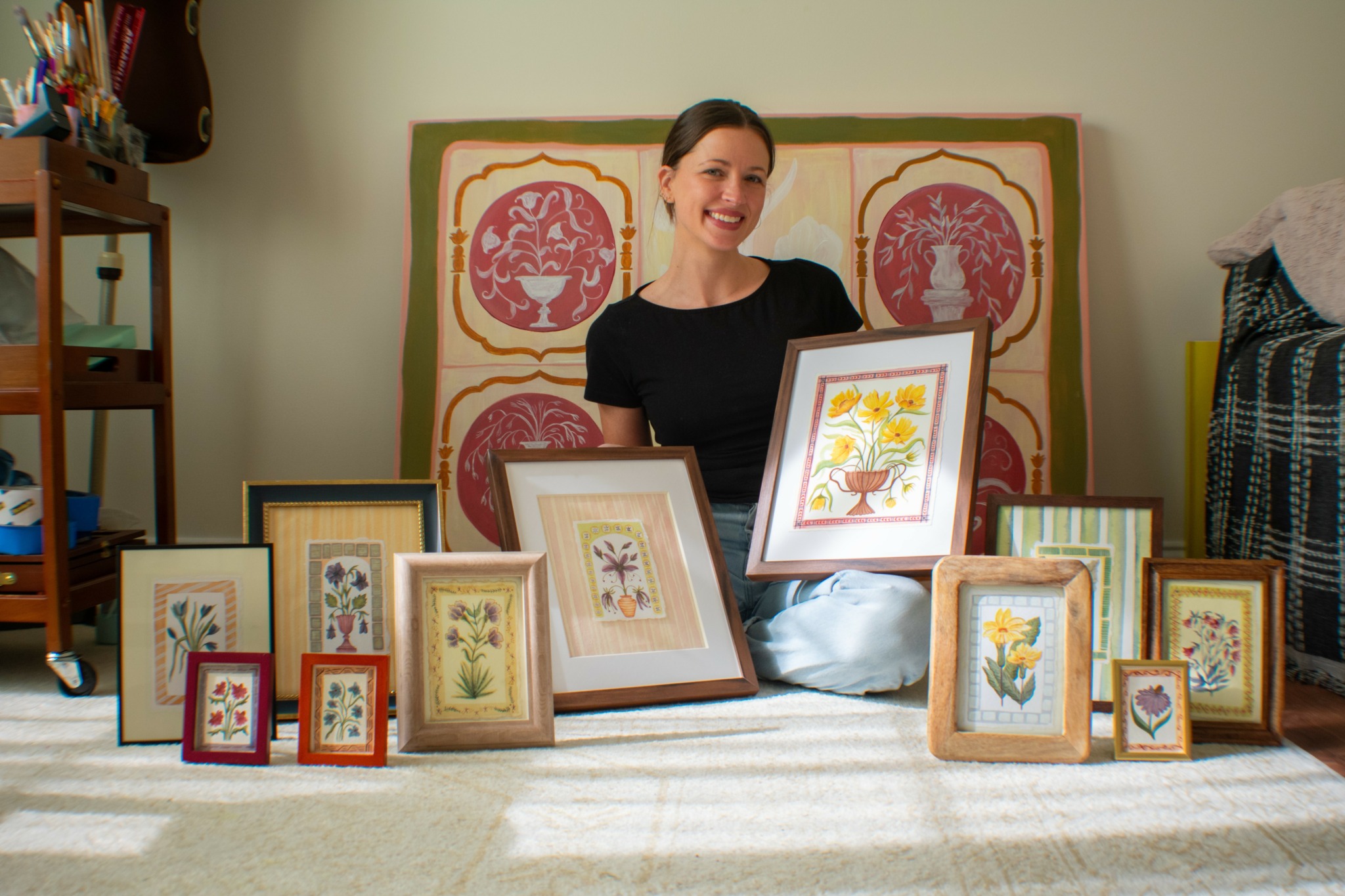
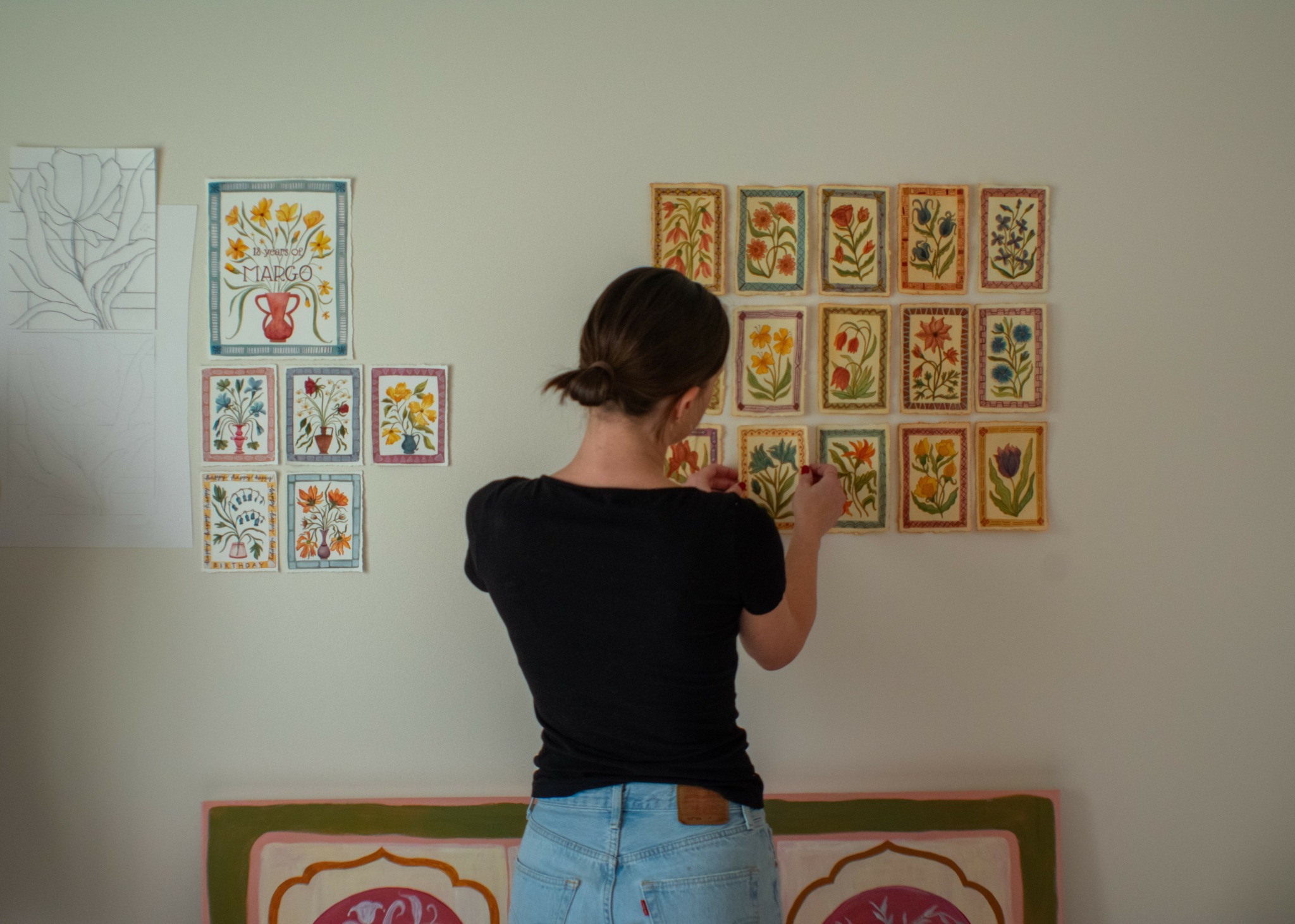
Image Credits
My husband, Ben.