
We caught up with the brilliant and insightful Courtney Paz Gale a few weeks ago and have shared our conversation below.
Courtney, thanks for taking the time to share your stories with us today Can you talk to us about how you learned to do what you do?
I began learning the art of woodturning in 2019 and I fell in love instantly. So many people with different skills were amazingly generous with their time and resources to help me get started. One family helped me get familiar with the equipment, and other friends gifted me with tools to get me started at home!
I am anything but self-taught in this craft. Even though most of my early learning happened in isolation during Covid-19 shutdowns, I was able to keep in contact with my friends who helped me get started and I found an amazing online community of woodturners from all across the globe. I discovered that woodturners are a special kind of people. They’re generous, helpful, supportive, and just generally happy people! I’m not sure if these kinds of people are drawn to the craft, or the craft makes them into great people, but I know my teachers are the kinds of people I want to be like!
Now that I’m becoming more established as a woodturner, I wish I would have pushed my earlier projects further in order to test the limits of my abilities. I was (and still am) very emotionally connected to everything that I make. Lots of my earlier creative choices were made not because I thought they were the best I could do, but because I was worried about making a mistake and losing the project altogether. I could have grown a lot quicker as an artist if I was able to accept that the lessons I could learn from a failed piece were just as valuable as a finished product, if not exponentially more so.

Courtney, before we move on to more of these sorts of questions, can you take some time to bring our readers up to speed on you and what you do?
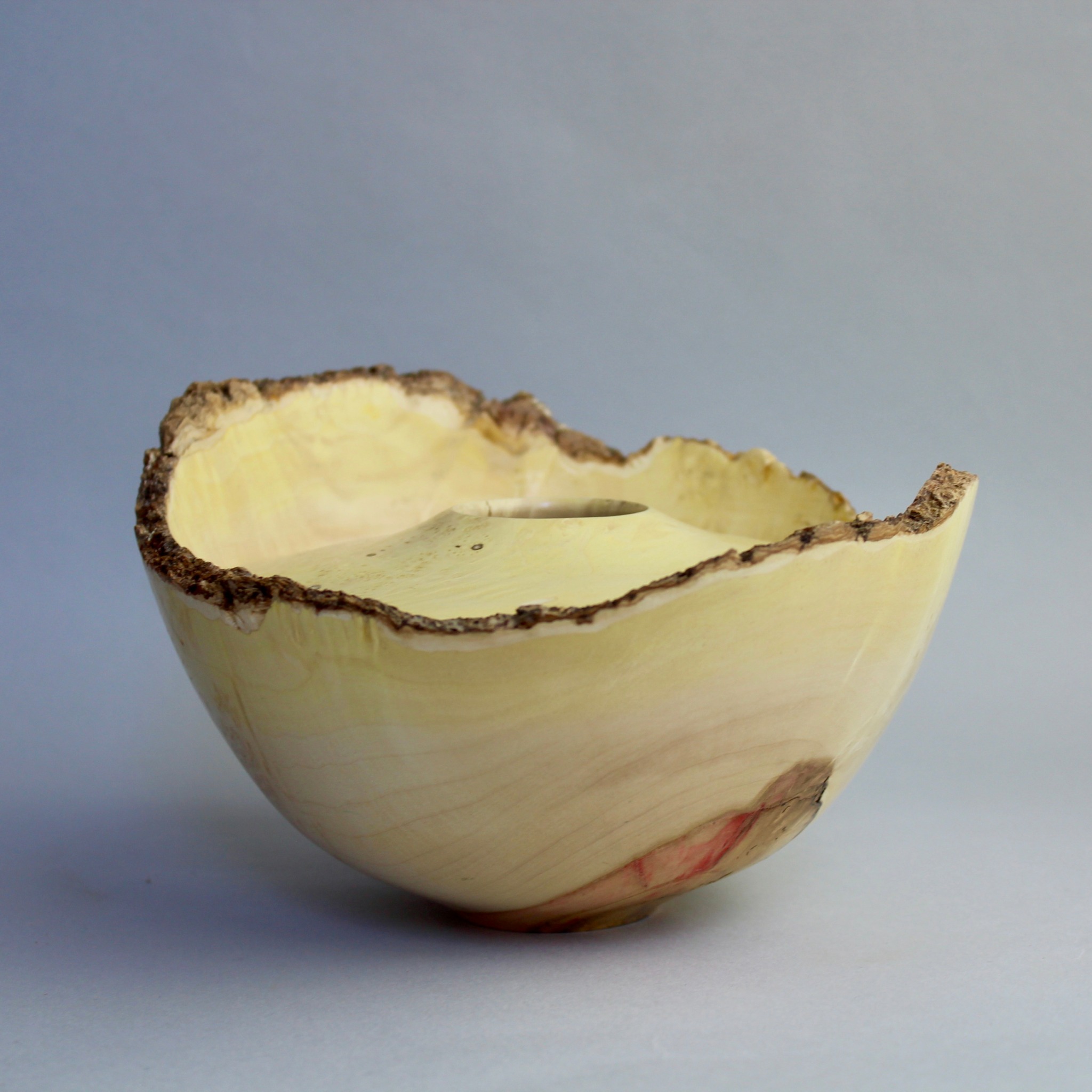
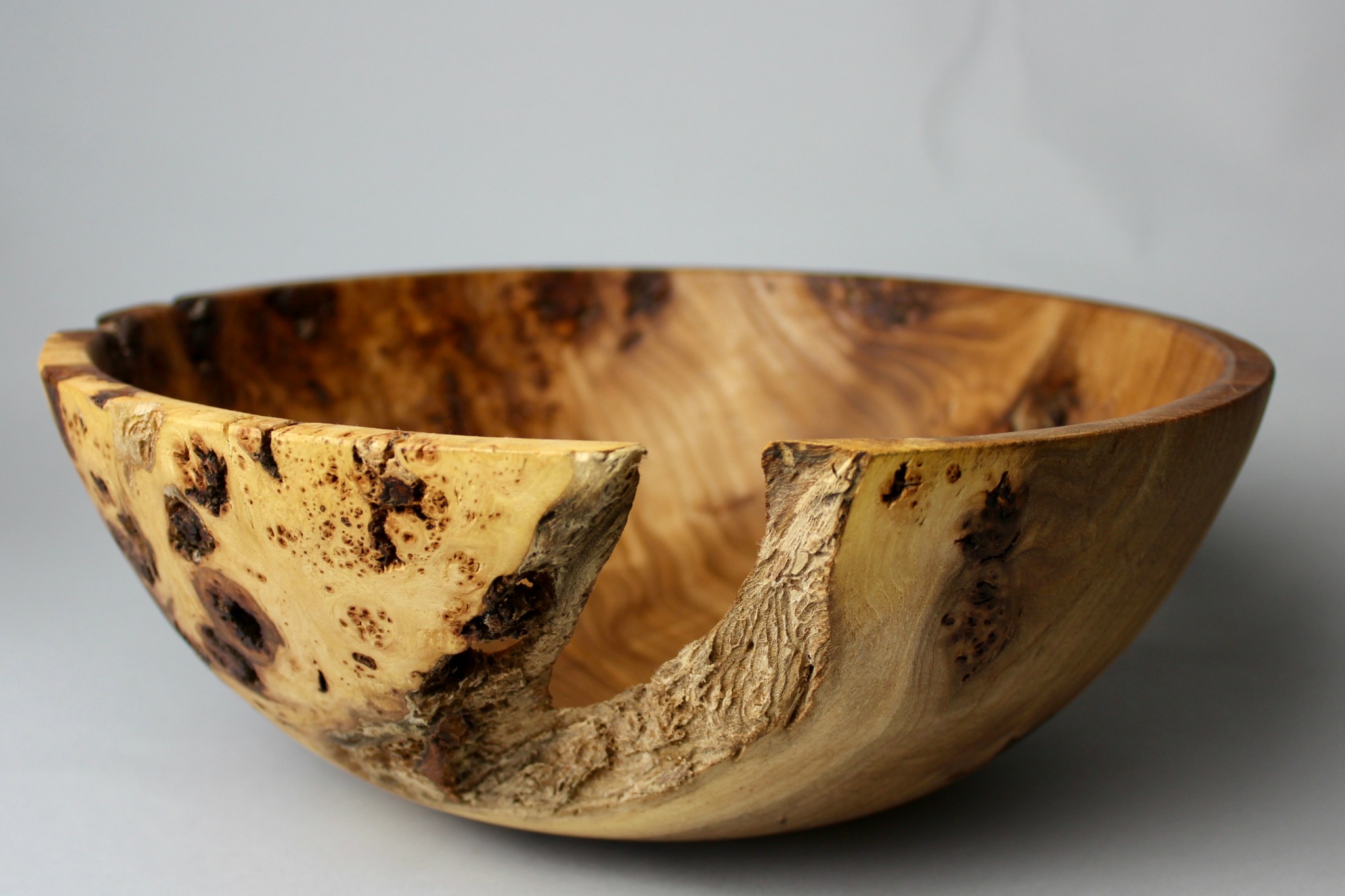
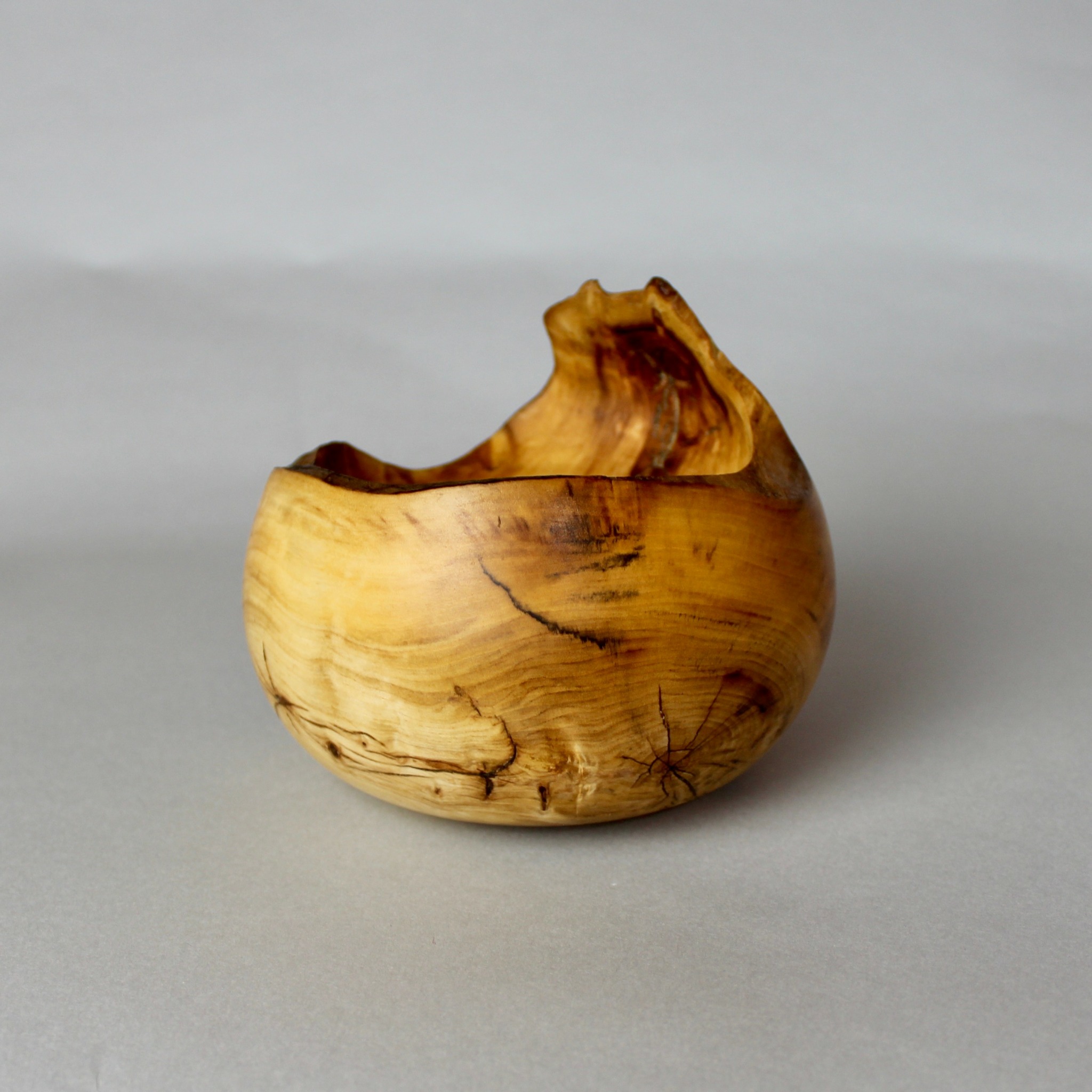
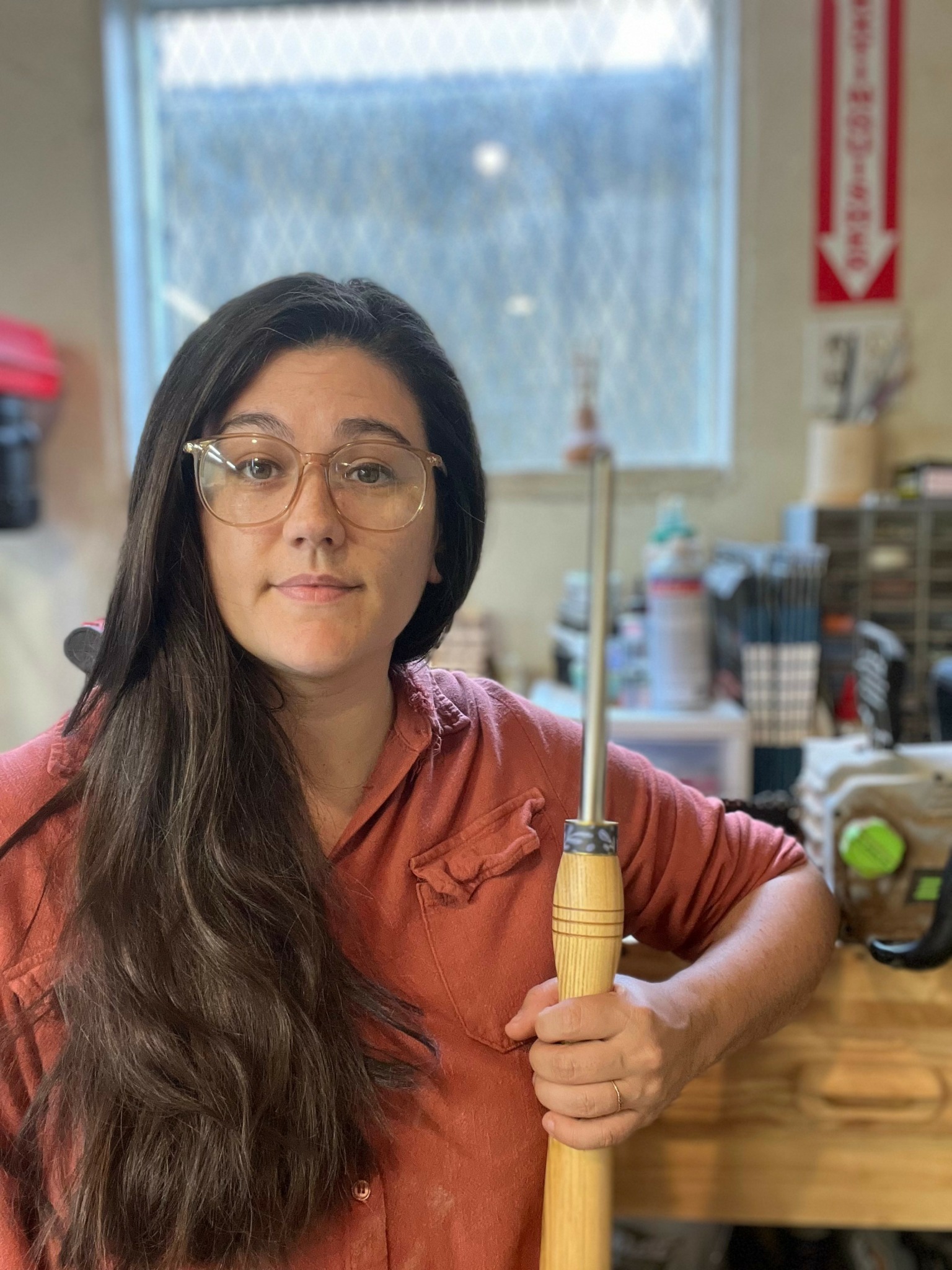
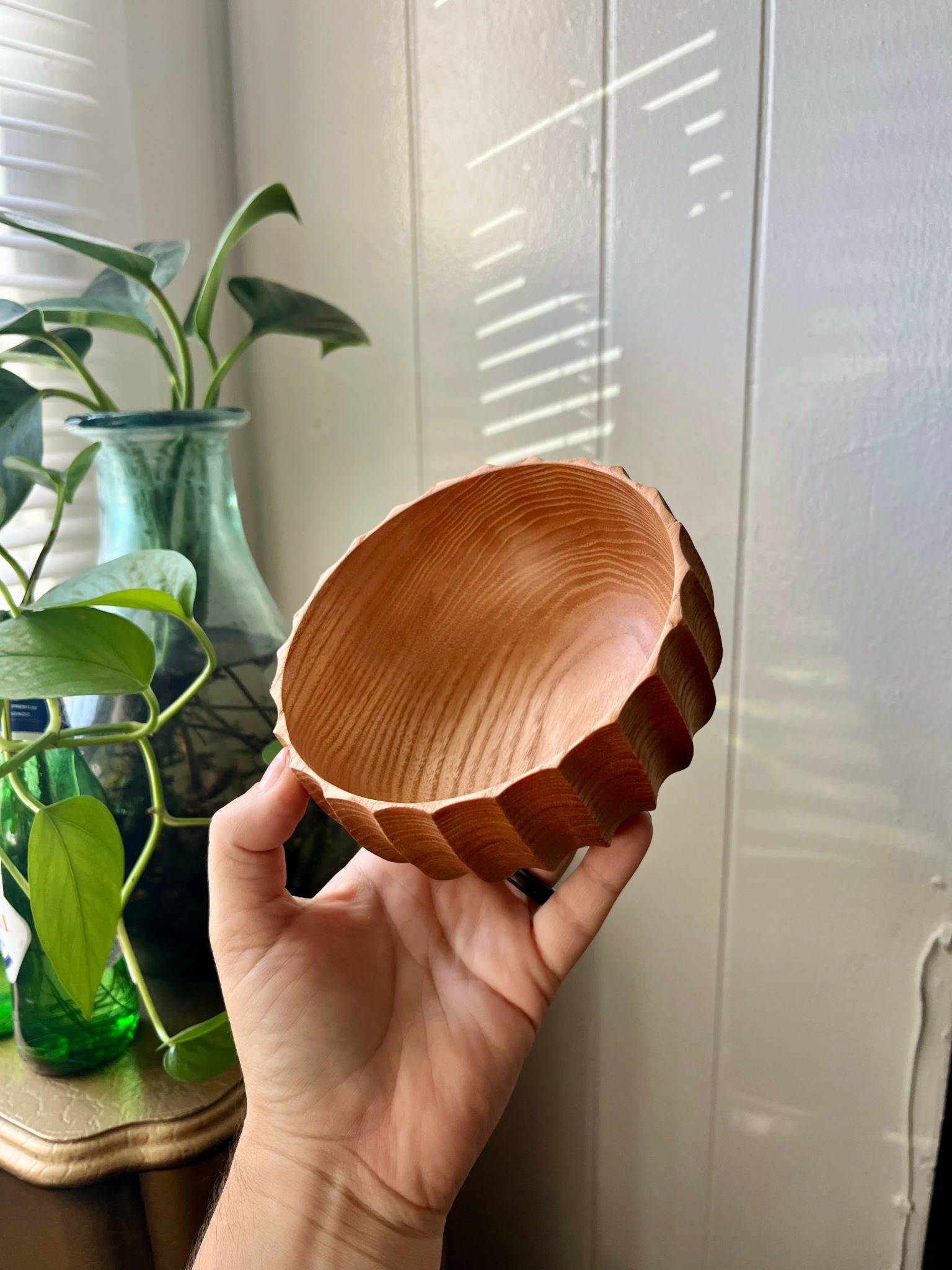
I’m a woodturner and woodturning instructor who got my start on the lathe in 2019, right before the social distancing and public closures brought on by Covid-19. I use a lathe and lots of various other woodworking equipment to make wood items like bowls, kitchen utensils, home decor as well as woodturned spindle furniture repair for clients.
Not everyone knows what woodturning is, and I describe it to people as a similar technique to a pottery wheel, but sideways and using sharp tools to carve the wood into different shapes.
I fell in love with vintage wood bowls and thought that it couldn’t be that hard to learn how to make one myself from scratch. There was a learning curve for sure, and I had to gain a healthy level of comfort and respect with the machinery, but after a little bit of trial and error and some help from tool savvy friends, I had my very first bowl.
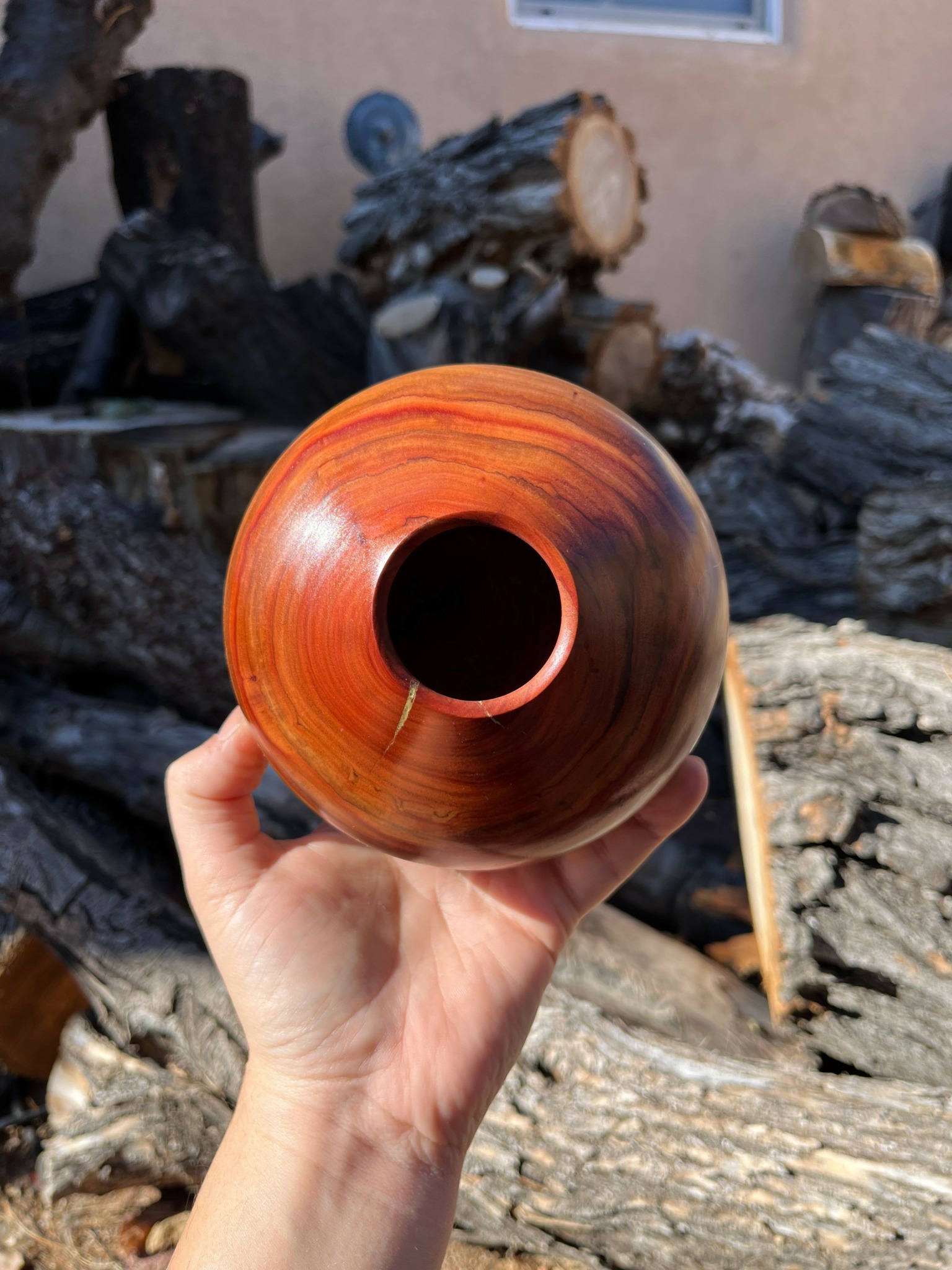
My process is almost as enjoyable to me as the finished products. It starts with finding logs with potential to be good on the lathe. I will find wood from everywhere and anywhere! After some careful work with the chainsaw to cut the logs down to smaller, workable pieces, I will set the wood on the shelves to dry, sometimes up to many years, before creating a bowl or vase from them. I love working with wood from trees that people recognize, it may even be wood from a tree that came down in a client’s yard. I don’t always have a plan in mind when I start my work. Mostly, I begin shaping the wood and take notes from what features emerge from the grain. Sometimes, the wood decides what it’s going to be, and I’m just along for the ride as that form is uncovered.
Seeing the beautiful cycle of how a raw material can be given a second life and turned into a beautifully displayed piece in their home is one of the most rewarding features of my work. We all have some kind of connection to the natural world, and wood is an incredible medium with which to express creativity and collaboration with nature, whether it’s in the creation of artwork out of wood, or using it to express ourselves in the way we style our homes.
Is there mission driving your creative journey?
My goal is to make the most of the material I have to work with in a way that honors the tree it came from. So much wood ends up in the burn pile, and even more ends up in the landfill. Even though it’s a resource we are able to grow more of, wood is still very important to me to make sure I waste as little as possible. Sometimes that means holding on to small and irregular shaped pieces of wood for years before finally finding the project I can use it with.
Of all the compounds in all the universe, wood is more rare than diamonds. Making choices that result in a timelessly classic gallery style piece of art, or an heirloom quality salad bowl that can be passed down through generations over something that gets discarded is something important to me.
For you, what’s the most rewarding aspect of being a creative?
The most rewarding aspect of my work is seeing the light in someone’s eyes when they see wood from a tree they recognize. Hearing customers say “I had a big walnut tree in my backyard growing up!” or “I had no idea cottonwood could look like that!” are phrases I hear often. I can feel a growing or strengthening connection to the natural world in people when I hear them say things like this. It’s so easy to disappear into the world of plastic, cheap, and disposable, with the world of trees, life, and natural things seeming like a distant world of the past. I feel like we all want a world that is a little more balanced between the world of nature and human. I’m very fortunate to be able to create from raw materials and feel that connection often though the process of my work. Being able to share that passion and tap into another’s innate connection to the finished wood at their fingertips is the most rewarding part of my process.
Contact Info:
- Website: https://oakenwell.com/
- Instagram: https://www.instagram.com/oakenwell/?hl=en
- Facebook: https://www.facebook.com/p/Oakenwell-100063367201808/
- Other: TikTok https://www.tiktok.com/@oakenwell