

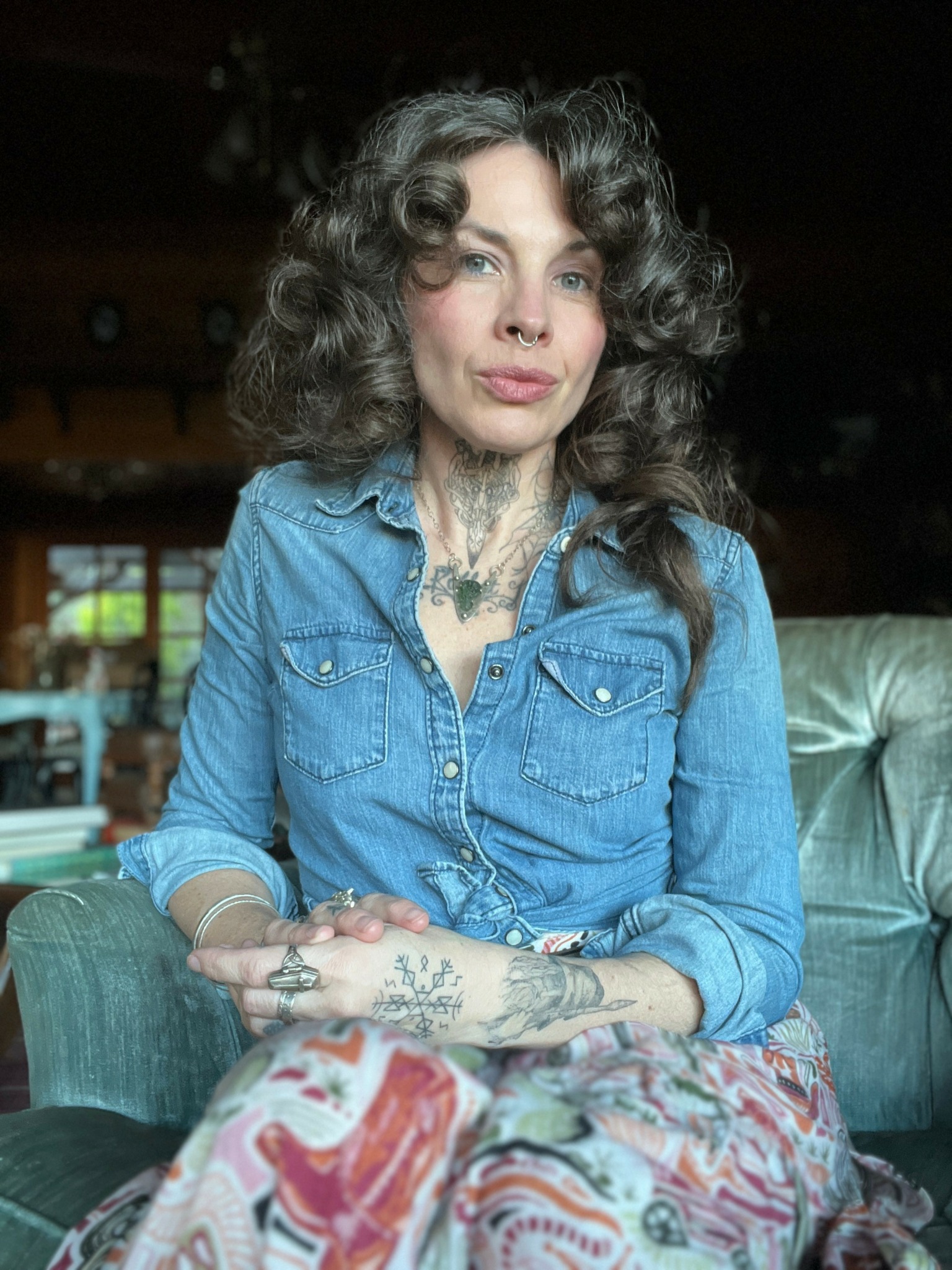

We were lucky to catch up with Elle Elizabeth recently and have shared our conversation below.
Hi Elle, thanks for joining us today. Was there an experience or lesson you learned at a previous job that’s benefited your career afterwards?
“No one person is worth more than any other person.”
This is the teacher, and the lesson that comes from the most humble gratitude one could possibly imagine. With the passing of Jane Goodall, I am reminded of when she said that we name things, and then they become the name; it is no longer the being. I can only imagine that she extracted this from the teachings of the indigenous people around her, as this concept is ancient. When we are surrounded by nature as she is, in all of her chaos, we are reduced from our society given titles, and we return to ourselves.
I learned this when I held the title of “first responder.” My title placed me directly into the center of the worst day that some people had ever had. I was blessed to work from the depths of Los Angeles studios, to the heights of the Himalayas. The poorest people and the richest people all have one thing in common; they all need help sometimes. In every one of these experiences, I found that people are all the same, especially on their worst day. Catastrophe has a way of bringing us into our most primal selves where our survival instinct, however lost in our inner workings it may be, kicks in and we become animal. We become a being, not a human, just another living thing on earth fighting for its life. I call this a blessing because I had the privilege of being there, and choosing to be a safe person who could almost certainly provide help. Never once did I look at the being in need in front of me and think, “How much do they make?” I only thought, “How can I help?” In this I found that we are all fundamentally the same.
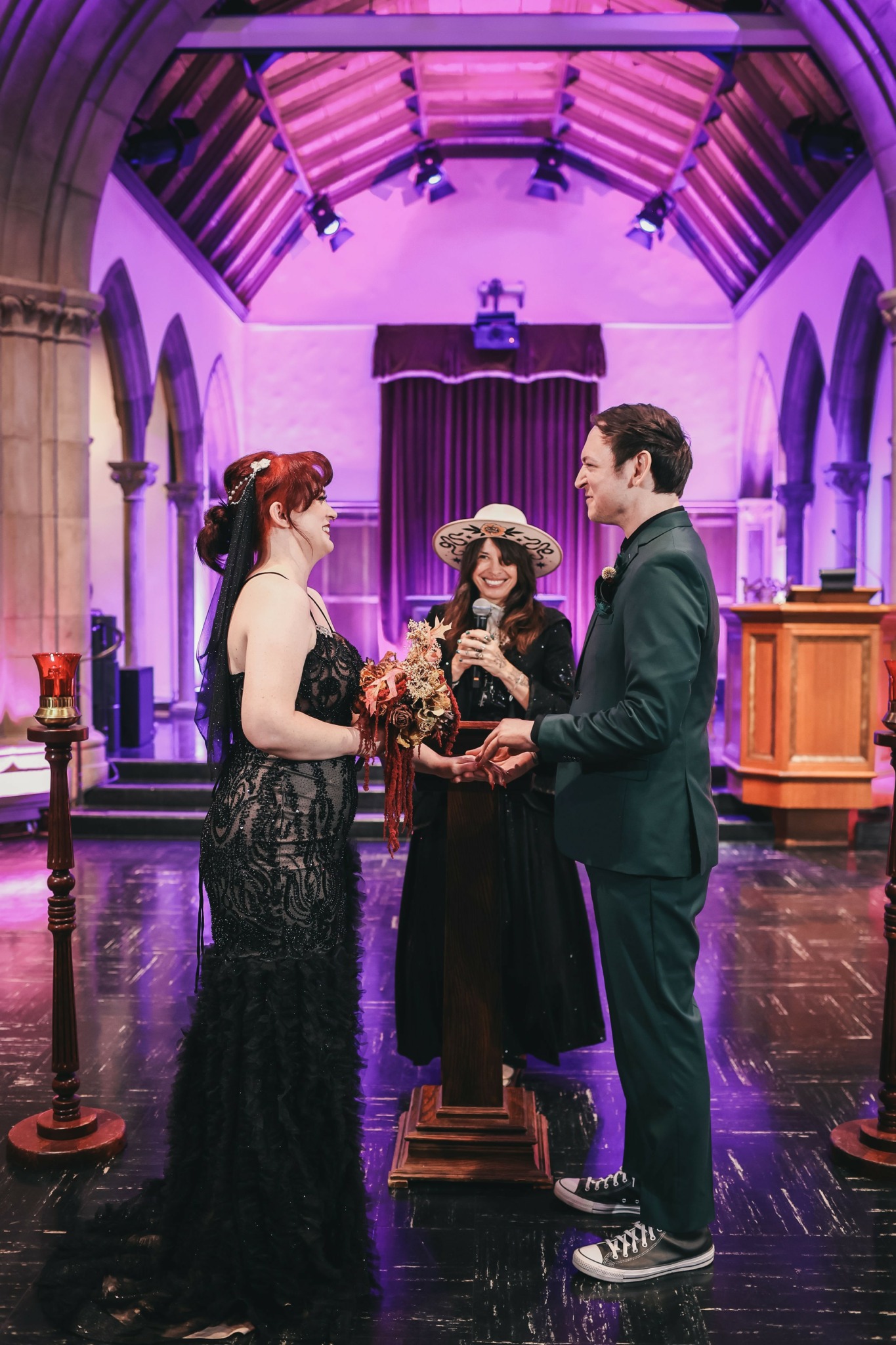
Elle, before we move on to more of these sorts of questions, can you take some time to bring our readers up to speed on you and what you do?
I am fortunate to be working in a space that I have created from earth with my own hands. Mycelial Wisdom refers to the communication between the thready underground lifeforce of fungi that connects and upholds all the plants on earth. No plant can exist without fungi, and this underground network is the silent ancient thread that keeps forests alive. We too require connection to earth to survive, and we find this by returning to our most primitive self; the body. I shaped this modality first in the deep forests of Vermont where I grew up running wild. The forest always knew my name, no matter how much hardship and loss I experienced, I could return to her for nourishment and understanding. I created a career around being a mother, and being in the outdoors; working in rescue and guiding. I became a wilderness EMT and rescuer, focusing on disaster response, fire, and eventually moved into the world of film medical. I found myself always in service to humanity; something I take great pride in and strive to pass onto my daughter.
The more I saw the way that people can fall apart, the more I realized that those pieces are never lost, but fragmented. We change in the face of stress, but we are still here; we just might not look the same as before. Mycelial Wisdom is offering a hand to walk a path that might not have seemed possible alone. It is the missing link to healing for many, as it is a REmembering of the self. I show my clients that they are not hard to love, or broken, but changed and I am here to introduce them to their new self. I use Somatic Experiencing, integration meditation, Feeding Your Demons, Norse Wisdom and my own intuitive abilities to navigate the landscape that is the nervous system. My gift is the safe space I provide so that the client may use this careful work to create their own healing. I am simply a guide with tools, as the real work is done by the them. While my work is careful and intentional, make no mistake, there is a violence to what I do. Trauma is not a peaceful being; it can be a monster that lives inside of us, and at times we must confront the violence within that had been silenced long ago. In my work, we embrace all the parts of us that arise, and work to integrate them into our wholeness. The space I hold is one without judgement, and I know that there are no bad thoughts, only bad actions. I incorporate different environments into my sessions, sometimes employing horses or the land to support the client in their work. I often meet my clients at their homes or in places that I have rented for the session. No two people will have the same journey, so I cannot possibly imaging doing this work strictly from the confines of an office.
I enjoy working with people of all demographics, but I have found that my work with young men has been the most fulfilling. This is a demographic that is often forgotten in mental health spaces. I am uniquely equipped as my career has placed me in many male dominated, and I have found incredible kinship with the men I worked with. I would say that my work with veterans and first responders was where I resonated the most.
How about pivoting – can you share the story of a time you’ve had to pivot?
In 2019 I was killing it. I was doing very well working as a union set medic, which means I was hired to stand by on productions to accommodate the medical needs of the cast and crew. I don’t mean to make this seem like it was a non stop emergency fest; it was not. Most of the time I was handing out sunscreen and electrolytes, and tending to the moral of the production. While this was the case most of the time, I did have many moments where my expertise came in handy, and I would respond to emergencies. Film crews work long days, and are often put into dangerous situations with many skilled people keeping everyone safe. Sometimes those safeguards would fail, and I would be there to help. I loved my job. Of course, I live to serve, but beyond this honor, I met and got to know hundreds of people that I may have never met anywhere else.
I noticed at the end of 2019, I was seeing a lot of cardiovascular issues cropping up in my crew. I chalked it up to the stress of the production for a while, but there came a time where we all knew something was wrong as I was sending more and more people to the hospital for narrowing blood pressure and fever. By March of 2020, we had our answer; COVID 19. I know that I am only one of the countless people whose lives were derailed by this virus, and I want to hold space here as I type for the millions of lives that were lost. This virus changed the landscape of humanity.
On the very last day of shooting my very last tv show as a set medic, I developed a sore throat that evolved into the worst flu I had ever had. By the time we moved into lockdown, I noticed my muscle tone diminishing, my stamina dropping, and my cognitive ability affected. After reaching out to my disaster response team offering my services, and being compassionately turned down, I realized that it was time to leave my work as a first responder behind. Fortunately, I had a remarkable amount of free time to not only think about what I was going to do next, but to figure out if healing was possible for me.
As I grew sicker, I found that I was also forced to rest. Sometimes when I share my story, I say that I needed to get sick because I never would have slowed down otherwise. In this newly found calm, I began to feel into my new reality. I didn’t know who I was without the title of first responder. This began not only my path to finding a new career, but to finding myself. I knew that I wanted my work as a Priestess to rise to become the center of my career, so I focused on learning how altered states of consciousness affected survivors of trauma. I spent a great deal of time studying ethnobotany and religion at Oregon State, as well as meditation with Daniel at Mount Tam Integration. In these spaces I learned how plants and fungi create neuroplasticity in the brain, and how as a practitioner, I could help to integrate these experiences. This is also where I found the courage to confront my own PTSD. I found through my own personal treatment journey how much of the healing happens outside of catharsis which can be harmful for the traumatized person. I never knew that there were other ways to heal that did not involve retelling, and in turn, reliving my experience. I learned that the nervous system is clay to be worked with, and I gained the knowledge that all people can heal. I began moving deeper into the worlds of Bessel Van Der Kolk, Peter Levine, and even Ram Dass, in learning that through therapeutic methods, archetypal work, and some help from spirit, we can rewrite the way we live in the world. When I found Somatic Experiencing I knew I had come home. Pairing this transcendent work with the Buddhist, Norse, and fungal teachings of my mentors bore Mycelial Wisdom, and that is where I am now. I have endless gratitude for this pivot as I am exactly where I need to be.
Let’s talk about resilience next – do you have a story you can share with us?
The Somatic Experiencing (SE) education program consists of three years of modules where students focus on learning the modality through lectures, demonstrations, hands on practice, and a whole lot of therapy. When I entered the program, I had already been on my therapy journey for a few years. I had discovered that I had PTSD, and was coming to terms with my own nervous system. My work as a first responder had left me with some battle scars, and I was finding that I had plateaued in my healing. When I entered into the Somatic Experiencing program, it became clear to me very quickly that this modality was unlike anything else I had seen before. This unconventional approach was what I was missing when I had begun studying psychology in college years before, but also what I was missing in my own healing. SE focuses on the response of the body, as well as the sense of the resonance between the practitioner and client. SE observes a 6th and 7th sense called interoception (the noticing of sensation in the body) and proprioception (self touch) that play into the work. The client is the healer, and we are the guides.
Every day that we were in class, we would spend the afternoons practicing on each other what we had been learning in a supervised setting. In the beginning, we worked on mildly activating topics, but as time moved along and we became more skilled, we deepened our practices, moving closer to larger events. I found myself having a more difficult time controlling my responses, and in one module, something in me shifted and I found myself completely regressed into an event that I hadn’t thought about in many years. My trauma was much deeper than I had realized, and now I was going to have to contend with it in a way I had not expected. With the help of the skilled assistants, the lead of our cohort, and my incredible peers, I began to unpack the things that had been making my life difficult to live for a long time. I was a survivor of domestic assault, and I had never confronted this in myself. I was harboring an incredible amount of shame about what had happened to me, and I had buried it under my work. I had become numb to fear to the point where my system only knew how to override such a response.
Becoming a Somatic Experiencing Practitioner is a grueling process, but doing so while coming to terms with my own trauma was what I can only describe as an initiation. There were so many moments in this program where I would be triggered into a trauma response, and I would find myself surrounded by my peers feeling safer than I had ever felt. I attended a Master Class at the end of my first year where Peter Levine, (the founder of SE) did a demonstration with a police woman. At one point, she said she wanted to scream, and Peter told her that she should. She stood at the front of the stage and screamed. I felt it move all the way through my body; it felt like she was screaming for me too. My mentor Anita was sitting next to me, and after the presentation, I raised my hand to ask a question. Anita gently placed a hand on my shoulder and said, “Perhaps this question can wait until after we have done some more work here.” I realized my heart was beating out of my chest, so much so that it was moving the pendant of my necklace. My entire body was shaking, and I hadn’t even noticed. I took a walk outside, and one of the older assistants followed me out. She introduced herself as a psychotherapist and asked how she could support me. I broke down and told her that I didn’t think I could make it through the program because my responses were making it too difficult. She looked at me and said, “This program is 3 years of trauma therapy for every person who goes through it. It is these responses that will make you great. Don’t quit.” At that moment I remembered that I was there to help people like myself. I remembered that it is a privilege to heal from our trauma, and that would be my mission. Now that I have completed the program and have created Mycelial Wisdom, I can confidently say that PTSD is not ruling my life. I am helping people return to themselves without judgement. I am ever grateful to Somatic Experiencing because it is where I returned to myself, and found my calling.
Contact Info:
- Website: https://mycelialwisdom.com/
- Instagram: mycelial_wisdom
- Linkedin: https://www.linkedin.com/in/elle-evans-5191b5323/
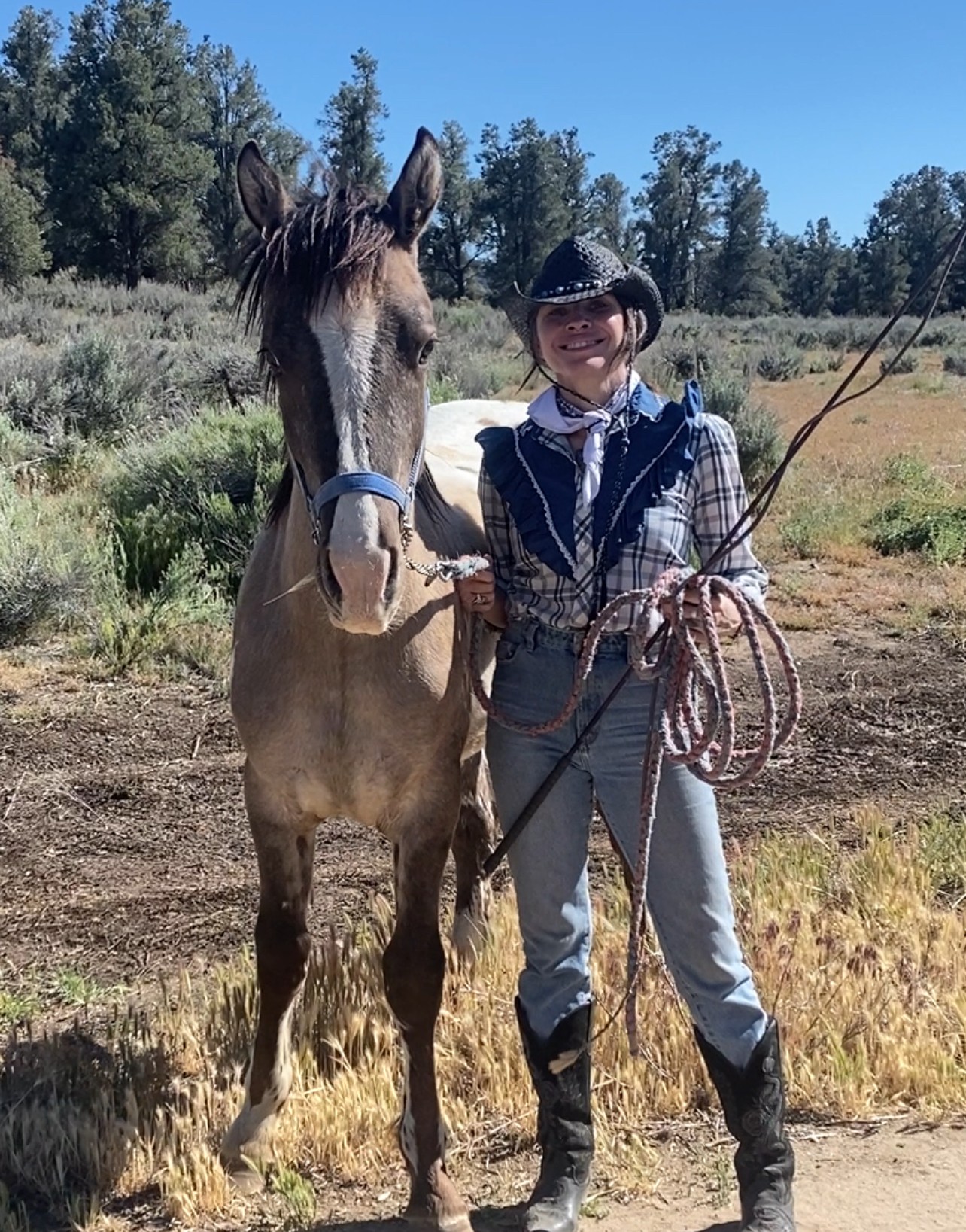
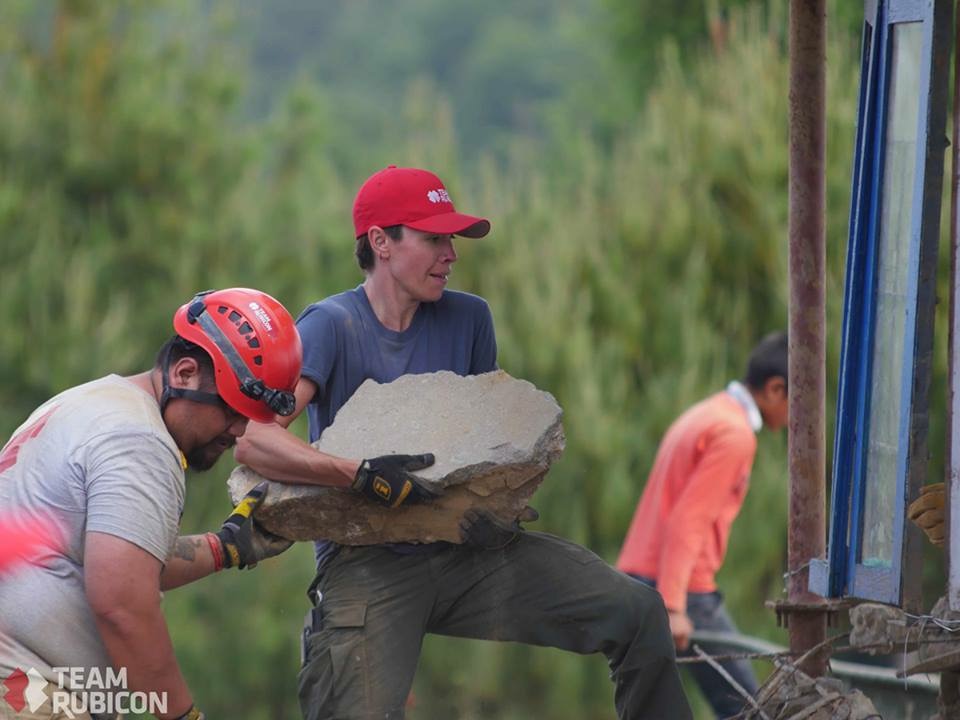
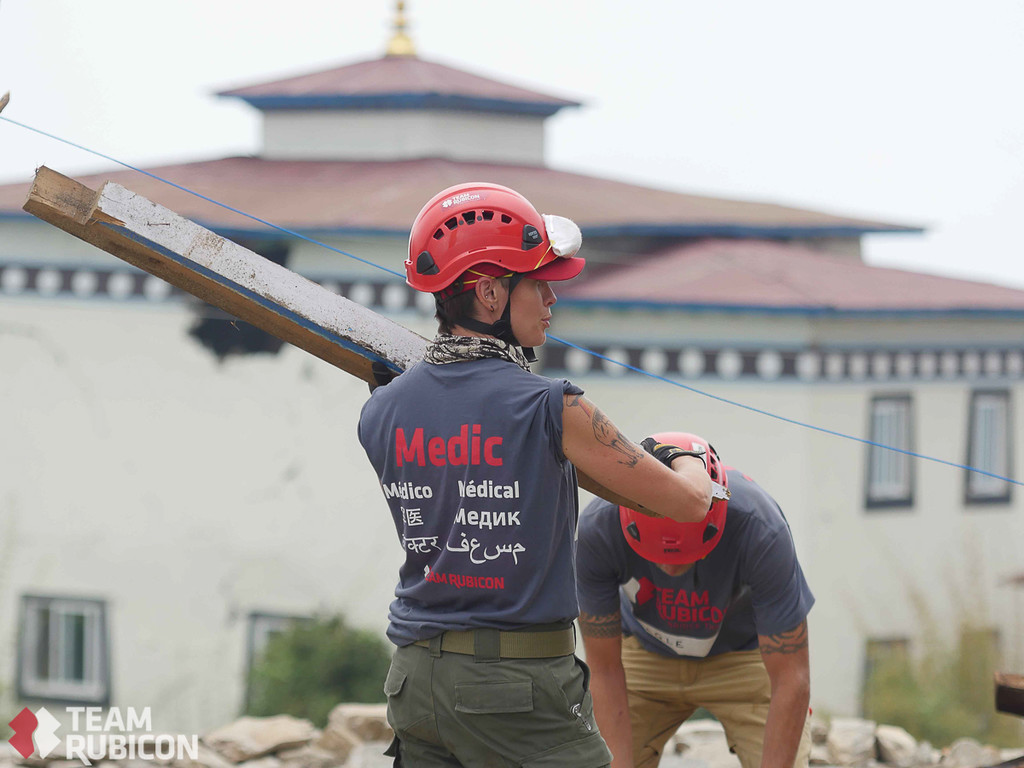
Image Credits
1) Grim Studios
2) Forgette Photo
3) Susie Delaney
4) R. Henry Evans
5) Team Rubicon
6) Team Rubicon
7) Elle Evans