

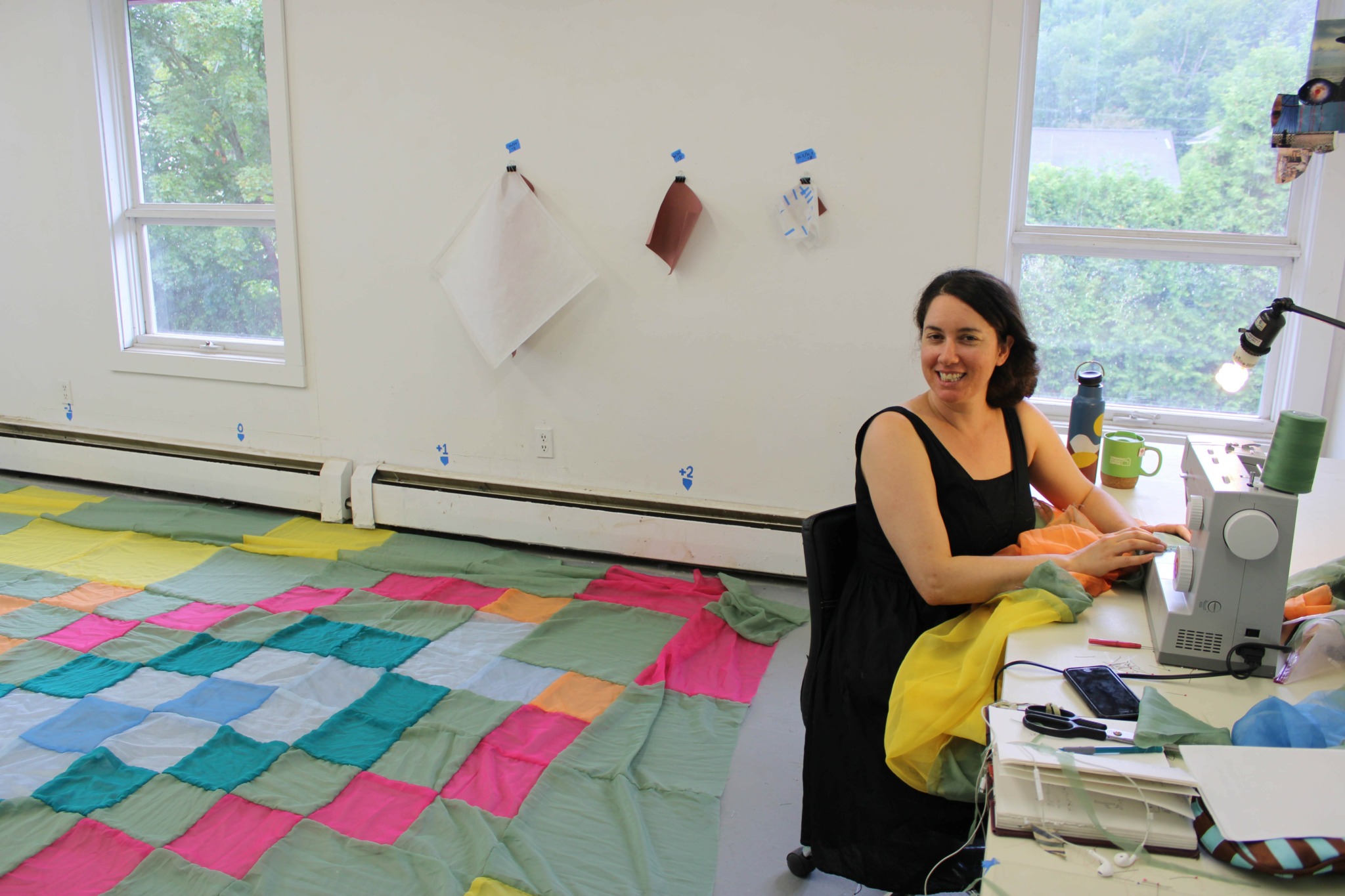

We were lucky to catch up with Ye’ela Wilschanski recently and have shared our conversation below.
Ye’ela, thanks for taking the time to share your stories with us today We’d love to hear about a project that you’ve worked on that’s meant a lot to you.
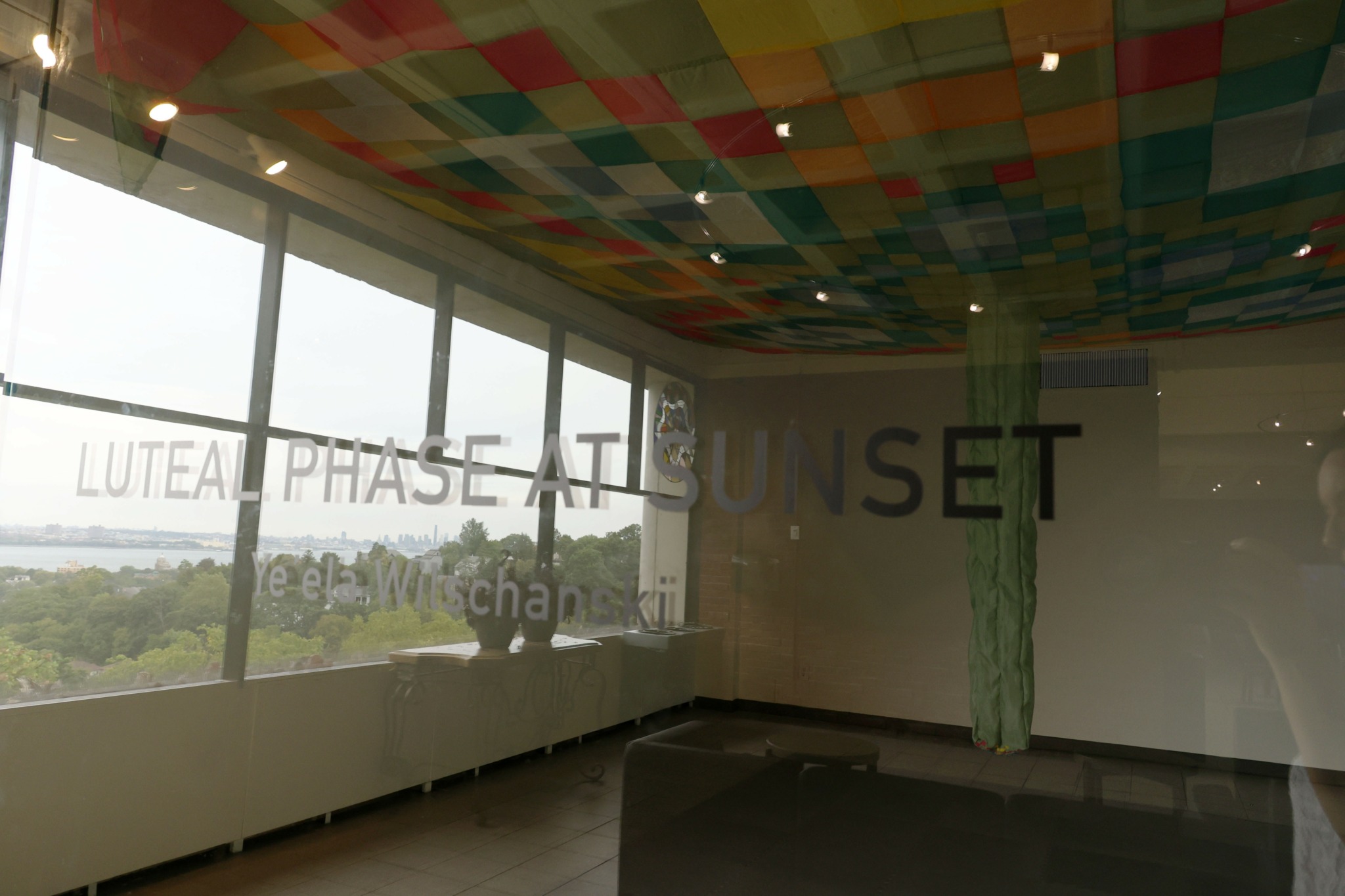
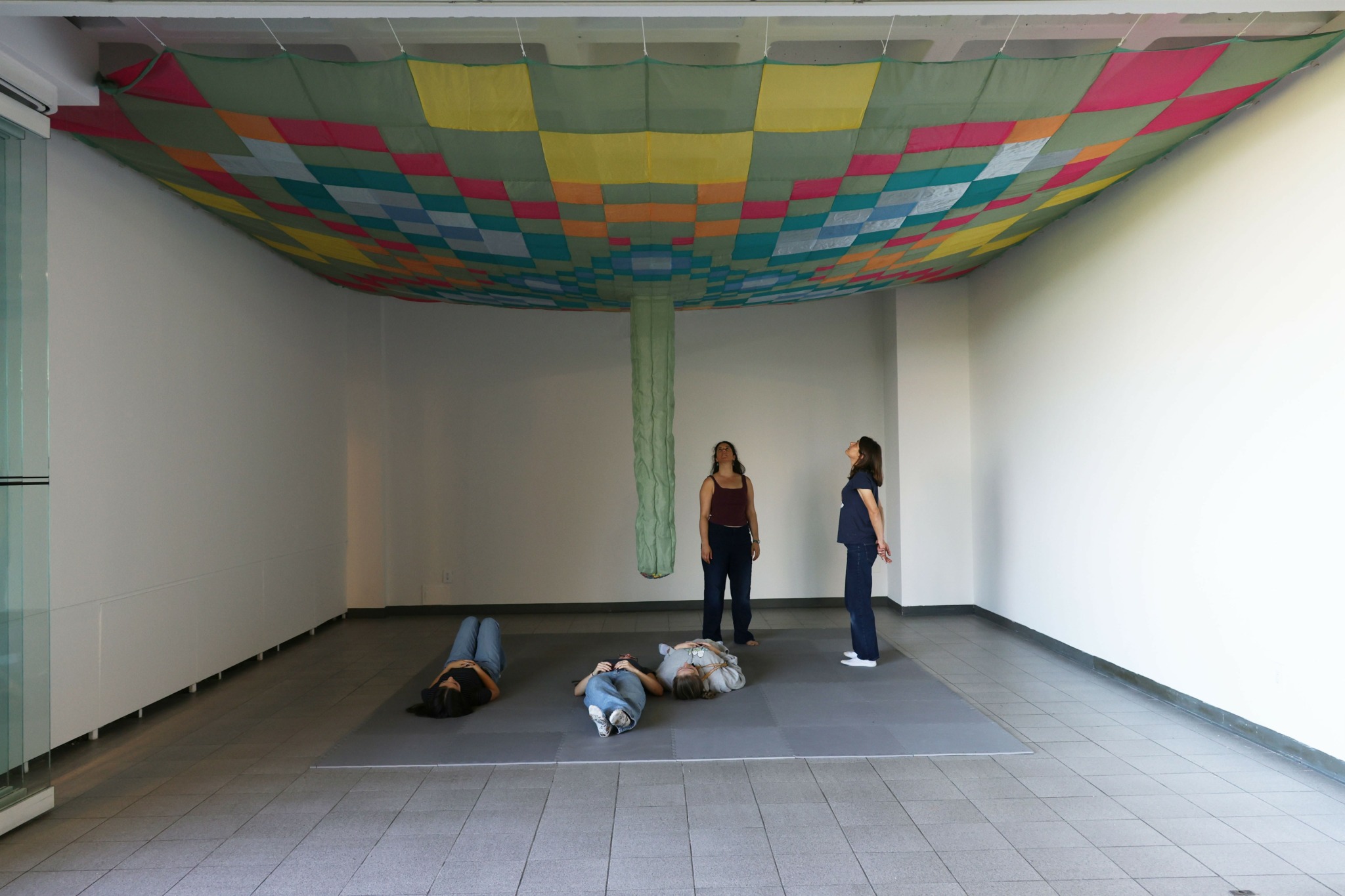
Thank you! I currently have a solo exhibition at the Union Gallery, Wagner College: Luteal Phase At Sunset.
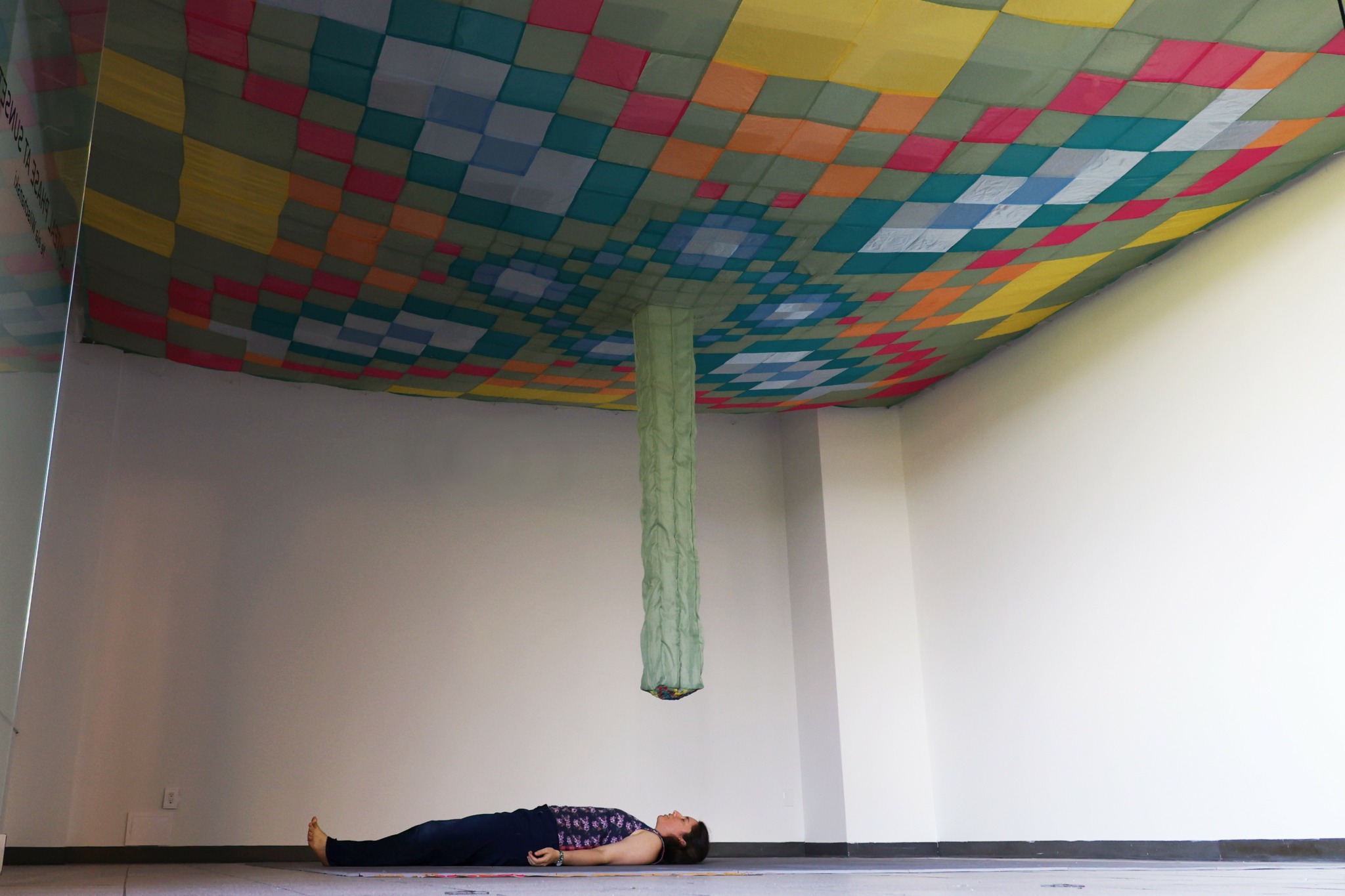
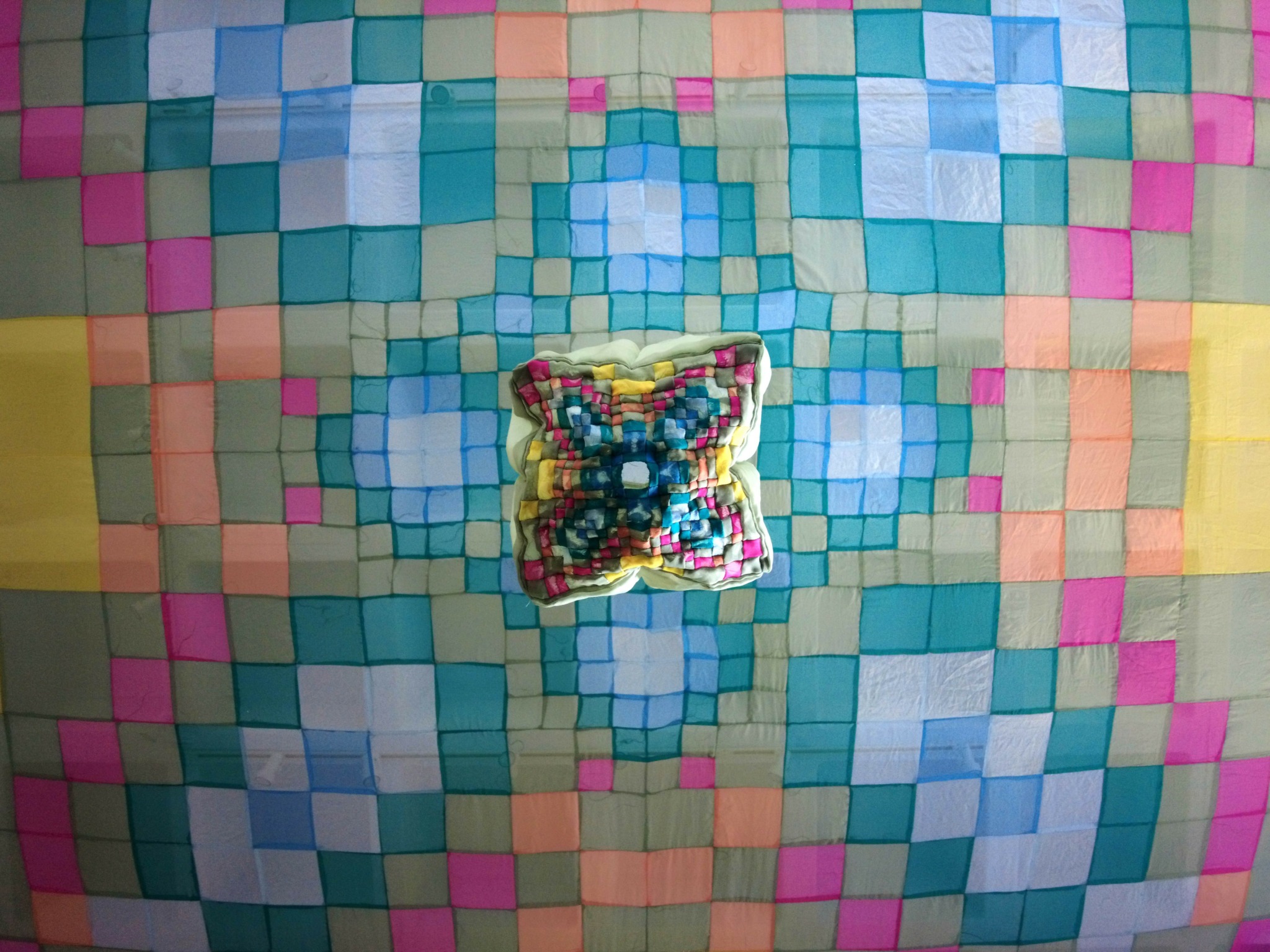
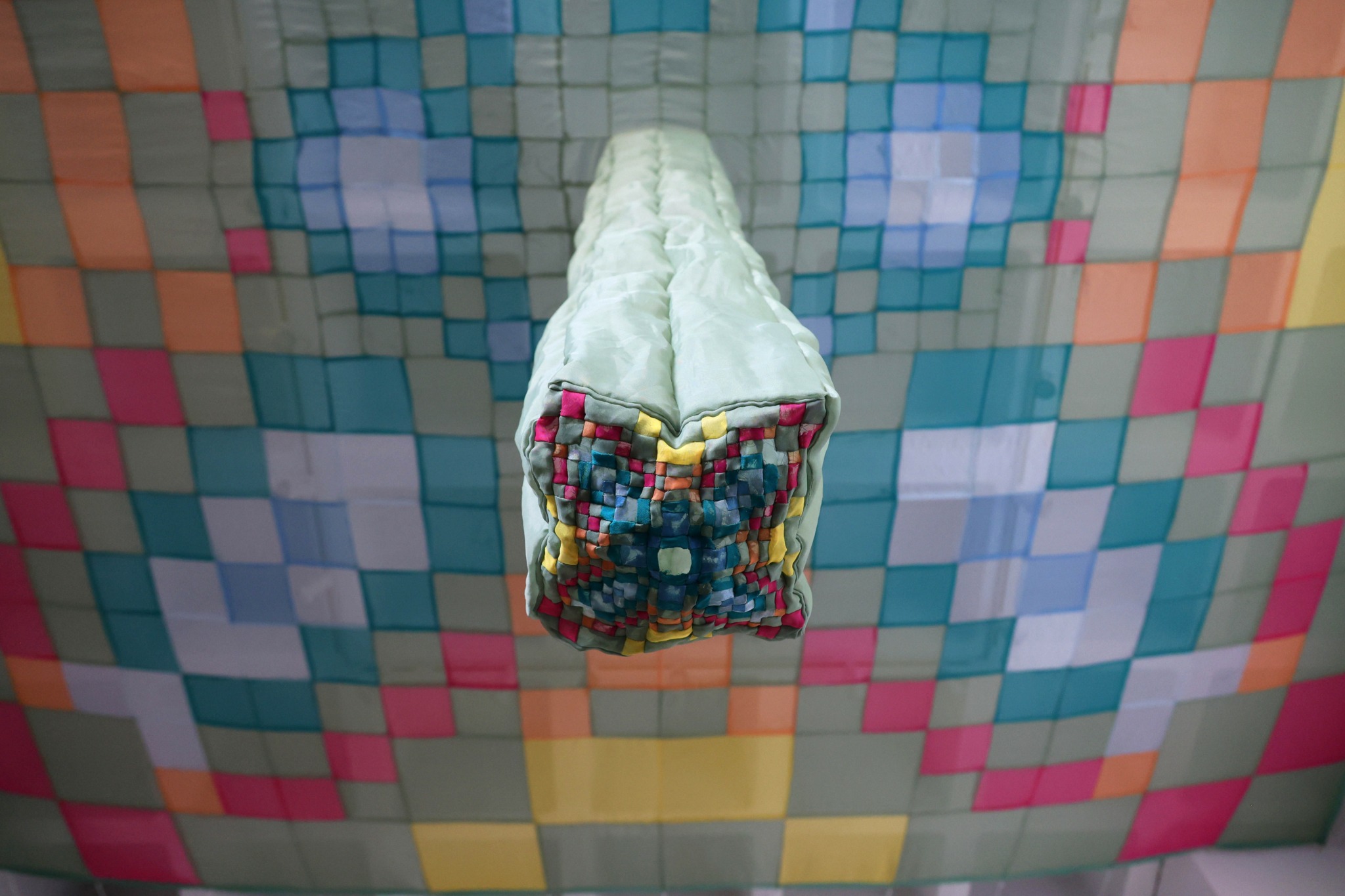
The quilt is stretched on the gallery’s ceiling. On the floor, a mat invites visitors to take their shoes off, lie down, and look up at the quilt horizontally. The 19.6 × 19.6-foot quilt’s patterns are inspired by the sunset and fall foliage. The prominent color is green, with additional pink, orange, yellow, and shades of blue. At the center of the quilt, and at the center of the gallery, the quilt extends a column 6.5 feet long. Only viewers lying down on the mat will see a miniature quilt at the base of the column, aligning with the larger quilt’s pattern.
The title refers to the final stage of the menstrual cycle, the luteal phase, which for some is characterized by emotional difficulty as hormones shift. Similarly, sunset is a time-based natural chapter that ends the day cycle, and fall is a transition to winter.
Luteal Phase At Sunset is site-specific, both in its dimensions and in relation to the window beside the gallery. When I first visited the gallery, I was in awe of the view from the mountaintop toward the Financial District, Upper Bay, Bay Ridge, and the Verrazzano Bridge. The unique architecture of the gallery invited me to think about how I look at nature versus how I look at art. I knew that whatever I created for this exhibition would be in conversation with the water, sky, and foliage visible beside the gallery. These natural elements change throughout the seasons and the time of day.
For me, looking at nature gives a sense of calmness because it just makes sense. I cannot fully understand or contribute to it. Nature is what it is, in its internal structure. Looking at art, however, is sometimes an out-of-body intellectual experience. When I approached creating Luteal Phase At Sunset, I wanted the gallery to be a place that invites viewers into a physical state of calmness. So I created a piece that encourages lying down to experience something similar to stargazing and cloud-shape naming.
Ye’ela, before we move on to more of these sorts of questions, can you take some time to bring our readers up to speed on you and what you do?
Yes, I want to share how I arrived at the type of work I make. As a little girl, I wanted more dresses for my dolls, so I cut fabric from old clothes of mine and sewed little dresses for them by hand. As I grew older, I bought a sewing machine and made my own clothes from old tablecloths and bedsheets. It was my creative outlet in my teen years. To plan my sewing, I needed to draw patterns. I got into drawing, and by the time I applied to art school, my portfolio was entirely two dimensional drawings. I thought I would develop as an oil painter; I didn’t see sewing as an art form.
Being an undergraduate in an art school in my hometown gave me access to classes at other art schools, and I took full advantage of that. Although my degree is in ceramics and glass, I participated in many classes in the performing arts, such as movement improvisation, movement score, visual theater, and choreography. After earning my Bachelor of Fine Arts, I was creating in two separate areas of practice: sculpture and movement. I decided to pursue a Master of Fine Arts to dive deeper into my practices and develop one cohesive body of work.
When I arrived in NYC, I struggled with a tight budget, but then I learned I had access to Materials for the Arts, a donation-based warehouse that offers free materials for nonprofits and city-related art institutes. A large portion of what MFTA offers is fabric and notions. Access to free fabric opened the possibility for me to create sculptures from fabric to perform in. When my studio was full of fabric, it felt right. It took a long journey for me to return to the place I started from: a needle and thread.
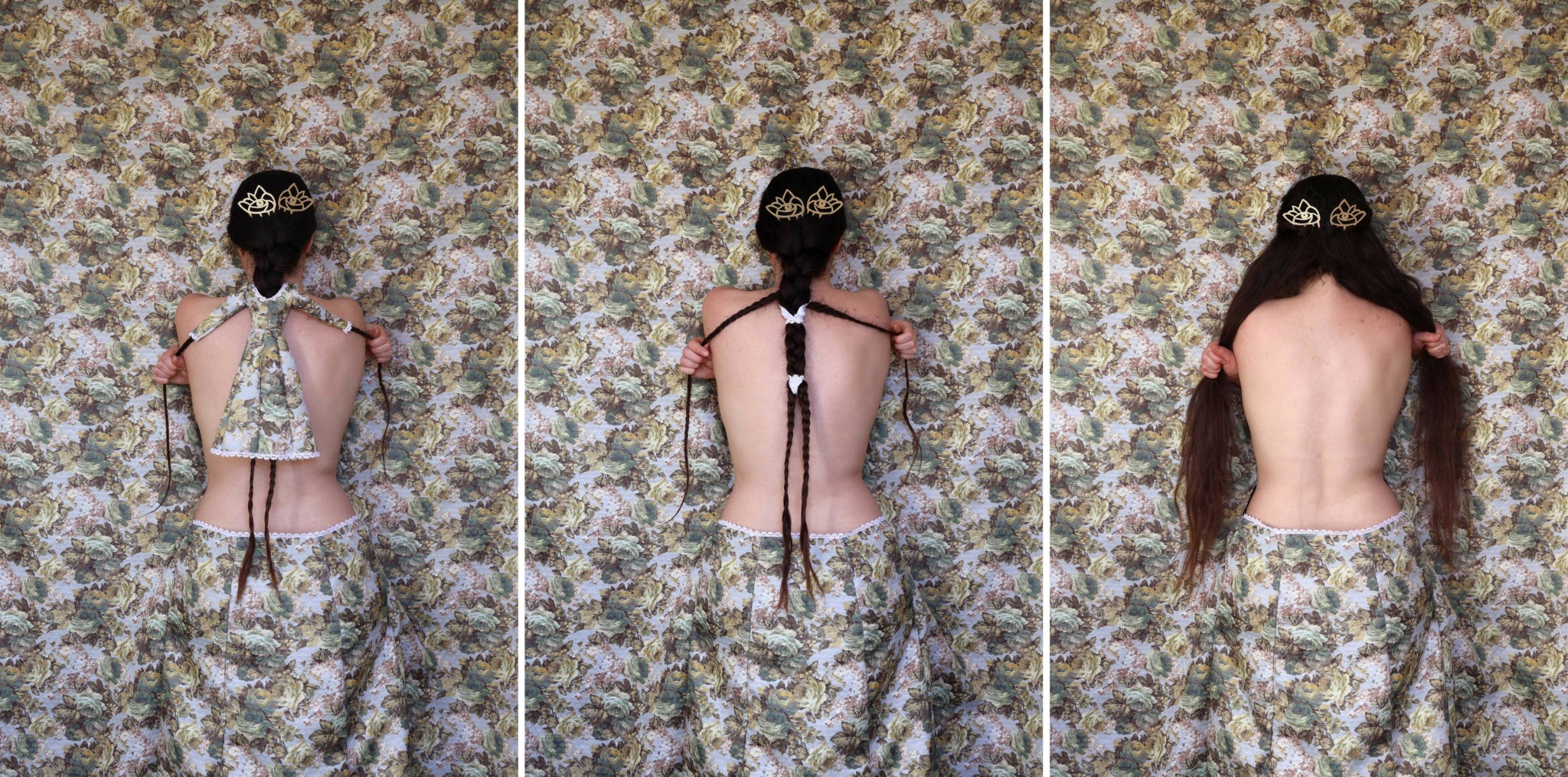
My current practice is sculpture, layered with video and performance. I call what I create time-based architectural garments. The soft sculptures partially follow the shape of my body and are partially connected to a frame with forms representing domestic interiors, such as windows, books, and tables. These transformative wearable items go through a series of images, functions, and forms.
At my core, I still very much identify as a potter. I was drawn to pottery because of the physicality of shaping clay in motion, but I realized I was drawn to the process, not the final product. I wanted to expand that bodily engagement to my entire body, not just my hands. Instead of creating a vessel smaller than me on the wheel, I wanted to make a vessel my whole body could inhabit. Fabric offered the perfect medium: large, malleable, and easy to store.
My work intersects puppetry, movement research, sculpture, and performance, but at its core, it is time based sculpture.
Is there mission driving your creative journey?
I feel that my creativity cannot be controlled, directed, or predicted. Words like “mission” and “goal” don’t fit how I experience it. I am led by my creativity; I am its humble servant. To thrive, it needs me to sleep, eat, and be kind to myself.
Being a creative person feels like hiring myself for different roles. Sometimes I hire a boss to organize my ideas into a to-do list. Sometimes I hire a worker, fully focused on a specific project. Finally, I hire an editor, to see the piece through my physical eyes rather than through the imagination or desire of what I thought it should be. As a professional artist, I also hire myself as proposal writer, application writer, and publicist. My creativity does not speak the language of obligation or of what I “should” be doing to meet goals.
If I were to name a goal, it would be simply to feel blessed and to welcome all creative desires.
In your view, what can society to do to best support artists, creatives and a thriving creative ecosystem?
Luteal Phase At Sunset is a great example of a supportive ecosystem. All the quilt’s fabric was used, donated to Materials For The Arts, and I was able to select and repurpose these fabrics into an art installation. I received a fully funded, one-month residency at the Vermont Studio Center, where access to a large studio made it possible to create this quilt pattern. A collector purchased a quilt I made last year, which enables me to continue developing my practice. Wagner College provided a stipend that covered additional costs. I am deeply grateful for this abundance.
I also want to answer the question differently—how do I, as an artist, best support the Earth’s ecosystem? In my life outside of art making, I try to be aware of what comes into my body through food and skin care. I try to educate myself to understand where products I consume come from and what happens to them after I finish using them. As an artist, what I do is create objects. All the time. Many objects. To make something that is worthy of sharing, I need to create many versions until it matures into something. I also feel responsible not to create trash that will live on planet earth long after I will be gone. This is a balance to navigate.
Contact Info:
- Website: https://www.yeelawilschanski.com/
- Instagram: https://www.instagram.com/ye.ela/
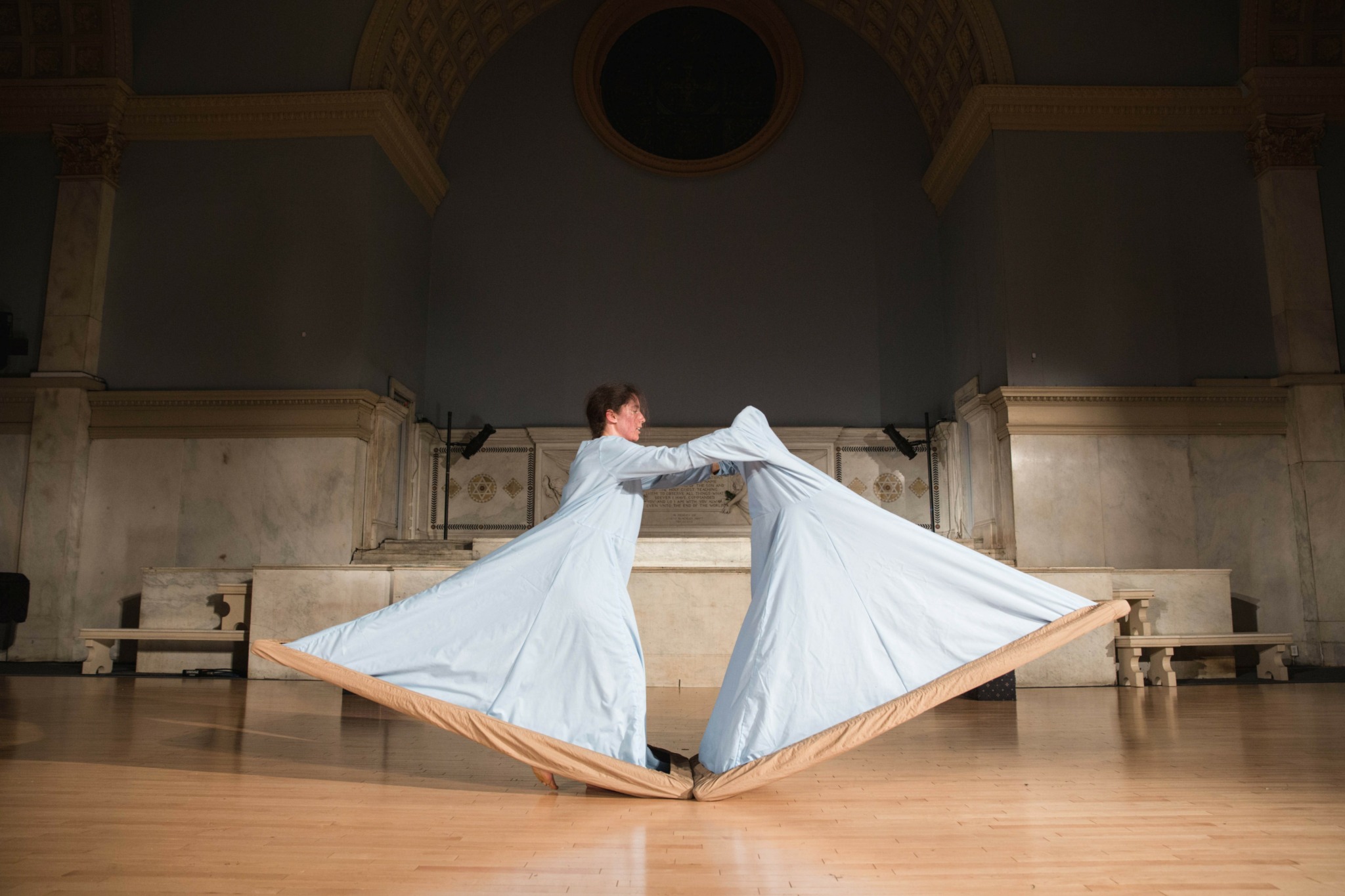
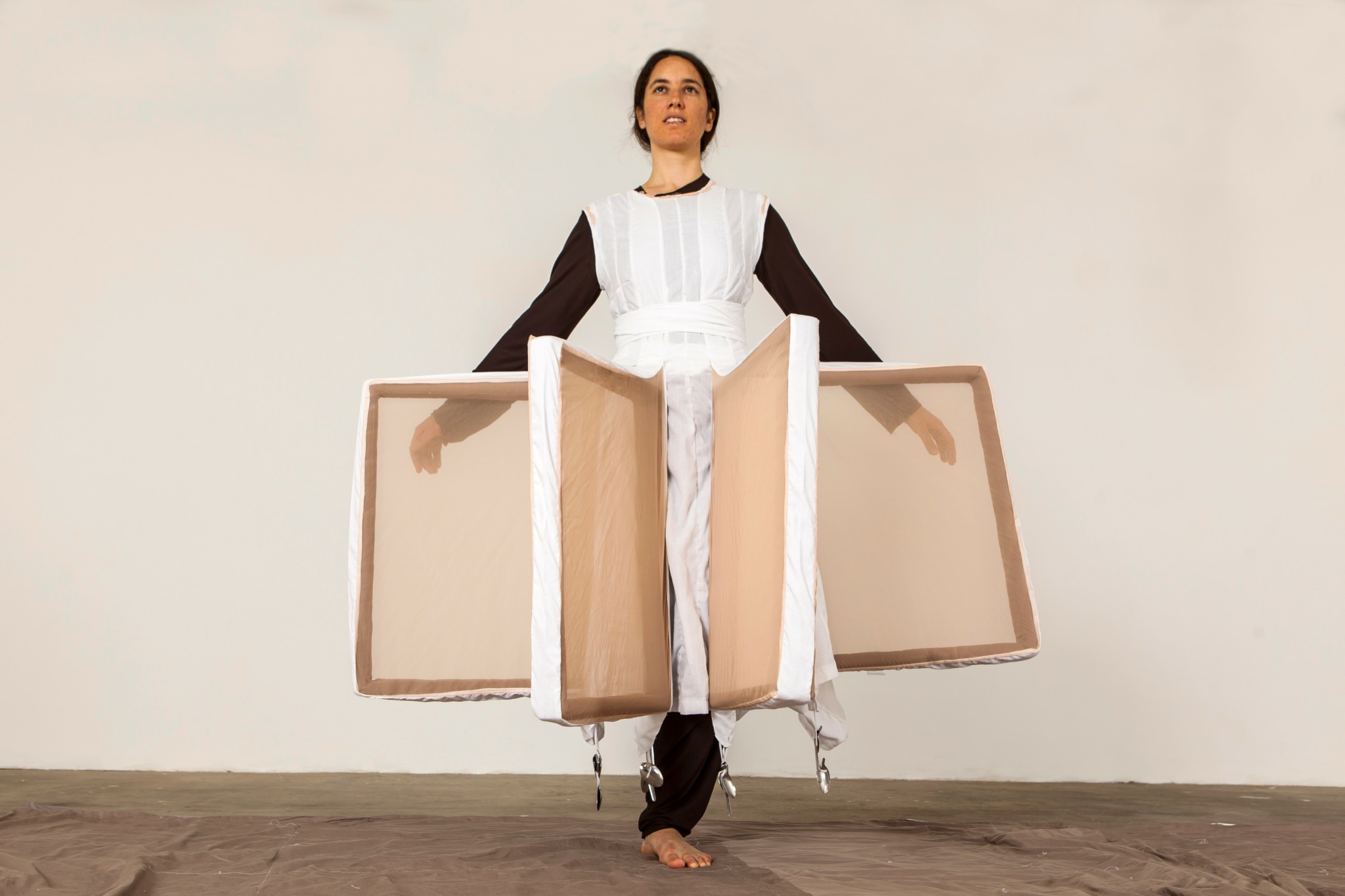
Image Credits
Personal photo: Fia Prestigiacomo
1, 3, 4: Renana Nueman
7: David Gonsier
8: Maya Baran
2, 6: Ye’ela Wilschanski