
We’re excited to introduce you to the always interesting and insightful Harry Chow We hope you’ll enjoy our conversation with Harry below.
Alright, Harry, thanks for taking the time to share your stories and insights with us today. Parents play a huge role in our development as youngsters and sometimes that impact follows us into adulthood and into our lives and careers. Looking back, what’s something you think you parents did right?
I grew up as a first-generation Asian American. My parents immigrated to the United States in search of stability and opportunity, but like many immigrant families, we lived with a constant mix of gratitude and pressure. Compared to many people, I was fortunate. We had a roof over our heads, food on the table, and my parents worked hard to make sure I had the resources to attend a very good high school. But that did not mean life was easy.
What my parents did right was teaching me resilience through their own example. What weighed on me most wasn’t money. It was watching them face serious health challenges. My family has dealt with terminal illness and the reality of my parents aging faster than I ever imagined. When you grow up knowing your parents may not be around forever, every choice feels heavier. You live with the feeling that you are racing against time to make their sacrifices worth it.
That urgency taught me something most people take decades to learn. You don’t have all the time in the world, and even if you have money, there are things in life that matter far more. Your health. Your family. Your relationships. The impact you leave behind.
I came from a competitive high school. I sat in classrooms surrounded by honors students and it always felt like my friends had perfect grades. Their report cards were flawless, their SAT scores were high, and their acceptance letters rolled in from the ivies. Meanwhile, I was just trying to keep up. My GPA was average, my SAT score was okay, and when I applied to my dream college, I didn’t get in. It felt like I was running a race I had already lost. Every comparison chipped away at my confidence. I told myself I was not smart enough, not capable enough, not deserving enough. For a long time, I believed it.
Everything changed when I got involved with a student nonprofit. At first, it was just something small to do on the side. But little by little, it grew. By the time I graduated, I had helped scale that nonprofit into one of the largest student-led organizations in North America. We reached a $25 million valuation, 550 million impressions, and built a 70,000-person community across 15 countries. I worked with a team of hundreds of students and partnered with global brands. For the first time, I was doing something that could never be measured on a transcript. That experience showed me that success does not come from perfection. It comes from passion. It comes from persistence. And it comes from refusing to stay down after you fail.
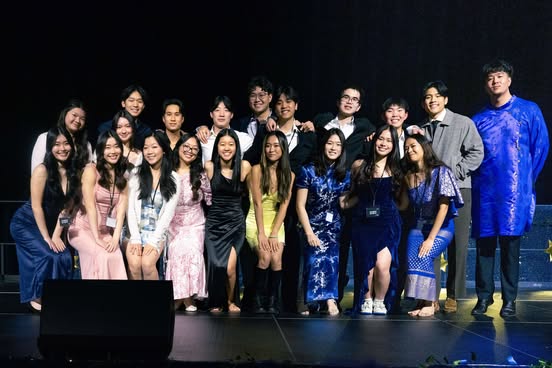
When I arrived at Bentley University, I carried those lessons with me. I took on leadership roles, eventually becoming President of the Asian Students Association, one of the largest cultural groups on campus. I served as Associate Director of Partnerships at NAAAP, a national nonprofit supporting Asian American professionals. I organized cultural events that brought hundreds of students together. I mentored and tutored younger students, helping them navigate school and career paths with more confidence than I ever had at their age. Along the way, I discovered storytelling. I began posting on LinkedIn and TikTok, sharing lessons on personal branding, leadership, and growth. I collaborated with startups and consumer brands on marketing campaigns and UGC projects. None of these opportunities came from a perfect résumé. They came from being willing to put myself out there, to tell my story honestly, and to connect with others through it.
At every step, my family’s story was behind me. Watching my parents fight through illness and aging gave me a sense of urgency. I felt like I could not waste time. Every success I achieved was for them. Every opportunity I earned was proof that their sacrifices mattered. Every time I doubted myself, I reminded myself that if they could survive everything they had endured, I could survive one more rejection, one more failure, one more late night of work. I would not be who I am today without the struggles I saw at home. They taught me resilience. They taught me empathy. And they taught me that impact is not measured in grades or test scores, but in the lives you touch along the way.
If I could give advice to students who feel the way I once did, it would be this: do not let numbers define you. Your GPA and test scores are not the final word on who you are or what you can achieve. Your story is your strength. Share it. Be authentic. Someone else will see themselves in you. Build communities, not just résumés, because the people you empower along the way will always be your greatest accomplishment. And turn pressure into purpose. The challenges you carry can become the fuel for your growth, if you let them.
I tell this story because I know what it feels like to sit in the back of a classroom, convinced you will never catch up. I know what it feels like to go home and carry the weight of family struggles no one else can see. But I also know that those same struggles can shape you into someone stronger, more resilient, and more compassionate than you ever imagined. I started as the student who felt invisible. Today I am a leader, a builder, and a storyteller. I am still growing, still failing, still learning, but I now believe something I never did back in high school: you do not need to be perfect to create something extraordinary.
HARRY, love having you share your insights with us. Before we ask you more questions, maybe you can take a moment to introduce yourself to our readers who might have missed our earlier conversations?
Honestly, my story really started back in high school. I wasn’t the kid with the perfect GPA or the highest SAT scores, but I found my lane when I got involved with a student nonprofit. What began as a side project grew into one of the largest student-led organizations in North America, with tens of thousands of members and hundreds of millions of impressions. That experience showed me the power of storytelling, community, and marketing, and it’s what pulled me into the work I do now.
Today, I focus on marketing, brand building, and creating content that inspires and helps others. I’ve led organizations on campus, like the Asian Students Association at Bentley, worked with nonprofits like NAAAP, and partnered with startups and consumer brands on campaigns that connect with people in a real way.
What sets me apart is that I don’t just look at numbers or short-term wins. I care about making work that actually resonates, that gives people confidence, and that makes them feel seen. I’m proudest when the work has an impact, whether that’s helping students who feel behind find their voice, or helping a brand tell its story in a way that inspires others.
At the heart of everything I do is this: I’m a builder, a storyteller, and someone who creates content to empower people and bring them together.

How did you build your audience on social media?
I actually started out in art, and that gave me a really unique foundation. Art taught me how to translate emotion into work, and how to use creativity as a way to connect with people. When I eventually moved into marketing and content, that skill carried over, I realized that the best campaigns aren’t just about numbers or features, they’re about making people feel something.
Over the years, I’ve run both B2C and B2B campaigns, and they couldn’t be more different. B2C is all about creating a lifestyle people want to be part of, while B2B is more about building trust, solving pain points, and proving ROI. But in both worlds, one thing has always been true: people follow stories, not statistics.
Across all my experiences, whether it was scaling a nonprofit, leading cultural organizations, or running brand campaigns, I’ve learned that the formula is actually simple. You need to create value, you need to be relatable, and you need to be authentic. If your work empowers people, if it resonates with what they’re feeling or striving for, then they’ll want to connect with you and follow along.
Have you ever had to pivot?
For a long time, I thought I was going to be an artist. I had a knack for charcoal art, and I almost went to art school. At different points, I imagined myself pursuing architecture, interior design, or some other creative path where I could bring ideas to life visually. Art was always about expression for me: taking what I felt and turning it into something others could see and connect with.
The pivot came when I chose business instead. At first, it felt like I was walking away from something I loved, but I realized pretty quickly that marketing is actually a bridge between creativity and business. It gave me a way to use the same instincts I had as an artist, storytelling, emotion, design, but now in a way that could build communities, grow brands, and make an impact at scale.
Over time, I saw that business is filled with other opportunities for creativity too, whether it’s designing campaigns, leading people, or shaping the identity of an organization. What made that pivot meaningful is that I didn’t lose my passion, I just translated it. Art taught me how to capture emotion, and business taught me how to apply it to inspire people, build trust, and drive change.
That’s why I feel so at home in marketing-it’s where creativity and impact meet.
Contact Info:
- Website: https://harrychow.xyz
- Instagram: https://www.instagram.com/harryc04/
- Linkedin: https://www.linkedin.com/in/harry-chow1/
- Twitter: https://x.com/_Harryc04_