

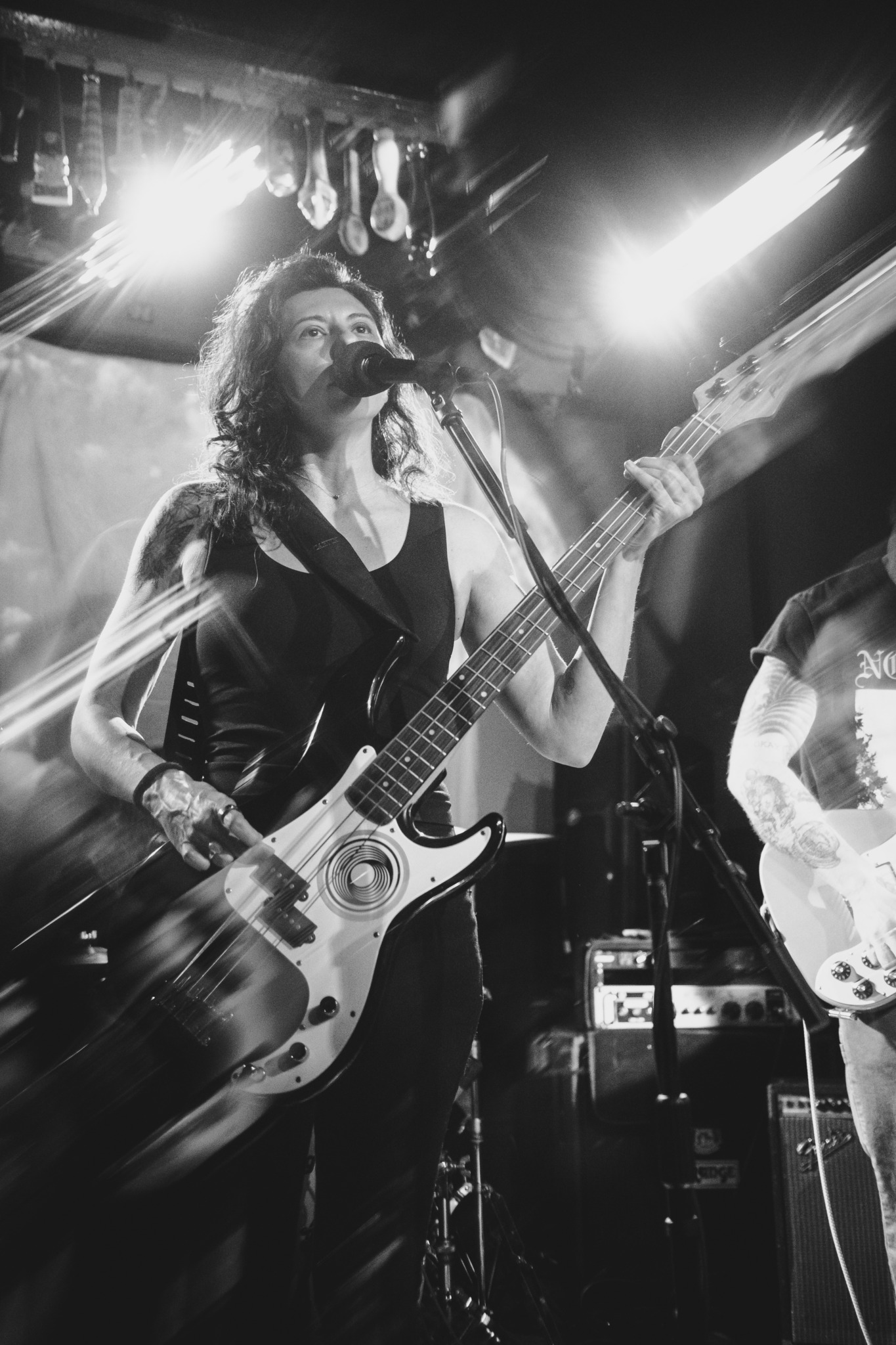

We’re excited to introduce you to the always interesting and insightful Anna Fitzgerald. We hope you’ll enjoy our conversation with Anna below.
Hi Anna, thanks for joining us today. Are you happy as a creative professional? Do you sometimes wonder what it would be like to work for someone else?
I’ll provide some context that will lead up to the present. I started studying music and art at a young age, piano, strings, (dance), I asked for private drawing lessons for my birthday at age 8. I knew I loved to draw and make things and play music. I didn’t really know you could make a liviing in the arts except what I saw on TV sometimes with a performer on a show like Star Search or a ballet. I took every arts class you could take in school and then majored in Art Education. It was after this first degree that I started to think I could make a living in the arts, but tacked on the “education” part thinking it was smarter….I couldn’t find an art teaching job that wasn’t in a rural area after graduation, let alone paid past around $32k. I went to work at a kroger gas station to get by and it was brutal opening the gas station at 6am everyday. I would think, like many of us do when we work jobs we know are jobs and not our career – “This is temporary.” I was in a parking lot contemplating how I loved art but how I thought I took the safe route by becoming a K-12 art teacher, but it wasn’t safe, when I got a call from a friend of a friend who worked at SONY in Nashville. Another friend asked them if there were any temp positions available and that’s one job I had that started a wobbly beginning to “working” in the arts, while balancing being an artist as many of us do. Since 2006 I’ve worked multiple jobs in many areas like offices, a bed and breakfast, a comedy club, music publishing, vinyl record production, waited tables, and in nonprofit management. I’ve worked MANY “regular” jobs and always felt like I was compromising and pieces of me were withering away and for what?….what everyone says we should have – stability, peace of mind, steady paychecks, and if you’re lucky- health insurance. But each time I would work around 2 yrs and feel like I couldn’t take it anymore. It was either so many rules, weird dress codes, overstimulating offices with florescent lighting that left me exhausted when I got home to where there was nothing left for creative work. I kept doing this until- 2016. I had a very demanding full-time “real” job where I was managing 4000 volunteers at a time and responsible for community engagement at a very large and well-known nonprofit. I was very good at it, but the organization did not respect work-life balance and I also being younger, wasn’t in the era of not worrying about how I was perceived and HAD to achieve and possibly over-achieve in my role. Needless to say, I became very sick and after some illegal activity went down that I couldn’t prove, but knew was going on, my health declined as it was a value and moral conflict to go to work everyday and put on a good face for “stability” while I left myself and my life as a creative person behind. I justified this work with “shoulds” and also the idea that helping others was a noble cause. I can say, it is NOT when you leave yourself behind and stop creating or finding meaning in life. So, at 33 I decided I would never work 40 hours a week for a corporation or organization again. I had been working almost 60 per week with that nonprofit and every weekend for a year and half. My work was my life and somehow it wasn’t good enough. I wondered why when I worked on my art and music and creative projects that I was ok with it being my “life” and not the other way around. That’s when I knew, I had to hold the line with myself and stick to my creative pursuits, no matter what, and no matter how hard it got financially. I couldn’t go back. I’d think about my eulogy and last breath and think- there’s no way I wanna lay down thinking, “I didn’t make music or paint or create in ways that give something to people who cannot express the way I can.” It was a truth I had to accept and a responsibility I had to uphold for my life. Our friends and people who want things FOR us, are NOT US, they are observers of our lives. We are the ones who live uniquely and each of us will die with our own thoughts and emotions in the end. I don’t want regrets or should haves to be present in my last moments. It sounds morbid, but I have other reasons for this that arrived long after learning from “real jobs” that nothing is stable, there is only an illusion of stability outside of you. You are the deciding factor ultimately in your awareness and how you move about and experience the world. It took me years to throw away traditions and external expectations of me and to accept who I am, what I want, and how I want to live as a creative person.
Great, appreciate you sharing that with us. Before we ask you to share more of your insights, can you take a moment to introduce yourself and how you got to where you are today to our readers.
I’ve coached creative people since 2017 on their goals, managing their energy to create, and understanding the science of deep focus, also known as Flow. Over the last 4 yrs I slowly swayed back over to songwriting and performing and I aim to combine and evolve as a musician/artist. A phrase I use is “Creative Pollinator” because I’ve always had a knack for connecting creative people and subjects. When I was in undergrad I would help students figure out their schedules before signing up for classes so that it made sense for when they naturally woke up or helped them understand the timelines they need to maintain in order to graduate. I worked several jobs that put me in the public eye and as an observer of lots of creative people. I lived my life in art school going to shows, playing music, and being part of a creative community in Murfreesboro, TN. At the time it was incredibly dense with people making all kinds of things, creating, and lots of house shows. The spirit and explosion of artists that came from that time and place with me, I am still very good friends with. At age 20 I became a founder of an arts nonprofit that still runs today and it was this experience shaped my life in profound ways as to what my purpose is as a “creative pollinator.” I would teach and basically be mentoring hundreds of young people and adults who were teaching at a rock camp and creating systems and infrastructure for operations of the nonprofit. I learned pretty young that I have a great ability to have vision and understand details and steps required to make a vision come to fruition. As i’ve aged, the biggest lesson I’ve learned is that sustainable changes take time and consistency on some level. Often we get used to creating and having feedback and results sometimes quickly, but the reflection and integration aspects to us personally and our lifestyle are what actually take longer to take hold. As a coach those I work with usually have good results beginning with 3 months and I have clients I’ve coached for up to 4 years who I’ve had the honor of helping them evolve as artists and creative entrepreneurs. Usually working together for a year is the mark where there are revelations about what is sustainable AND doable for each person in the way of creative energy and the practicality that life requires us in paying bills, managing a household, and often times working a serious job or multiple jobs to make ends meet for each person. We get to the root of many projects started and never finished, ideas that are lovely and inspirational, but not practical…a big part of my purpose as I’ve evolved in life is knowing I am the sounding board and confidant for many people. The creative people who trust me with their deepest fears, challenges, and allow me to support them are incredible and we have mutual respect because we KNOW that what it takes to create and live an artist’s life can be brutal, winding, and unconventional to say the least. Having someone who has lived the life and actually “gets” you, is comforting in a way that family or friends can miss the mark on.
Problems I solve are mainly, 1) What is the big picture for this phase in your life? This can be creative goals and personal goals, along with lifestyle. 2) HOW the heck can you reach your goals without burning out? I teach energy management, flow science, grit development, and analyze each person’s schedule, commitments, and workflow. Then, I help them create a plan that makes sense to prototype/implement and move forward with. I help people stay accountable and adapt if the plan is not working or something comes up personally that they need to work through. My purpose in life is to elevate the value of creativity in everything I do and am. From supporting someone through tough phases in life or creating a schedule to finish a book, painting, or song, I’m here to create harmony through clarity and organization. I’ve been able to do this in several arts nonprofit management roles and jobs, as well as, help manage creative projects either for community foundations, schools, arts groups, and individuals in my career.
I’m most proud of making a comeback personally after losing my dad in a tragic way just before covid, going into isolation, and coming out having gone through the depths of grief, innerstanding, and learning how my own brain works within the context of flow science and deep focus. I did this without substances, drugs, therapy, or really much help from others. While some might say that is incredibly lonely and possibly stubborn, I came to understand the process as building confidence to face anything and to use my innermost fears, emotions, and depths as reference for art making, music making, and therefore able to empathize with many walks. of life. What sets me apart from a lot of coaches is that I have a very wide variety of experience in the arts. I’ve been serious about theatre, I did drumline, I played classical cello for many years, I worked in Nashville on music row, I’ve cleaned up vomit from many venues and organized many creative events from festivals to conferences…I have practical knowledge and the ability to synthesize and apply what I learned into everyday life and when I work with clients who are doing these same types of jobs or want to work in a field of art. My friends joke that my resume has ADD and I don’t mind it because I have a very solid reference to time and energy required for many types of work, including artistic production, along with the recovery time an artist needs after producing their work or performing.
I’m focused on songwriting and performing with my band, Shower Cry currently and leave a few spots open for coaching clients. I really like doing deep with 1-3 clients a year and I enjoy group coaching because I’ve found that in small groups people learn that they are not alone and face some of the very same problems as artists. Sometimes just knowing you are not alone can make all the difference! I took 15 years away from making music and it feels really great to be back in what I consider my main craft. I’ve returned to cello, bass, and singing, and it has been a great experience in self-discipline and learning to work with others. No one is perfect, I am far from it, and one thing that I can see is different about me is that I know that relationships, friendships, and working environments change. Some days are going to be crunchy and maybe even drive you nuts, others will be euphoric and high….but it’s the ability to traverse these ups and downs that show us who we really are. The most adult realization after working with many clients and creative people is when the truth stands alone that we all are human, we all will make mistakes, and we can all choose what we focus on. Focusing on moving forward can be easier with a coach or creative mentor, I hope I can be a positive force for anyone I meet.
What can society do to ensure an environment that’s helpful to artists and creatives?
This is a deep-rooted aspect of all of our lives. I studied how subcultures form through social and psychological bonds in graduate school within the radio/tv/film, ethnomusicology, and art history departments in a program called “Media Studies.” During that research I learned that value must be clear in order to create bonds. You either bond with the art, bond with the artist’s intent, bond with audience members, or you bond geographically through exposure to a scene. All of these aspect create an identity bond. One way society can support artists is to put aside whether you identify with an artist and value their ability to create in ways you may not be able to. Within these creations, you may uncover parts of yourself and humanity that you haven’t found any other way, place, shape, or form- therefore the artist is valuable.
Another way to support a creative ecosystem is to exchange value for value and do not debate price. While you may not think a painting is worth $200, the artist took the time to create it and values it as such for the exchange. Haggling with an artist is saying, “You are not valuable enough. Lower yourself to my perception.” We live in a world with music for example from American culture, which is valued all over the world, yet in America, a majority of artists are not valued in ways that proportionately exchange financial amounts for what is valued. (In other words people want this value from the artist for free. My question is: If the art is so valuable and you want it (often at your fingertips with streaming), why always try to get it for less, or free? You can trace American music and its influence all over the world, and the influence of other cultures into American music, but systematically, the arts remain underfunded and often an afterthought.
The very simple ways to support an artist are: tell them how much their art means to you. Show up, and when possible, buy something of theirs. Encouragement goes a long way and word of mouth does too.
What do you think is the goal or mission that drives your creative journey?
I don’t know whether it’s a goal or mission, but it is an impetus. I’ve played cello and watched people cry in the audience as a young person. I’ve delivered lines in theatre and watched emotions change on faces who didn’t know me. I’ve played many times in public and also seen people cry listening to songs or the story inside the song…the point is, NOT EVERYONE CAN CREATE THE WAY YOU DO. In this way, it’s a gift and burden. Artists are the only population who continually and most of the time willingly put themselves out there for others to SEE. I’m not talking about surface details, sometimes art is all the way down underneath and can come up as something that NO ONE has ever seen, not even the artist themselves…and some of us share it with the a friend, a family member, or…the world at a performance or even online. We don’t have to do that, the art is ours first. THEN, it can be shared and belong to others. I say belong because once I sing a song in front of one person, I accept that they may choose to love it. They may never love me as a person, but they can love the song or what it’s about or that it reminds them of someone they love. In this way, artists are brave. You can apply this to any art form. Ok, so who willingly puts themselves out for scrutiny over and over and over again as an expression? Not as a function, but an expression of self? In this way, we bring incredible beauty to the world and the beauty is made from ALL parts, the good, the ugly, the fickle, the broken, the joyous, the curious, the sad and gross aspect of being alive…the artist draws from all of it. And if we’re dedicated, we can take all of this and make it into something that moves a person.
As an artist, I am driven to move people and remind them of being alive. This is an honor and a great responsibility. I do this first for ME and then, for others. Making art (of any kind) reminds me I am alive and here…and I won’t always be. So, I accept I won’t hit the mark every time, I may never make a living with art, I may never be known outside of a small circle, but I’ll know I lived because I made art.
Contact Info:
- Website: https://heartbeathive.com
- Instagram: https://www.instagram.com/heartbeathive/
- Youtube: https://www.youtube.com/c/annafitzgerald
- Other: Shower Cry (my band): https://www.instagram.com/showercry_band/
Image Credits
Justice Images (Joe Justice, https://www.justiceimages.com/Music )
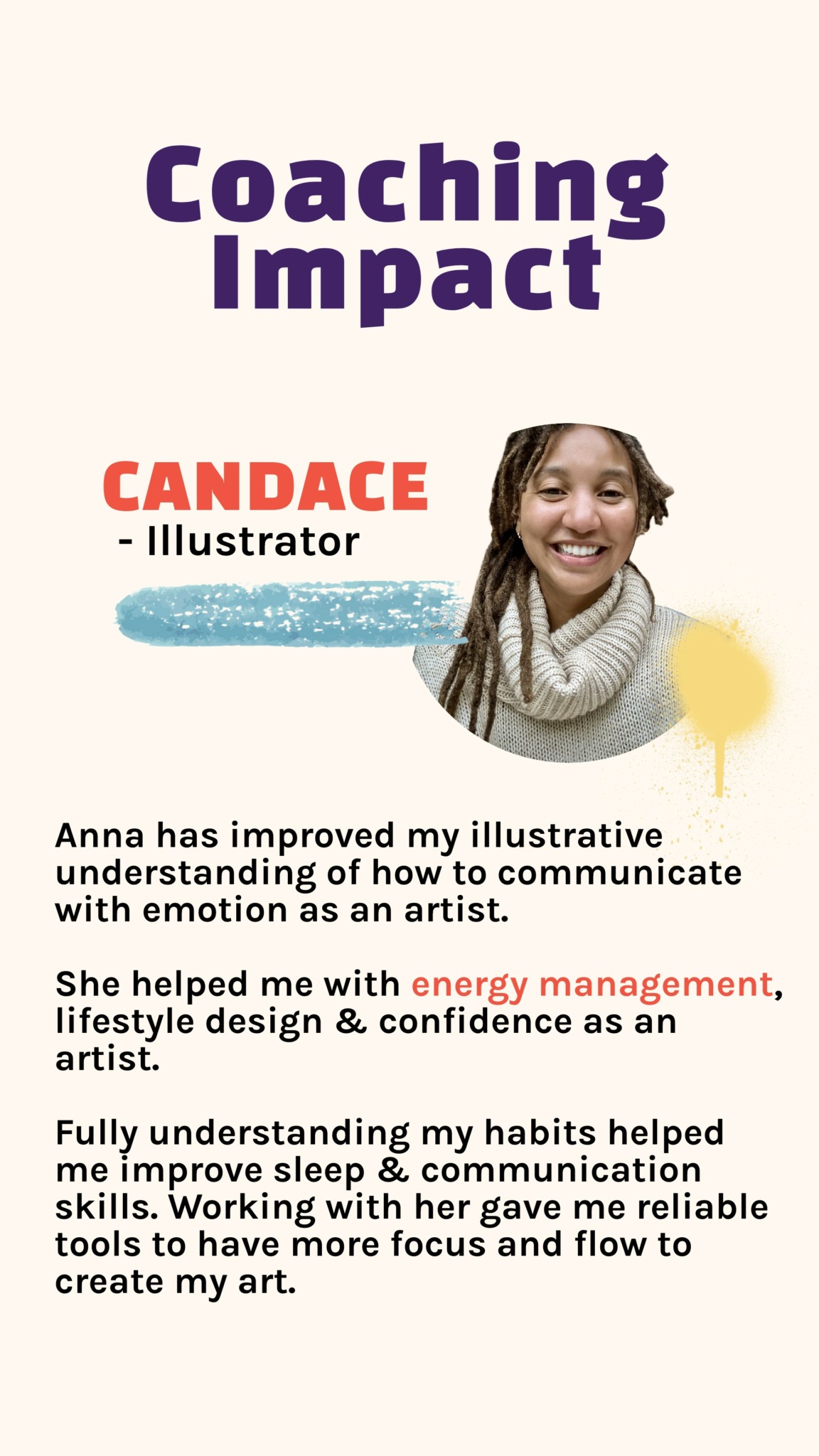
Screengrab is a testimonial of my client Candace. Coaching is transformational, so I don’t really have picture of me talking ot me people on video chat while coaching.