



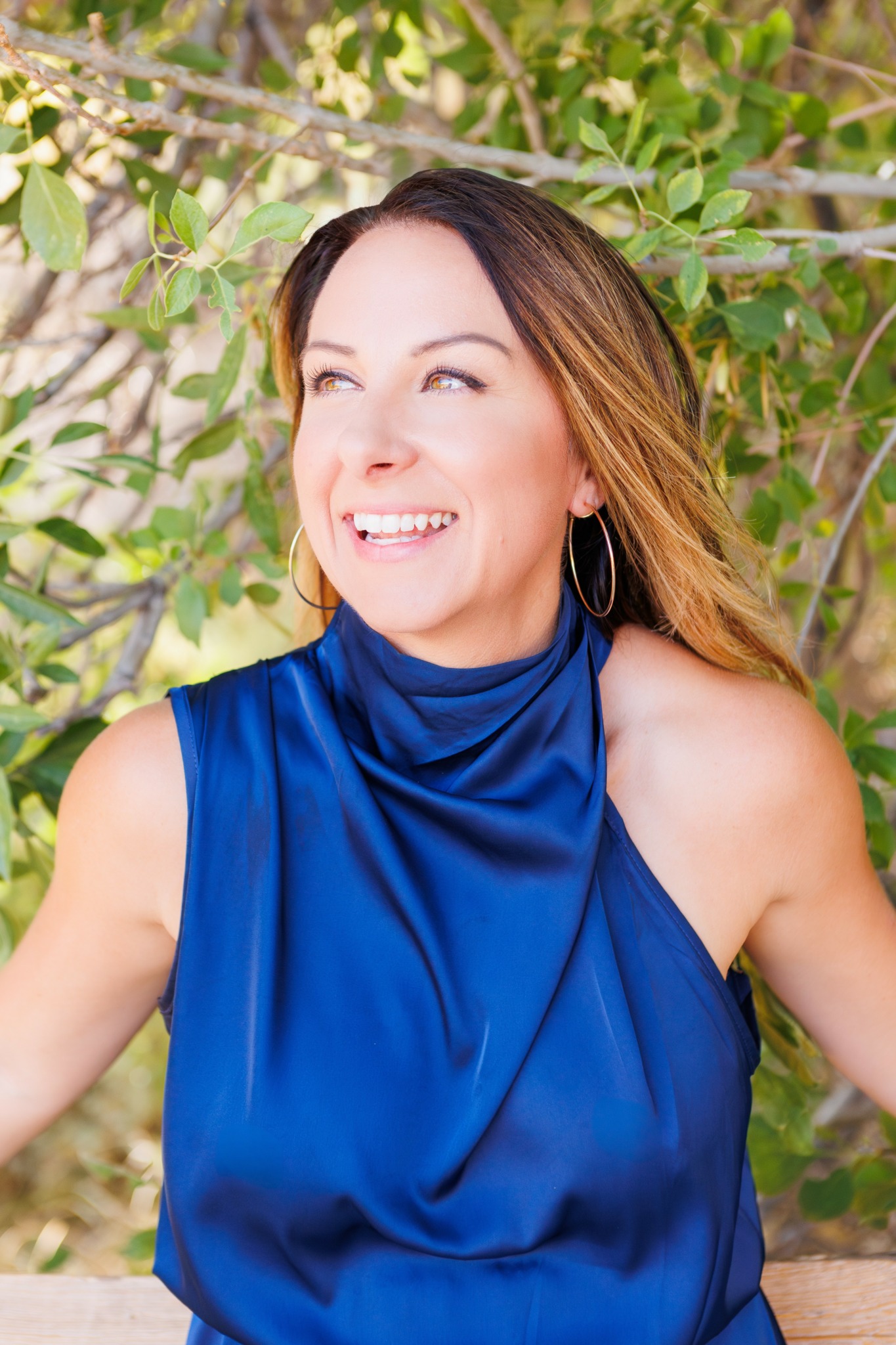
We were lucky to catch up with Megan Alves recently and have shared our conversation below.
Megan, thanks for taking the time to share your stories with us today Was there a moment in your career that meaningfully altered your trajectory? If so, we’d love to hear the backstory.
There have been a few defining moments. The first came early, when a family member encouraged me to try therapy during my mom’s struggle with alcoholism. I remember sitting in that office, sobbing my way through the whole session — only for the therapist to confuse me with another client’s story. I left thinking, “Well, that was the last time I’m ever doing this.” For years, I stayed surface-level. But before I finished my graduate degree, I knew I had to work on my stuff. When I finally found and trusted a therapist and shared my story, I realized just how powerful it is to feel truly seen. That shaped everything about how I practice now — my clients will always know I’m listening, fully.
The second defining moment came from a dear mentor, now friend. At the time I meet with her, I had pretty much decided social work wasn’t for me. At the time, I was assisting a family member with their therapy agency and exploring how to bring integrated healthcare to more people. When I first met my mentor, I told her I didn’t have an interest in social work because so many I’d seen struggled to manage high trauma. She looked me straight in the eye and said, “Megan, you can be a different type of social worker.” That struck a chord. I wanted to bring trauma-informed care to people who felt overlooked, and meet them exactly where they were. I walked into her office just trying to understand integrated healthcare in our county — and three days later, I was signed up for a master’s program. Sometimes the best detours end up being your path. It hasn’t always been easy, but I know I am exactly where I’m meant to be, and I love the work I get to do.

As always, we appreciate you sharing your insights and we’ve got a few more questions for you, but before we get to all of that can you take a minute to introduce yourself and give our readers some of your back background and context?
I’m Megan Alves, a Licensed Clinical Social Worker and founder of Peak Mental Health and Mental Summit. At Peak, ( which stands for Physical Emotional Awareness and Knowledge) I provide 1-on-1 therapy, specializing in trauma, anxiety, and life transitions. My focus is holistic care — looking at the whole person, not just a diagnosis — and helping people discover empowerment in their health. Sometimes that means untangling deep trauma, other times it’s managing everyday stress, or even something as practical as encouraging clients to schedule their primary care appointments. Either way, my role is to meet people where they are and give them space to breathe.
But I also knew healing couldn’t just live inside the therapy room. That’s why I created Mental Summit, my education and mentorship platform. It’s designed for parents, entrepreneurs, first responders, and high-achievers who feel stretched thin. Some have had negative therapy experiences and need a safe on-ramp back to healing. Others are already in therapy but want to dive deeper because they know growth doesn’t stop after a 50-to 60 minute session. Mental Summit gives people practical tools to regulate emotions, find balance, and reignite their spark — on their own time.
The problems I help solve come down to this: people feeling stuck, overwhelmed, and disconnected from themselves. I help them learn to manage stress, build emotional awareness, and create healthier patterns so they can thrive instead of just survive.
What sets me apart is a mix of professional training and personal lived experience. Professionally, I’m trained in EMDR through EMDRIA and certified in Complex Trauma Levels 1 and 2. I’m always pursuing evidence-based modalities because people deserve care that actually works, someone to help them think out of a box.
Personally, I’ve walked through grief, burnout, and plenty of anxiety. I’ve wrestled with perfectionism and people-pleasing, and I once believed rest wasn’t productive (spoiler: rest is very productive). Learning to let go of those patterns gave me a healthier, more sustainable way to live — and it’s why I can help others find theirs too.
Let’s talk about resilience next – do you have a story you can share with us?
Resilience and I go way back — though for a long time, I didn’t call it that. In massage school, I failed multiple exams, one of them six times. Later, I failed my first social work licensing exam and only passed on the second try. At the time, it felt humiliating. Now I see it as grit — I’m relentless in my mission.
That’s also when I realized I wasn’t “bad at tests” — I had testing anxiety. Once I asked for help, leaned on support, and used the right tools, I was able to move forward. It taught me resilience isn’t about pushing harder, it’s about working smarter and having the courage to say, “I need help here.”
By graduate school, I had two kids under five and my amazing husband who was traveling. Life was chaos, and I often wondered if I’d make it through. But I did — not perfectly, but persistently. With so much help, I had to get real vulnerable and ask for help and people showed up, forever thankful for them ( you know who you are!) And in that process, I learned something else: resilience isn’t just about powering through — it’s about putting my health first. When I began prioritizing my own well-being, I could manage everything better and show up stronger for my boys. Movement, rest, and balance became non-negotiables, and they’ve made me both a better mom and a better therapist.
To me, resilience is showing up, asking for help, and choosing what truly matters.

Have you ever had to pivot?
Starting Peak Mental Health — which stood for Physical, Emotional, Awareness, and Knowledge — was one of the scariest and most rewarding leaps of my life. It came at the tail end of the pandemic (need I say more?). Honestly, it felt like having a baby — my “third child.” I poured my heart into it, figuring out entrepreneurship as I went, and learning to trust myself in the process.
About a year in, I realized something had to shift. To protect my license and my vision, I needed to separate my clinical work from the education I wanted to offer. With guidance from my attorney and the support of mentors, I pivoted — moving from one business to two. At first, it felt like loss. But soon I saw it for what it was: growth. That’s how Mental Summit was born. Peak became the foundation where I serve clients one-on-one, and Mental Summit became the space where I could reach more people through education and mentorship.
But honestly that wasn’t the only pivot happening. Around grad school — and especially when I launched Peak — I had to make a personal shift too. For a long time, I chased quick fixes, thinking that was the only way to manage stress or calm anxiety. What I finally learned is that it’s the small, consistent choices at home that will give me long-term peace and well-being. Choosing movement, rest, and healthy rhythms became just as important as any business decision.
Looking back, both pivots — in business and in health — taught me the same truth: you can’t build big dreams on an empty tank. I teach this a ton. Protecting your foundation, whether that’s your license or your health, gives you the strength to grow.
Contact Info:
- Website: https://mymentalsummit.com/ and https://peakmentalhealth.org/
- Instagram: https://www.instagram.com/mentalsummit/
- Facebook: bug is everything done https://www.facebook.com/profile.php?id=61565594925459
- Linkedin: https://www.linkedin.com/in/megan-alves-a8793b223/
- Youtube: https://www.youtube.com/@MentalSummit
- Other: https://share.google/U0BbXKiWMsVNf09TI https://learn.mymentalsummit.com/bundles/elevate Spotify: Summit to Healing


Image Credits
Ati Grinspun