


 Alright – so today we’ve got the honor of introducing you to William Brigham. We think you’ll enjoy our conversation, we’ve shared it below.
William, appreciate you joining us today. Do you feel you or your work has ever been misunderstood or mischaracterized? If so, tell us the story and how/why it happened and if there are any interesting learnings or insights you took from the experience?
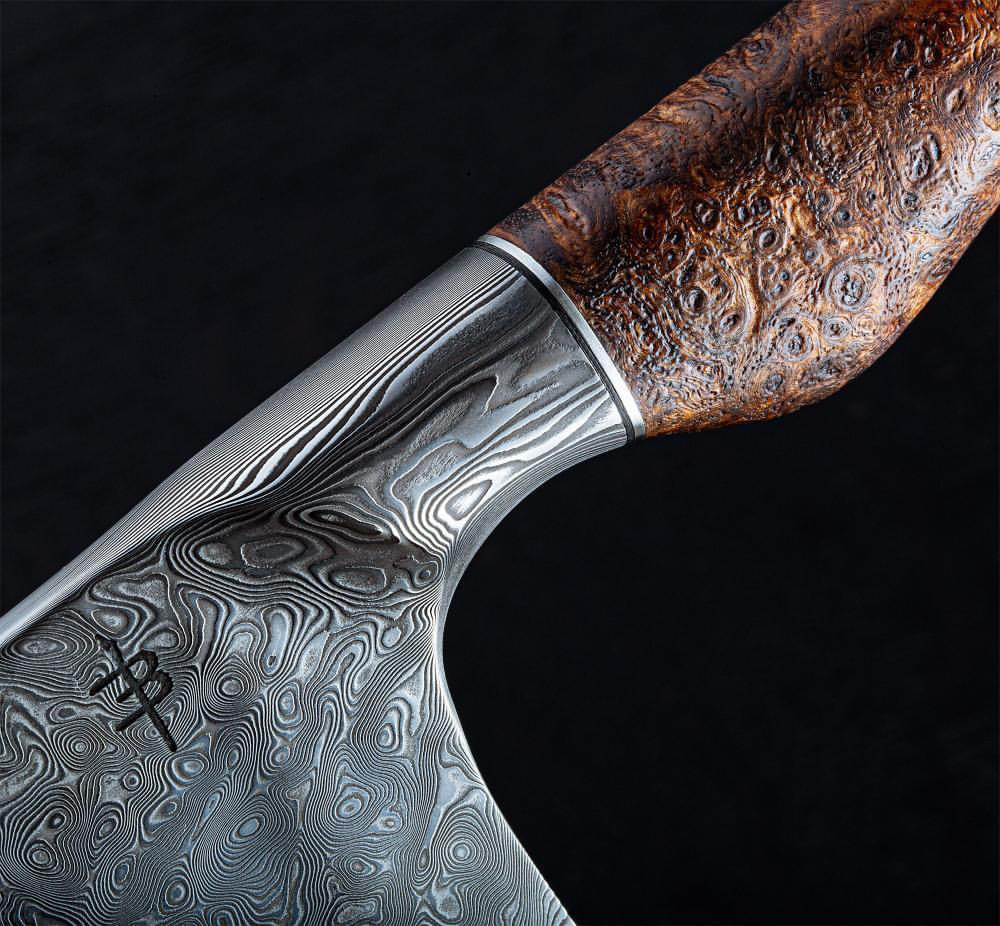
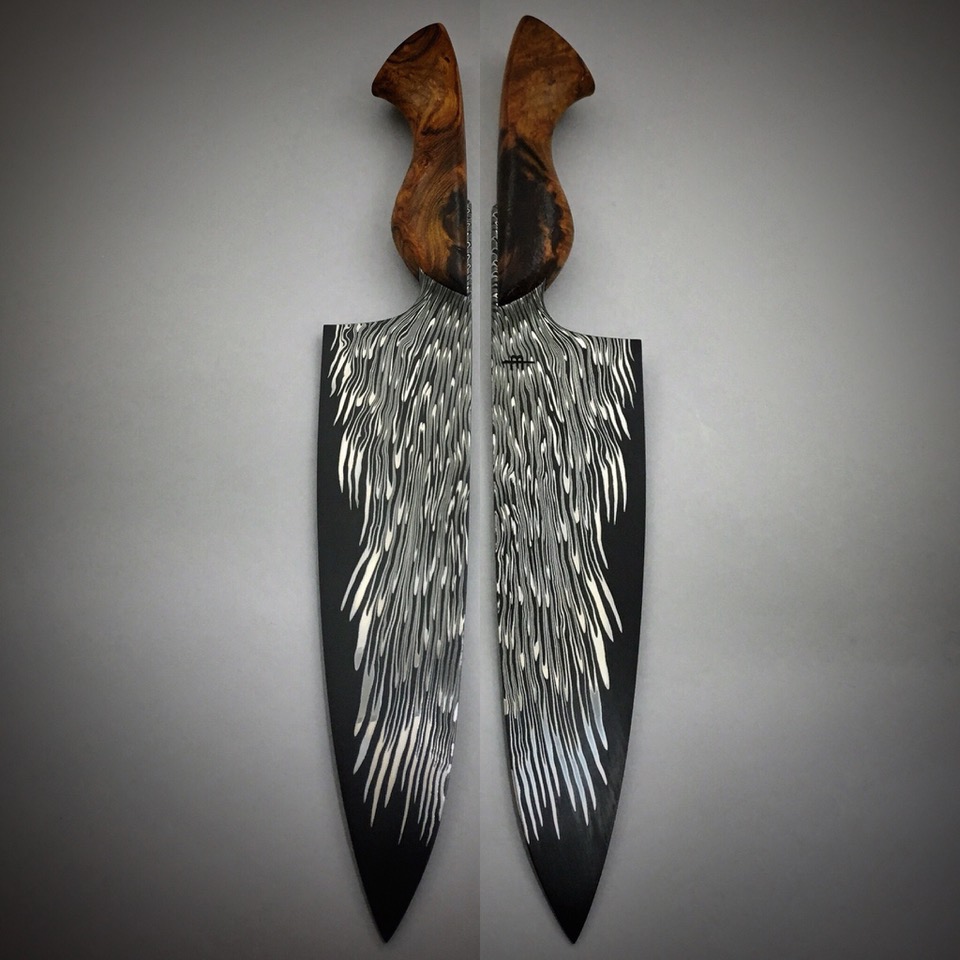
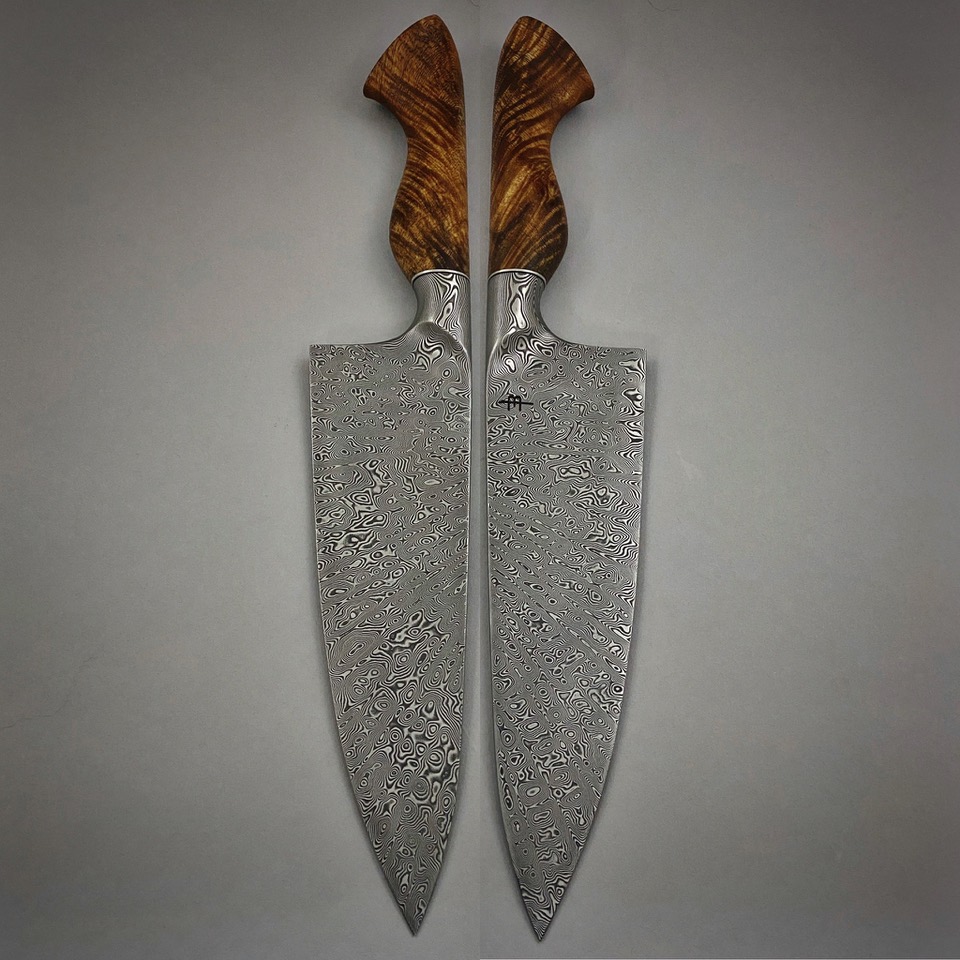
I have had several well-known knifemakers (and even customers) tell me that the people out there really do not understand how remarkable my knives are. There are a large number of other makers forging damascus and creating knives today, and many of them produce excellent work. I can say with confidence that there is no one else making blades out of pattern welded stainless steels as I am today. I have been pushing boundaries in every aspect of my work: The materials used, the fit and finish, as well as the textures and overall appearance of my blades are unlike anything else that has ever been produced. The most misunderstood aspect of what makes my work so difficult is that my blades are made of a variety of stainless steels. The blade will look as good the day you acquired it as it will 10 or even 20 years from now. It will be bright, shiny, and sharp when you give it to your grandchildren. A damascus blade from any of the other finest smiths in the world will look like it has an oil slick on the surface within days of use. Those blades will begin to get a brown patina and eventually rust. Mine will not.
I strive to make beautiful and magical blades. They shimmer as light plays over the ripples in the metal. The eye follows clean lines, soft curves and takes careful note of the sharp edge. I guarantee you that the moment you pick up one of my pieces you will notice everything that makes it different. Most importantly, it will stay that way.
William, love having you share your insights with us. Before we ask you more questions, maybe you can take a moment to introduce yourself to our readers who might have missed our earlier conversations?
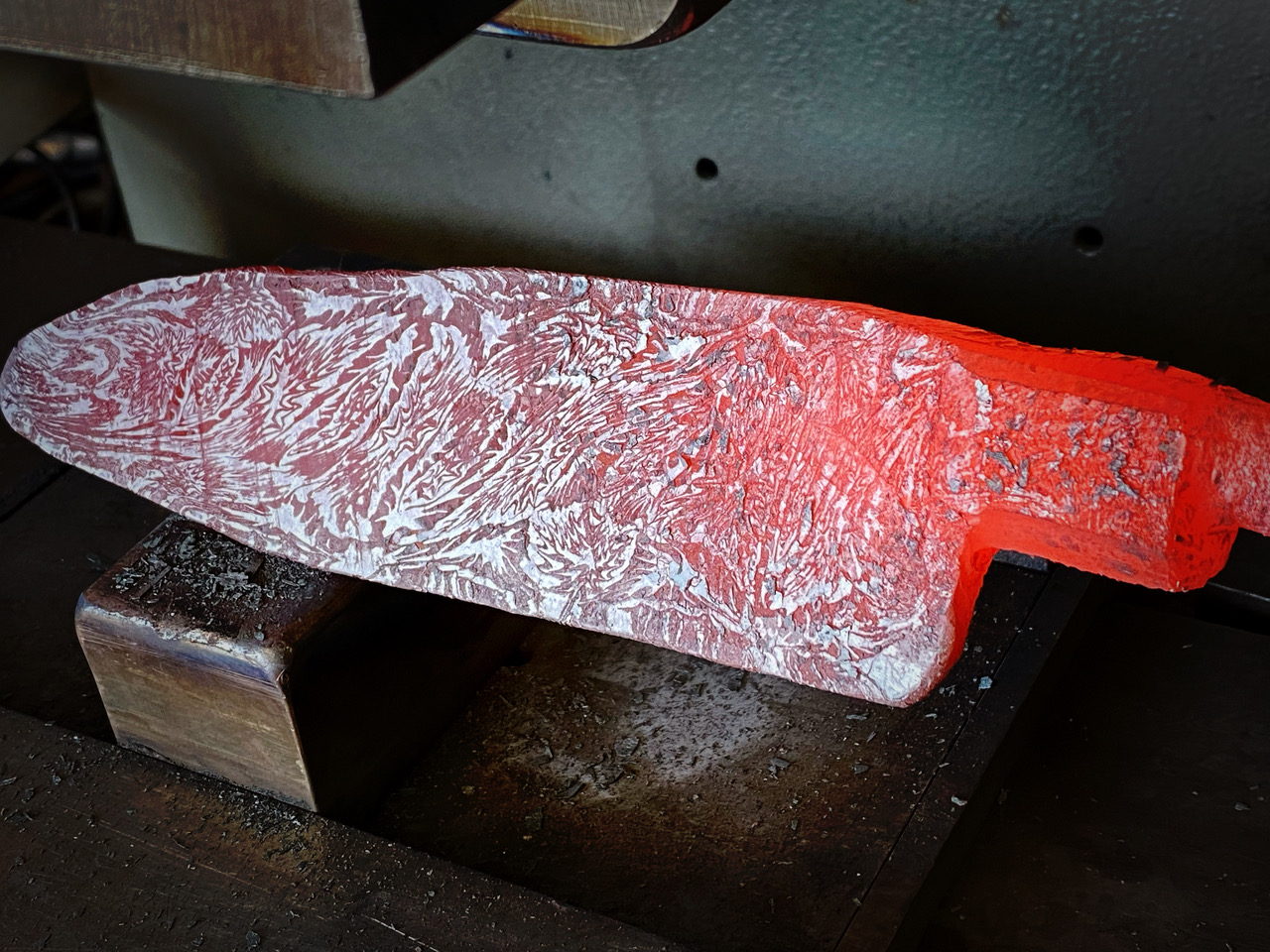
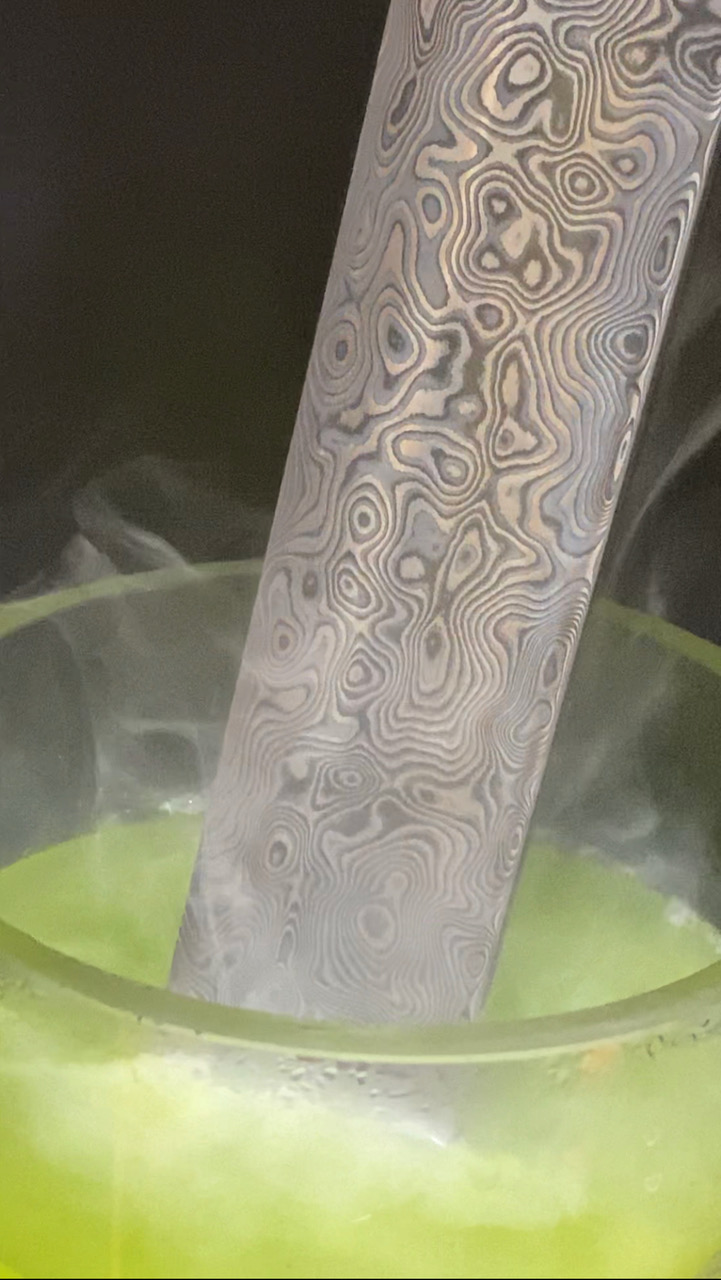
My name is William Brigham and I am a bladesmith specializing in pattern welding exotic stainless steel alloys for culinary blades. I have a rather overwhelming imagination and a love for the mythical and arcane, as well as science and technology. As a child my father would read me stories every night as I fell to sleep. Everything from The Count of Monte Cristo, to The Lord of the Rings and Star Wars novels fueled my dreams. Even today the majority of my waking hours are spent with headphones in and Science Fiction or Fantasy novels whirling through my thoughts. I was fortunate to be able to travel all around the world when I was young and spent time in museums, walked through crumbling moss covered castles and saw the carvings in temple ruins. I loved seeing all of the ancient gold inlaid weapons and artifacts. What does this have to do with making knives? Well it all shaped who I am today and how I approach my work. I get to use a hammer and anvil to shape glowing red hot steel, and have actual glass cylinders of bubbling green acid that reveal the pattern hidden in the structure of the blade. This is probably as close to alchemy, enchanting and shaping the primal powers of the universe as I will ever get.
For those not familiar with the terminology or history of steel, humanity has been forge-welding/ laminating/pattern-welding steels together for over 2000 years. The majority of the time this was for a practical reason. The availability of good high-quality steel that would hold a cutting edge was scarce, and that steel only needs to be at the edge that is doing the cutting/chopping/chiseling etc. The high-quality steel was often welded onto a poorer-quality steel or iron body. Smiths and users of the knives and tools quickly noticed that the two steels would weather differently and that there was a visible difference in color and texture. Independently, every steel producing and using civilization did this on purpose, folding in layers and patterns. The Vikings, Romans, Chinese, Japanese, various peoples throughout Southeast Asia and Africa, all throughout the Middle East, and India (just to name a few) dabbled with laminating steels. The most recognizable and controversial term for all of this is “Damascus steel.” This term was popularized in the west by the ingots of Indian crucible steel that made its way to the Middle East (Damascus, Syria) and then into Europe. Ironically, this steel is not laminated at all, but has inherent visible patterns due to the way it is created and forged out. It has just become common practice by many to call all steels with visible intentional patterning “damascus.”
Today, there is no functional necessity for laminated steels: Its creation resides solely in the realm of art. It is an exercise in creating through deft manipulation of the materials. I view my blades as a canvas on which my art is displayed. This canvas is not meant to be just displayed, however, but held and used every day. I put as much thought and care into the geometry and heat treatment as I do into the functionality of of the blade.
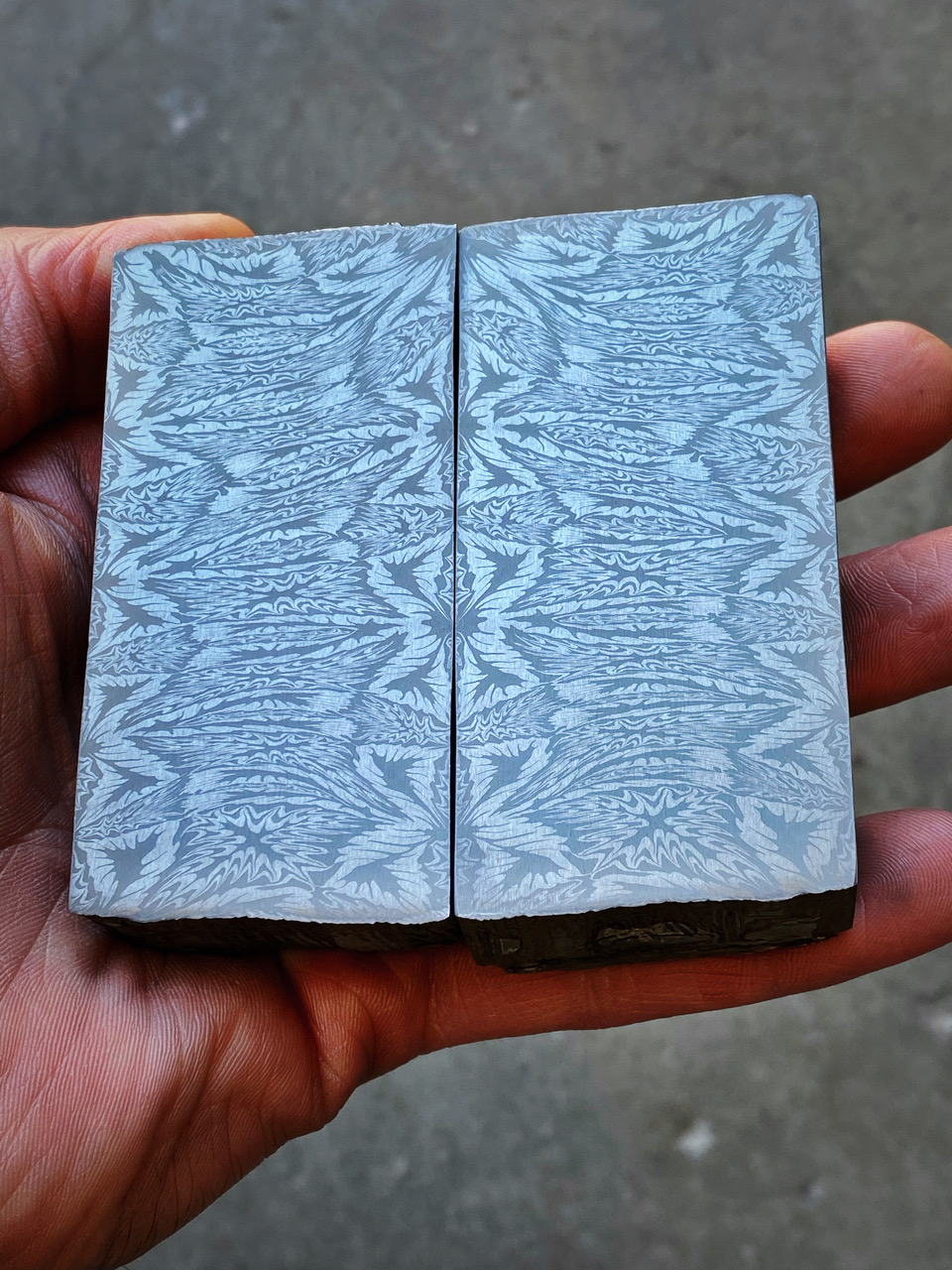
It is very important to point out that the pattern you see is not only on the surface: Every pattern runs through to the core—it has real depth. What you see is the very structure of the blade, just as the grain in wood. My blades are pattern-welded stainless steels, so they will continue to stay bright and shiny while other damascus blades will rust away.
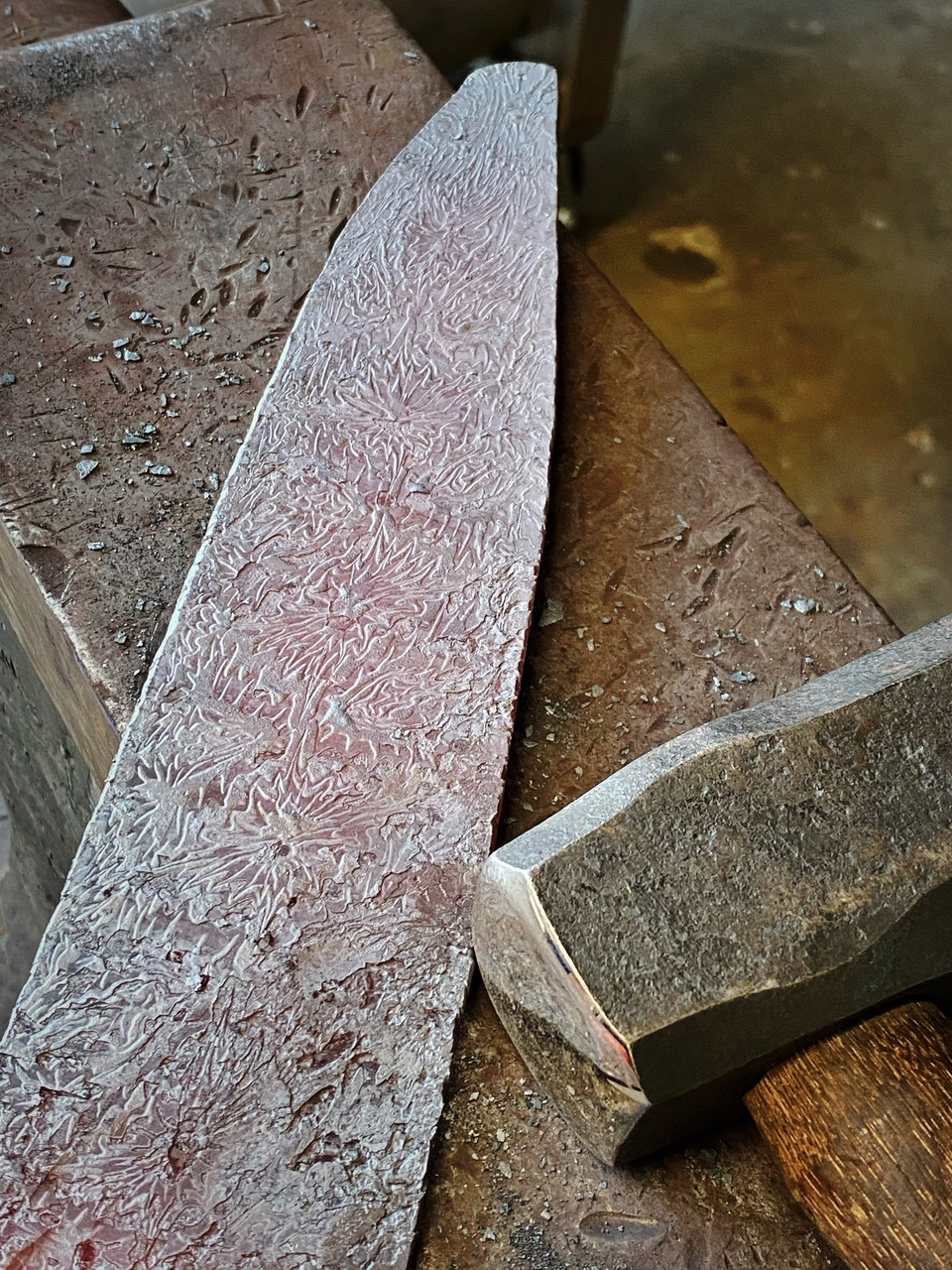
From forging and patterning the layers of steel, to forging out an individual blade, to precise heat-treatment in order to achieve the best possible balance of hardness and toughness, to careful grinding and shaping of the blade to find its final optimal geometry, to hours of hand finishing with abrasives, to polishing and acid etching to finally reveal the pattern, I put my heart, soul and not a little blood and sweat into each and every blade.
I use my hands to create functional, beautiful objects. With the earth’s raw materials—metal, wood, and stone—I use fire, strength, and skill to shape these mediums into a desired form. The details mean everything and the material out of which something is made and the process through which it is made is as important as how it looks when complete. I strive to bring beauty into the world by making something that will stand the test of time.
I have to admit I sometimes get overwhelmed with the overall complexity of what I do. The creation of this work requires an immense amount of time and patience. I have had to become part chemist, engineer, fabricator and more than a little “mad scientist.” Not only do I forge these objects by hand, but I also make and maintain a majority of my own tools and equipment. There is something powerful and elemental about having precise control over the heat, pressure, and time required to make these pieces. Though I have made them and know precisely what is happening down to the crystalline structure of the metal, I am still enthralled with the process: To me, it’s damn near magic.
Can you share a story from your journey that illustrates your resilience?
I have had to become very comfortable with failure. Many of the steps in the processes I use to create my blades are extremely unforgiving. I get one shot to get it right. Once a process goes wrong, there is usually no way to fix it. I have had a solid week’s work of 12-hour days be destroyed by a moments inattention or a faulty temperature reading. All of the other makers that know what I am doing and how I do it all think I am more than a little crazy. But to make great art, (to make great anything,) I think you have to be a little crazy.
The handful of people around the world who know the techniques are not eager to share because each of them has had one hell of a time wrestling with them. I set out to make pattern welded stainless damascus and I was not going to let anything get in my way. I knew it was physically possible: my goal was to take it further than anyone else had. I read scientific papers on metal diffusion, and gleaned what I could from those that would give me hints. I just kept on researching and kept experimenting and kept going until I got it down. As successful as I have been creating these materials, it remains a stressful process that requires my undivided attention.
The temperature control required for forging stainless steels is much tighter than traditional steels. The need for this fine control over a furnace does not exist outside of a large industrial setting, or in a small laboratory scale. After much consulting with experts and years of planning I fabricated two highly controllable propane fired forges (one for large work, one for small.) The body design comes from the Navy shipyards of the Pacific Northwest and the air/gas controls are a working prototype for an advanced control system that some friends and fellow makers are working on. I say all of this to emphasize that I am not screwing around. I love the historical and fantasy connotations of forging steel, but I am going to use all of the science and technology at my disposal.
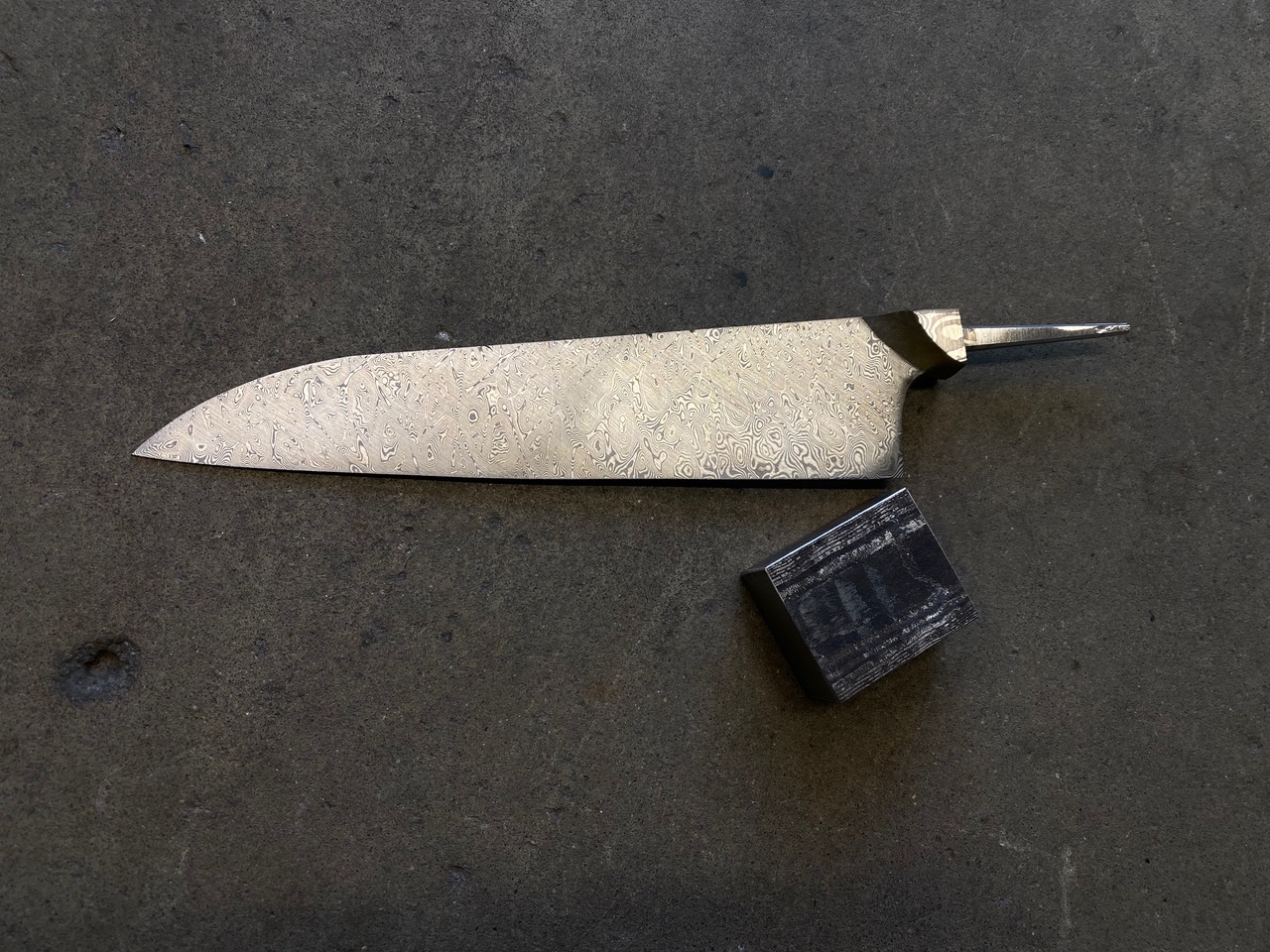
Thats is all just making the patterned material itself. I must next forge a blade out of it. Then I heat treat it using the best methods possible in the world today. My success rate is very high now, but it has been a long hard road. The number of cracked, warped and broken blades I have dropped to the shop floor in defeat would make Hephaestus weep.
For you, what’s the most rewarding aspect of being a creative?
I love hearing about my blades actually being put to use. It is lovely to know that something I have made is being used each day in someone’s kitchen. I know that many of my pieces are in collections–they sit on shelves, and hide in drawers and cabinets. That is fine, I know that they bring joy every time they are admired and displayed. I am not going to lie, I know the exceptional high quality of my work and what goes into it. I know what it is like to wield one of my legendary blades–Even if it is just against vegetables.
Contact Info:
- Instagram: @the_artificery
- Other: email: william@theartificery.com
Image Credits
EatingTools.com