

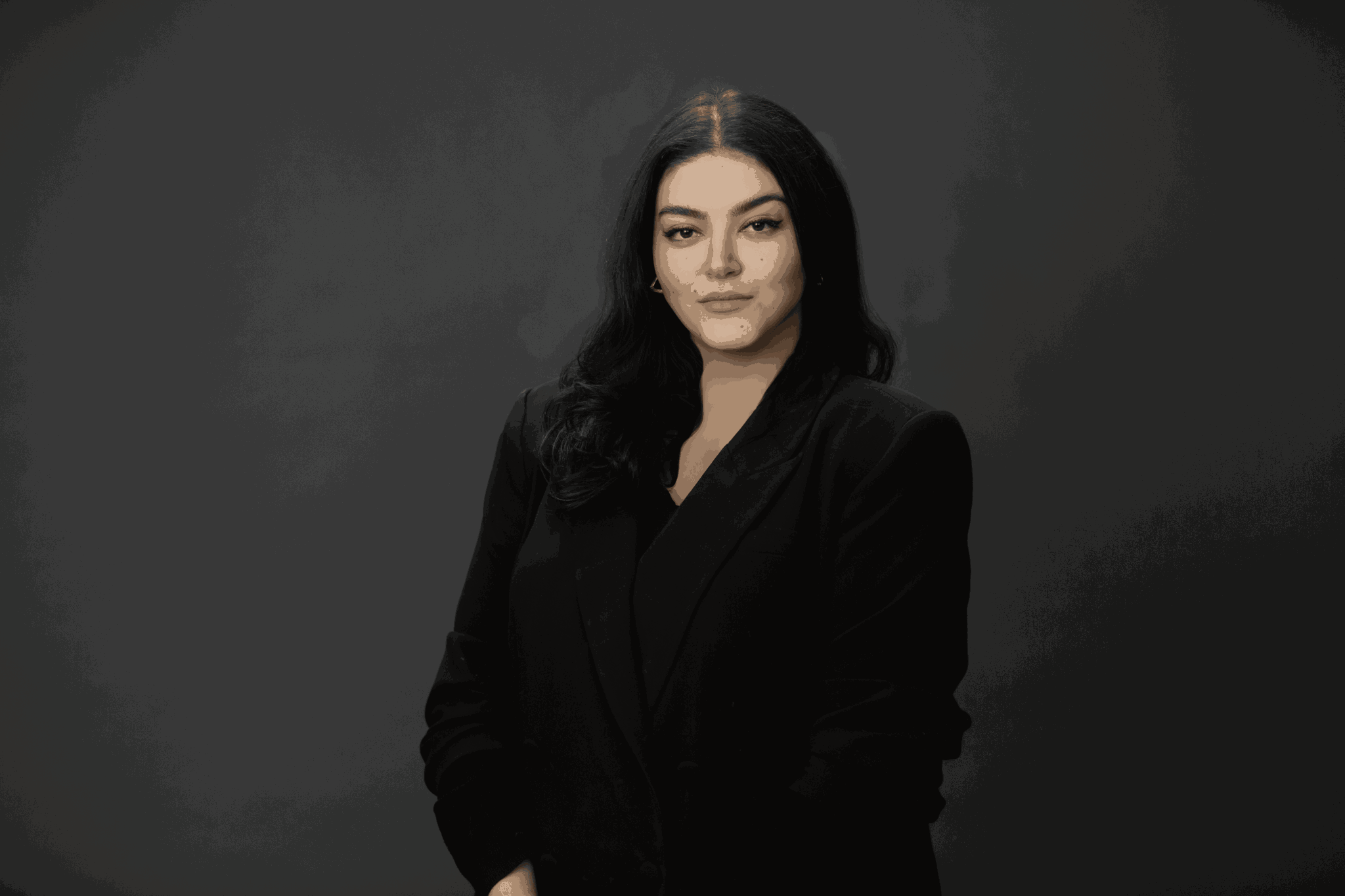

We recently connected with Soukaina Alaoui El Hassani and have shared our conversation below.
Soukaina, appreciate you joining us today. Let’s start with the story of your mission. What should we know?
My mission is to tell stories with intention, whether in film or advertising. Working in advertising taught me that every frame, every word, every color choice communicates something. That kind of precision shaped how I move through the world, not just as a producer but as a person. It taught me to be proactive, to listen closely, and to consider impact at every level.
In commercial work, you have seconds to make someone feel something. That forces you to distill meaning and emotion in a very subtle, deliberate way. I carry that skill into my films. I’m less interested in being loud, which is ironic because I am quite boisterous, and more focused on resonance. How do you say something meaningful without spelling it out? How do you layer truth into a scene, a character, or a single line of dialogue?
That’s the kind of storytelling I want to be known for—thoughtful, intentional, and clear. Whether I’m working on a brand campaign or a narrative film, my goal is the same: make it honest, make it specific, and make it matter.
As always, we appreciate you sharing your insights and we’ve got a few more questions for you, but before we get to all of that can you take a minute to introduce yourself and give our readers some of your back background and context?
My name is Soukaina Alaoui El Hassani. I’m a Moroccan-born filmmaker and producer based in New York. I work at the intersection of commercial advertising and narrative storytelling—two worlds that, for me, constantly feed each other.
I got into this industry because I’ve always been drawn to storytelling. Growing up in Casablanca, storytelling was a communal act—passed around at dinner tables, in taxis, and through gestures as much as words. When I moved to New York to study film, I wanted to translate that feeling into visual language. I fell in love with the production side of things—organizing chaos into something meaningful, helping directors realize their vision, and building trust on set.
In my career so far, I’ve worked on a range of creative projects—from commercial campaigns for brands like Netflix, Audible, and Pepsico, to personal films and documentaries. I currently work as a producer at Versus Creative Studio, where we create high-level branded content and short-form storytelling for global clients. I also direct and produce independent work on the side, including my documentary Children of Sin, which centers unwed mothers in Morocco and the legal and social systems that abandon them.
What sets me apart is my ability to move between commercial and artistic spaces without losing intention. My background in advertising taught me how to be efficient, decisive, and emotionally precise. You learn quickly in that world how to say something real in a short amount of time, and that skill deeply influences my creative process in film. Whether it’s a 30-second spot or a 20-minute short, I’m always asking: what’s the emotional core here? And how can we say it in a way that feels honest and sharp?
I’m most proud of the ways I’ve been able to hold onto my voice and my values in an industry that often pressures you to dilute both. I care about collaboration, integrity, and being of service to the story—whatever form it takes.
If there’s one thing I’d want potential clients, collaborators, or even viewers to know, it’s that I approach every project—big or small—with care. I don’t believe in phoning things in. Whether I’m producing a campaign or developing a film, I show up with intention, clarity, and the belief that good storytelling can make people feel less alone.
What do you think is the goal or mission that drives your creative journey?
At the heart of my creative journey is a simple but powerful goal: to sharpen my skills so I can see people more clearly—and tell their stories with care and complexity.
Whether I’m producing a brand campaign or making a personal film, I’m always looking for the human element. I want to get better at listening, observing, and translating what I see into stories that feel true. My craft—editing, producing, directing—is just the toolset. The deeper mission is about connection.
Stories have the power to dignify people, to make them feel seen in ways the world often forgets to. I want to use my creative voice to hold up a mirror—not just to reflect people’s pain, but their nuance, their humor, their contradictions, their joy.
The more I grow in this work, the more I realize that being a good storyteller means being a generous observer. And that’s what I’m always working toward.
We often hear about learning lessons – but just as important is unlearning lessons. Have you ever had to unlearn a lesson?
One major lesson I had to unlearn is the belief that things will go according to plan. They rarely do—and that’s not a failure, it’s just the nature of creative work.
Early on, I thought success meant sticking tightly to the plan. But the reality is, every project—whether it’s a film shoot or a brand campaign—will throw curveballs. Timelines shift. Budgets tighten. People drop out. You can’t cling to the original vision so tightly that you miss what the project actually needs.
What I’ve learned instead is how to pivot without panic. Being malleable isn’t a compromise—it’s a creative strength. It’s not catastrophic to shift direction; often, it’s exactly what makes the final product stronger. Sometimes you just need to take a beat, reflect, re-outline, and move forward with clarity. Adaptability is part of the craft.
Contact Info:
- Website: www.saelhassani.com
- Instagram: https://www.instagram.com/saelhassani/
- Linkedin: https://www.linkedin.com/in/salaouielhassani/


