



We recently connected with Kiffin McCoy-Albert and have shared our conversation below.
Hi Kiffin, thanks for joining us today. Risk-taking is a huge part of most people’s story but too often society overlooks those risks and only focuses on where you are today. Can you talk to us about a risk you’ve taken – it could be a big risk or a small one – but walk us through the backstory.
After being part of a corporate layoff, I started to look for my next role. Very quickly, I realized that perhaps this was the time to take the step to go out on my own. Having a husband that is also self-employed and in the early stages of business, I was the primary income. So, the idea of starting my business was a very scary prospect. We had to adjust our lifestyle and think differently about spending, but we decided it was worth the risk. My business is still less than a year old, but I am really happy working on building something of my own.
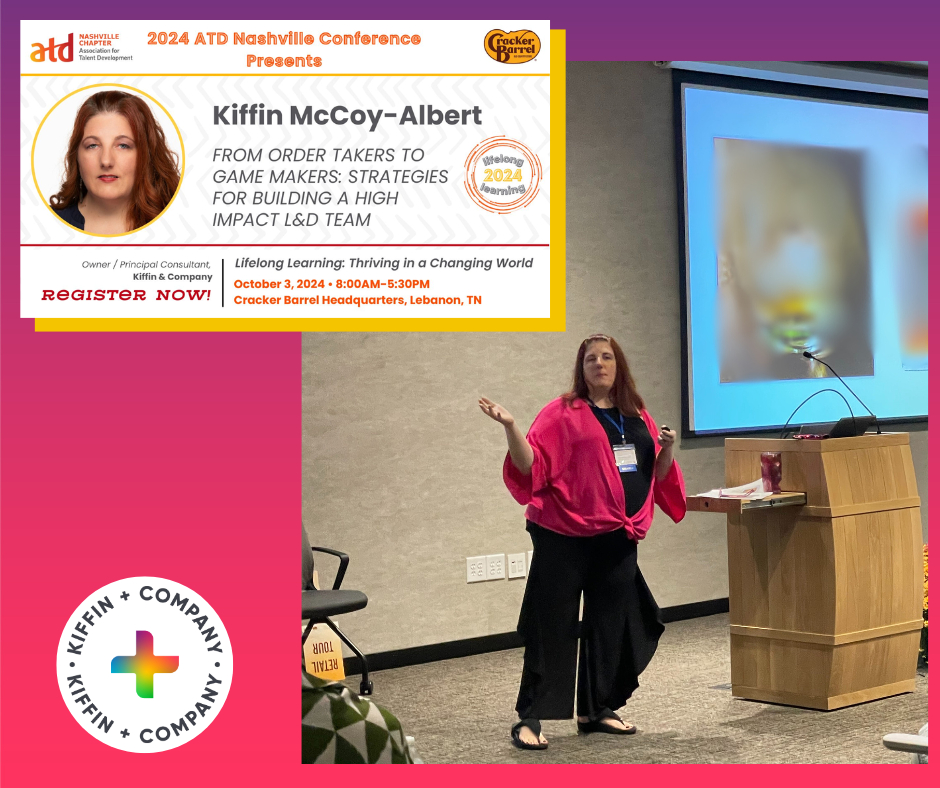
Awesome – so before we get into the rest of our questions, can you briefly introduce yourself to our readers.
I have been in the corporate training space for over 20 years. I started in the non-profit world, moved into logistics, and have spent the majority of my career in healthcare — with a few other industries interspersed over the years. In the beginning, I was a one-person training department, but then I had roles on teams both as an individual contributor and as a leader. My most recent internal role was as Director of Learning and Development (L&D) for a healthcare company, where I led the non-clinical side of the learning function and partnered with the Director of Clinical Education.
Because of my experience, I have an unusually broad set of skills in corporate training that spans facilitation, instructional design, eLearning development, and leadership within organizational L&D. This is a blessing and a curse in some ways, but it allows me to see the larger scope and connect dots that can sometimes be missed.
Kiffin and Company was founded with several thoughts in mind. Here are 3 main ones:
1. Training is often created because someone (leader), somewhere says, “We need some training on….” However, all too often, no time is spent verifying that training (or a particular method of training) is what is actually needed. And if it is, it is usually created from the direction of a subject matter expert with no input from frontline learners. Advocating for input from those who are actually doing the work can be vital in creating engaging and relevant content.
2. Similarly, training is often purchased “off-the-shelf” or even if created it is done so in a way that is a broad stroke, meaning that it covers everything for everyone big picture. It does not take into account the varying levels of knowledge or experience among the workforce. That is why creating tailored solutions helps to maximize impact.
3. I have seen so many organizations offer training as a check-the-box activity instead of an outcome-based solution, which causes statements and questions like “They went to training. Why are they still doing it the old way?” or “We offered training classes. What else can we do?” However, when asked about follow-up, check-ins, or coaching, there is silence.
To solve some of the frustration organizations have around their internal learning function, I offer
– Curriculum analysis to review and offer recommendations for improvement
– Content development from training strategy to course outlines to actually developing live or eLearning modules
– Coaching specifically for L&D teams, frontline managers on coaching post-training, and leadership on working with their learning teams
Additionally, even though I have a broad skill set, I can’t do it all myself. So, I have a network of experts to consult with, bring on, or refer out as the need arises. That way I can still be of value to organizations even if I am not the right fit for a particular need.

We often hear about learning lessons – but just as important is unlearning lessons. Have you ever had to unlearn a lesson?
One of my favorite quotes is from Alvin Toffler: “The illiterate of the 21st century will not be those who cannot read or write, but those who cannot learn, unlearn, and relearn.”
I think we have to unlearn and relearn all the time in small ways.
Two big ways for many of us right now are around social media and AI. While I could give many examples with AI, I will just share one. I am generally a really good writer, and the thought of not taking the time to craft everything I ever write is difficult. I am having to unlearn some of my old ways and relearn the timesaving benefit of getting a draft quickly from AI that includes all I need it to include and then revising it to fit my voice and precise need. The lesson that I have learned, though, is that it can sometimes spur even better thoughts and outcomes in much less time by being able to react to the results of my own AI prompts.
As for social media, platforms change, functionality within a given platform gets updated, and the use cases for specific platforms evolve, all requiring some unlearning and relearning. Plus, I know many of us who struggle with authenticity over perfection — even though we know that is what people want these days. So, my lesson learned is that I have to prioritize what platforms I use and how I use them WITH my target audience in mind. Seems so simple when I say it that way, but that can be quite difficult.

Have any books or other resources had a big impact on you?
We are all aware that we have access to so many resources these days, and many of them are excellent. So, I will stick with my love of 3’s and share the following that have impacted me.
Book: “The E Myth Revisited: Why Most Small Businesses Don’t Work and What to Do About It” by Michael E. Gerber
The author lays it out how many of us start businesses for the wrong reason and fail to realize the requirement of balancing roles and working ON your business not just IN it. He uses stories and examples that make it a simple book to read and comprehend.
Video: Angela Duckworth’s TED Talk titled “Grit: The Power of Passion and Perseverance”
This “oldie but goodie” is quick watch (or even just listen) and is a reminder that we don’t have to be the smartest, best, or other “est” to succeed. Sometimes grit to overcome or outlast can be the differentiator.
Podcasts: I listen to multiple podcasts on a regular basis. Some are business-related, while others are for pure enjoyment. Sometimes we forget that we are allowed to read, watch, or listen purely for the enjoyment of it.
Contact Info:
- Website: https://www.kiffinandcompany.com
- Facebook: https://www.facebook.com/kiffinandcompany
- Linkedin: https://www.linkedin.com/in/kiffinmccoy
- Youtube: https://www.youtube.com/@OneMoreThingKMA

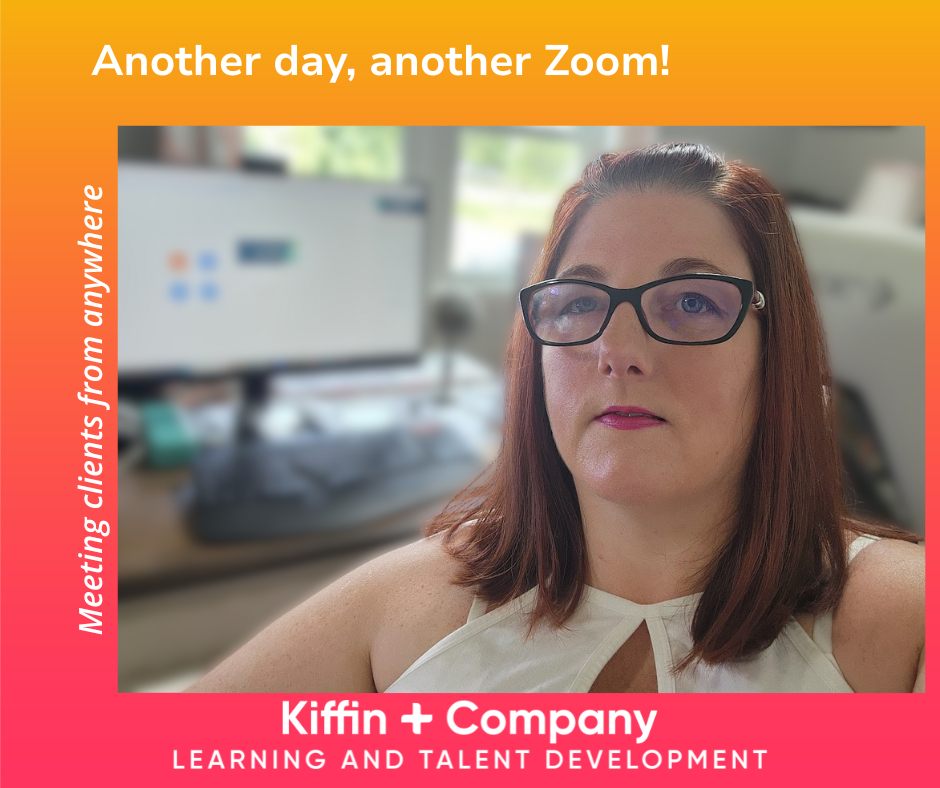

Image Credits
Faith Doggett Photography