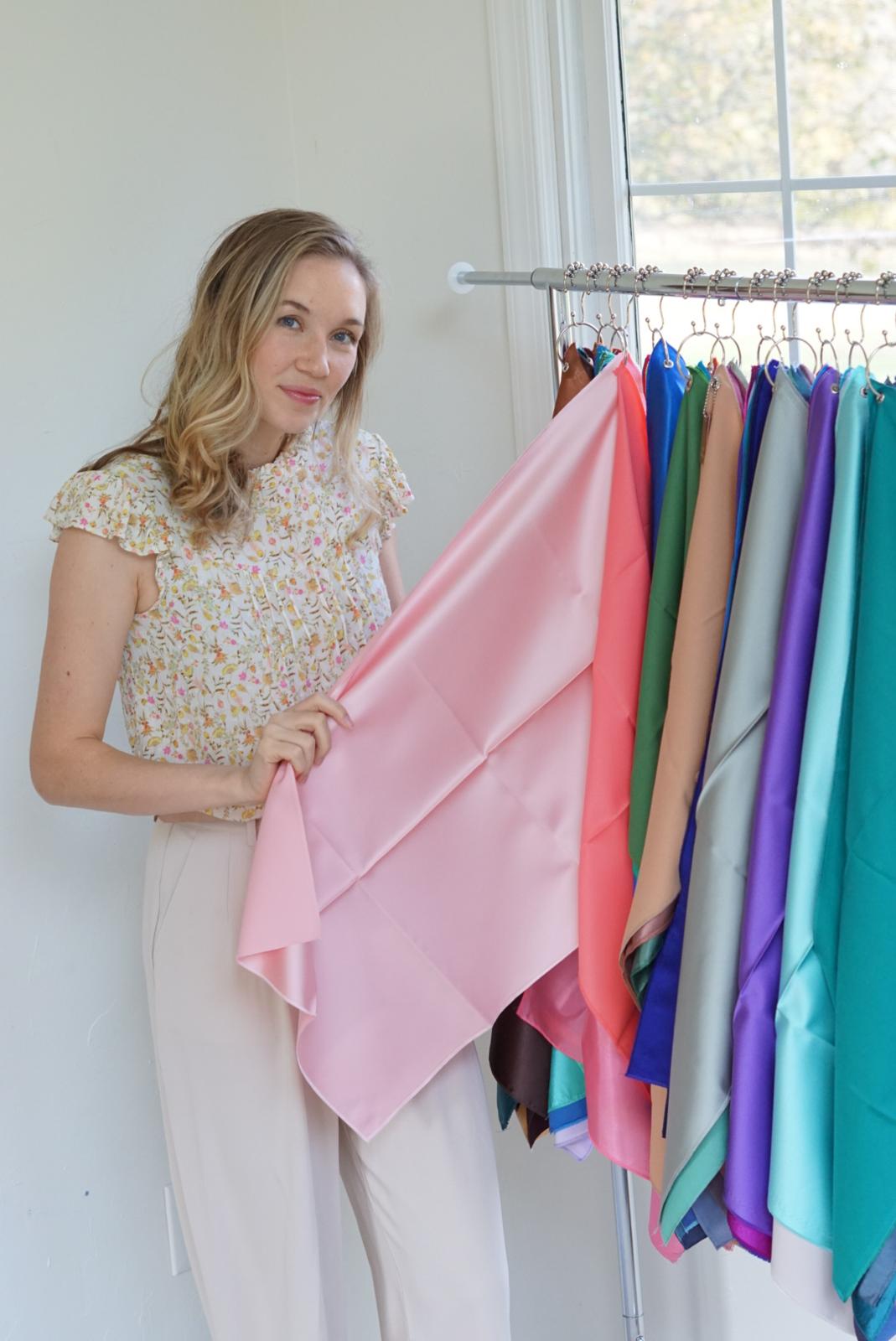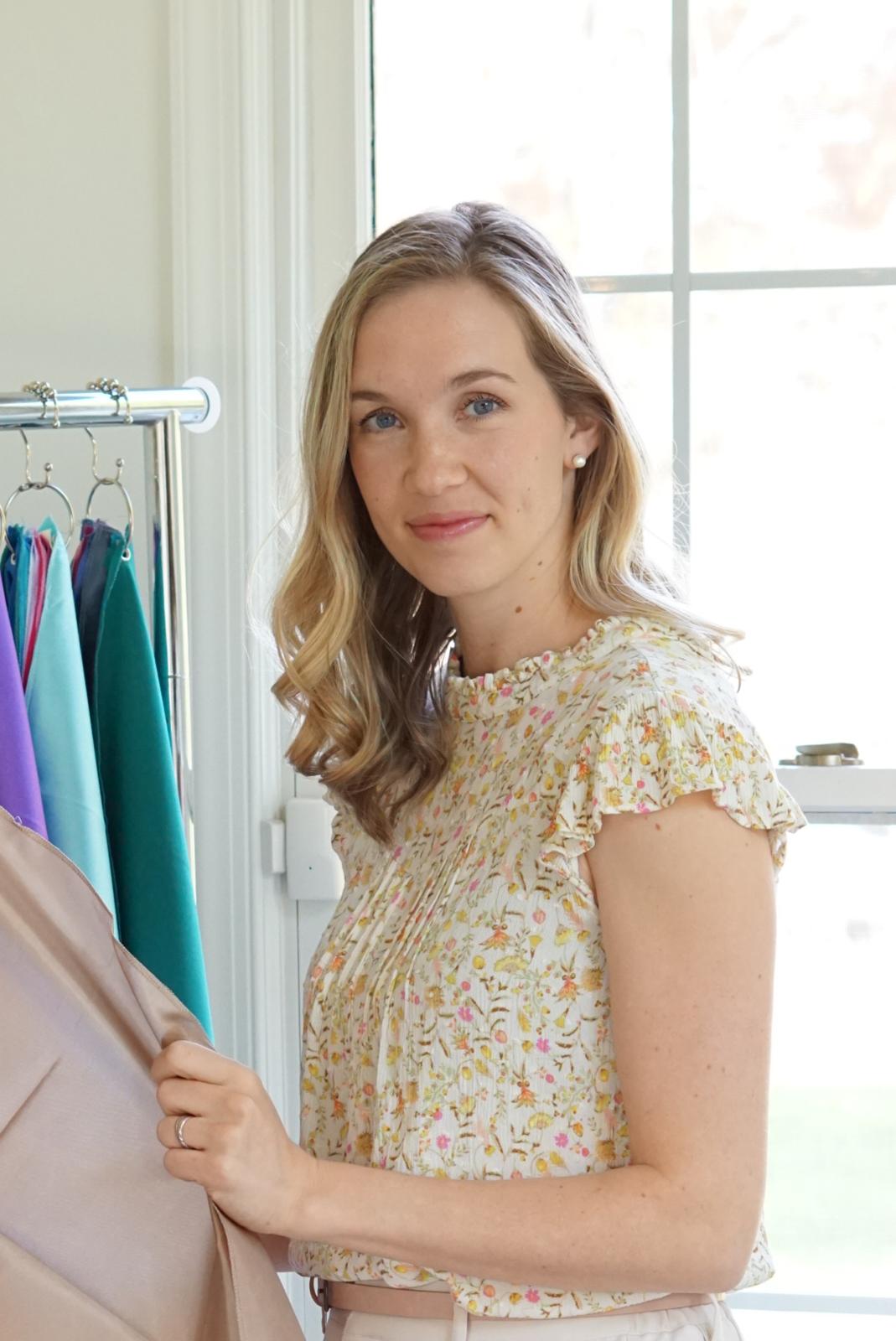

We caught up with the brilliant and insightful Ginamarie Lynch a few weeks ago and have shared our conversation below.
Hi Ginamarie, thanks for joining us today. Risk taking is something we’re really interested in and we’d love to hear the story of a risk you’ve taken.
Once I discerned that my love for color analysis was bigger than a passing obsession; I knew I had to be involved with it in a very real way. For me, I decided that I wanted to study personal color analysis, and in order to do so, that meant enrolling in training to become a color analyst.
Because I wanted to study color analysis from the most scientific and reputable method, that meant that training would be a significant financial investment. In order to justify such training (which is really an apprenticeship of sorts), I would need to guarantee a return on the investment – meaning start my own business! While the prospect of opening my own studio was exhilarating, I also started to feel some imposter syndrome. Who am I, at this stage in my life as a mom of little ones, starting my own business? Am I being selfish by pursuing this passion and taking this risk? What if the clients don’t come? What is the market is not as hot as I think it is? What if it takes me a longer timeframe to pay back the loan?
In the end, I betted on the market, and on my own passions. If this passion for color analysis has been given to me, and the numbers look promising – then it makes sense to take the risk!
I did it; I am a color analyst at GM Color Studio! I have clients, and I am on track in my timeline to make my expenses and then some! And I still love studying personal color analysis! It’s a win win, and I’m so grateful for those who encouraged me to risk on my passion.
Ginamarie, before we move on to more of these sorts of questions, can you take some time to bring our readers up to speed on you and what you do?
What is personal color analysis?
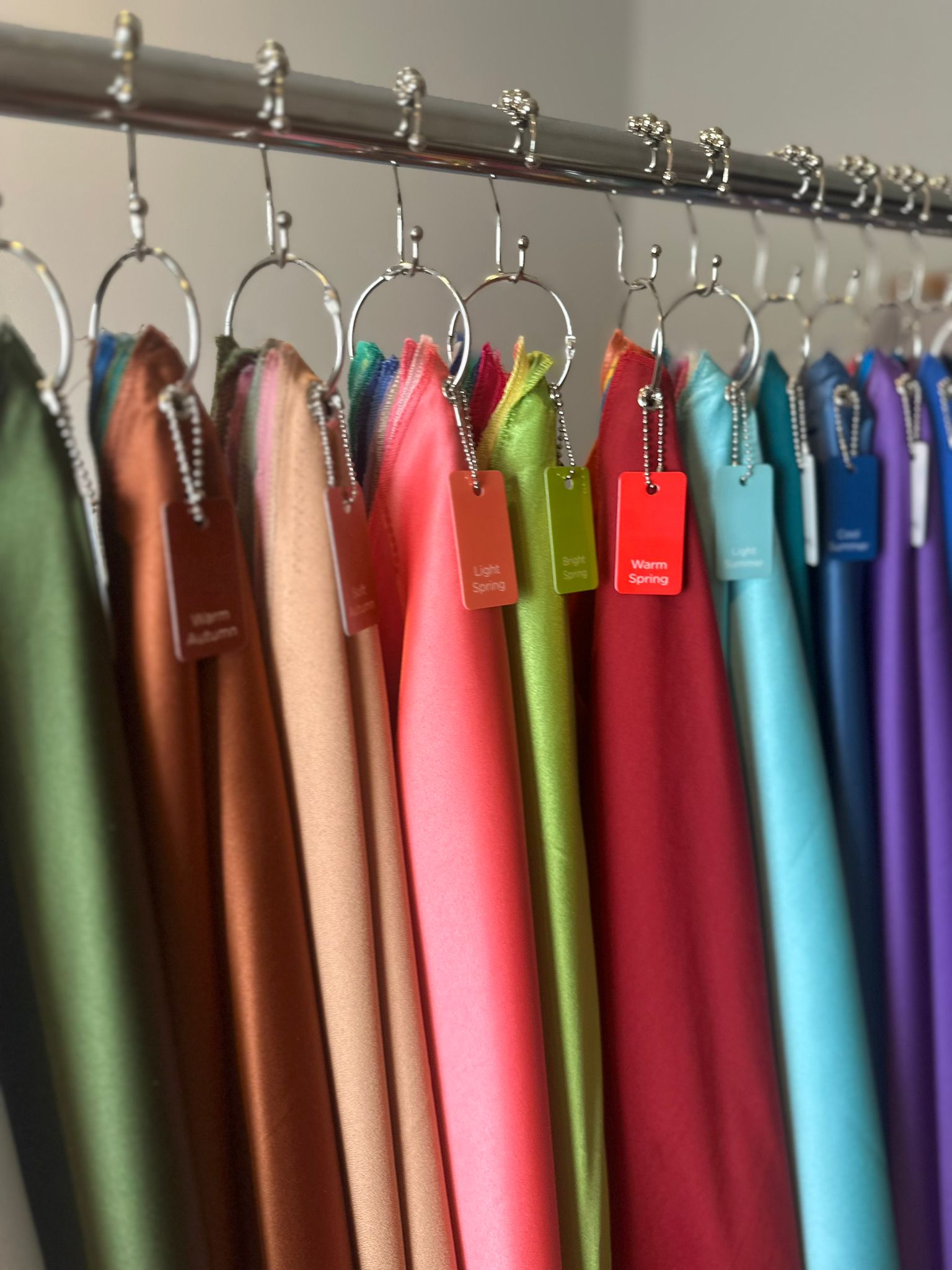
Personal color analysis analyzes the color tones of your skin, and uses ‘seasonal palettes’ to create color harmony in one’s appearance. Colors that are not in harmony with our own coloring create unattractive optical illusions on our face, while colors that are in harmony with our skin create a pleasing impression. As every artist knows, beauty presents itself as one unified whole. Just as there is beauty in music and displeasure in noise, the brain is affected by color in the same way.
My journey with color analysis & GM Color Studio:
For me it all began at a trip to the local library at approximately 12 years old. I discovered the 1980s original “Color Me Beautiful” book. I was captivated by the beautiful colors and ideas behind personal color theory. I distinctly remember thinking about the book again months after returning it. Serendipitously, not more than a year later when I wanted to check it out again, I found it again on sale for 5 cents at the same library; I still have it today.
Fast forward to 2022, when through Instagram, I rediscovered personal color analysis and was hooked. I studied and compared all the theories and methods, researched all the color innovators, saw multiple color analysts, and came to the conclusion that this passion I have for color analysis is real and insatiable.
Personal color analysis has been this beautiful merger in my personality of my academic research side and my love of beauty. Personal color analysis combines the science of color with the human face, and there are few things more beautiful than the human face. It’s getting to discover each individual’s unique beauty and the “whys” of what in their personal coloring makes them that way. Then my clients, take it from there, and live their most authentic selves embracing their unique color harmony.
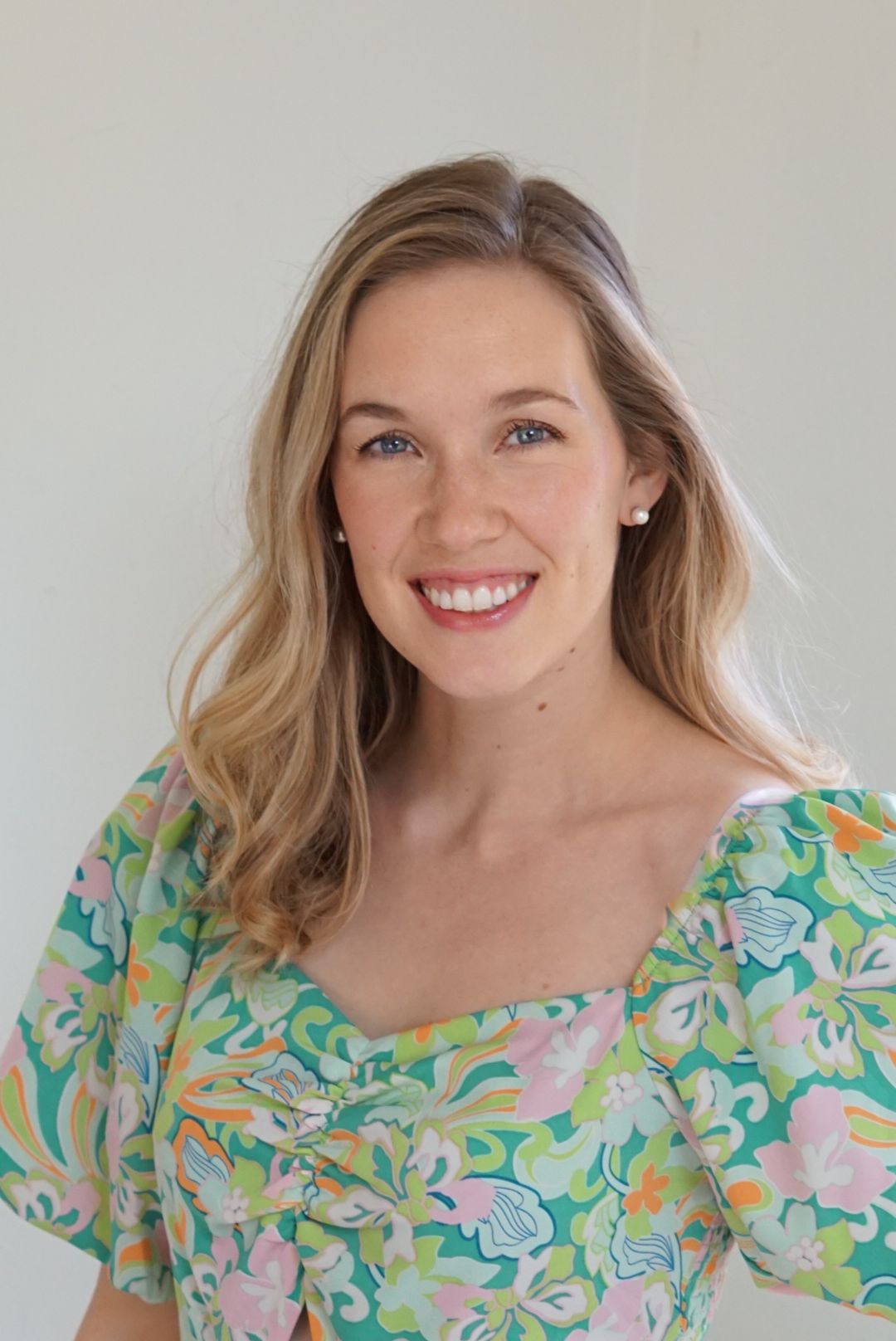
How about pivoting – can you share the story of a time you’ve had to pivot?
During graduate school (I studied theological anthropology), I married my high school sweetheart, and we soon began a family. Unlike many of my peers who were building their careers (or more realistically figuring out what they wanted to do for a career), my 20s were spent raising babies – a decision that raised a few eyebrows. But being the primarily caregiver actually gave me a luxury that many of my friends did not have – the space to really discern what were the gifts and talents that I bring to the world, what actually makes me happy, and what field industry – including unorthodox ones – support that. It also gave me excellent experience in prioritizing tasks and time management. Nothing make you time manage better than when you’re not sure if the baby is going to nap for 5 minutes or 2 hours – you make the most of the time you have.
During those years, I always had a side hustle/freelance work. For me personality, I couldn’t sit still. I would find a break and then think of the next business idea. I’ve done many things: from executive virtual assistant work, to graphic design, to selling skincare, to leaning into the mom influencer world on social media, to project managing a 2 million dollar grant – all part time. All these experiences helped me to grow in different ways. And honestly, the sales training I received in selling skincare, rivalled my college degree in terms of professional development.- I use that knowledge all the time.
For me the pivot as a mom is constant – who needs what from me in this season of life. When the kids are babies and toddlers, that answer changes every couple of months. But honestly, it’s also the most fulfilling pivots, because each pivot is in the direction of a different good, an assessment of needs that fulfill not only the needs of my family, but also of myself. It’s the responding to reality, without my preconceptions and presumptions of what my life should look like, that has given me the freedom to respond to all the cool and varied opportunities in front of me. Those opportunities have helped me to grow as a person and get to know myself better.

We often hear about learning lessons – but just as important is unlearning lessons. Have you ever had to unlearn a lesson?
Being immersed in social media as I entered into my color analysis training came with a lot of background noise. I had researched so much that there was a lot of thoughts and noise in my head that I brought into my color analysis training. Sometimes we feel that more information is better (especially for someone research minded like myself,) but sometimes you have to picked a specific source to learn from and put your blinders on and just focus on that. This is true in my personal life as well – there are so many voices and experts in “how to sleep train,” that the way to be most successful in it, is to pick one voice to listen to, experiment with it, and then judge whether it worked or not. I find this lesson to be the same in my artistic training as well. To really understand a perspective, you have to go deep into it, and put your blinders on to the other voices. Then once you’ve been immersed in it, then you can step back and make a judgement. But to evaluate methods or techniques from afar, without first engaging yourself fully in them, you can’t actually learn the thing that is being proposed to you. I love listening to and learning from various perspectives, and I’m not saying not to do that, but there is a big risk that you think you understand something, but really only scratch the surface of it, and actually make a poor judgement because of it. Or you become paralyzed from all the noise, especially if it’s contradictory. To really learn something and judge the merits of it, you must really engaging yourself in one method first.
Contact Info:
- Website: https://www.gmcolorstudio.com
- Instagram: @gm_color_studio
- Yelp: https://www.yelp.com/biz/gm-color-studio-gaithersburg-2?osq=Color+Analysis