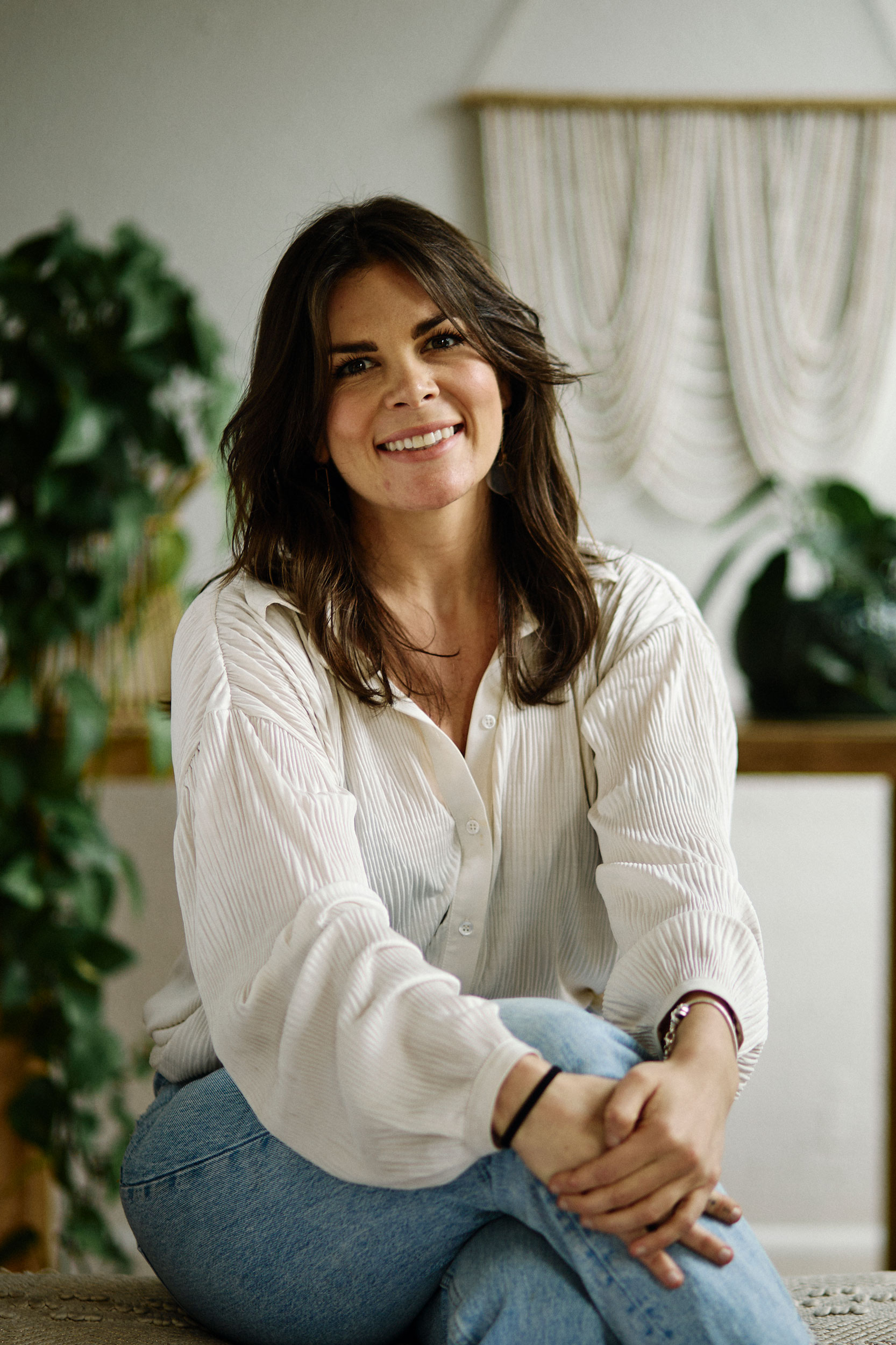

We were lucky to catch up with Maggie Saltiel LCSW, PMH-C recently and have shared our conversation below.
Maggie, looking forward to hearing all of your stories today. It’s always helpful to hear about times when someone’s had to take a risk – how did they think through the decision, why did they take the risk, and what ended up happening. We’d love to hear about a risk you’ve taken.
I think anyone who’s answered a deeper calling, pursued a passion, or stepped away from the certainties of a 9-to-5 job knows that practically every step of it feels like a risk. And when you allow yourself and your business to keep growing and evolving, the risks really just don’t stop! There are financial and logistical risks, of course, but for me, the most confronting risk has been the vulnerability of putting myself out there—again and again—while evolving and scaling my practice.
I really do feel like when we follow these callings or passions, the process becomes more than just building a business, but sharing a piece of our truth with the world.
Recently, I expanded my private practice, which included a shift from using my own name to Sensoma Psychotherapy, a name that better reflects the growing team and services we offer. This process wasn’t just about rebranding; it was about understanding exactly what I do in the therapy room and how to translate that into something bigger than myself. It was a deep listening exercise into the values and truths of my work and a full-bodied trust fall into a deeper calling in life.
But once I found that clarity, the real challenge was sharing it with the world. Expanding my practice meant expanding my reach and audience, which inherently opened me up to being seen, judged, and sometimes rejected. Every new offering, every launch, and every step is also a chance to fail- and be seen doing it!
To me that vulnerability is the scariest part!
But- one time, in a moment of doubt before the launch of my newsletter “Between Sessions” (another place where I share myself in a vulnerable way with a larger audience), chat gpt gave me some advice that resonated:
Feeling vulnerable is not a sign that it’s too much, it’s a sign that it matters.
So with each risk I try to just say f*ck it and lean into that!

Maggie, love having you share your insights with us. Before we ask you more questions, maybe you can take a moment to introduce yourself to our readers who might have missed our earlier conversations?
I’m Maggie, the founder of Sensoma Psychotherapy- a therapy practice grounded in the principles of attachment theory, somatic healing, and trauma informed-care. We offer therapy specializing in trauma, anxiety, OCD, and reproductive and perinatal mental health, an online Preparing for Birth Class, and resources and support for growing clinicians.
We support clients in reconnecting with their innate capacity for safety, connection, and self-trust with authenticity, attunement, and real relationship.
What sets Sensoma Psychotherapy apart is our team’s capacity to go beneath the surface and create real and lasting change with clients. This isn’t traditional talk therapy. It’s work that’s deeply reparative on a nervous system and attachment system level- and I think that’s deeply felt by our clients.
I’m most excited about the launch of our online Preparing for Birth class – it’s 6 modules of comprehensive childbirth education and postpartum mental health education co-taught with a certified doula. This class was thoughtfully crafted to help improve birth outcomes, increase agency and body autonomy in any birth setting, and prevent depression and anxiety in postpartum. AND! We are officially publishing our companion book Preparing for Birth: Your Guide for Wellness in Birth & Beyond available on kindle and amazon August 1st! This is something has been years in the works, and I’m most proud of that right now.

What’s a lesson you had to unlearn and what’s the backstory?
Alllllmosssttt everything about what it means to be “professional,” especially in the mental health and therapy fields. My grad school experience, internships, and agency work all reinforced the belief that I needed to disconnect from my authenticity in order to be perceived as “professional.”
The reality is, bringing my authentic self into the therapy room is one of the most important aspects of being a good therapist, because it humanizes the therapeutic relationship and the work. Grad school, in particular, teaches you to dehumanize the therapeutic relationship—like never sharing anything personal about yourself, never reacting emotionally, and never offering a hug at the end of a session. While there are nuances to these rules, I’ve found that being human—showing empathy, vulnerability, and authenticity—makes a far greater impact than sticking rigidly to a robotic idea of professionalism.

Can you open up about how you managed the initial funding?
Long story short, I started small and part-time with limited initial capital or expenses and worked my way up from there.
My private practice has been very successful—about six months after I went full-time, I was fully booked with a waitlist and hiring another clinician. A lot of people ask how I managed this, and what’s important for others considering private practice to know is that it didn’t happen overnight, or even all in those six months. I spent about three years laying the foundation before making the leap to full-time.
I started while still working full-time at another job. I didn’t wait for the “right time” or for everything to be perfectly in place. I just began with the basics—filing my LLC, building my website, and networking with other professionals. Once I had those in place, I took the next leap and placed ads on Psychology Today and other therapist directories and purchased a subscription to a telehealth platform to see potential clients. I began seeing just ONE client on my lunch break, virtually, while still working full-time. Once I had 2 regular clients, I gradually reduced my hours and went down to a four-day work week.
I was hoping to quit my job and go full time private practice at that time but clients didn’t come in as quickly or seamlessly as I had hoped. So, I joined a group practice to build more experience and visibility. For a year, I balanced working there while still keeping my private practice small but steady. Over that year, I gained three more clients, and eight clients followed me from the group practice. By the time I transitioned to full-time, I had 13 regular clients.
It wasn’t until this point that I started investing in larger business expenses, like office space and branding and marketing support. As my client base grew, several of them referred others to me and I continued to build community relationships that helped me get to where I am today.
The key takeaway here is that growth doesn’t happen overnight and funding a business doesn’t have to either. It takes time, and the process isn’t always linear. There will be ebbs and flows and lots of trial and error, but it does grow exponentially with consistent effort. So my advice to anyone considering this path is to keep making small, intentional steps forward and not to wait for the “perfect moment” to launch everything at once. And, definitely don’t expect it to just all fall into place- you’ll feel like an imposter or worse- a failure- when inevitably it doesn’t happen that way.
Contact Info:
- Website: https://sensomapsychotherapy.com
- Instagram: @maggie_saltiel