

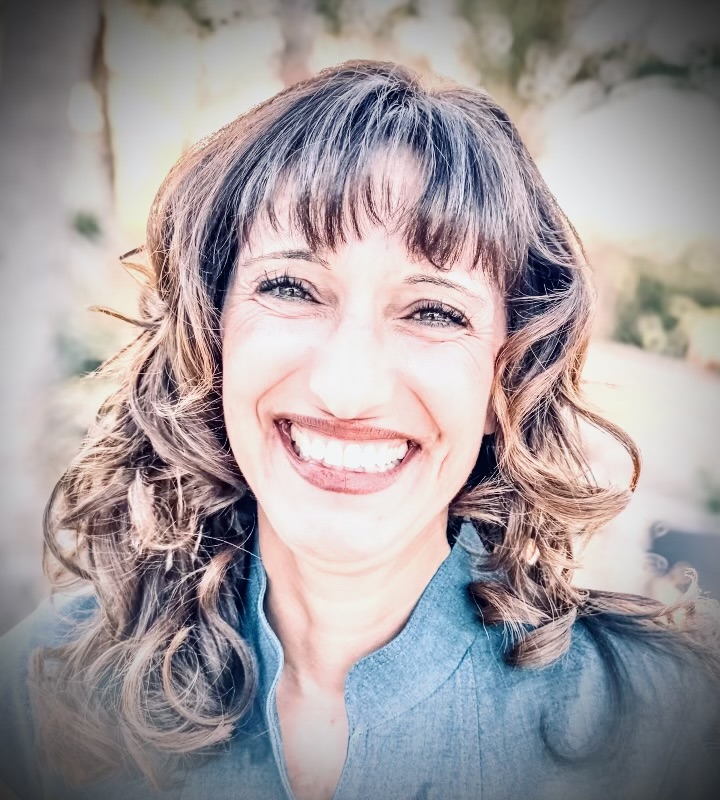

We caught up with the brilliant and insightful Helene Zupanc a few weeks ago and have shared our conversation below.
Helene, thanks for taking the time to share your stories with us today If you had a defining moment that you feel really changed the trajectory of your career, we’d love to hear the story and details.
Overcoming the Grip of Obsessive-Compulsive Disorder: My Journey from Struggle to Strength
My struggle with obsessive-compulsive disorder (OCD) began early in childhood and continued into my young adult years. Let me tell you, OCD is no joke. My mind was constantly hijacked by fears—fears that something terrible would happen, fears of losing my connections with others, fears of being misunderstood, and fears of not measuring up. These thoughts felt like life-or-death matters. Every time the cycle began, I’d experience sweaty palms, a racing heart, and shallow breaths—even though, in reality, they were just thoughts. It felt like a gun was aimed right at my face, even when there was no real threat.
To try to keep my thoughts at bay, I’d perform rituals until something “felt right,” but that never happened. And then there was the counting. I had to count a specific number of times in quick succession during these rituals. For years, my number was four. I could count sixty-four sets of four so fast, it was almost absurd. This endless process of mental and physical repetition consumed my every waking moment.
Let me take you back to a typical dinner at my house during high school:
I’d sit at the kitchen table and glance up at the round straw basket hanging on the wall. Then, I’d start a routine of neck rolls, wrist flexes, blinks, and swallows. It didn’t feel right, so I’d start the sequence over again. One, two, three, four, one, two, three, four—over and over. I’d keep going until it “felt right,” but it never did. My mom would urge me to eat, telling me everyone else was almost done. But I couldn’t. I’d pause, eyes on the plastic-covered fluorescent lights above me, counting the tiny squares on each panel. Forty-eight squares per row. My mind would latch onto the numbers, and I’d start the whole counting process again.
That stupid straw basket, the cherry wood clock in the family room, the window outline in my bedroom—these objects became my focus for rituals. And it wasn’t just at home. Every classroom I was in had its own objects for me to fixate on. I don’t remember when it all started, but I don’t remember a time when I didn’t do it either. I hated it. It stole my time, energy, and sanity. The worst part was knowing these rituals didn’t make any sense, yet I couldn’t stop. The cycle felt like a no-win situation: anxiety would consume me if I didn’t perform the rituals, but even after I did, it never felt like enough.
Over the years, my fears evolved with my life experiences. Sometimes the anxiety was vague, a heavy sense of doom, but often it was specific—like fearing someone I loved would get hurt or that someone would misunderstand me or stop loving me. I’d also have intrusive thoughts about things that disgusted me or that I could somehow harm others. I’d imagine picking up a random object and using it as a weapon, or I’d have inappropriate thoughts that I couldn’t control. I had so many rituals, I lost track. Neck rolls, specific breathing patterns, switching things on and off, head scratching, removing and replacing bottle caps, repeating words, flexing my wrists—these were just a few of them. Before bed, I’d endlessly adjust my posture, trying to end on the “right” thought. Some words had connotations that I couldn’t end sentences with. Looking in the mirror made me fear becoming vain. And I had to draw an invisible line with my feet to ensure my loved ones were on the right side, or something bad would happen.
In high school, I struggled to keep up with my peers because it took me so long to complete my rituals. I woke up at the crack of dawn just to get ready. College wasn’t any better. I vividly remember one terrible night when I spent hours trying to put a piece of paper into a folder, only to end up stabbing a pencil into my thigh out of sheer exhaustion and frustration.
I finally discovered what OCD was through a book, and then I watched a video showing examples of people struggling with it. That was a huge “holy shit” moment for me. I wanted to shout, “Wait, other people have trouble folding a towel just once, too?” For so long, I thought I was just crazy. These days, OCD is much more visible—featured in movies and the media—but back then, not so much. Realizing I wasn’t alone was a huge relief. Still, I didn’t talk about my OCD much. I was ashamed and felt like a weirdo for doing these strange rituals and not being able to let things go.
I eventually started seeking help and learning about my brain and the false messages it was sending me. I’ll never forget a psychiatrist drawing a triangle on a piece of paper to explain it. He said that most people’s thoughts bounce between the points of the triangle before moving on, but my thoughts were getting stuck at one point and never leaving. Once I had a name for what was happening, I started opening up about it. My mom became a major source of support and collaboration. It turned out, she had these struggles, too. So did a lot of people in our family. Genetics is real!
Mom and I started creating mantras to interrupt my thought patterns. The one that really stuck was, “That’s a brain glitch. I don’t have to pay attention to that.” Then, I found the most incredible book called Brain Lock by Jeffrey M. Schwartz. It was like my Bible. The way he described OCD was spot on, and his method—recognizing the OCD thought, reattributing it (calling it out as bullshit), and then refocusing—really resonated with me. He said you could rewire your brain by doing this, and I realized that’s exactly what I was doing with my mantras. They were truly a lifesaver. By consistently interrupting my obsessive thoughts and replacing them, I created new neural pathways and rewired my brain.
I’m not going to say it was easy, and I didn’t win every battle. But after many years, I can honestly say OCD no longer controls me. Sure, I still have tendencies when I’m stressed, and my mind might try to fall back into old patterns. But it’s nothing like it used to be.
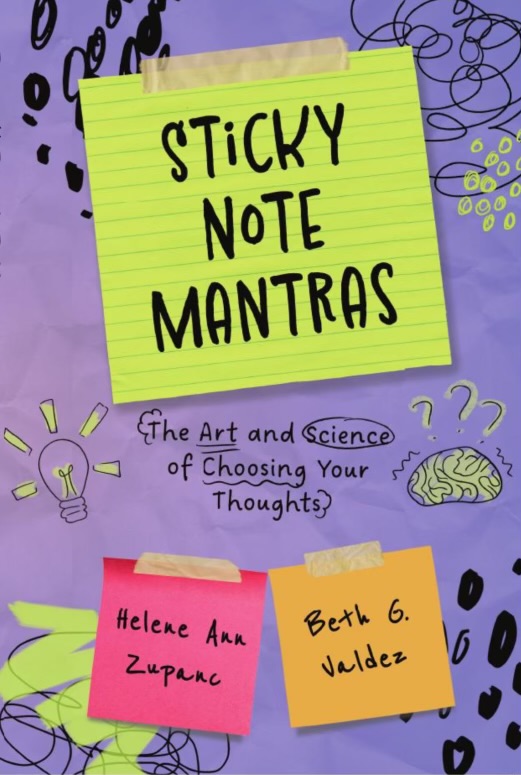
Discovering the transformative power of mantras marked a pivotal moment in both my personal life and my career. Mantras continue to be an integral part of my journey, guiding me in areas like perfectionism, balance, acceptance, encouragement, and self-validation. I began my career as a Special Education Teacher in 1995, and in 1998, I made the decision to pursue a master’s degree in counseling. It was during graduate school that I met an incredible friend, Beth Valdez, and we immediately formed a strong connection. We quickly realized that we both used mantras not only in our personal lives but also in our work as educators and counselors. The mantras Beth introduced to me, or that we co-created, have profoundly enriched my life in ways I can’t fully express. Beth is one of the most genuine, compassionate, and downright hilarious people I know. For years now, we’ve been collaborating to refine our approach to mantras, and our work culminated in the publication of Sticky Note Mantras: The Art & Science of Choosing Your Thoughts.
After two decades of working as a comprehensive counselor, I now am part of a private practice called Outsmarting Anxiety & OCD. Having conquered OCD in my own life, I’m deeply passionate about helping others overcome their struggles with it and regain control over their lives.
Helene, before we move on to more of these sorts of questions, can you take some time to bring our readers up to speed on you and what you do?
I am a Licensed Professional Counselor in Arizona with a master’s degree in counseling. My career has provided me with experience in diverse therapeutic environments, including schools, agencies, and private practice. I’ve had the privilege of working with individuals facing various challenges, and now, I specialize in treating clients dealing with OCD, anxiety, and trauma.
I utilize proven therapeutic techniques to guide clients toward healing, including Exposure and Response Prevention (ERP), Cognitive Behavioral Therapy (CBT), and Eye Movement Desensitization and Reprocessing (EMDR). My goal is to create a safe and supportive space where individuals feel heard, valued, and empowered to take control of their mental health and well-being. I am consistently inspired by my clients’ strength and resilience, and it’s an honor to be a part of their healing journeys.
You can connect with me online at Outsmarting Anxiety and OCD.
In addition, I recently published a book titled Sticky Note Mantras: The Art & Science of Choosing Your Thoughts, which outlines my personal battle with OCD, the neuroscience behind breaking the cycle of anxiety, and my favorite mantras to help interrupt that cycle. For more information, visit my website at stickynotemantras.com, where you can learn more about me, read my blog, find upcoming events, and purchase the book. It’s also available on Amazon, Barnes & Noble, and other bookstores.
We’d love to hear a story of resilience from your journey.
The journey of publishing my book took nearly 20 years to complete! It all started around 2002, shortly after graduate school, when I began the project. My good friend and colleague, Beth, joined me when we discovered we both used mantras in our lives. She brought fresh perspectives and invaluable insights to the table. Then, life happened. We both began raising families, focusing on our children, and took a step back from writing.
Two decades later, we found ourselves still deeply involved in the counseling field, and we realized that the need for our book was more pressing than ever. We decided to revisit the project and update it with topics like perfectionism, self-compassion, mindfulness, simple living, goal-setting, and letting go—just to name a few. The core theme of the book revolves around using mantras to interrupt negative thought patterns and create new neural pathways, making them an ideal tool because of their simplicity and repetitive nature.
Our work was finally published in July 2024, and we continue to incorporate the science-based principles from the book into our work with every client we see today.
Do you think you’d choose a different profession or specialty if you were starting now?
If I could go back, I would have pursued a career in counseling earlier, even during my undergraduate years. At that time, I didn’t fully grasp what was happening in my own mind—OCD was still a mystery to me. To be honest, I still see counseling as one of the most challenging careers I could have chosen. There were many personal hurdles I had to overcome to become an effective counselor. I had to release the perfectionism that often accompanies OCD, learn to sit with uncertainty, and embrace being genuinely present with others without constantly questioning whether I was enough.
For many years, I worked with a diverse range of issues in counseling, which was both rewarding and inspiring thanks to the incredible clients I worked with. But deep down, I knew I wanted to specialize in something that was personal to me—OCD. It’s been the white elephant in the room throughout much of my life, the ongoing battle I understood all too well. The question was, could I help others with the same struggle? The answer is yes. Perhaps I was meant to do this—to connect with others over this relentless and often misunderstood aspect of the brain. Along the way, I’ve met so many strong, intelligent, and compassionate individuals. I am deeply grateful to all of them who worked with me. You are incredible, invaluable, and truly inspiring.
Contact Info:
- Website: https://stickynotemantras.com/
- Instagram: https://instagram.com/stickynotemantras
- Facebook: https://www.facebook.com/stickynotemantrasbook
- Linkedin: https://www.linkedin.com/in/helenezupanc/
- Other: https://tiktok.com/@stickynotemantras6