

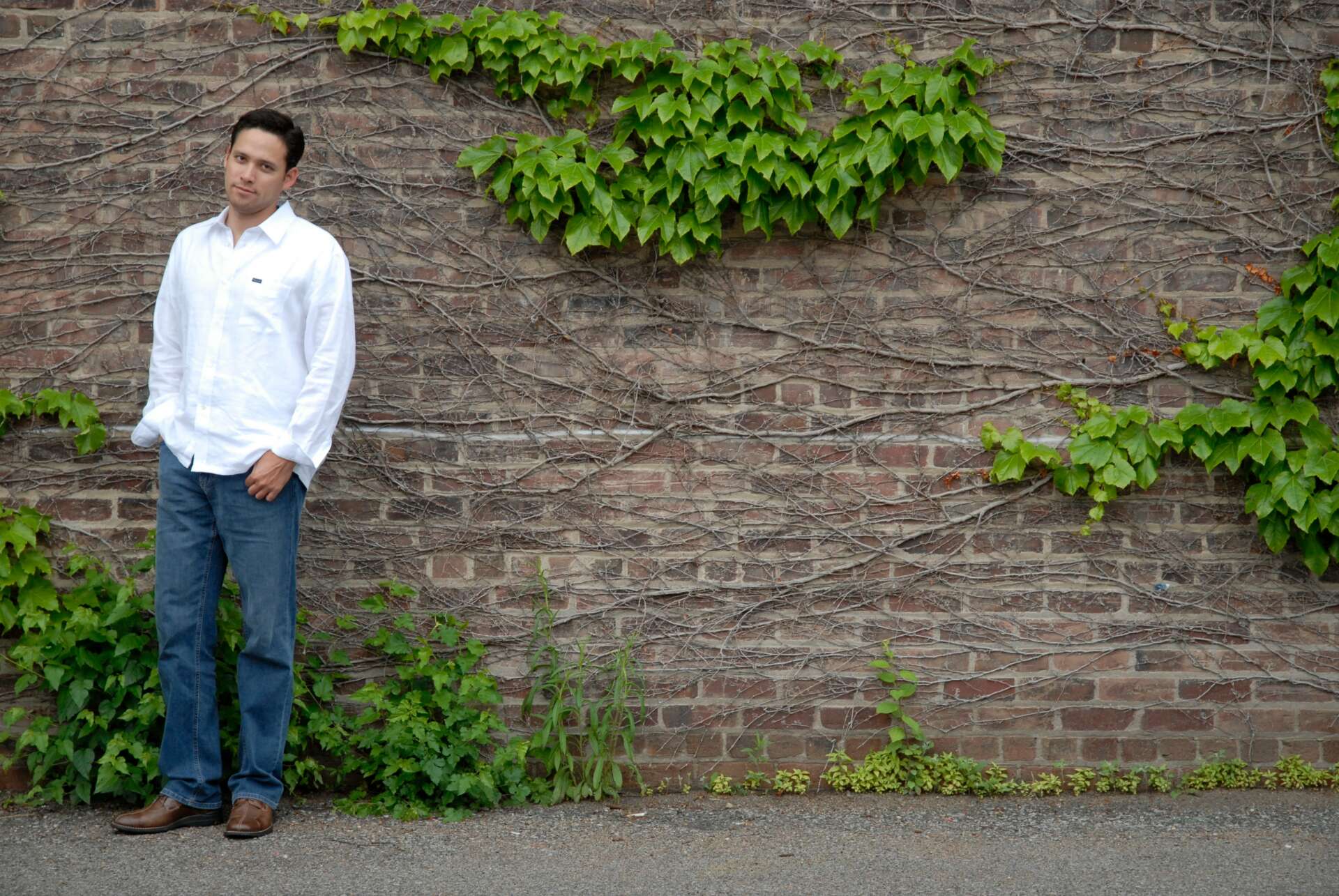

We caught up with the brilliant and insightful Shun Lee Fong a few weeks ago and have shared our conversation below.
Shun Lee, thanks for joining us, excited to have you contributing your stories and insights. Are you happy as a creative professional? Do you sometimes wonder what it would be like to work for someone else?
I had the advantage of having a “regular job” for several years before becoming a full-time creative professional. I was a lawyer for five years, specializing in intellectual property and media & entertainment law – and ducking out of my firm at lunchtime to go to auditions my agent had lined up for me. At a certain point, I realized most of my time was being spent doing all the contracts and paperwork for the people who were getting to enjoy all the creative things that I was trying to make room for myself. It was then that I decided to fully pursue my own career in the arts & entertainment industries, and that ended up being an incredible turning point in my life. So having had a “regular job” first and experiencing what that was like, and by comparison, now experiencing the fulfillment of being a creative professional, I no longer think about what it would be like to have a regular job. What have I learned from all that? First, that nothing is wasted – I’ve been able to take everything I learned as an entertainment attorney and apply it to what I do now as a creative. And second, that identifying one’s calling – finding that unique area where your skills, dreams, and passions overlap – is one of the most satisfying things a person can do in this life.


Shun Lee, before we move on to more of these sorts of questions, can you take some time to bring our readers up to speed on you and what you do?
I play several roles in the creative industries, primarily in feature films and television. I’m a writer and producer who has had the opportunity to work on some really wonderful projects. Currently, I’m the executive producer on a feature film that we shot in Nashville and Taiwan over the last year. I’m on the producing team for a great new animated series, along with Mike Nawrocki (VeggieTales) and Steve Taylor (Blue Like Jazz), that will launch next year, and I’m co-producing a feature film that is shooting in Tennessee as we speak. And I currently am attached to several other films in various stages of production. I’m also a director and a SAG-AFTRA actor, and that’s given me the opportunity to take part in filmmaking from a lot of different perspectives.
As a former attorney, I still teach entertainment law & business courses at several universities across the country. I also use that background to provide creative consulting for people in the entertainment industries, helping them to develop effective strategies for their projects. The worlds of creativity and business often speak two different languages, and so it’s been extremely useful to be fluent in the languages and practices of both. People tend to speak one language or the other, but being “bilingual” has provided lots of opportunities to work with both.
I also lead a great nonprofit organization called The Greenhouse Arts & Media. The Greenhouse works with all sorts of professionals in the arts & entertainment industries—developing and equipping creative artists and providing opportunities for continuing professional education, mentoring, projects, workshops & labs, writers groups, community events, and more. We have two chapters at the moment—in Los Angeles and Atlanta—and we have a growing membership of artists from across the country and around the world. Since our inception, over 9,000 creatives having gone through our various programs. The vision has always been to see creatives come together to collaborate and to serve one another and the entertainment community, and it has been great to watch that happen as more and more people get involved. It’s been extremely fulfilling for me to have had the opportunity to help lead The Greenhouse community and watch what it has become.
All of this has given me the opportunity to expand my own creative pursuits as well. Along with filmmaking, I’ve also been able to really dive back into music performance, which is really where my creative path started, as well as photography and writing. I recently published my first book, “The Saints & The Poets,” and I’m currently working on a novel—an espionage thriller that I’m having just a great time writing—and a book on how to navigate copyright issues in the entertainment industry.


What’s the most rewarding aspect of being a creative in your experience?
When it comes to creativity, I’ve found that each of the artistic disciplines informs the others—no matter what your main discipline is, you can learn something important and useful from the other disciplines as well. I get to utilize a number of them—film, photography, music, the written word—and all the modern tools that are available for them.
And with my background in law, I’ve found that the skills needed for being a good lawyer are quite similar to those required for being an effective creative professional: initiative, big-picture strategic thinking, understanding storytelling and communication, and a commitment to serve both people and projects well.
I have the pleasure of getting to put all of that into practice each day. I get to slow down and engage in the creative process, really wrestle with deep ideas like truth, beauty, and redemption—ideas that often get overlooked in the hustle and bustle of our daily lives. I get to see how that process changes me and others who experience it. Watching it all mix together and generate some pretty amazing outcomes that—hopefully—explore meaning, move emotion, spark imagination, and enlighten the soul.
Is there mission driving your creative journey?
I love the idea of creativity as an engine for positive change—in our individual selves, in our relationships with others, in our society. I’ve seen it played out time and again: creativity, at its greatest, is a powerful collaborative exercise that changes those engaged in it and those who experience the outcomes.
I’ve found that, in order for a person’s ideas—and that’s in any area, whether it be art, business, reasoning, politics, or any other practice—in order for those ideas to reach full potential, that will almost always happen in the context of community and collaboration. Ideas become complete in the collaborative process. And that means that great creativity forces us into friendships with others; it forces us to rely on others. It forces us into relationships that sharpen our ideas, maybe even uncomfortably challenge our ideas. And I have to intentionally make room for that—we all do—because that feels volatile, even dangerous.
Which means that we have to bring a great deal of humor, humility, and grace to the process, and that isn’t always convenient—but then again, grace is never convenient, is it? But that is where creativity becomes most effective. Creativity in a collaborative environment becomes dangerously good.
Contact Info:
- Website: https://greenhouseproductions.com
- Instagram: https://www.instagram.com/shunleefong/
- Facebook: https://www.facebook.com/shunleefong
- Linkedin: https://www.linkedin.com/in/shunlee/
- Twitter: https://twitter.com/Shun_Lee