
Alright – so today we’ve got the honor of introducing you to Kenneth DeVito. We think you’ll enjoy our conversation, we’ve shared it below.
Kenneth, thanks for joining us, excited to have you contributing your stories and insights. Learning the craft is often a unique journey from every creative – we’d love to hear about your journey and if knowing what you know now, you would have done anything differently to speed up the learning process.
As a self-taught artist with no formal training, I have learned the craft of painting in a number of ways.
First, I learned from my father, a formally trained artist who attended art college on the GI Bill after the Second World War. He painted in oils throughout his life and I spent many hours watching him and listening to him explain what he was doing. In addition, he would analyze for me paintings by the masters, primarily explaining the compositional techniques they used.
Second, I studied (and continue to study) instructional art books and instructional videos. And, of course, like all artists, I learn a tremendous amount analyzing the work of other artists in galleries, exhibitions, fairs, books (I have an extensive library of art books) and on the internet.
And, of course, third, I have learned much from the act of painting itself. This includes, naturally, much trial and error.
Knowing what I know now, I would have asked my father for specific instruction in drawing and painting and done both under his tutelage. I also would have considered minoring in art in college. (But as I majored in music [with a concentration in composition] I don’t know whether I would have had enough time and energy to pursue both disciplines.)
When I started painting five years ago, one of the obstacles I faced was the intimidation of the blank canvas…that hesitancy to “ruin” the perfect, blank, white canvas…the notion that whatever I applied to the canvas had to be perfect. This was exacerbated by the fact I was, technically speaking, starting from scratch, with no training. But l knew that to learn I was going to have to make mistakes—lots of mistakes. I learned that some of those mistakes could, with major or minor corrections, be fixed. And worst case, a completely failed painting could simply be covered with a coat or two of titanium white and I could start fresh!
Kenneth, before we move on to more of these sorts of questions, can you take some time to bring our readers up to speed on you and what you do?
I have had a long and varied career, in and out of the arts.
I studied music composition in college, receiving my Bachelor of Music from California State University Northridge and my M.A. and Ph.D. from UCLA. I subsequently taught music at the college level for a few years.
After that I spent 7 years as executive director of Ohio Dance Theatre, a small regional company based in Oberlin.
This was followed by the final chapter in my pre-retirement employment career: for 17 years I was a software engineer, doing database and web development.
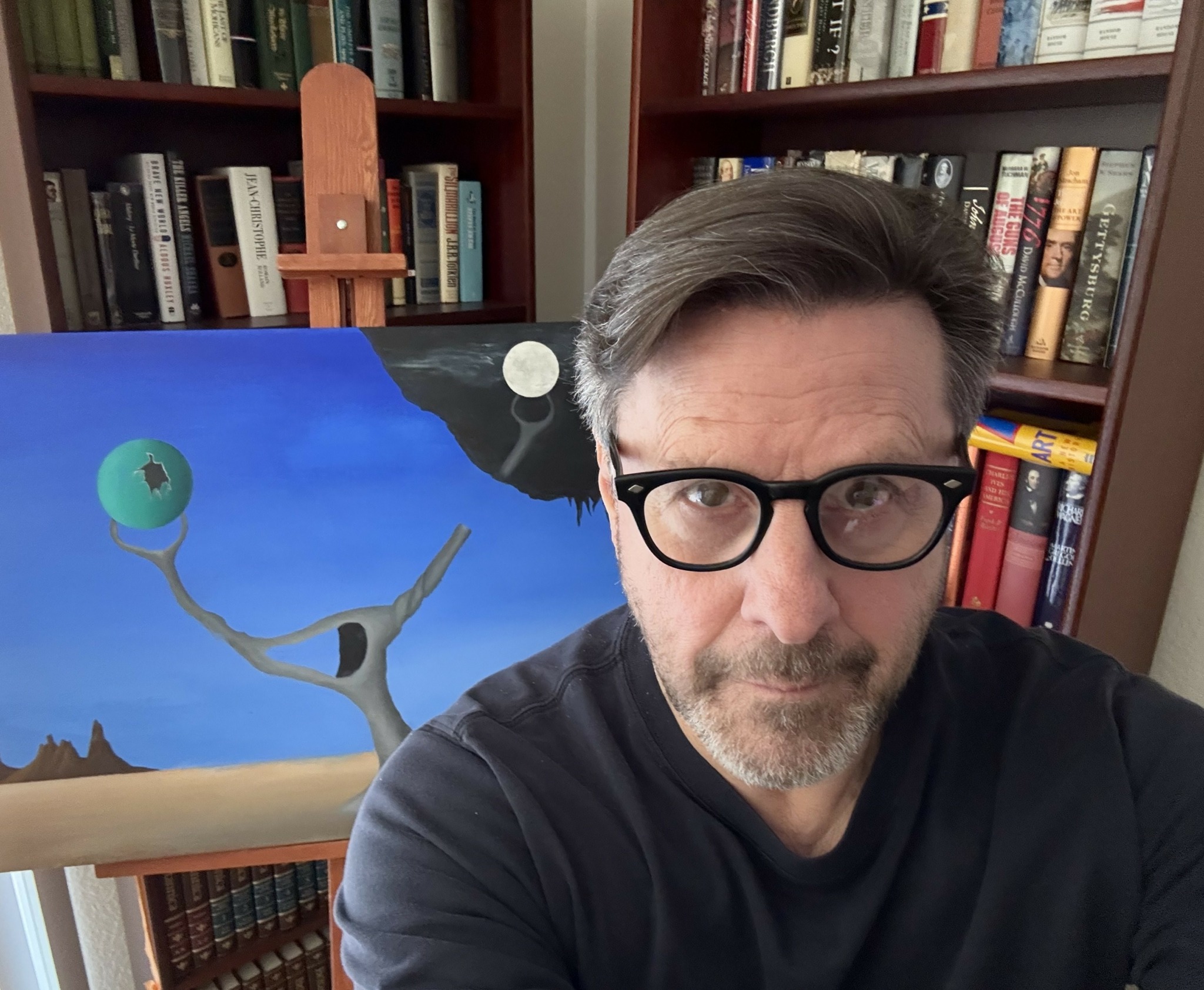
As for my painting, back in 1973, using my father’s paints, brushes, etc., I executed one painting, a surrealistic work in oils. It wasn’t until January 2020 that I returned to painting. (In late 2019 my girlfriend at the time asked me for a painting she could hang in her living room and, for a Christmas present, bought me supplies…and the next month I began painting in earnest.)
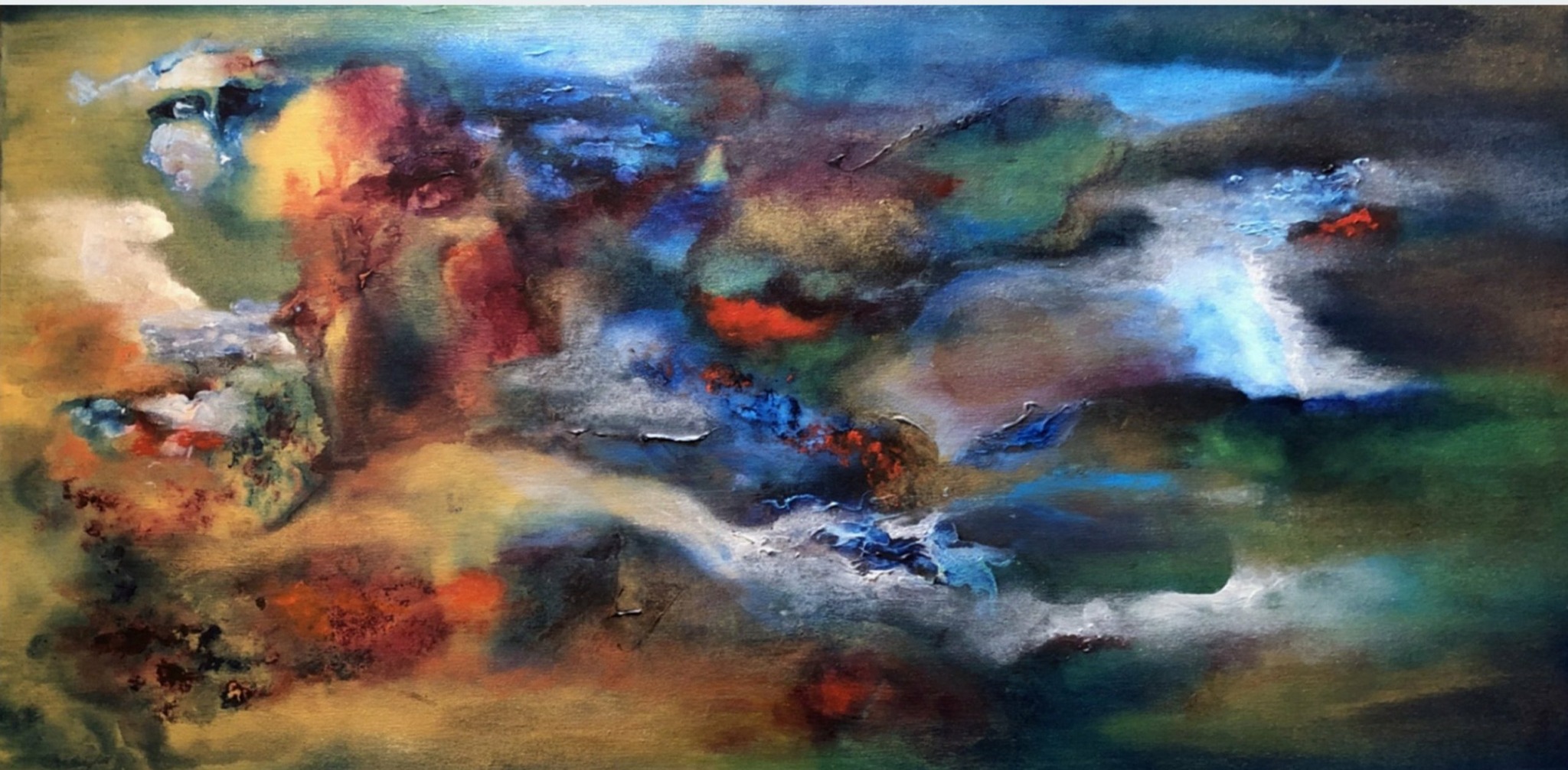
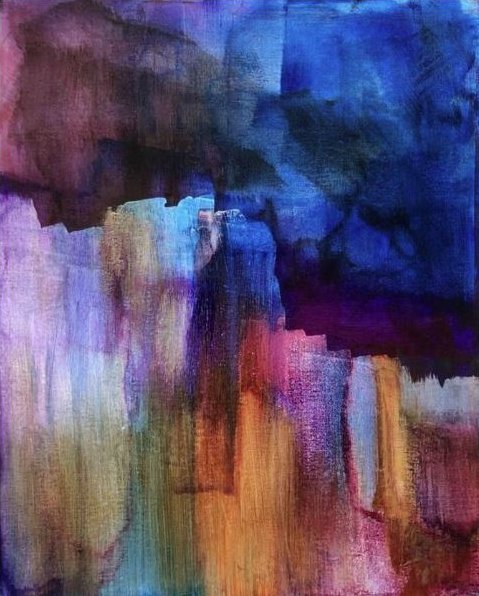
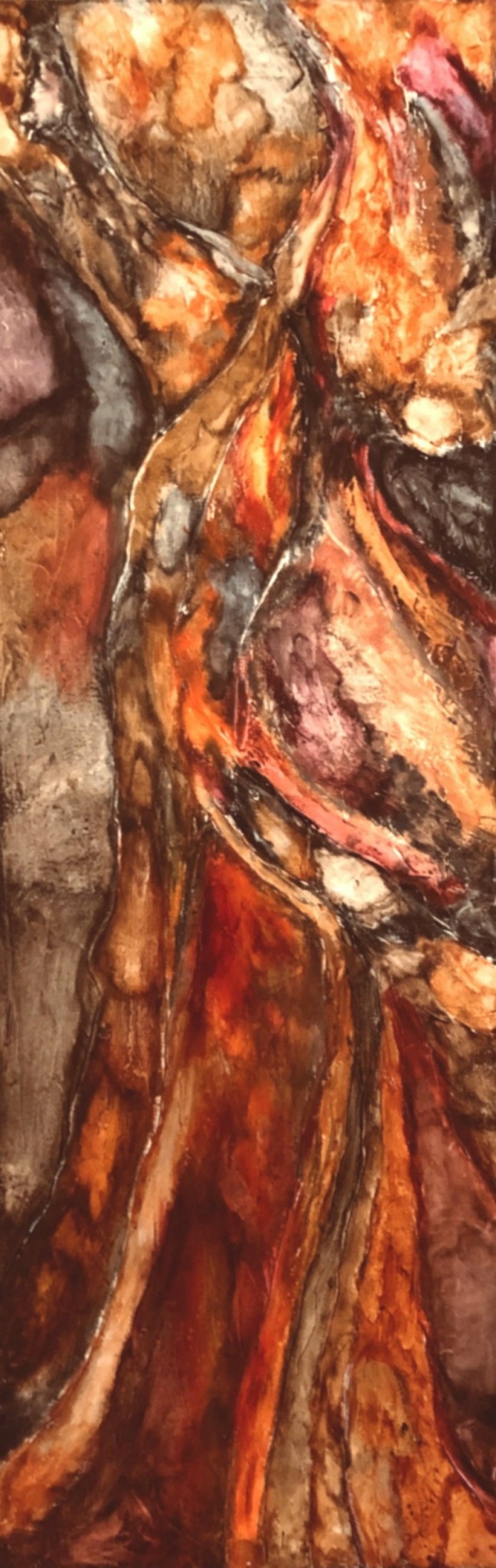
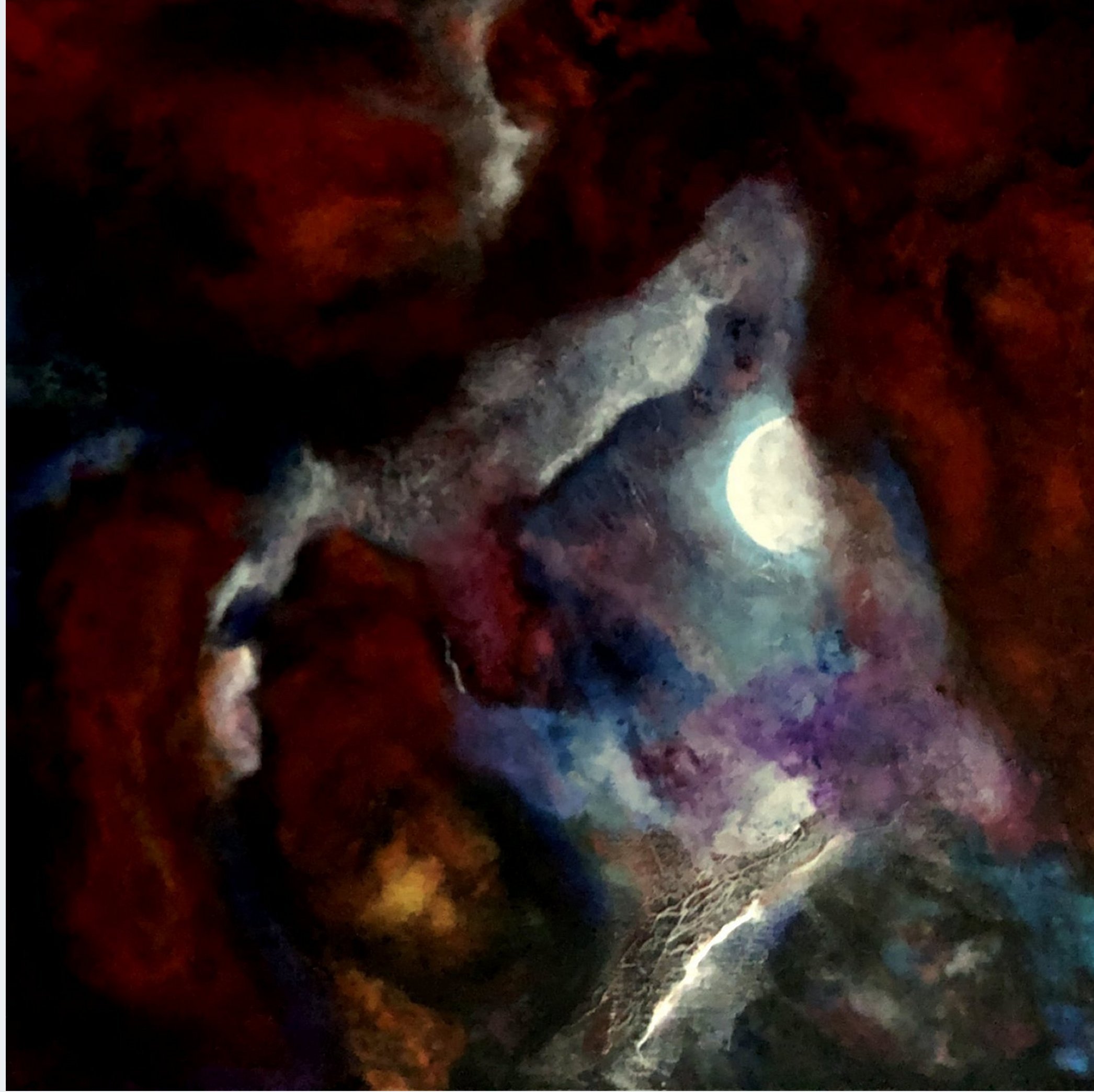
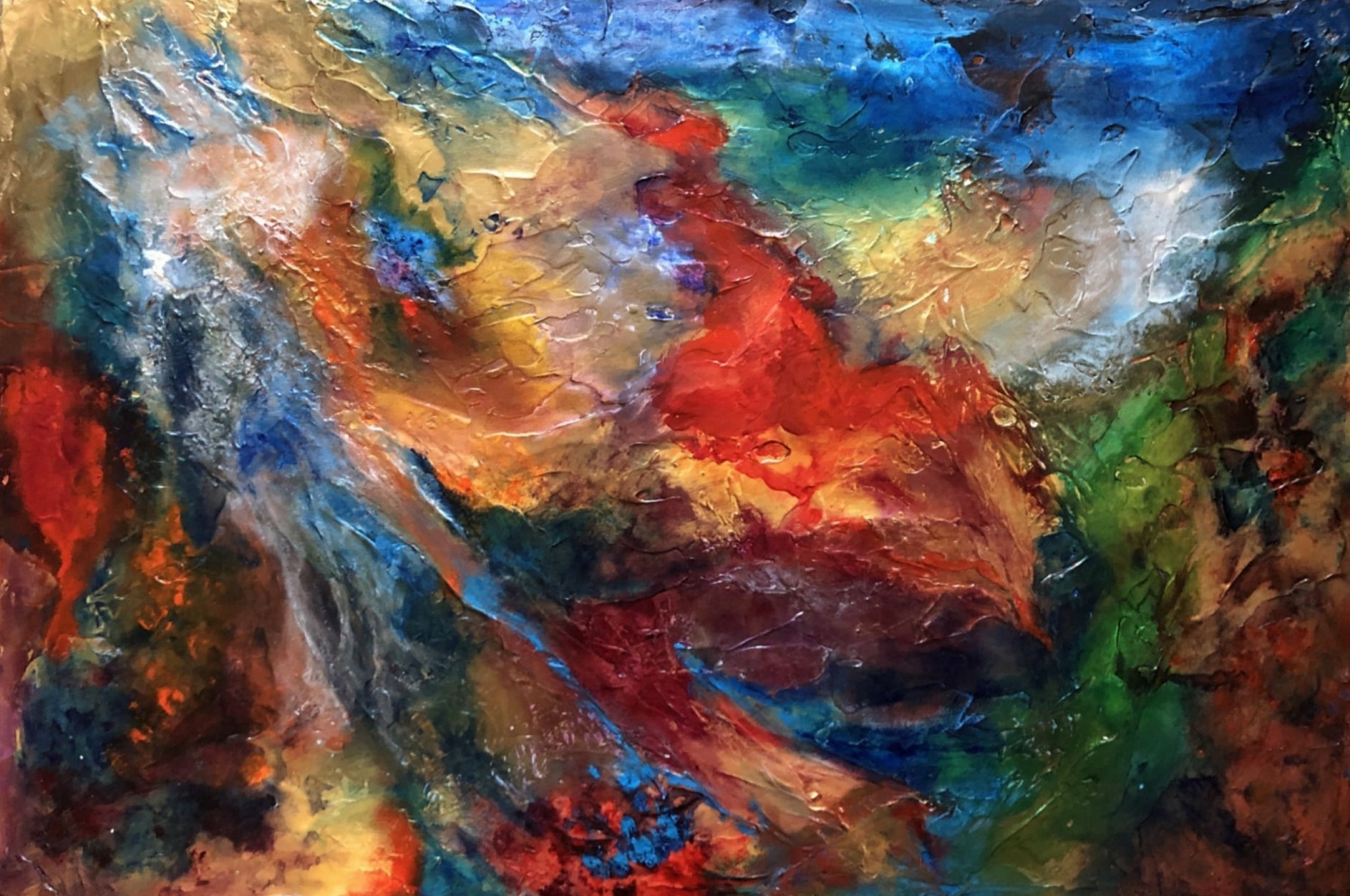
Over the last five plus years I have completed approximately 100 paintings, most of them abstracts in acrylics. I have also done a couple of surrealistic works in oils.
Like many artists, I tend to work in “series”, i.e., I will come up with a basic idea and do a number of paintings based on that idea and similar in look and feel. For example, in one series of 5 paintings I did, I used the same exact composition and same sized canvas, using a different color palette for each one.
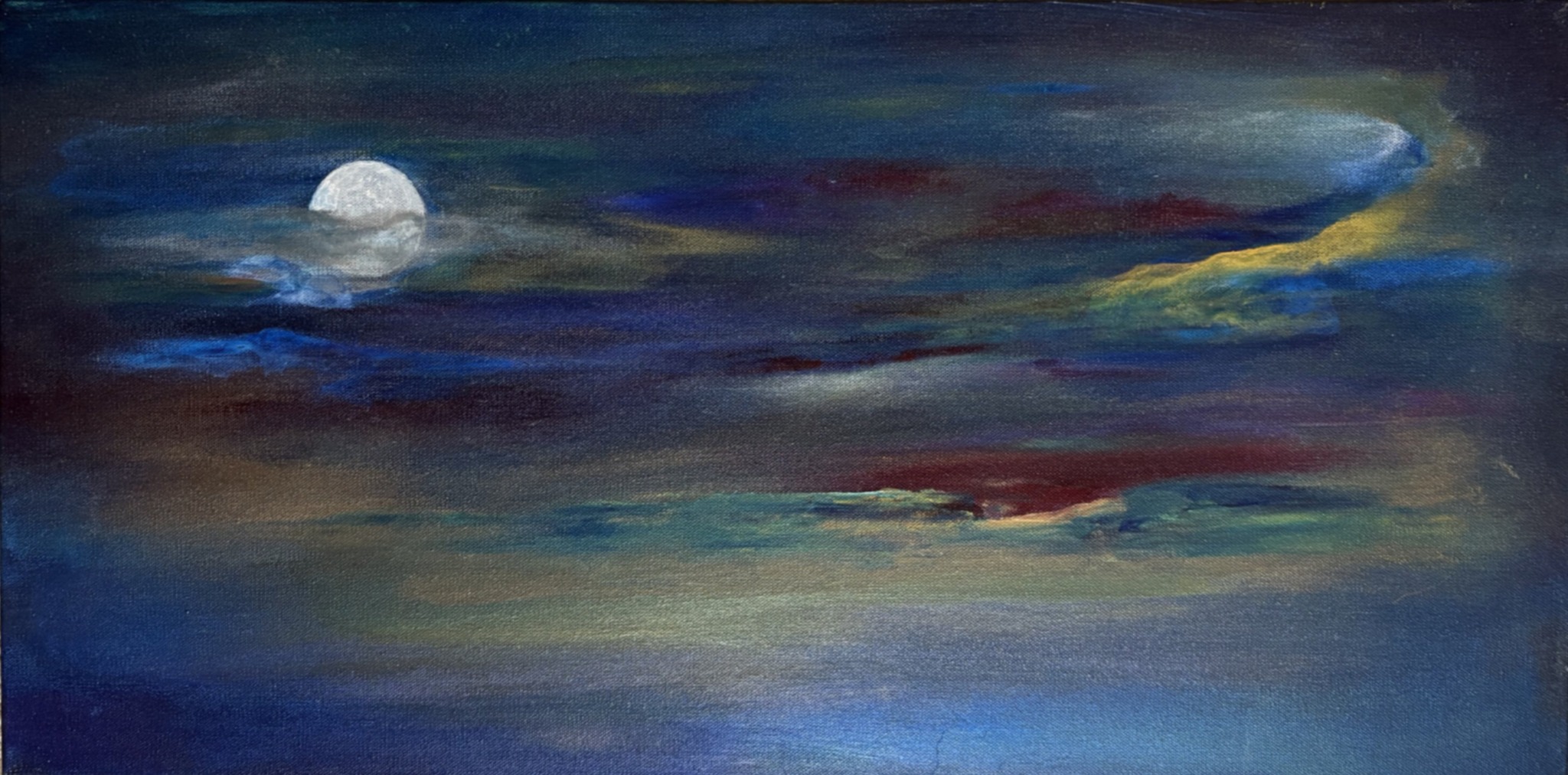
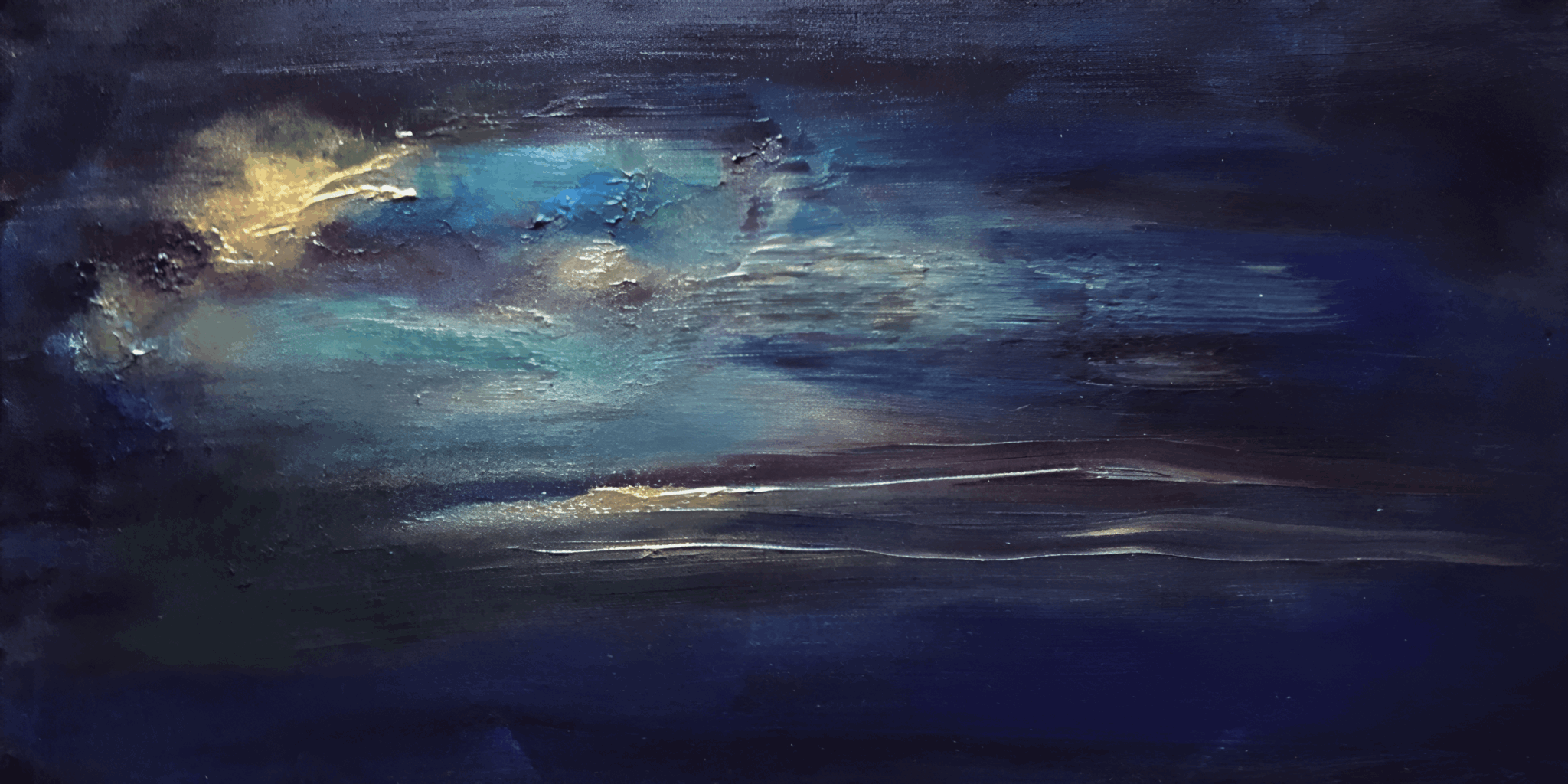
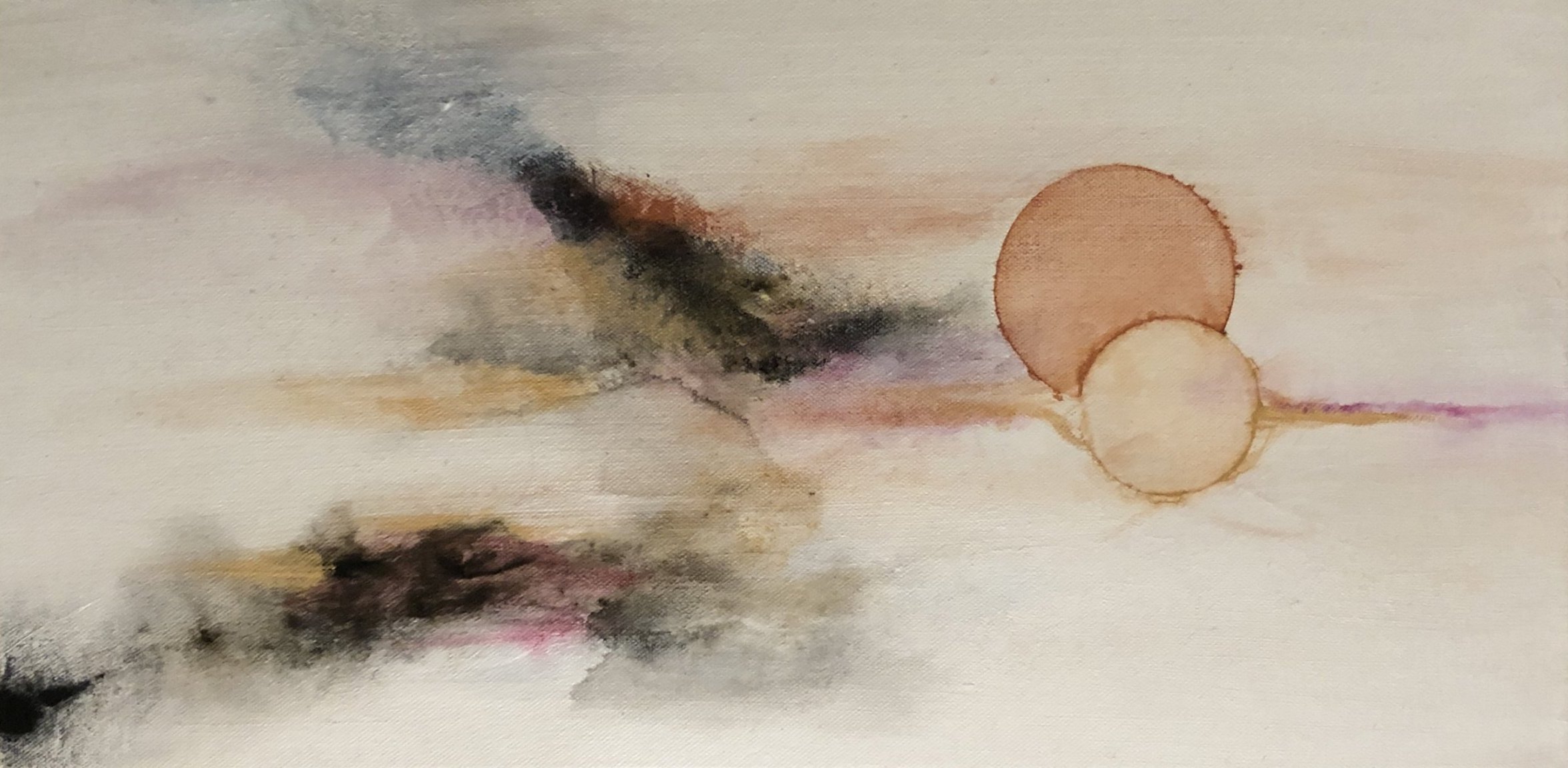
I am currently working on a “skyscape” series…ethereal skies with moons, suns, clouds, etc.
What do you think is the goal or mission that drives your creative journey?
I consider myself an aesthete in the best sense of the word. I passionately love beauty, beauty in the performing, visual and literary arts. Works in those various fields have the ability to enrich and uplift. With my own artistic efforts, I try my best to create paintings (and music) that do just that. I won’t say I succeed, but I try.
Line, color, shape, texture, dynamics and form are elements of both painting and music composition. My goal with my painting is to incorporate my training as a composer to integrate the musical with the visual to create vibrant, colorful, aesthetically and emotionally impactful paintings.
What’s the most rewarding aspect of being a creative in your experience?
There are two rewarding aspects: 1) the sense of achievement and fulfillment I feel when I have completed a painting that meets my standards and just as, if not more, important, 2) the positive response a work of mine may generate in others…the idea that my work has enriched another person’s life.
Contact Info:
- Website: http://www.kennethdevitoart.com
- Instagram: https://www.instagram.com/kennethdevitoart
- Soundcloud: https://soundcloud.com/user-13672672
- Other: https://www.saatchiart.com/kennethdevito