

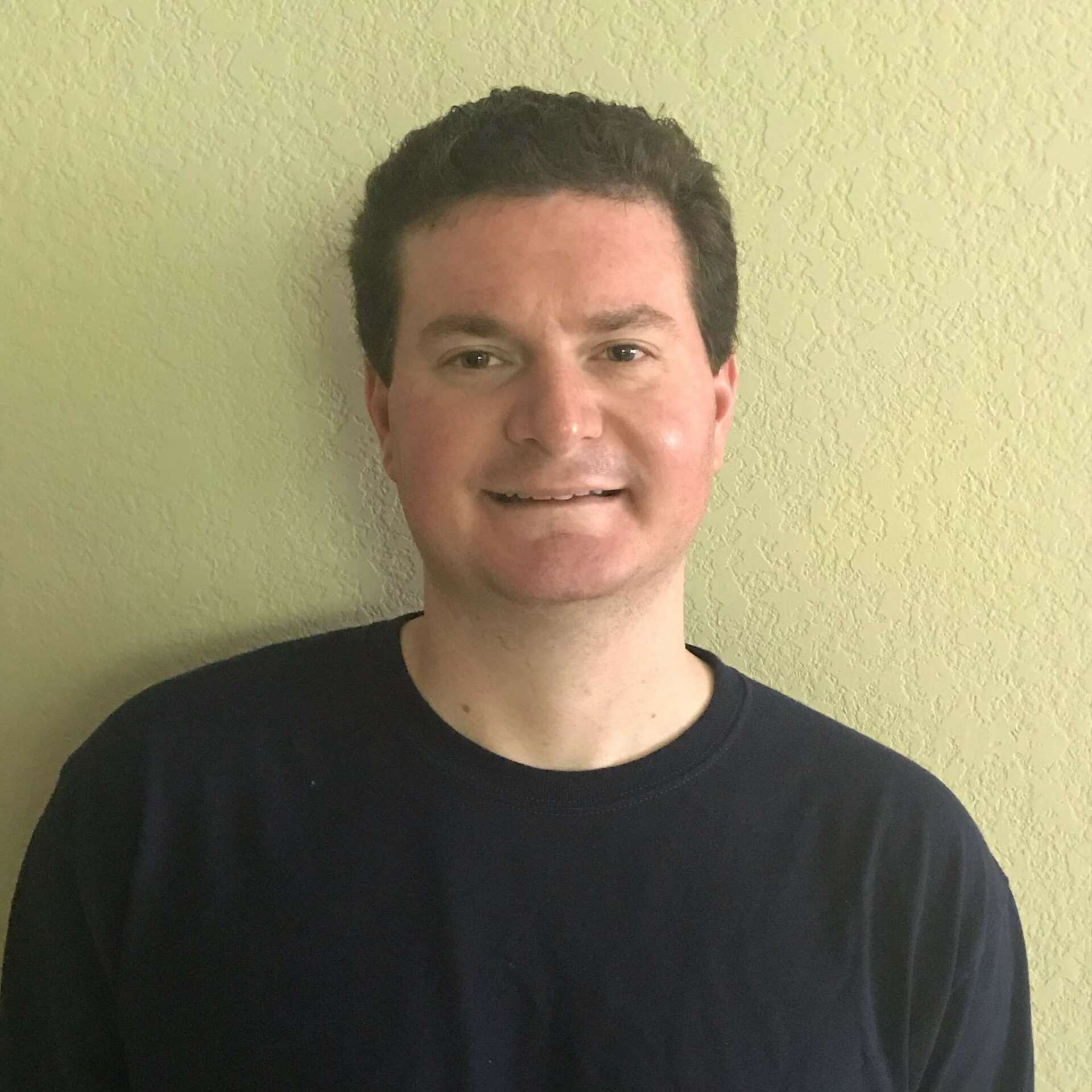

We caught up with the brilliant and insightful Andrew Blitman a few weeks ago and have shared our conversation below.
Andrew, appreciate you joining us today. Learning the craft is often a unique journey from every creative – we’d love to hear about your journey and if knowing what you know now, you would have done anything differently to speed up the learning process.
For most of my childhood, I was obsessed with world history and science — especially astronomy, biology, engineering, paleontology, psychology, and medicine. I loved watching TV shows like “The Magic School Bus”, “Bill Nye the Science Guy”, “Mythbusters”, “Blue Planet”, and “Walking with Dinosaurs”. My favorite magazines were “Natural History” , “Scientific American”, and “National Geographic”. My favorite books from that time included “Around the World in 80 Days”, “The Time Machine”, “20,000 Leagues Under the Sea”, various encyclopedias of animals and extinct creatures, stories about maritime history and shipwrecks, records about Pompeii, and the Eyewitness book series. For fun, I would create art and play with models and puzzles, Lincoln Logs, and Erector Sets.
I spent the majority of my time before college honing in on my science knowledge and my writing skills with the goal of being a biologist or a psychologist or a medical doctor, with the intent of helping other people who had autism like I do, and to figure out if there were ways to cure myself. I also had depression and schizoaffective disorder, and my mental health issues would plague me for most of my early life. Strangely though, although I was good at math, I had repeated difficulty with physics. This problem would eventually pave the way to my Master’s degree in Marine Affairs — specifically Marine Conservation Science and Policy and the use of GIS (Geographic Information Systems), where environmental laws and mapmaking were more important than pure physics. Also interesting is that I interviewed the artist and marine biologist Dr. Guy Harvey for my master’s project.
All this aside, it was not until 2007-2008 (my senior year of high school) that I seriously invested time in creative writing. In 2008, I won 3rd place in my school’s haiku contest, and that inspired me to pursue poetry further into my college years and beyond them. However, between elementary school and high school, I did take several art classes and learned how to paint and use pastels, and how to make scratchboards, sculptures, and sketches on paper and canvas. These classes lay the foundation of my current path as a professional artist. I also took an introductory art class in my first semester of college, and this too would provide important experience to this very day.
However, between high school and 2020, I focused on poetry and short stories (in many of which I illustrated too). I wrote and published my first book in 2011 and this early project inspired me to write a memoir about my 2012 experiences in Israel, which was organized by the Birthright Foundation. I made many drawings and illustrations but it was not until September 2019 that I began to take up painting as a serious interest.
At that time. my Grandma on my Mom’s side had asked me to make copies of three beautiful paintings that she saw on a trip to Maine. Naturally, I accepted the request — in part because I found out she had already asked me years ago — and because I wanted to make good on my promise. She liked the finished paintings, and that inspired me to make paintings for my whole family — and also to friends and colleagues — to give them joy. Three paintings became 20, and this minor collection would eventually — by December 2019 — motivate me to make paintings for myself because I found it therapeutic and fun. It also helped me combat my depression by giving me feelings of accomplishment whenever I completed a project, and it gave me hope for the future by directing my attention from self-hatred and past-oriented resentment to future art projects — such as finding new things to create, new subjects and new materials to use. It would also influence me to do less and less poetry because writing poetry fed my depression (although there are poems in all 14 of my books — and I have written around 1,000 poems so far), and because creating art gave me joy and positivity, and also enabled me to make wonderful gifts to those around me. I did not intend to sell my artwork in the beginning.
My interest in painting inspired me to watch every single episode of Bob Ross’s show, “The Joy of Painting”, and I also watched almost every art class on Jerry’s Art-a-Rama’s YouTube page. I have also watched at least 50 art history documentaries on Amazon Prime and YouTube and they taught me so much about art and its rich stories of great masters. My favorite art historian is Waldemar Januszczak, and his documentaries are very educational and inspiring. These sources explained amazing painting techniques, including making realistic ocean waves and applying paint thinner to oil pastels to create true oil paintings. I did a lot of research, to learn as well as to have fun. I learned also how to teach the craft over the past 3 years — the early days of the COVID-19 pandemic left me a lot of time to practice and experiment with different media and painting styles without much interruption. My favorite medium is acrylic paint on canvas.
I learned much from the Old Masters and the modern ones, but what taught me most of all are practice and patience, and practicing patience, as the majority of art revolves around the way the artist experiences and notices details, and the way the interpretation of a piece affects its message and value. Another deeply important thing is wise counsel. Find people who are honest and true to you, and to politely accept criticism — good and bad — because that will make you truly successful, and that will build your character and your technique.
Other resources I have come to deeply appreciate are “Antiques Roadshow” and “Pawn Stars” — they have provided valuable education about the way things are valued and appreciated in love as well as in money. I am always amazed by the way the antique and pawn shop dealers haggle over prices and how they know how to appraise these creations. Most amazing was a 1770s-period wooden table I saw on Antiques Roadshow: It was sold for more than $500,000 at auction after that episode took place. It makes me wonder what my art could worth someday.
Part of what helped me achieve my current level of success was an idea I had in July 2021, to create a portfolio photo book that displayed all of the paintings I had made between elementary school and June 2021 — more than 300 paintings are featured in it. My Grandma on my Dad’s side told me to share that book with my friends and colleagues from the autism community and I did what she said. That one moment of guidance completely changed my career and my life direction. Yes — I am still a teacher and I like science — but her advice has helped me feature my paintings in several galleries — at the Els Center Pavilion for more than a year, the Art & Autism Expos in 2021 and 2022, the Artists with Autism store at the Festival Flea Market, and even at the Coral Springs Regional Library for an exhibition in October 2021. I have also sold my paintings at 2 Els Center events this past April, and as of now I have currently produced more than 1,000 paintings.
Those are the secrets really — have fun; be persistent; help people; be prolific; create a lot; learn a lot; teach yourself and practice your crafts consistently; share your work with others — especially with like-minded people –; take wise advice; do new things; take breaks; and most of all — give credit to those who helped you achieve your success.


Andrew, before we move on to more of these sorts of questions, can you take some time to bring our readers up to speed on you and what you do?
I am an artist and the published author of 14 books, who grew up in Cooper City, Florida, and received a Masters in Marine Conservation Science & Policy from the University of Miami in May 2014. There, I blogged on WordPress. The blog posts evolved into multiple books, including a memoir of my experiences on a 2012 Birthright trip to Israel: “Birthright 2012: A Voyage into the Heart and Soul of Israel”. I am also the author and illustrator of the “Wild Writers” series: Three books of poems written from the perspective of animals and plants; as well as the author of a book of original jokes: “The Big Book of Pun-ishment” (2018); the author of five original poetry anthologies; and the author of a new portfolio book that documents more than 300 original paintings for your viewing pleasure: “The Painting Portfolio: A Comprehensive and Current Collection of Visual Art”. You can find and buy all of my books through Amazon.com.
As an author, I prefer writing poetry – especially free verse and sonnets. I invented a new kind of my own too – called Matrix poetry (which you can find in my book, “The Book of Matrix Poetry”, on Amazon). Among my favorite original poems are “Never Again (Conversations with God)”, “Alone in the Universe”, “The Emperor and the Swan”, “The Song of Love”, and “Mother Elephant”. “Birthright 2012: A Voyage into the Heart and Soul of Israel” is my most popular book and is a personal favorite.
As a painter, I find myself specializing in birds, fish, landscapes, seascapes, and monuments. I pride myself with my acrylic paintings. I am really proud of how much improvement I have seen in my paintings over such a short period of time.
I am different from other acrylic painters in terms of my creative process – I am certain that it is the combination of rapid production speed and art production quality that makes my work stand out from the works of other artists.
As an educator at Firewall Centers, I take pride in teaching my students math and English and in offering them homework help and life lessons. Firewall is a non-profit organization that provides afterschool academic support and mentorship to children who would otherwise be unable to afford it. I like working with them. I enjoy being a tutor and a mentor, and it’s our mission at Firewall to help our students grow into servant leaders.
This past July, I worked as an art teacher at the Els Center’s summer camp for young adults and children with autism. I taught four different groups between the ages of 6 and 21 years old. I had a lot of fun! I also taught art classes at the Firewall Center’s summer camp this past June — with participants also between elementary-age and high school-age.
I suppose the thing that makes me most unique is my age and the fact that I have done so much in such a short period of time. I also believe that my personal experiences with depression, schizoaffective disoarder, and autism enable me to be more empathetic and sensitive toward my students and colleagues than someone who has never dealt with these challenges, and that my own story could help people without disabilities relate to those who have them, and also show that these challenges are difficult — but not impossible — to overcome.
I served on UM-NSU CARD’s constituency board from 2011 to 2017, and I currently serve on the advisory board for Els for Autism, as I have done since 2018.
However, my main goal as a teacher, as an adult with autism, and as an advocate in South Florida’s autism community is to connect people with autism and their families to the resources they need to treat the disability, recover and thrive. My achievements and accomplishments are secondary to this goal, and that is why I like being a teacher so much!


What can society do to ensure an environment that’s helpful to artists and creatives?
I honestly think that the most important things we must do to support creative people are the following:
1. Provide collaboration and network opportunities between artists, perhaps something like a FaceBook or LinkedIn for artists. Let’s do the same for actors and directors and musicians to support the performing arts
2. Keep art and music and creativity resources fully-stocked in every level of the school system without question. Support art in all American schools
3. Provide art therapy in hospitals, psych wards, orphanages, half-way houses, prisons, juvenile hall, rehab facilities, hospice care, senior care facilities, in museums, and in schools for people with disabilities, and other similar places
4. Teach cursive and calligraphy in all schools — they are important for writing signatures and poems, and other forms of abstract artwork too
5. Provide art history classes that are accessible to everyone — do more than just AP Art History. Also, provide mentorship and apprenticeships for artists – perhaps something similar to “Best Buddies”
6. Subsidize artwork created from non-biodegradable materials such as plastic and Styrofoam and glass like the work 4 Ocean does around the world. Promote environmentally-friendly art and its artists
7. On a larger scale and in more cities, promote and subsidize local artists with commissions and grants and exhibit space, similar to the artist’s residency program used by Pompano Beach and the Bailey Center for Contemporary Art
8. Promote, provide for, house, and rehabilitate homeless and impoverished artists — similar to the plot of the movie, “The Soloist”
9. Promote, provide for, and subsidize Native American, African American, and Latino Artists on a larger scale, and give them equal opportunities for selling their work
10. Provide easily-accessible resources and courses for aspiring artists, especially when it comes to teaching them how to practice setting up booths at art fairs and farmers’ markets, and about how to sign up for them, and how to determine prices for their art, and perhaps how they can best prepare for future in-person art events


Do you think there is something that non-creatives might struggle to understand about your journey as a creative? Maybe you can shed some light?
Well, my story is a multifaceted one. I am a South Florida native. I come from a Jewish background, and I am blessed with a loving family and friends. My life has been transformed by autism/Asperger Syndrome and childhood depression, and also to some extent by bullying and therapy, and the ways in which everything played out led me to philosophy and experiences with a variety of religions. While I have always loved being creative, the majority of my life and education is rooted in science — especially biology! The most important thing about my life looking back is the fact that much of my life’s direction — especially the most important moments of it — occurred unexpectedly. I never expected to become an author or an artist — or anything at all.
Traumatic experiences connected to socializing with my peers and managing my developmental disability, and bad doctors and bad luck with medications deeply affected me for a significant period of time. Thankfully, community service, science, and visual art gave me outlets for helping others, for increasing my creativity, for learning new things, and for channeling difficult emotions through productivity. I took many art classes between elementary and high school.
I also have many other positive moments in my life. Graduate school at UM was another important component of my life. Following that experience, I decided I needed a break from scientific research, and then poured my efforts into teaching. In 2016, I worked for a year as an exhibit guide at the Museum of Discovery and Science in Fort Lauderdale. My favorite part of the Museum was my job as a horseshoe crab handler — and teaching guests about the animal’s amazing biology.
In 2020, I also worked as a sea turtle specialist for Nova Southeastern University (NSU) and the Broward County Sea Turtle Conservation Program (BCSTCP), for whom at night I monitored sea turtle nests on Broward County’s beaches for freshly-hatched turtles and escorted those hatchlings to the water. One of my favorite experiences on the job was in July 2020, on Fort Lauderdale Beach, when I excavated three caged turtle nests and delivered the hatchlings to the water during a colossal 2-hour thunderstorm.
For most of my life, I hated myself for having autism and for being different from my peers. I suffered a lot from loneliness in that department. Many times my anger and self-loathing almost consumed me, but I never gave up, even when I wanted to. On Halloween 2009, I was hospitalized for suicidal feelings — I turned myself in, because I hated myself and my situation, and I knew something was seriously wrong with me. From that point to this very moment, I made a vow to God that I would never attempt suicide again — even if I wanted to. I chose to persist through the urge. Poetry and art allowed me to make sense of my emotions, and they are crucial to my recovery and are the reason why I am still alive with you today. I have been true to my words, and that dedication laid the foundation for my recovery.
Perseverance is the most important social skill, because it builds character and makes you stronger. It also instills in you the value and dignity of human life — and of your own life! Life is incredibly uncertain but there is strength in resilience, and flexibility in your reaction to it. Creativity and adaptability work well together. Creativity is persistence, and with persistence comes opportunity. Open up to new experiences, because the best ones are often the ones you didn’t prepare for!
Contact Info:
- Website: https://www.andrewblitman.com/
- Instagram: https://www.instagram.com/andrewblitmanart/
- Other: SoundCloud: https://soundcloud.com/andrew-blitman Amazon Author’s Page: https://www.amazon.com/-/e/B008TCJZBG AllPoetry: https://allpoetry.com/Andrew_Blitman Fine Art America: https://fineartamerica.com/profiles/1-andrew-blitman