
We caught up with the brilliant and insightful Michele Mitchell a few weeks ago and have shared our conversation below.
Michele, appreciate you joining us today. Can you tell us about a time that your work has been misunderstood? Why do you think it happened and did any interesting insights emerge from the experience?
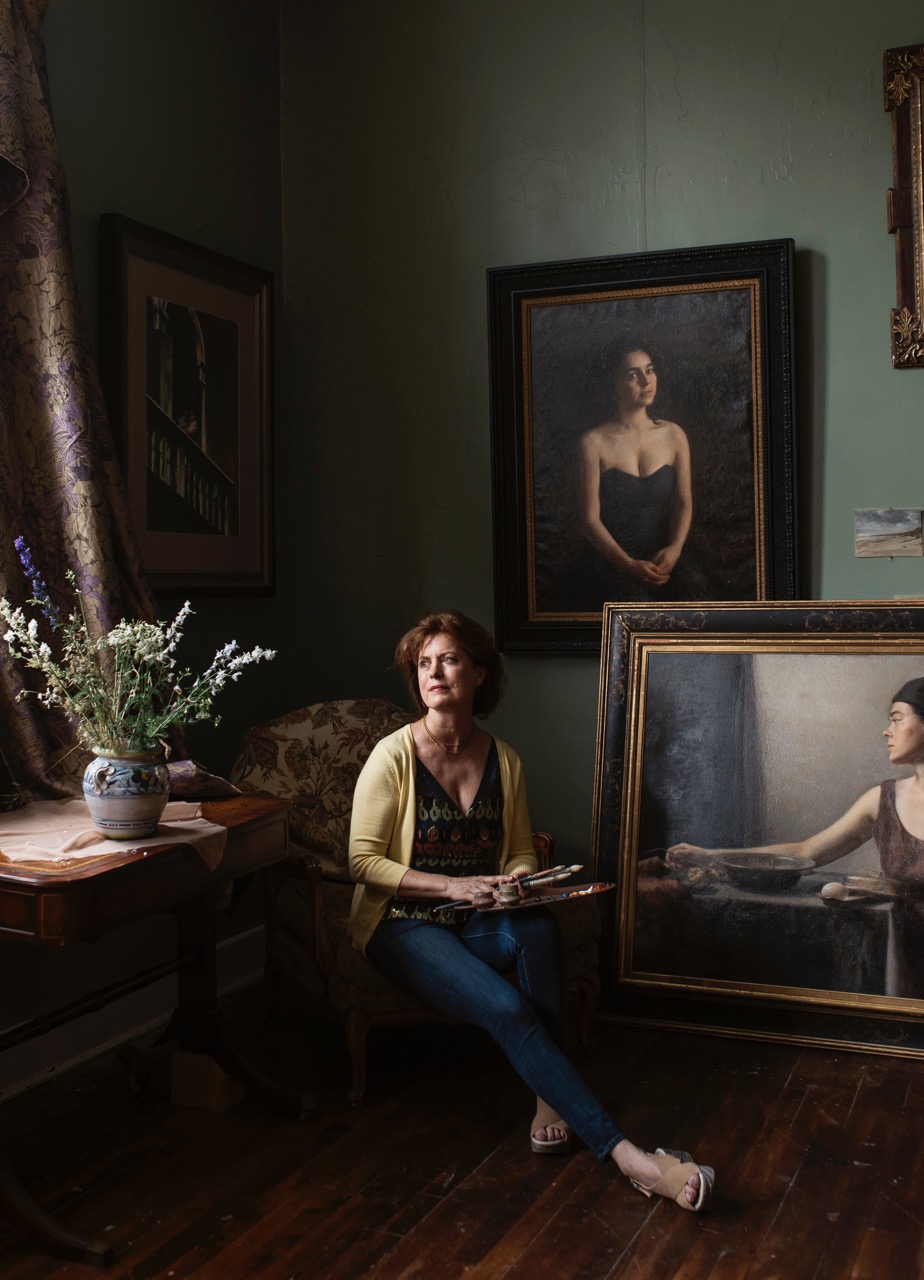
As we all have been misunderstood or mischaracterized, I too, have as well. One particular misconception was when people assumed a man had painted my works, or when they gave me a skeptical look and asked, “You did these?!” Perhaps it was my appearance or demeanor that didn’t align with their preconceived concepts about the artist, which I found interesting, as it reveals how deeply ingrained assumptions can shape our perceptions. I believe there are so many intrusive and fabricated concepts that color our perceptions. And with that, a choice to replace consciousness with unconsciousness. And in doing so, we lose what is most valuable and precious, allowing preconceived notions to dominate our understanding
.
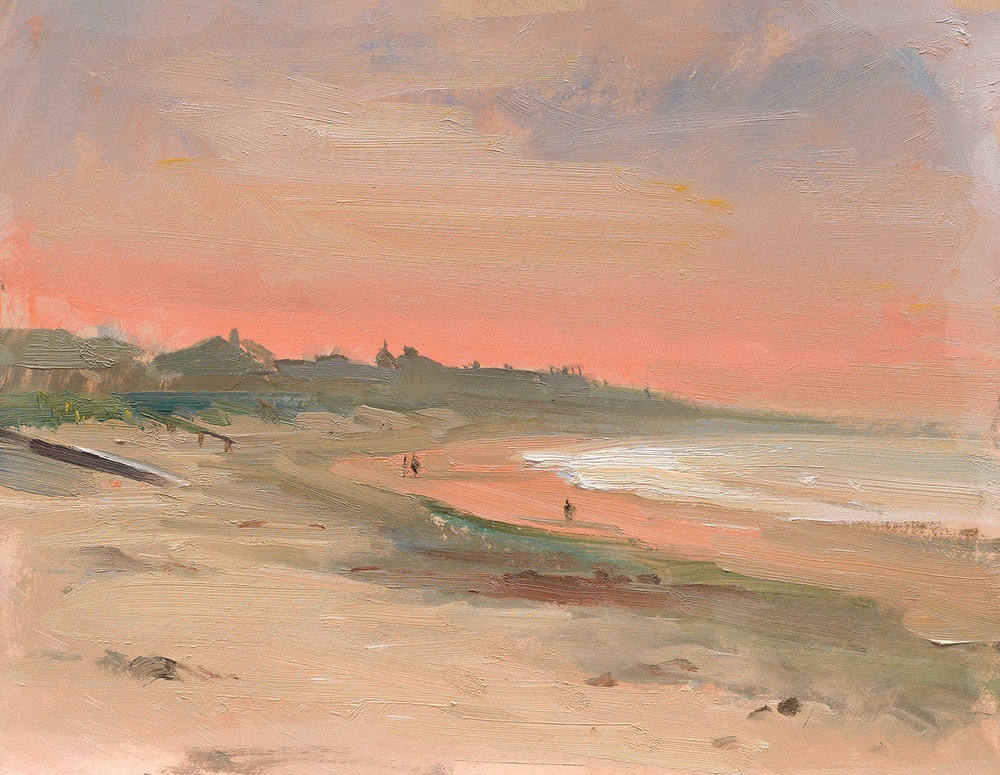
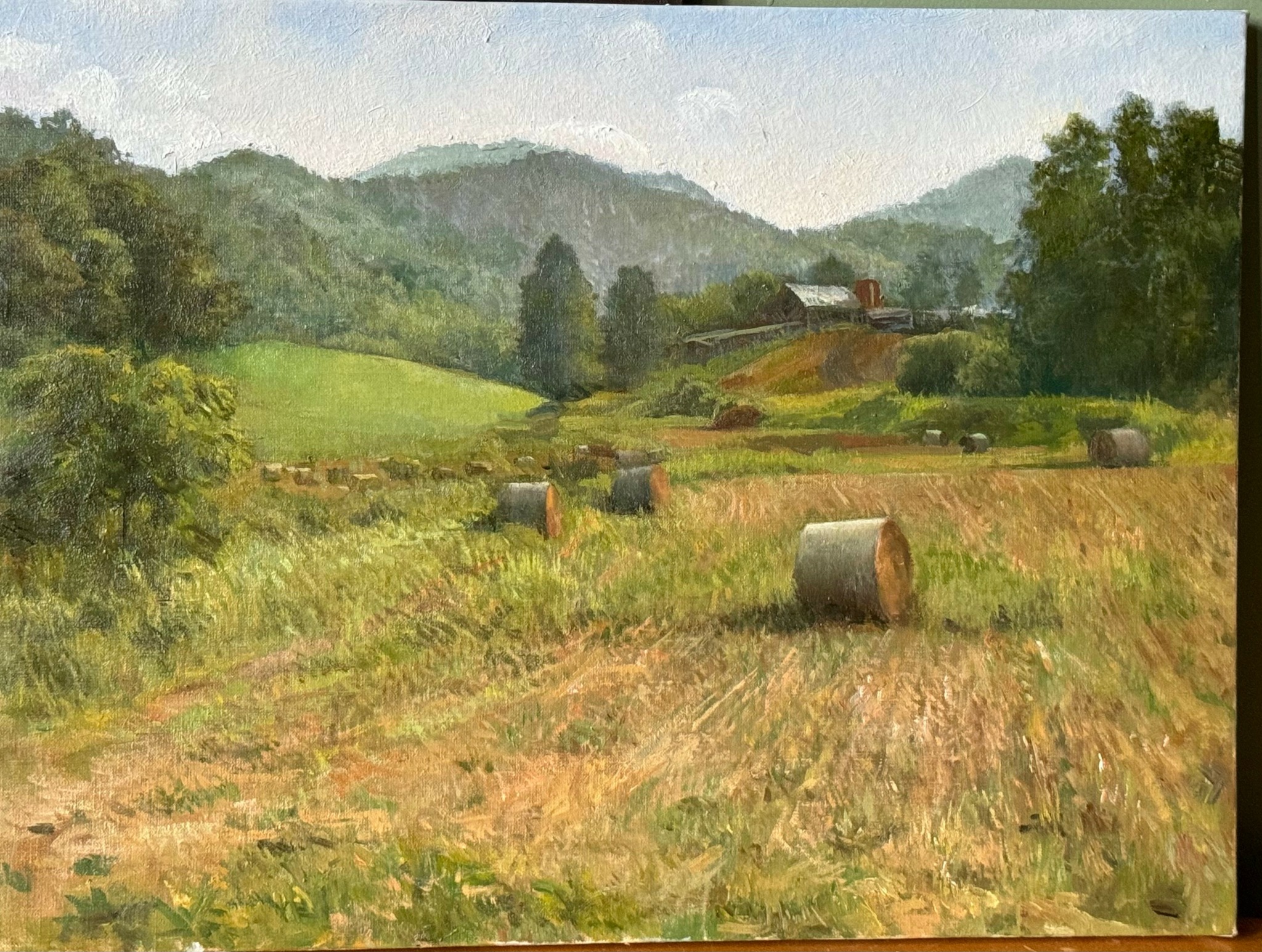
Within the realm of art, one common misunderstanding I’ve encountered revolves around “Impressionism”. Many assume it’s merely about vibrant colors loosely applied to a canvas, creating a “brushy” and carefree appearance. But Impressionism is far more profound.
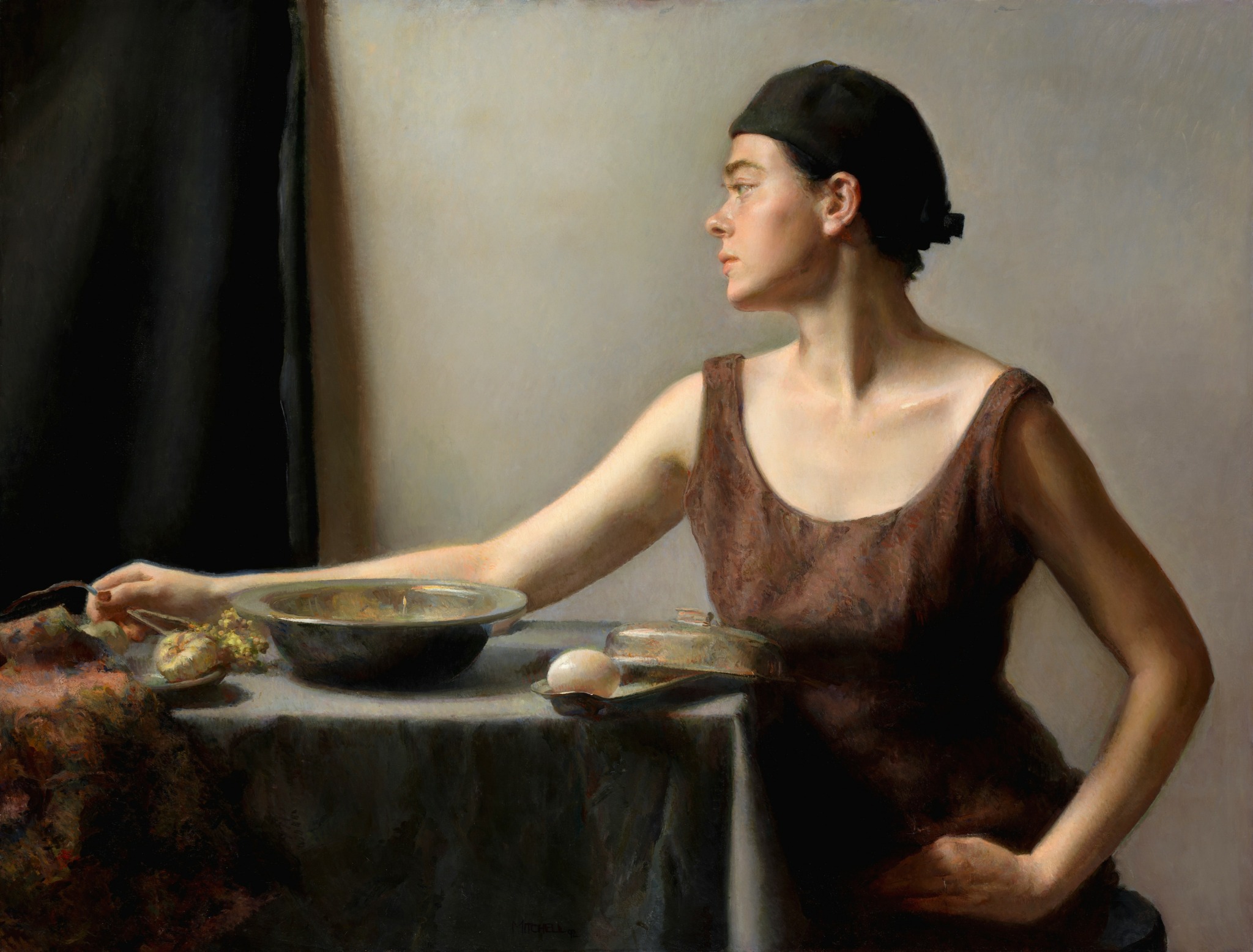
I am deeply rooted in both the French Academic tradition and the Impressionist tradition, a duality that defines my artistic practice. My training took place in a small atelier that maintains a direct lineage to the Old Masters, a tradition passed down from master to student in an unbroken line stretching back to Jacques-Louis David in France. This lineage includes artistic masters such as Jean-Léon Gérôme, William McGregor Paxton, and Paul Delaroche, whose rigorous methods and commitment to precise drawing and composition form part of the foundation of my work.
I am, at my core, an Impressionist—a truth my teacher recognized when he said to me, ‘Michele, you’re an Impressionist whether you like it or not.’ It’s not just a style I adopted; it’s how I see the world. Impressionism, for me, is about “seeing”—seeing the whole, And seeing, I believe, is something deeply misunderstood. Prior to my atelier training, I achieved international recognition and won numerous awards, But I had reached a point where I felt my own artistic style was limiting my ability to see. I was seeing through my own fabrications and filters obscuring my ability to truly see. I wanted to break through these barriers,
Through my training at the atelier, I learned to “see”. I began to dismantle the mental constructs I had built in relation to my art. My approach shifted as my eye and hand synchronized and grew stronger, and I surrendered to the elegance of Nature’s forms. But this required presence—without it, one cannot truly see what is before them.. My education blended the precision of the French atelier, with its emphasis on accurate drawing and the separation of values into broad forms of light and shadow, with the holistic vision of Impressionism. At its heart, Impressionism is about perceiving the ‘whole’—the infinite interplay of color and atmosphere as they converge with form. It demands of one to release the preoccupation with detail to observing how every element interacts within the broader composition. It is about trusting the eye, allowing the hand to transpose what is seen without becoming entangled in any single part.
When I first encountered this approach, I felt drawn into a world of harmonious light and atmosphere, compelled to record that visual symphony onto canvas. Impressionism is about capturing the fleeting profundity of a moment, as light dances across form, and nature’s colors shift and spill in the ever-changing atmospheric harmonies.
In my work, I strive to honor that first impression—the initial, inherent response to the subject matter—without letting conceptual dictates or overthinking interfere. It’s about staying true to the immediacy of what I see and feel, and I am guided by appreciation, and engaging within the whole, as the hand follows to constantly return to the initial impression.
To detect a harmony aligning and bringing together a visual story that a moment may capture, a moment’s impression. It weaves its magic through one so sensitively that it becomes the artist’s voice as well as remaining Nature’s gift. And its structural melody is carried throughout while I companion its form and depth. In this way, I witness an impression speaking of something the heart may embrace but the mind cannot fathom, and the landscape, or still life, or portrait becomes a seamless symphony of atmospheric relationships, where every brushstroke contributes to the harmony of the whole.
.
As always, we appreciate you sharing your insights and we’ve got a few more questions for you, but before we get to all of that can you take a minute to introduce yourself and give our readers some of your back background and context?
I once found myself at a divergence of paths. I found myself between two loves, for music and for art. Both demanded everything from me, and I knew I could only give myself fully to one. While I loved playing instruments, composing music, and singing, I craved a more private and introspective path than the lifestyle of performing in clubs—a life I couldn’t quite envision for myself in the long term. So, though I continued to engage with music, I began to turn my focus more deeply toward the visual arts. In many ways, I’ve always been guided by my heart, and art felt like a natural extension of that intuitive prodding. It was, in essence, not so different from music~ a different language, perhaps, but one that spoke to the same depth within me.
From a young age, I experienced a depth few could embrace or understand and the arts was a path that allowed me free rein to discover, evolve and grow, far removed from society’s expectation. Unfolding was creativity but also the experience of self knowledge.
I felt a depth of emotion and perception that seemed to set me apart. The arts became my refuge. It was a journey not just of creativity but of seeking truth and understanding. Painting became an extension of that search—a way to witness beauty, to appreciate it fully, and to respond with as much humility as I could gather within myself. In return, I was always met with a sense of grace that felt almost sacred.
The heart has a way of recording what the mind cannot fully grasp or articulate. It’s a privilege to stand before the canvas, and to allow beauty to speak through me. My wish ~ my prayer, is to remain transparent, and to let something greater than myself emerge. In this way, I hope to honor the beauty I’ve been given the gift to see.
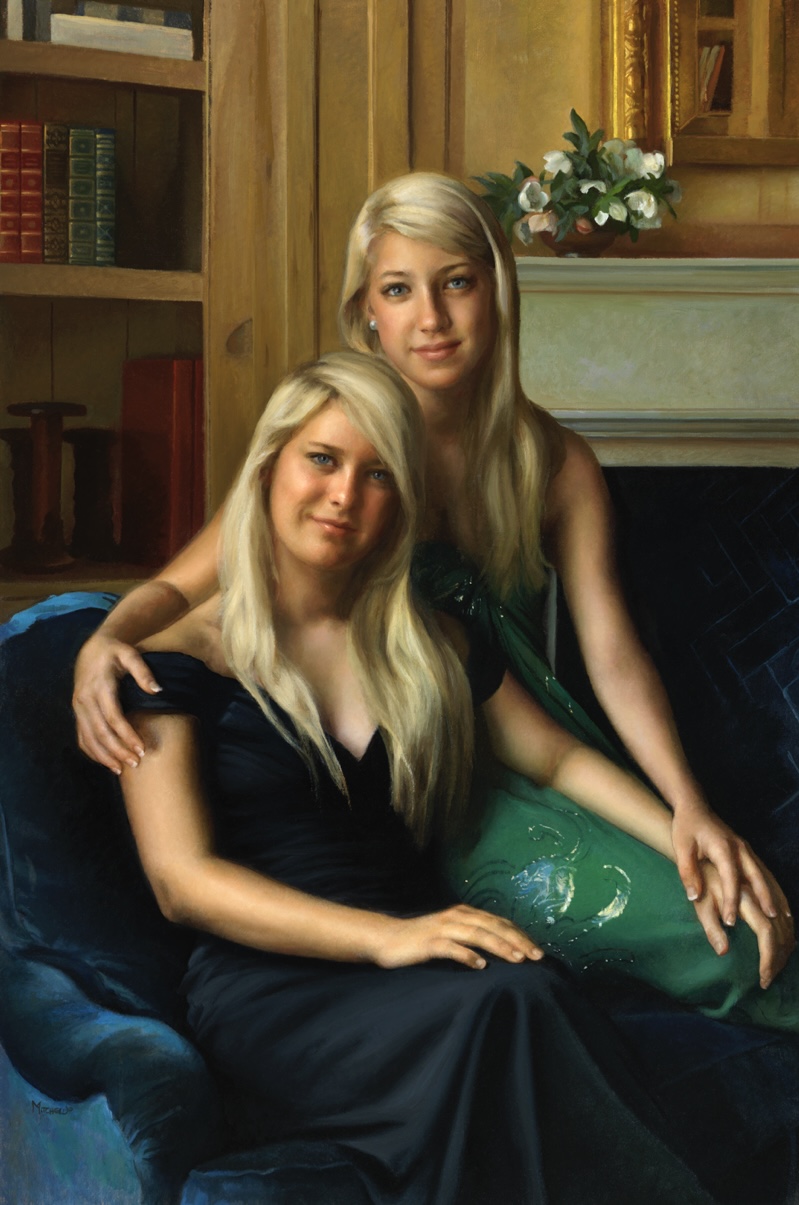
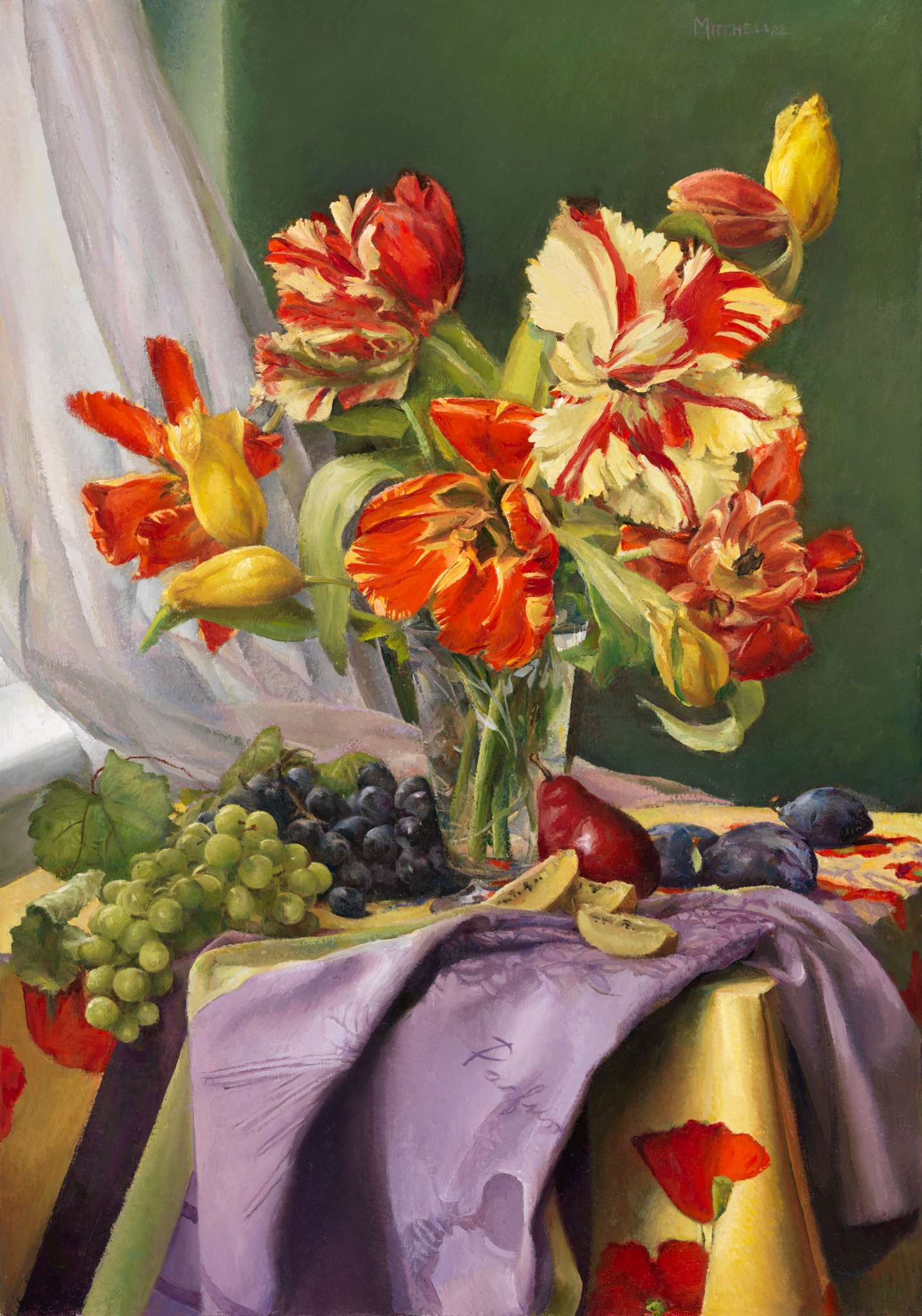
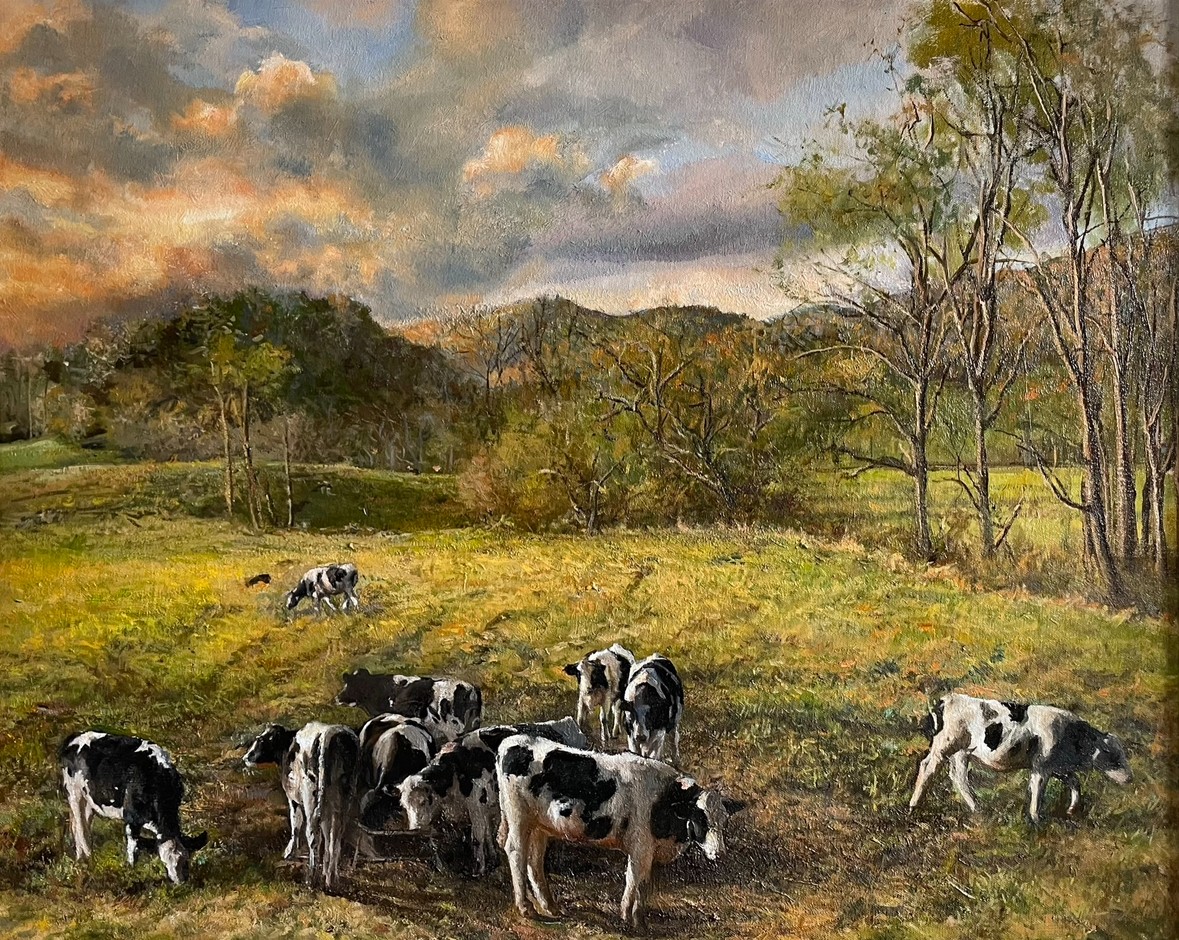
In my artistic journey, I’ve explored figurative works, genre pieces, still lifes, landscapes, and portraiture, I loved the moments when I could witness the essential part of someone emerge as I painted them. Or the wind and sounds and scents of a landscape be given voice or even the majestic way a flower shows its delicacy as it moves toward the light.
I have also delved into watercolors, a medium that demands fluidity and precision, as it is an unforgiving medium.
Once, I painted the same piece twelve times until I felt it truly captured what I envisioned. This dedication reflects my deeper commitment to a vision given authenticity and, as my teacher once said, “Michele, you are going to be a great painter because you have tenacity!”
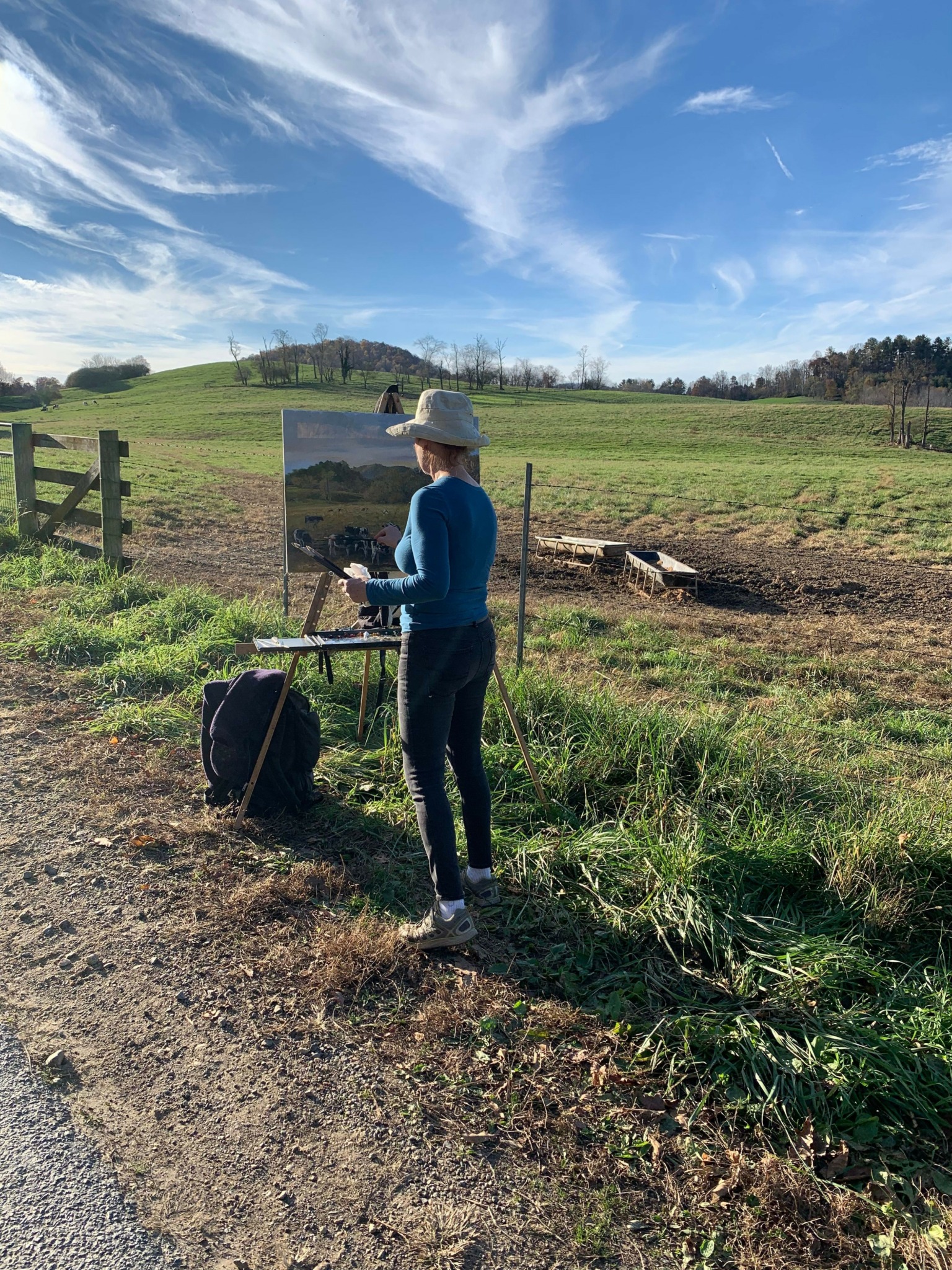
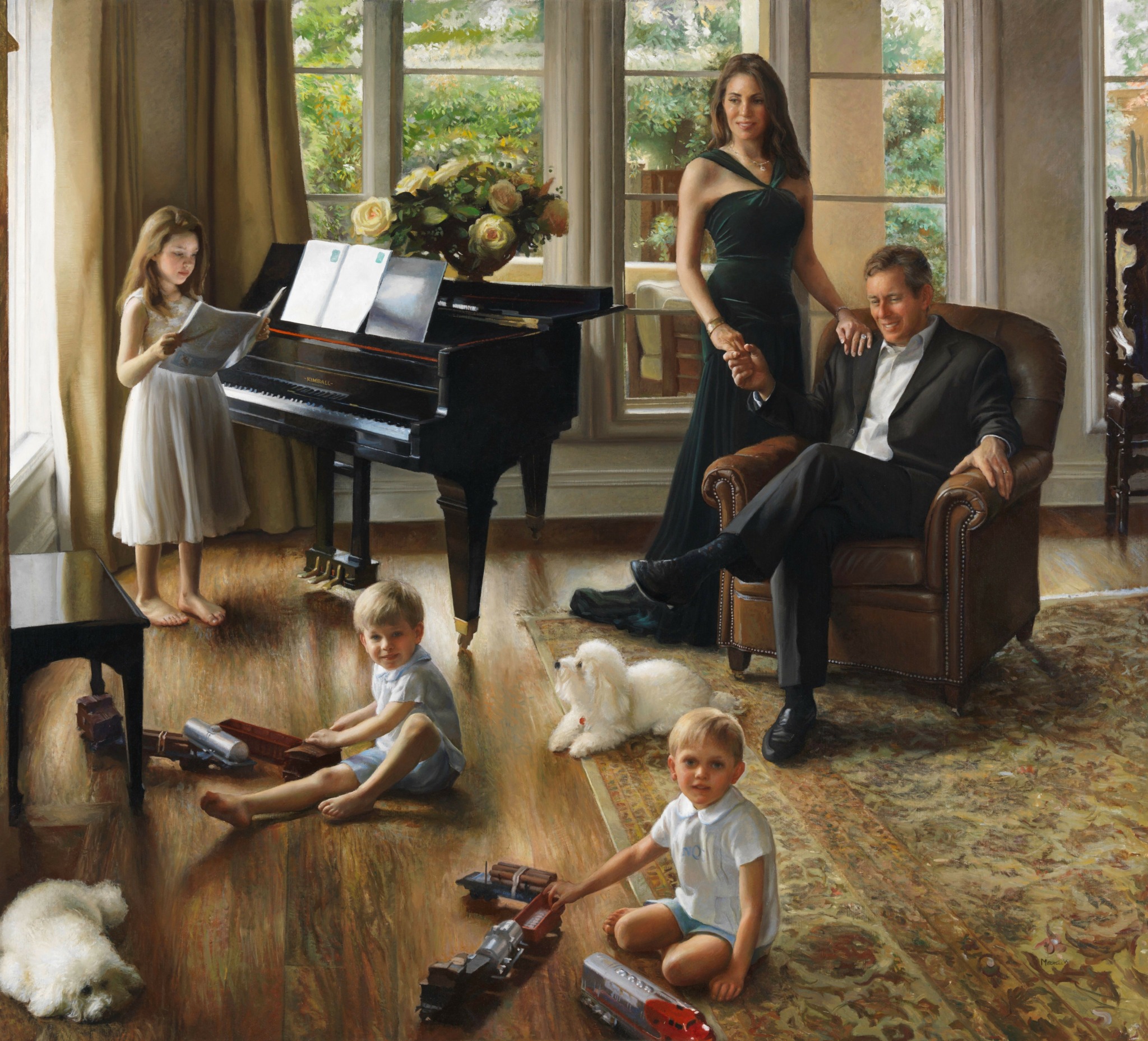
Today, my days are spent in the studio or outdoors, painting landscapes en plein air. In the studio, my subject matter remains diverse—ranging from still lifes and genre scenes to commissioned portraits. What am I most proud of? It’s the ability to see beyond the illusory, to the extraordinary to follow something deeper and more profound through the language of my art, no matter the subject.
I am always open to collaboration and welcome inquiries from those with a vision or artistic request, whether it’s a portrait, landscape, or still life. It brings me great pleasure to help clients discover what they’re looking for and bring it to life on canvas. In essence, my pleasure is their wish—or even their unspoken wish—into a tangible work of art.
We often hear about learning lessons – but just as important is unlearning lessons. Have you ever had to unlearn a lesson?
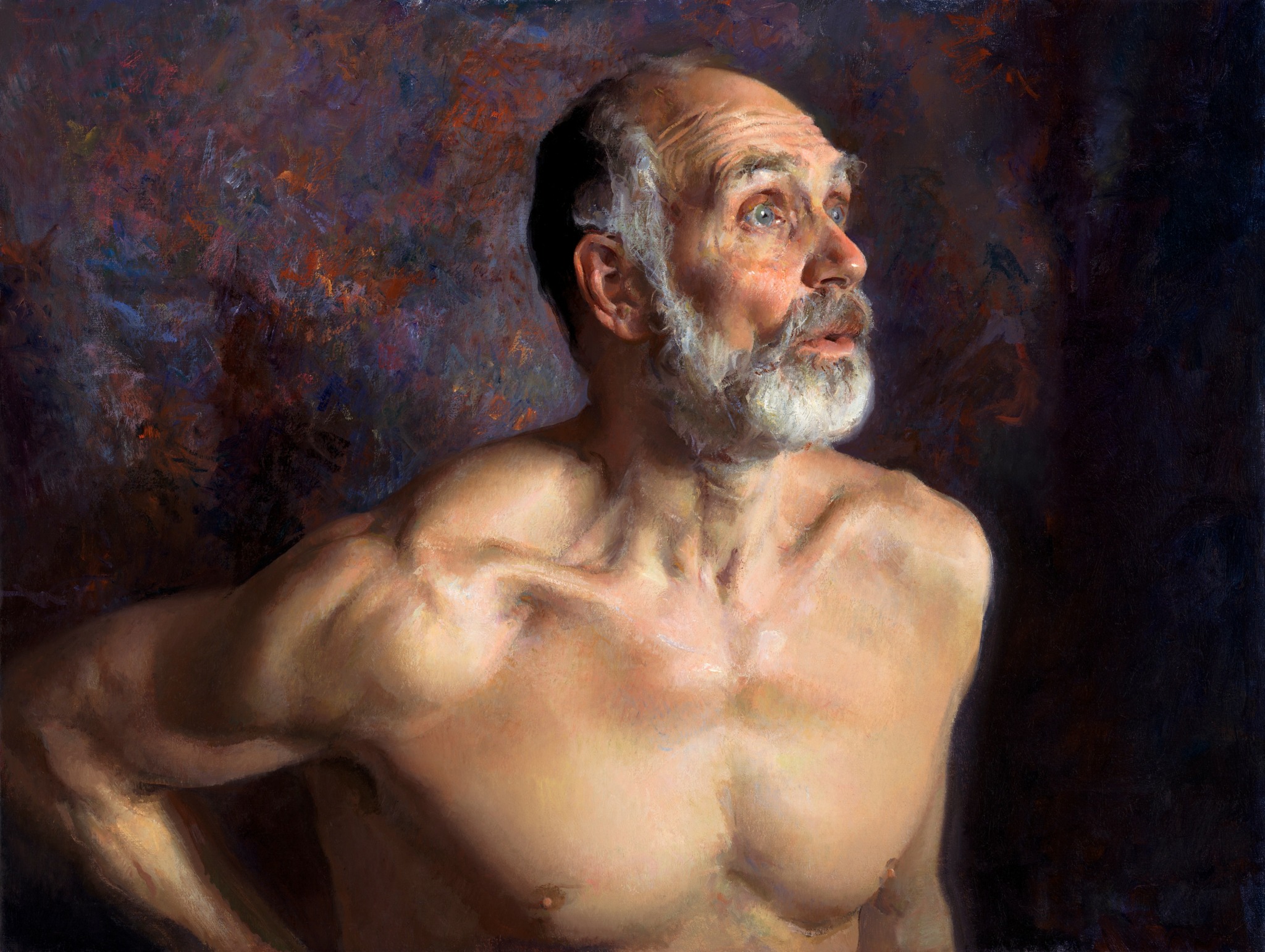
The lesson I had to unlearn was to get out of my own way. For a long time, I was trapped in a self-imposed prison of style. I had developed a palette and approach that felt comfortable, almost like a pre-written code I would return to without question. Whether painting figures, portraits, or still lifes, I delighted in the randomness of my process but completely missed the point. It was like building a beautiful, decorative structure that lacked the strength to bear its own weight—or wandering through a carnival, letting go of the hand that could guide me to where I needed to go and safely back to where I began. Without that guidance, it was easy to get lost and remain lost. My paintings became idealized decorative interpretations. People admired my “style,” but all I felt was confined by it.
Unlearning this was one of the most difficult challenges I’ve faced. To truly see what I was looking at and paint or draw it without the interference of bias, preconceived ideas, or self-imposed rules required a profound shift. But when I finally reached a point where my eye and hand could connect without intrusion, it felt like learning to fly. I discovered a profound sense of freedom in allowing myself to be fully present—to have the courage to relinquish control and respond honestly to what I was seeing, so I could paint it with authenticity. This shift was transformative—it revealed the profound strength in humility, the clarity of true observation, and the beauty of letting go..
For you, what’s the most rewarding aspect of being a creative?
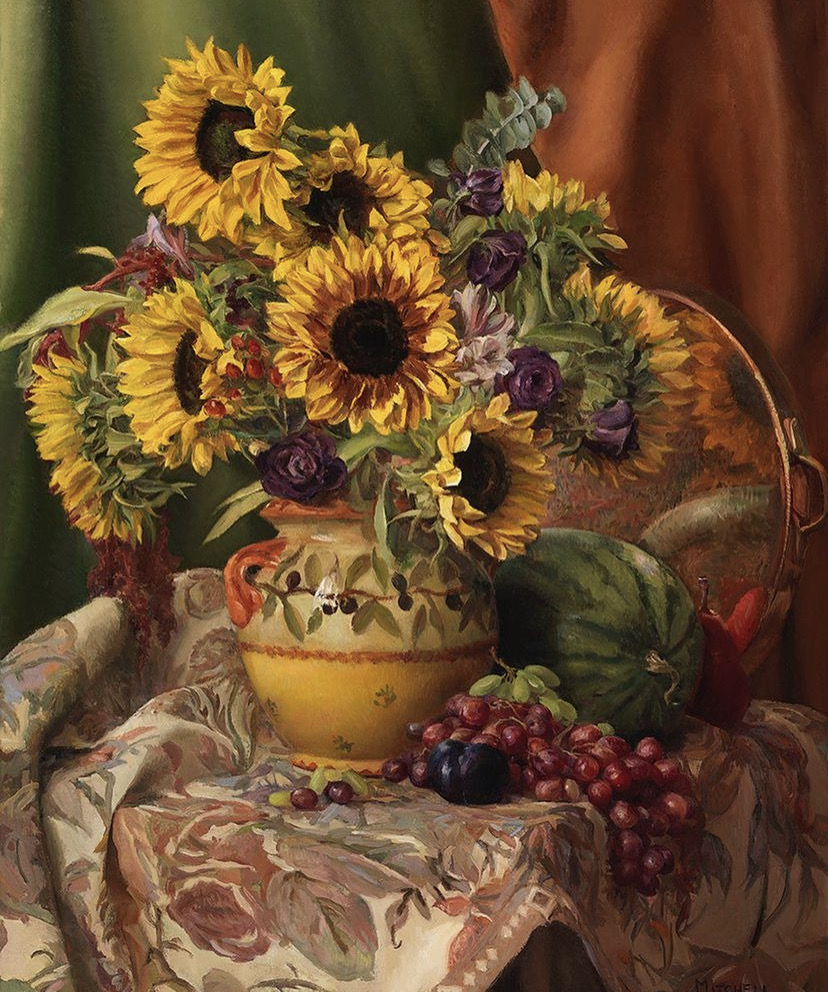
For me, the most rewarding aspect of being an artist is that it exists outside the bounds of societal constructs. It is an unfolding guided by the heart’s own rhythm—a sense of being and belonging that transcends linear time. Nature has been my constant companion, a generous and kind teacher, always revealing more of itself to me. To immerse myself in the language of consciousness and depth, and to find in it not something foreign but a foundation to trust in an ever-changing world, is profoundly fulfilling. It reminds me that peace is possible.
To walk a path of uncertainty while seeking certainty, to measure not by human standards but by hope, is both a challenge and a gift. Nature’s lessons are endless—timeless harmonies that resonate both within and without. To begin in a single moment, to trust the heart, is a beautiful privilege and joy.
There are paintings I dream of creating, one in particular that feels like a calling. It will require hiring models and working on a large scale, but this, too, is an incredible gift—to give the heart a voice, to translate its whispers into something tangible and timeless.
Contact Info:
- Website: https://michelemitchellfineart.com
- Instagram: mitchell.fineart
- Facebook: Michele Mitchell
- Linkedin: Michele Mitchell