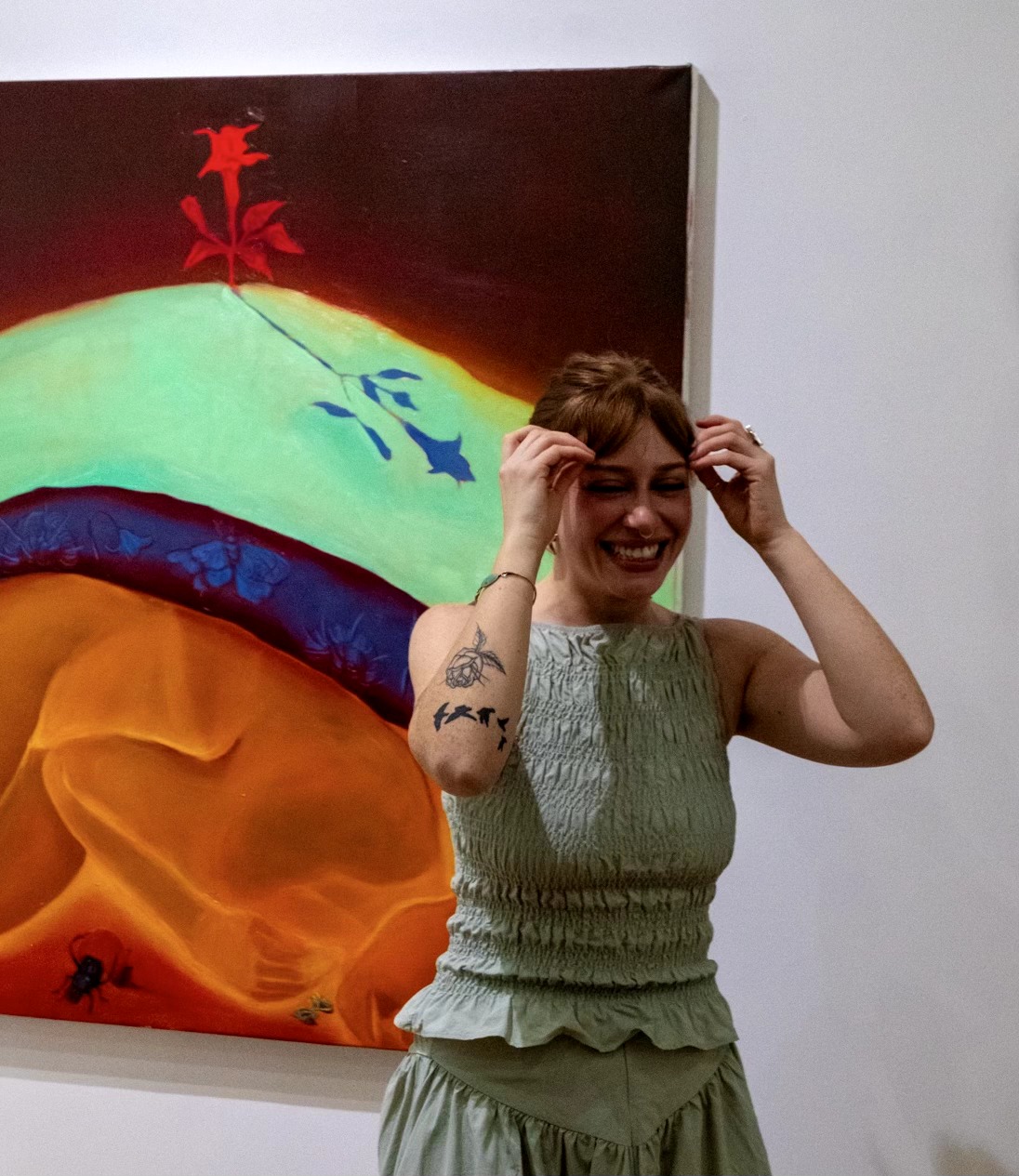

We caught up with the brilliant and insightful Frances Matassa a few weeks ago and have shared our conversation below.
Frances, thanks for taking the time to share your stories with us today When did you first know you wanted to pursue a creative/artistic path professionally?
My grandpa, Jim Goehle, was a painter. He was a really amazing guy and his work gravitated toward lots of use of color and really – to me felt similar to Matisse, and the fauvists. Anyway, I remember him teaching me and my sister how to draw and paint at a pretty early age. He was always very encouraging of us being creative. His daughter– my mom– went on to be a really incredible jazz singer, so I think that side of my family in particular never shied away from pursuing creative careers. I always enjoyed making art in elementary and middle school but never really took it very seriously. My sister has an incredible talent for photorealistic drawing and painting, and that has never been my strong suit. I remember in highschool not wanting to pursue art because I didn’t really think I was very good because I was trying to emulate a style that wasn’t my own. I eventually went to my first year of college and was studying social justice when I kind of unexpectedly had to drop out because I couldn’t afford the cost of tuition. I was determined to be an adult and be out on my own so I moved to Portland, Oregon, and started working at restaurants. I was starting to really feel the symptoms of trauma that I now focus on in my work, but that at the time were very new to me. I was living on my own, in a city that I didn’t yet know many people, so I started coming home from work and drawing just to settle my mind. At first I wasn’t considering at as anything other than something to self soothe. I would draw whatever I wanted– self portraits, friends portraits, stills from movies etc. With time I got a little better and was reminded of how much I loved making art as a kid– the ability to play was really freeing. I decided to go back to school for art and started that journey at Portland State University where I covered a lot of the basics of art making and really tried to take classes in a broad range of practices to find out what I wanted to focus on. It was there that I was assigned in a painting class to paint a self portrait that would introduce yourself to the class. At the time I was in the throws of processing an assault and had been struggling with eating disorders for years. I made a self portrait of a figure who’s face was obscured and body compartmentalized into varying fields of color. This was my first venture into trying to explore the self as something fragmented and compartmentalized something that I felt disconnected and far away from at times. Eventually I moved to New York and was able to complete my undergrad and BFA at Hunter College where I had the privilege of working with artists like Philemona Williamson, Chitra Ganesh, and Cameron Martin who deeply impacted my painting practice and the theory behind it. It was in this program that I was able to expand on my series focusing on how the body holds trauma and develop my artist language for expressing that unease. Since completing my degree I’ve been lucky enough to show a couple times and I am always continuing to pursue a career in art. But I still have a full time job outside of the studio– that is to say I don’t know that I consider myself a professional yet. Though I would like very much to be.
My grandpa, Jim Goehle, was a painter—an amazing man whose work was full of color and, to me, felt reminiscent of Matisse and the Fauvist movement. I remember him teaching my sister and me how to draw and paint at an early age, always encouraging us to be creative. That side of my family never shied away from pursuing artistic careers—his daughter, my mom, went on to become an incredible jazz singer.
I always enjoyed making art in elementary and middle school, but I never took it very seriously. My sister has an incredible talent for photorealistic drawing and painting, something that was never my strong suit. In high school, I didn’t want to pursue art because I was trying to emulate a style that wasn’t my own, and I didn’t think I was very good.
I started college studying social justice, but when I had to unexpectedly drop out due to tuition costs, I was determined to be independent and moved to Portland, Oregon, where I began working in restaurants. It was during this time that I started feeling the symptoms of trauma—something I now focus on in my work—but at the time, it was unfamiliar and difficult to process. Living alone in a new city without many connections, I started drawing in the evenings to settle my mind. At first, it was just a way to self-soothe—I would draw whatever felt right: self-portraits, portraits of friends, stills from movies. Over time, I improved and was reminded of how much I loved making art as a kid. That sense of play became freeing.
Eventually, I decided to return to school for art, starting at Portland State University. There, I took a broad range of classes to explore different mediums and figure out what I wanted to focus on. In a painting class, I was assigned to create a self-portrait as an introduction to the class. At the time, I was in the midst of processing an assault and had struggled with eating disorders for years. I painted a figure with an obscured face and a body compartmentalized into fields of color—my first attempt at exploring the self as fragmented and disconnected, something I often felt within myself.
Later, I moved to New York and completed my BFA at Hunter College, where I had the privilege of working with artists like Philemona Williamson, Chitra Ganesh, and Cameron Martin, all of whom deeply impacted my painting practice and the theory behind it. In this program, I was able to expand on my series exploring how the body holds trauma and develop a visual language for expressing that unease.
Since completing my degree, I’ve been fortunate to show my work a few times, and I’m continuously working toward building a career in art. That being said, I still have a full-time job outside the studio, so I don’t know that I fully consider myself a professional artist—at least not yet. But that’s the goal, and I’m actively working toward it.
Awesome – so before we get into the rest of our questions, can you briefly introduce yourself to our readers.
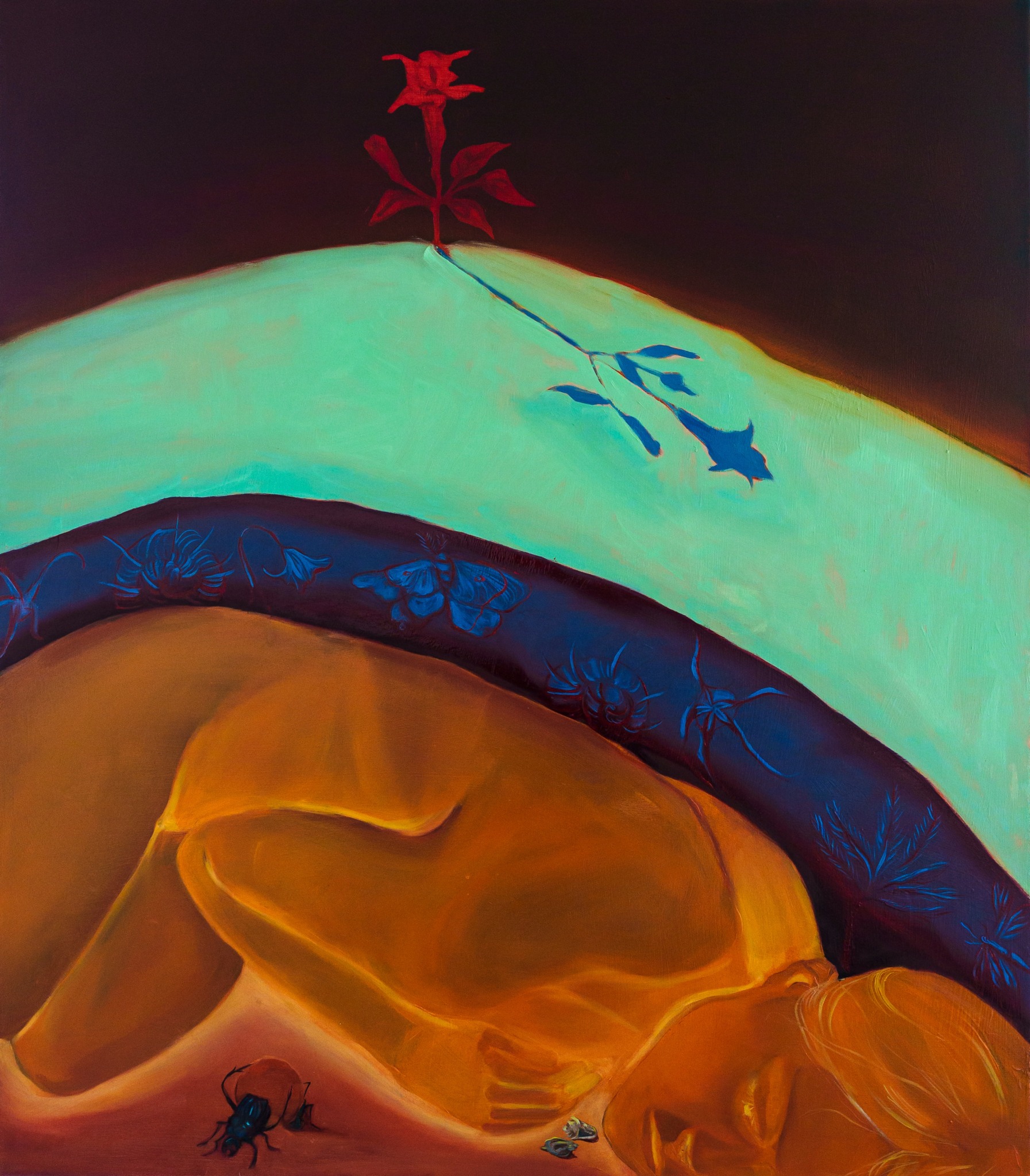
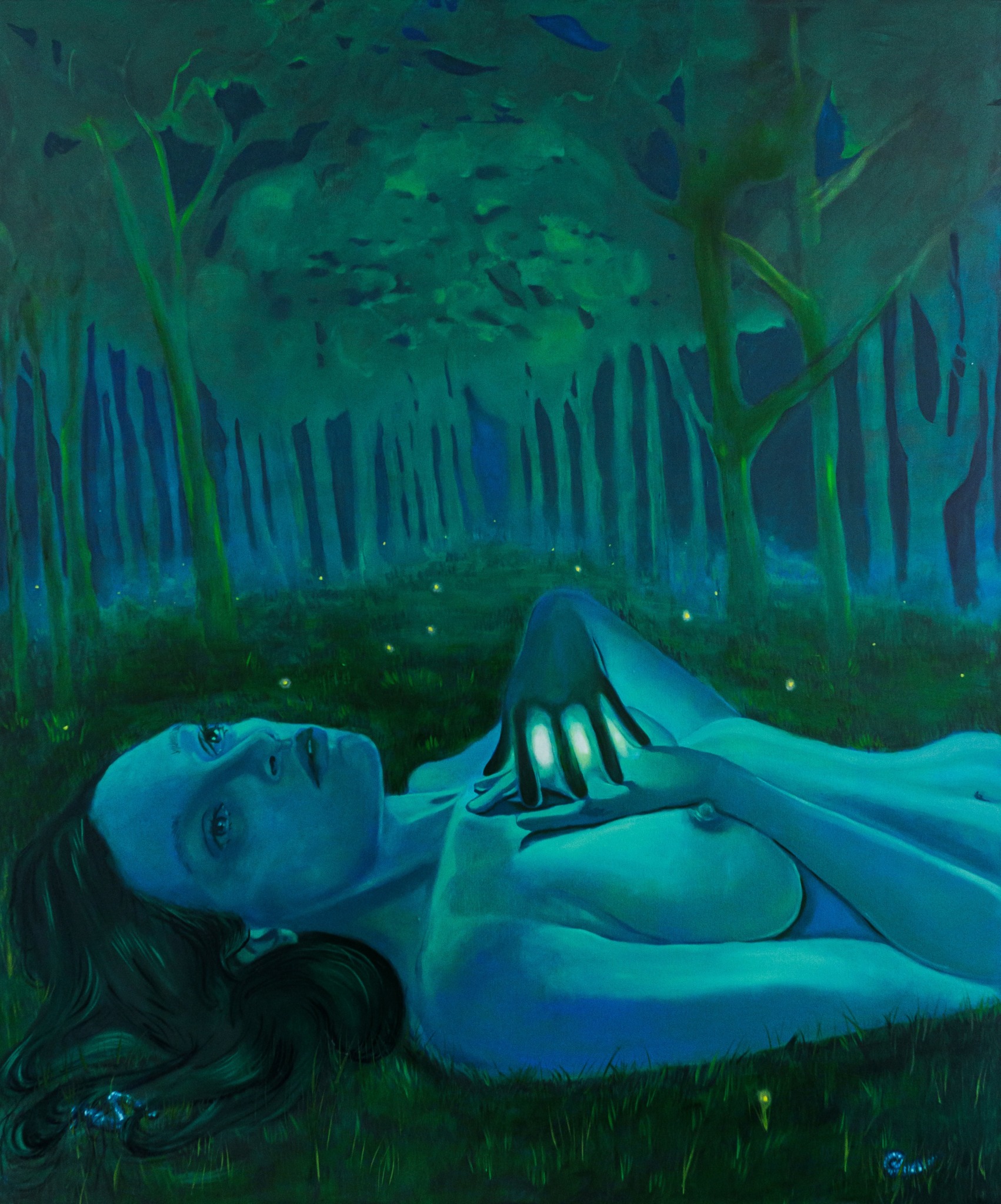
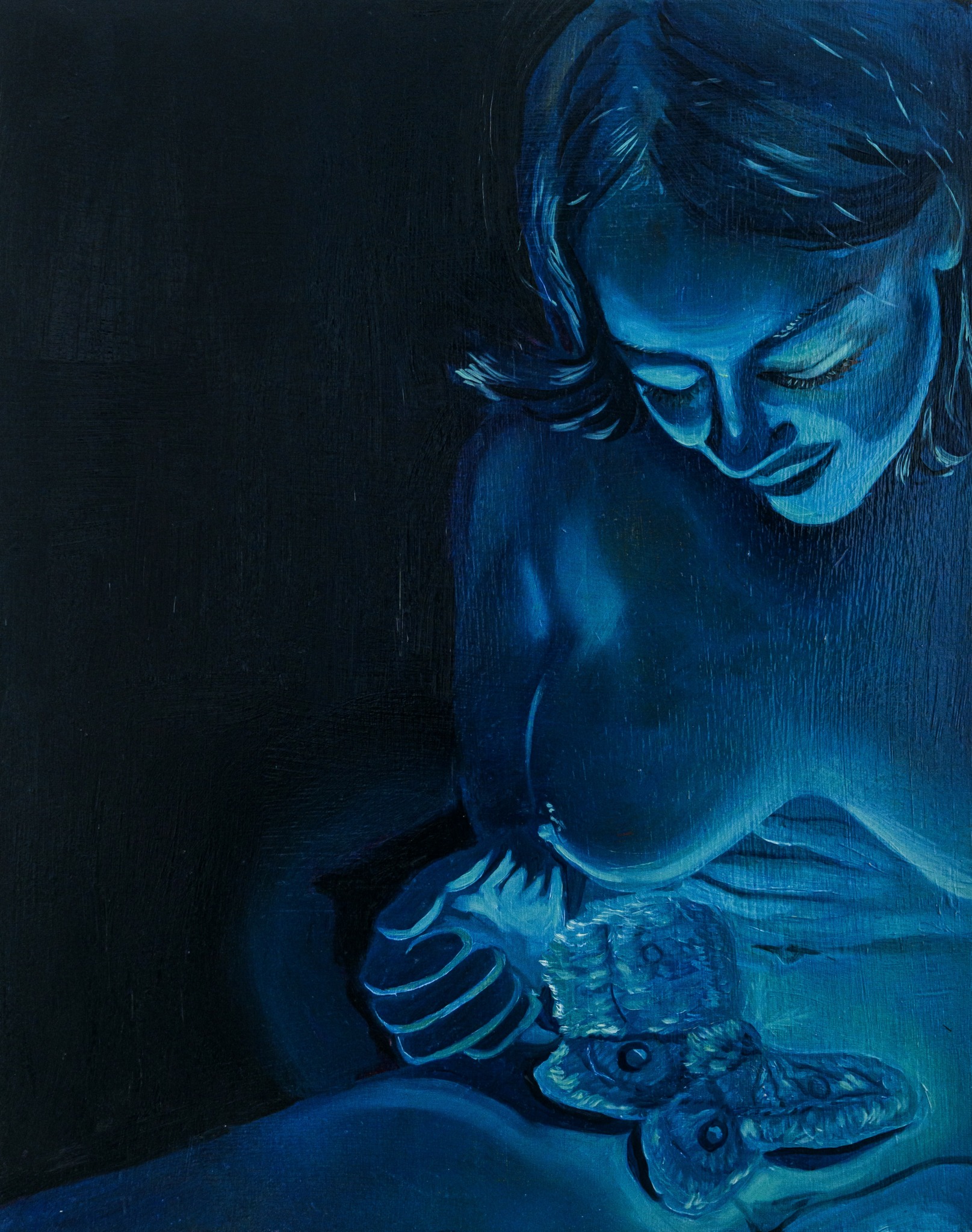
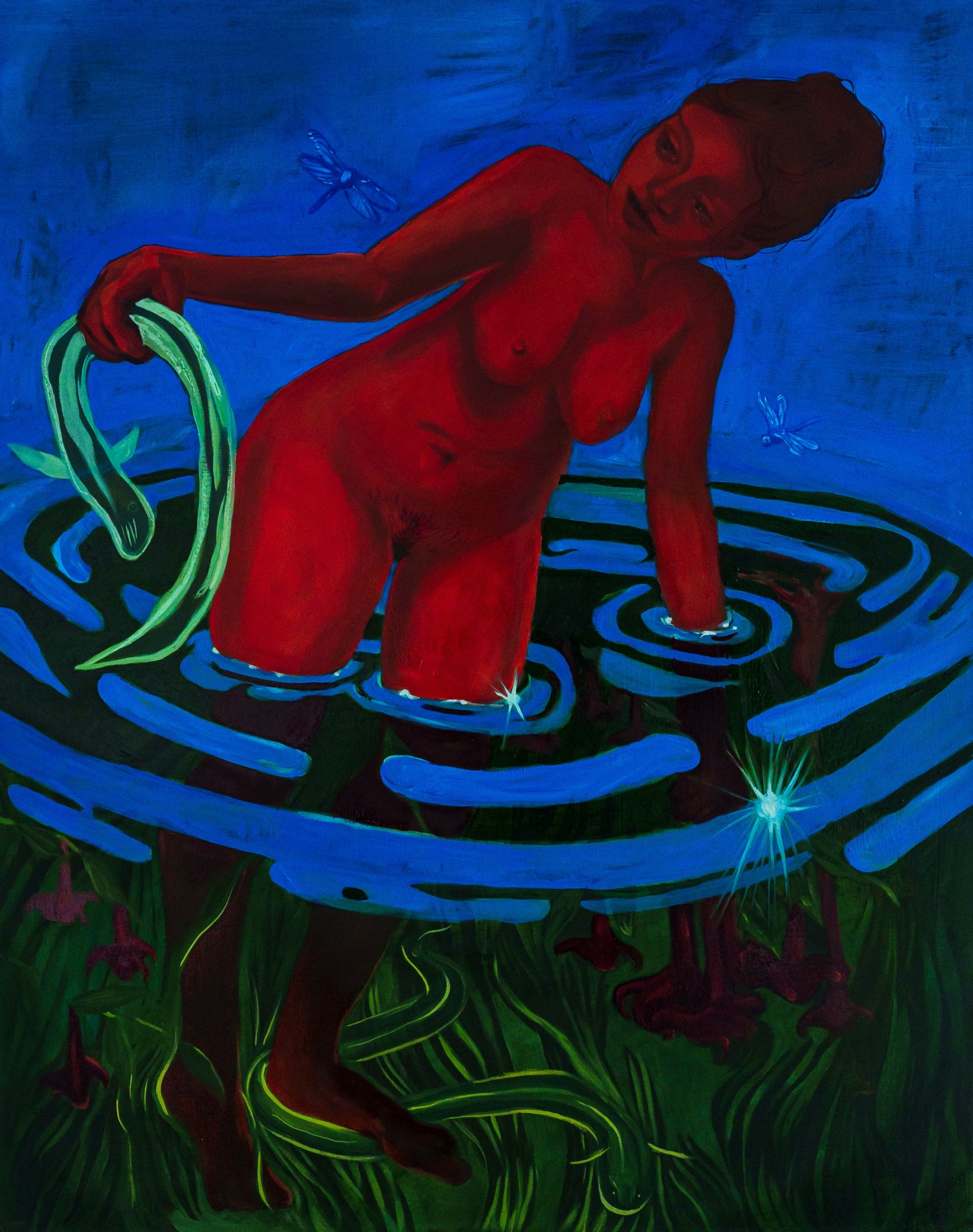
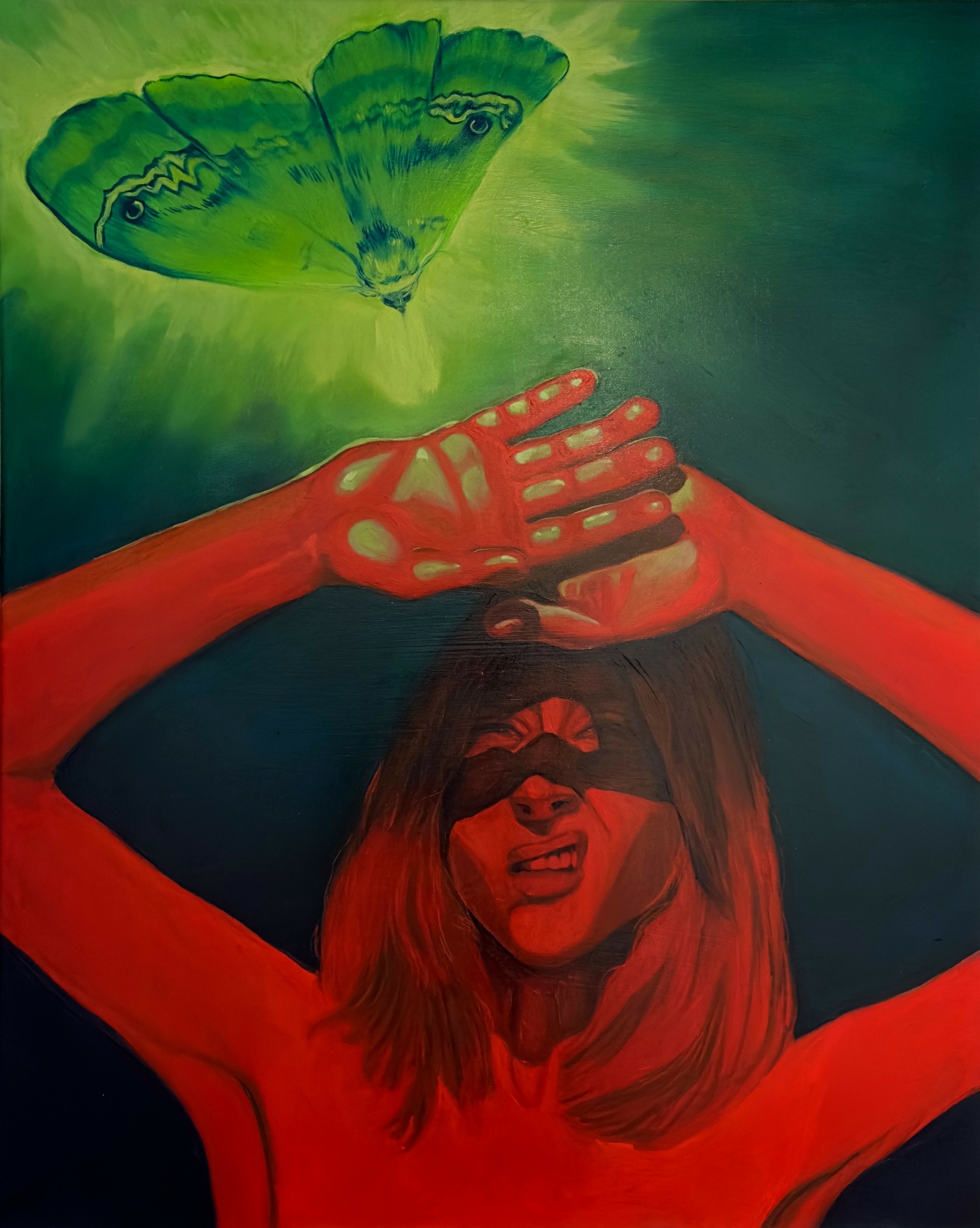
My name is Frances Matassa, and I’m a New York-based figurative painter exploring themes of dissociation, grounding, and transformation. My work often navigates the tension between reality and the surreal, using color and symbolism to evoke the emotional experience of moving through trauma, memory, and healing.
I initially came to painting as a form of self-soothing. While living in Portland, I began drawing as a way to process emotions I didn’t yet have the language for. Over time, I rediscovered my love for making art and eventually pursued a BFA at Hunter College in New York. During my time there, I studied under artists like Philemona Williamson, Chitra Ganesh, and Cameron Martin, who helped shape my practice and the conceptual framework behind my work.
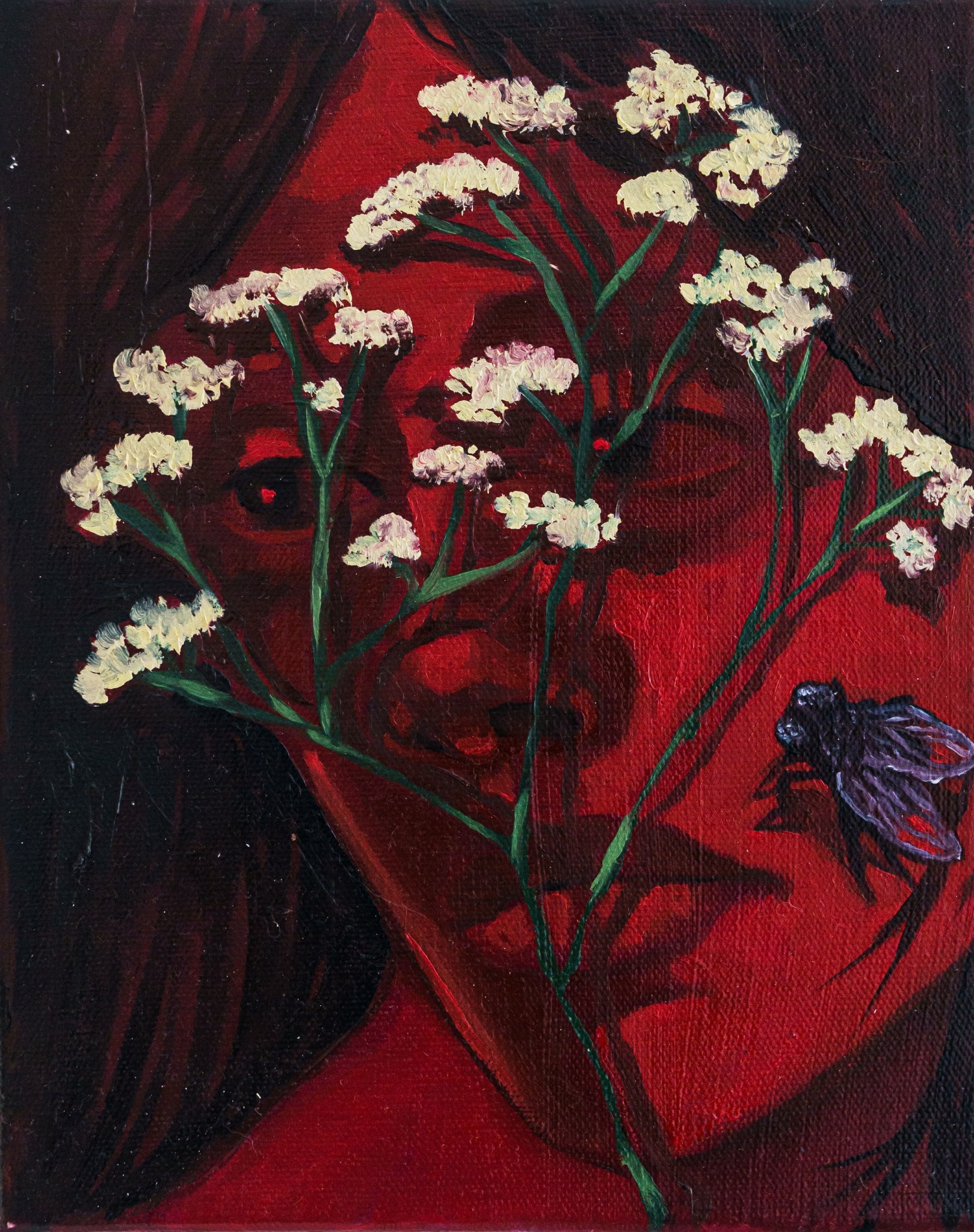
In past series, I explored derealization through dreamlike worlds where figures existed in a liminal state, caught between the safety of dissociation and the longing for reality. My current series shifts that perspective—these figures are no longer lost in fantasy but beginning the process of returning to themselves. The environments they inhabit are rich with sensory experiences that ground them: the tickle of grass against skin, the sting of a bee, the hum of flies, the flicker of fireflies at dusk. These details serve as reminders of the physical body and its connection to the world, mirroring the slow, fragile process of emerging from dissociation.
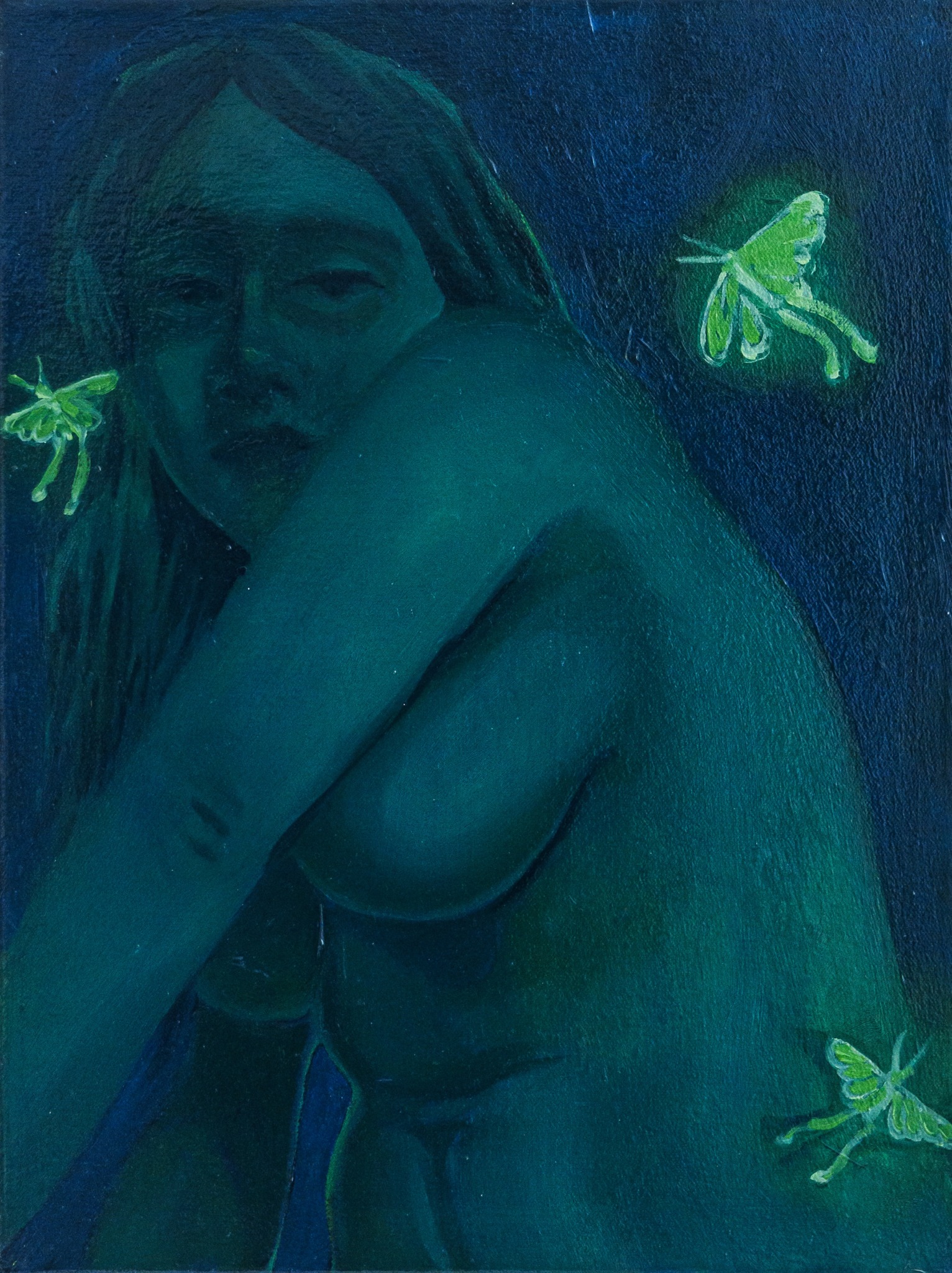
I use recurring symbols to explore how the body holds trauma. Insects—moths, flies, dragonflies, worms—appear throughout my work, each representing different aspects of transformation, decay, and buried memory. The glowing moth is especially important to me; it embodies yearning, a search for something external, only to realize the light it seeks is within itself. My figures, too, begin to glow, symbolizing the moment they find that same realization—their path forward is not outside of themselves but in reconnecting with their own bodies.
I’m not just interested in creating figurative paintings—I want to make work that feels visceral, that evokes sensation and memory in the viewer. I want my paintings to serve as spaces where discomfort and beauty coexist, where dissociation meets grounding.
I’m proud to have had my second solo show, When The Moon Turns Green, debut at VillageOne Art in January 2025, following my first solo exhibition, Embodiment, in 2023. My work has also been featured in group shows including Art is Gay (2024), remnants (2023), and Unsettled (2023), as well as at the Volta Art Fair (2023). My paintings are held in private collections, and I am continuously working to expand my practice and share my work with a broader audience.
For those new to my work, I want them to know that my paintings are about more than just the figures I depict. They’re about the experience of moving through disconnection and finding presence again. They’re about transformation, about the body as both a site of pain and a source of healing. And ultimately, they’re about that search for light—the realization that what we’re looking for has been within us all along.
Are there any resources you wish you knew about earlier in your creative journey?
One resource I’m especially grateful for—and that I wish I had known about sooner—is NYFA (New York Foundation for the Arts). For anyone in the New York area who hasn’t come across it yet, NYFA is an invaluable online resource that covers just about everything an artist might need. They offer listings for grants, workshops, open calls, and even studio spaces for rent. Their classifieds section is particularly helpful, with job postings across different art fields, which has been a huge help for me as I try to transition from bartending full-time to building a sustainable career as an artist. If you’re looking for opportunities in the art world, it’s definitely worth checking out.
For you, what’s the most rewarding aspect of being a creative?
For me, the most rewarding part of being an artist is taking something intangible—a feeling, a dream, a sound—and translating it into a visual language on canvas. There’s something incredibly fulfilling about spending weeks or months on a piece and then stepping back to see that I’ve manifested something real and physical from something fleeting and nebulous.
The question of an artist’s intent versus a viewer’s interpretation is a whole different ballgame, but for me, as long as I feel like I’ve successfully translated my idea—while learning something about myself, my work, or my painting practice along the way—that’s enough. I love when people connect with my work for the same reasons it resonates with me, but if someone sees something entirely different in it, that’s just as valid. Art is, in part, about bringing yourself into the work, and that naturally comes with your own experiences—ones that I may never know but that are just as meaningful.
Contact Info:
- Website: https://www.francesmatassa.com
- Instagram: @francesmatassa