



We were lucky to catch up with Agnieszka Spieszny recently and have shared our conversation below.
Agnieszka, looking forward to hearing all of your stories today. How did you come up with the idea for your business?
My Polish papercraft business (handmade paper folk ornaments) began when I started volunteering as an English tutor to newly arrived refugees through Miry’s List in 2017 (I heard about them on KCRW). I got paired up with Arezo, a refugee from Afghanistan. After a couple of years of regular lessons and playdates with her then three-year-old son, she expressed the need to work, but had very limited options since she couldn’t speak English, had a toddler to care for, and couldn’t drive.
I used to make traditional Polish ornaments with my grandpa as a child. I wondered whether anyone would buy them if we made them. So we gave it a shot! I taught her how to make them and we sold many more ornaments than I ever thought possible (my grandpa also couldn’t believe it was possible). We sell direct online and have wholesale accounts in California, Michigan, and New York.
People really love the story behind the brand and want to support what we’re doing. All profits go to Arezo and she’s been able to support her family in Afghanistan on her earnings.

As always, we appreciate you sharing your insights and we’ve got a few more questions for you, but before we get to all of that can you take a minute to introduce yourself and give our readers some of your back background and context?
I was fortunate to have a lot of artists and crafters as friends, plus I love crafting myself, so I asked my grandpa how to make these ornaments on visits to Poland in the summer as a teenager.
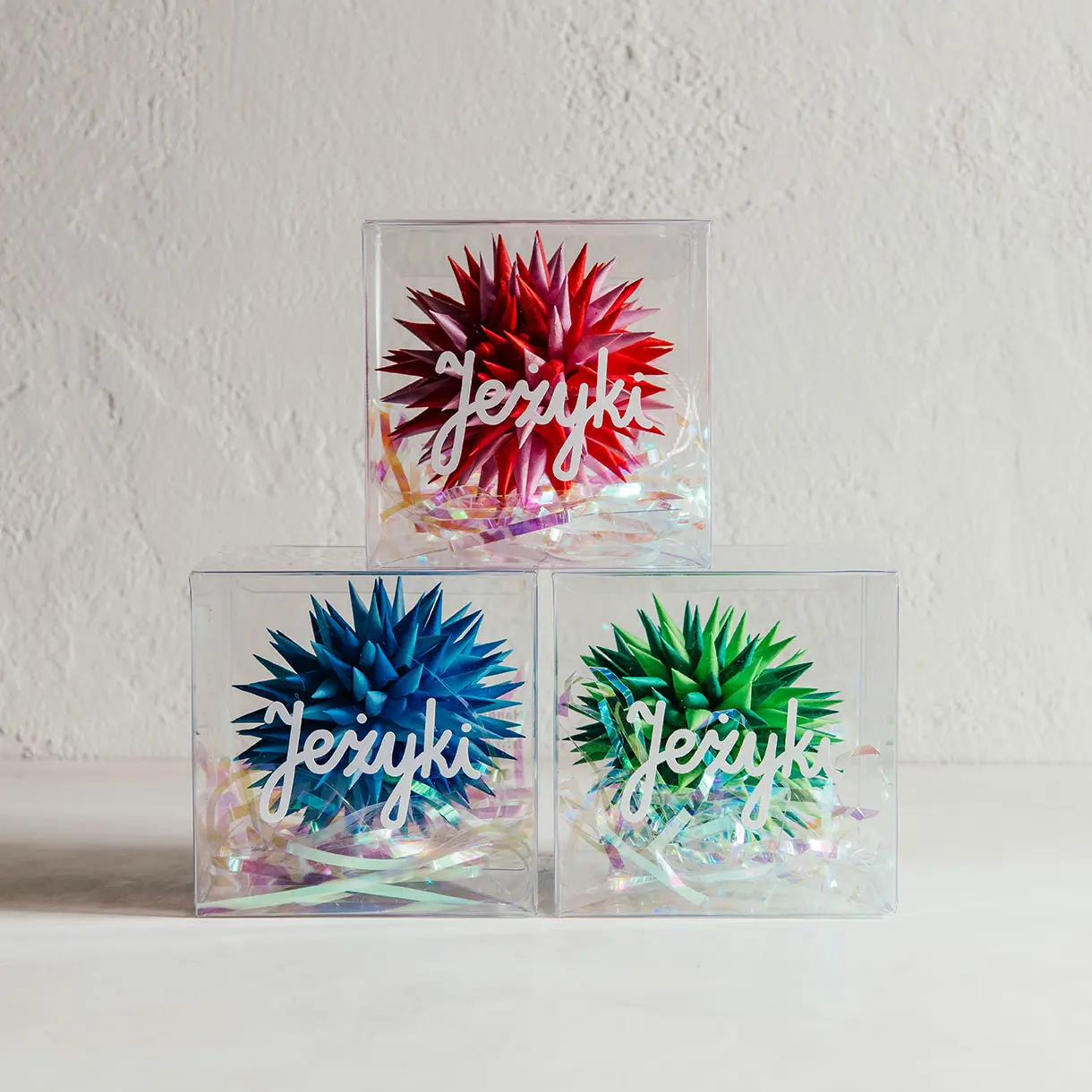
We’re now a team of two, Arezo and myself. The ornaments we make are called “jeżyki,” which means “little hedgehogs” in Polish because of their spiky appearance. My grandpa learned how to make them as a child in 1930s Poland. I taught Arezo to create them as a home-based job for her, and she has turned out to be a highly skilled artisan!
The ornaments have a wonderful history and because it’s a folk craft, there are many variations to them depending on the maker, like different paper types (some people make them out of wrapping paper), size, how pointy and long the tips are, etc. My grandpa, an engineer, tinkered with this design over the years and that’s why ours are the size and shape that they are. We use his original patterns and tools.
I loved sharing this craft in the original way it was meant to be shared—with friends and family sitting around a table chatting and having a great time working with their hands. I’ve hosted jeżyki-making nights with friends and have even hosted two community workshops making them with 60+ people each time at Craft Contemporary, a museum in Los Angeles.

We’d love to hear your thoughts about selling platforms like Amazon/Etsy vs selling on your own site.
I did A LOT of research before opening an online shop, mostly through YouTube videos and forums to see which platform would be the best. In the end I ended up going with Squarespace mostly because of the beauty of the layouts, especially since I had a lot of good, professional photography done. I wanted to show it off! Plus, they offered a lot of the same services as Shopify. But I ended up regretting that decision, and after three years I decided to not renew my subscription with them.
Shopify and Squarespace sell basically the same service for the same price, although Shopify is more integrated with other selling platforms, like Faire, and allows you to create a B2B catalog (for wholesaling directly through your own website). I wasn’t happy with the load times on Squarespace, and I could never get the image zoom to work on my product photos even though that option was checked (like when you hover over a product image, it should zoom in to get a detailed view of it). Eventually, the expense made it untenable. $300+ per year for a basic ecommerce account. My little craft business is small and while we could make that money back through the website, it still took a large chunk out of our earnings.
Through my research, I found out that Shopify offers a “Buy button,” which allows you to use another platform for your website, like WordPress, but add ecommerce to your own website for a set period of time. This would be significantly cheaper than an annual subscription if you only use it for a few months at a time. For a seasonal product like mine, that makes a lot of sense.
Despite all of the above, I currently have an Etsy since they don’t charge an annual fee to host (only a very small listing fee). And the added benefit of Etsy is that you have a built-in market of shoppers who are looking for handmade goods solely through the Etsy marketplace. That’s easier marketing for me!
Are there any books, videos, essays or other resources that have significantly impacted your management and entrepreneurial thinking and philosophy?
Absolutely. I was very fortunate to have one friend who was an artisan herself, had worked in retail and sold her goods to retail shops, and eventually ran her own handmade crafts store. She mentored me and helped me test my products on the market. For example, she taught me about the seasons for selling my product—since it’s an ornament, summer is the time for wholesale, while most direct sales happen in November (not December as you’d think!).
I’m a fan of podcasts for learning more, and I believe in business coaches to achieve something specific. If you don’t know what you’re doing or just want to expand, make sure to get a business coach that specializes in handmade, artisan craft businesses.
For wholesaling, I listened to Emily Grey’s Wholesaling to Boutiques.
For pitching to media outlets for inclusion in gift guides, I took advice from Nora & Kirsten at Wolf Craft.
For general advice, I listen to the Etsy Success podcast.
And watch a lot of YouTube videos!
Contact Info:
- Website: https://www.etsy.com/shop/jezyki
- Instagram: https://www.instagram.com/jezyki_hedgehogs/
- Linkedin: https://www.linkedin.com/in/aspieszny/


Image Credits
Matt Arnold (headshot photo). Emily Berger (all other photos).