



We were lucky to catch up with Megan Moon recently and have shared our conversation below.
Megan , looking forward to hearing all of your stories today. Let’s go back in time a bit – can you share a story of a time when you learned an important lesson during your education?
Sure. I of course learned a lot in graduate school. The positive parts of the history of the mental health field, theories and approaches, diagnostic criteria, and the basic skills of being a therapist.
For a lot of therapists however, I think there is also a lot of “unlearning” graduate school that births more important lessons than perhaps what we received sitting in a classroom.
For those of you who do not know, the history of the mental health field isn’t great. Women were often forcibly institutionalized for having very human normal responses to say their husbands abuse or the grief of losing a child. Struggles that needed connection, community, processing, and care yet many received isolation and electric shock therapy, also known as Electroconvulsive Therapy (ECT) which is still being practiced to this day. It has only declined since 1970 with the rise of anti-depressants and the pharmaceutical industry.
There is also a history of institutionalizing autistic and neurodivergent children. Often families would surrender ties to their child completely and these children would spend their entire lives locked away and without connection in horrible conditions. This is a part of the history that isn’t taught in the institutions of education.
So fast forward to the present, we are still trained to be pathology and diagnosis oriented and medication focused. The Diagnostic Statistical Manual, which therapists use to diagnose clients, was and continues to be written largely by white middle to upper middle class males. You can start to see how many of us get lost in that process and don’t feel reflected or supported by the criteria.
When we go straight to diagnosis without taking the client’s lived experience into account, their social identities, how systems of power affect them, nor their trauma history and nervous system, we cannot help them. We erase them completely.
Luckily, relational therapists and trauma therapists such as myself are growing in number so that clients can begin to see how their “symptoms” are adaptive not pathological. They can learn that they likely developed hyper-vigilance (what the DSM would call anxiety) because they were so unsafe in their day-to-day life that they had to be alert and attuned to their environment at all times in order to survive or stay connected to their parent. And thanks to ‘neuroplasticity’ and relational safety with a good therapist they can begin to slowly and with intention come out of those survival states.
Therapist are still taught to be “blank slates” with their clients. To never self disclose anything about themselves and take an “objective” and largely non-responsive approach into the therapeutic relationship. We now know, that relational safety with your therapist, is the largest contributing factor to healing outcomes. Do you want to share your most vulnerable thoughts and feelings with someone who blankly nods at you and is assessing for the pathology in your very normal response to horrendous things happening in your past and in our world? None of us do. Therapist are humans too and pretending not to be is further traumatizing to the clients that come to us for support.
So yes, I learned in graduate school. I worked hard and accomplished the task of getting a masters of arts in counseling in Texas and becoming a licensed therapist. And now I get to do the work that fills my life with meaning. But most of that meaning, was found in my own lived experience, with the work that I do with my amazing clients, and in conversations with other therapists that I align with.
Megan , before we move on to more of these sorts of questions, can you take some time to bring our readers up to speed on you and what you do?
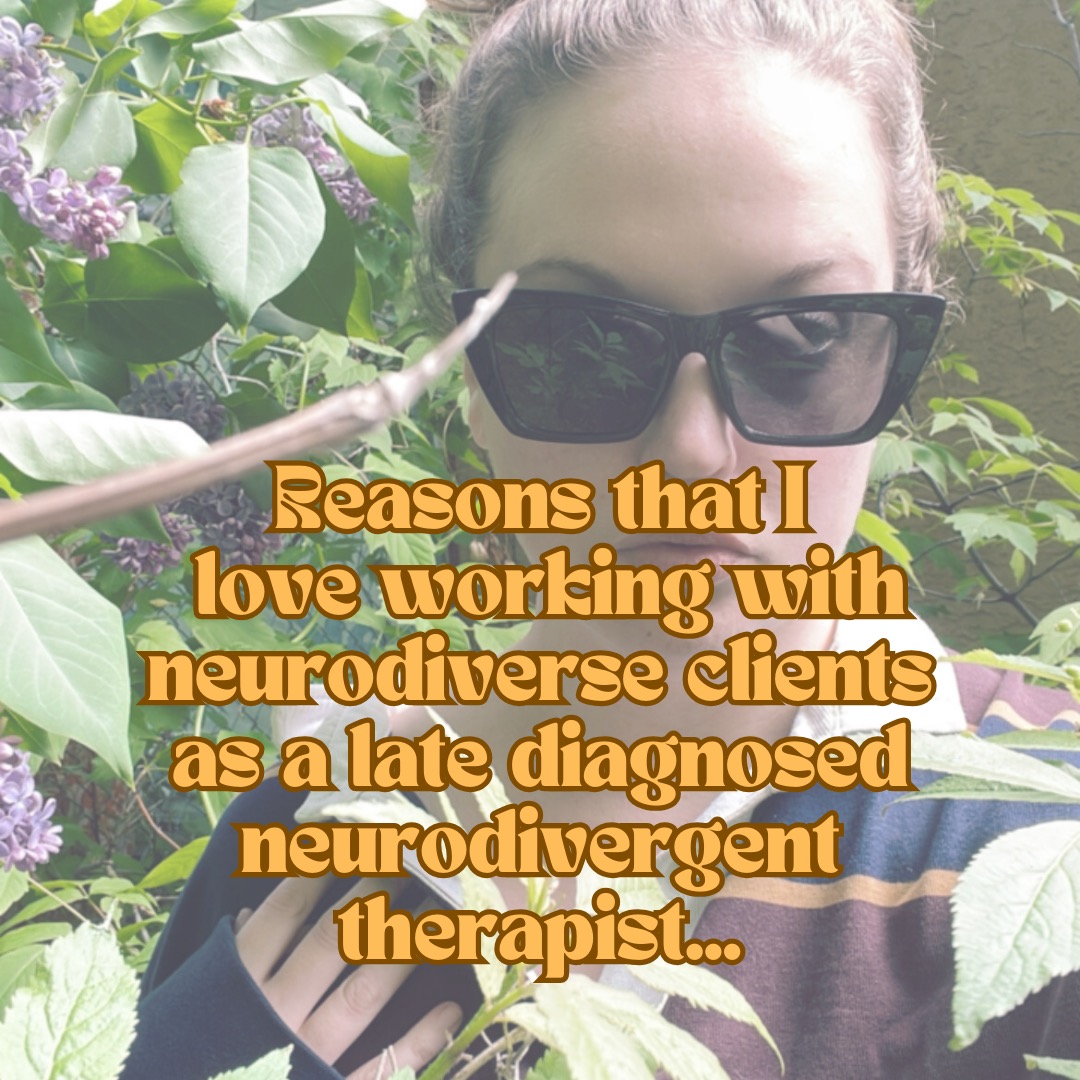
Absolutely. My name is Megan Moon, LPC. I am a queer and neurodivergent relational trauma therapist and the owner of Reclamation Psychotherapy. I am currently providing therapeutic care for anyone in the state of Texas via telehealth.
I work with adults of all ages who have experienced childhood trauma, both within their family of origin, and in general. The majority of my clients are adult children of emotionally immature parents who experienced emotional neglect and abuse in childhood and are wanting to make sense of it all and how it continues to impact their sense of self, their view of the world, and their relationships.
The byline on my website says “Fierce Therapeutic Support for the Cycle Breakers.” This is for a couple of reasons. One is that as a therapist and human I believe that I embody the fierce protection that so many of my clients did not receive in their childhoods. I love my clients and I let them know when I feel protective of them and when I feel anger when they are mistreated. I will name abuse as abuse directly. I often imagine myself standing in between my client’s little self and the abuser in front of them. I like to think that by honouring my authentic self as a fierce protector, they can begin to see themselves as someone who deserved and continues to deserve protection and safety.
Secondly, I work with cycle breakers. Cycle breakers can come in a lot of forms. Most of my clients are the very first person in their families to be brave enough to begin therapy. They see how the dysfunctional family system causes harm. They have tried to get their families to do things differently but are mistreated or talked out of their truth when they do.
It is HARD to say the least to be the only person in your family that is honest about the cycles of harm. The system, not wanting to be challenged, often scapegoats and gaslights the child that is highlighting the abuse. It means a lot to me to be able to be someone that can provide the space for my client’s to feel supported and less isolated during that process and to be a voice that is affirming their lived experience and saying “you are right. this isn’t okay. what you are seeing and feeling is real.”
What’s been the best source of new clients for you?
As someone who has tried a lot of different kinds of marketing, the most consistent and aligned source of new clients for me is the other therapists that i have developed relationships with. And I say this as someone who HATES to network and has a limited social battery. So my advice is to connect in a way that honors your capacity. I reached out to other therapists that do similar work to me as well as therapists that work with a different population such as young children. I would set up 30 minute zoom calls with them and authentically and without a script connect with them. Now, so many of these amazing therapists refer to me and I to them. And it’s an honor.
Secondly, my website is a true and honest representation of myself and how I approach therapy. So clients that visit my website feel connected to working together or not. The ones that do feel connected to what I say end up being long term clients because they felt something in themselves that resonated with what I created on my website.
Those are my two biggest pieces of advice for other business owners.
We often hear about learning lessons – but just as important is unlearning lessons. Have you ever had to unlearn a lesson?
A funny and interesting thing about being a therapist is that you are also working with your own survival adaptations and they can show up in session with clients. So for example, a part of my survival adaptation from childhood is appeasement. To put the needs and wants of others above myself and never rock the boat so to speak. As a therapist, a part of my job is to lovingly challenge my clients when they are in patterns they have named they want to heal out of, to express and hold boundaries around my time, my fee, and my schedule. I have shed a lot of my own appeasing tendencies since becoming a therapist because I know that it doesn’t support anyone including my clients. Learning to have difficult conversations about the therapeutic relationship and all that it encompasses is important and can quite literally heal attachment wounds.
Contact Info:
- Website: https://www.reclamationpsychotherapy.info/
- Other: Look for me on Substack soon! I am looking forward to having a centralized space for all of my musings on mental health, trauma and narcissistic abuse recovery, and whatever the hell is happening in America right now. The link will be on my website.
Image Credits
Photographer: Caitlin Rounds at caitlinrounds.com