


We recently connected with Kim Graham and have shared our conversation below.
Kim, thanks for taking the time to share your stories with us today Do you have any thoughts about how to create a more inclusive workplace?
For me, inclusiveness has three dimensions: inclusiveness of self, inclusiveness of all humans, and inclusiveness of all beings. Empathy, curiosity, and kindness can help to build pathways to collaborate with, and be fully inclusive of, others.
Inclusiveness of self: how inclusive are you of every part of yourself? I’m talking about the full spectrum of your emotions, thoughts, strengths, weaknesses, past, and present actions. This involves knowing and embracing yourself deeply. I think, you can only respect and fully embrace others to the extent that you love and deeply understand yourself. So, clarity of mind, and self, is really important.
Inclusiveness of others: can you look beyond outdated stereotypes that serve to exclude women, minorities, neurodiverse, and multi-abled people from the economy, political life, and society? Can you see their full-potential, skills, and personal qualities that are unique and special? We all have something distinctive to contribute: how can we support, and encourage, each other to do that?
Inclusiveness of all beings: deep inclusivity is about incorporating into your considerations and actions all beings on Earth. I have never seen myself as separate from the water that I drink from the rivers and lakes, or the air that I breathe from the sky. About half of the oxygen we breathe originates from photosynthesizing algae in the ocean and the other half from land-dwelling trees and plant life. The water, skies, and land provide us with sustenance, while also being the homes of a diversity of life: with scales, feathers, fur, hair, spikes, and wings… personalities, social bonds, families, and languages: too much diversity to mention. We are all deeply interconnected and I respect and admire the unique gifts and skills of animals, plants, and other life forms, many of which are far superior to humans and we can learn so much from. Yet we often treat other beings as inferior and with an indifference that reinforces separation, instead of kindness and curiosity.
With my work, co-creating art with water, I hope to inspire more creative relationships with nature: grounded in practices of partnership, curiosity, and renewal.
Awesome – so before we get into the rest of our questions, can you briefly introduce yourself to our readers.
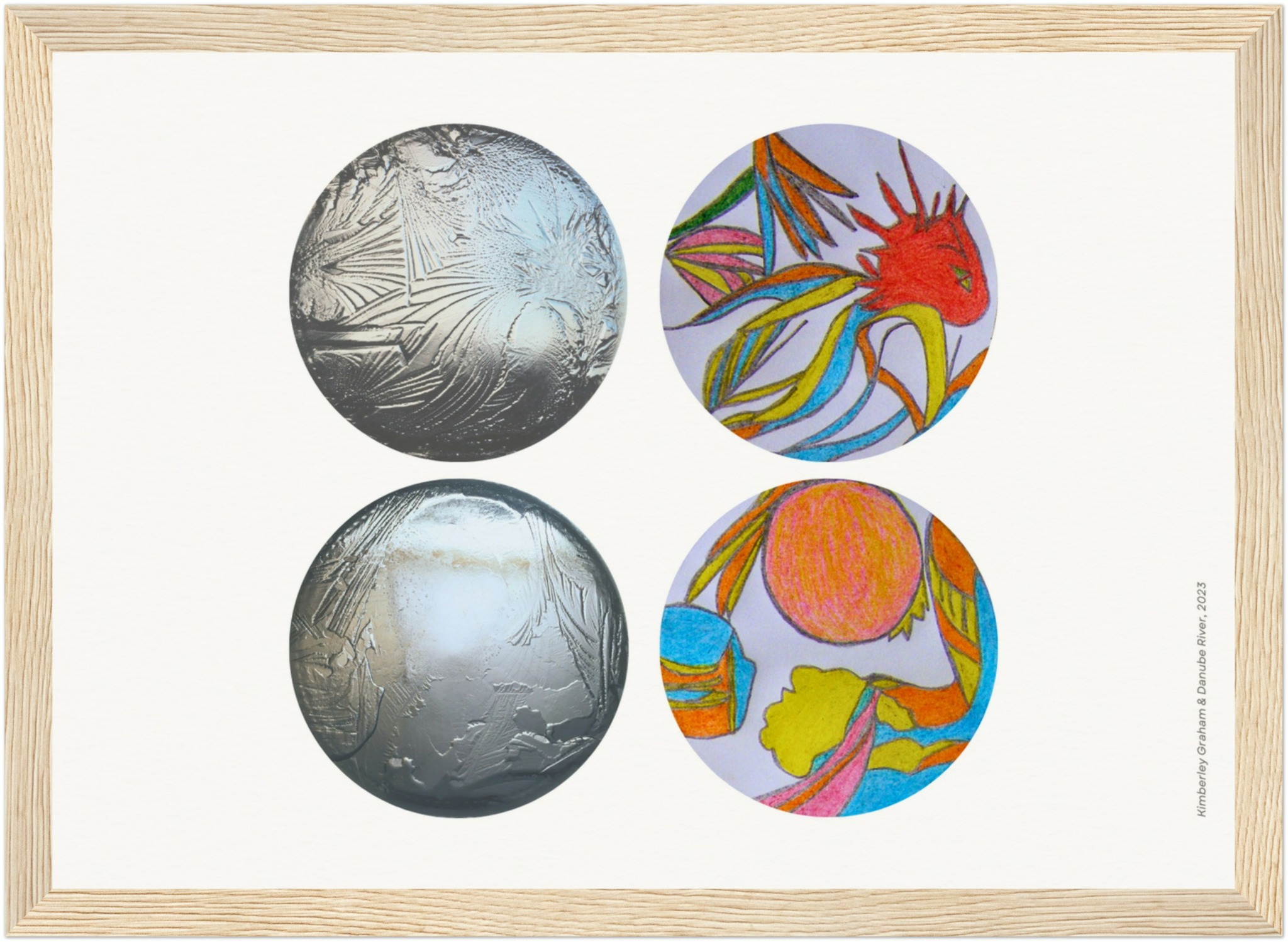
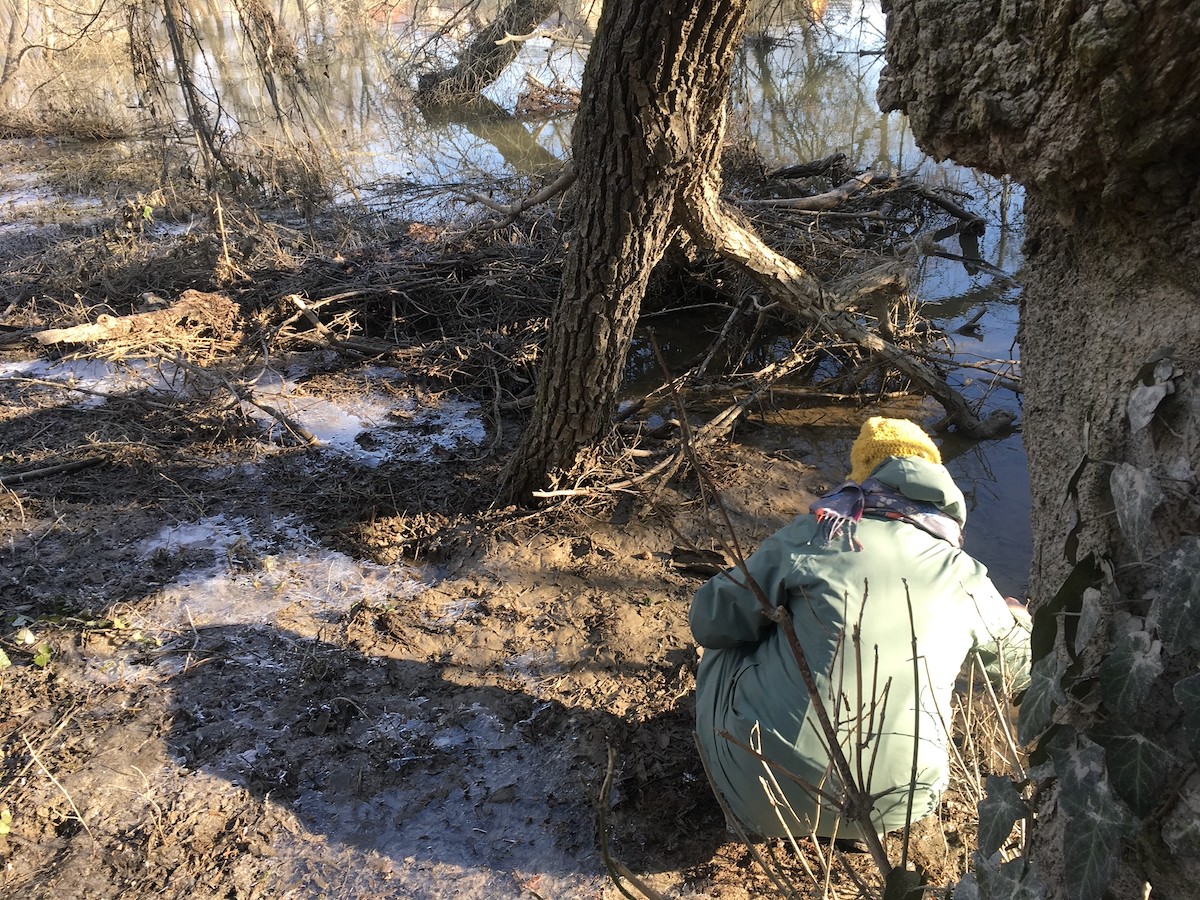
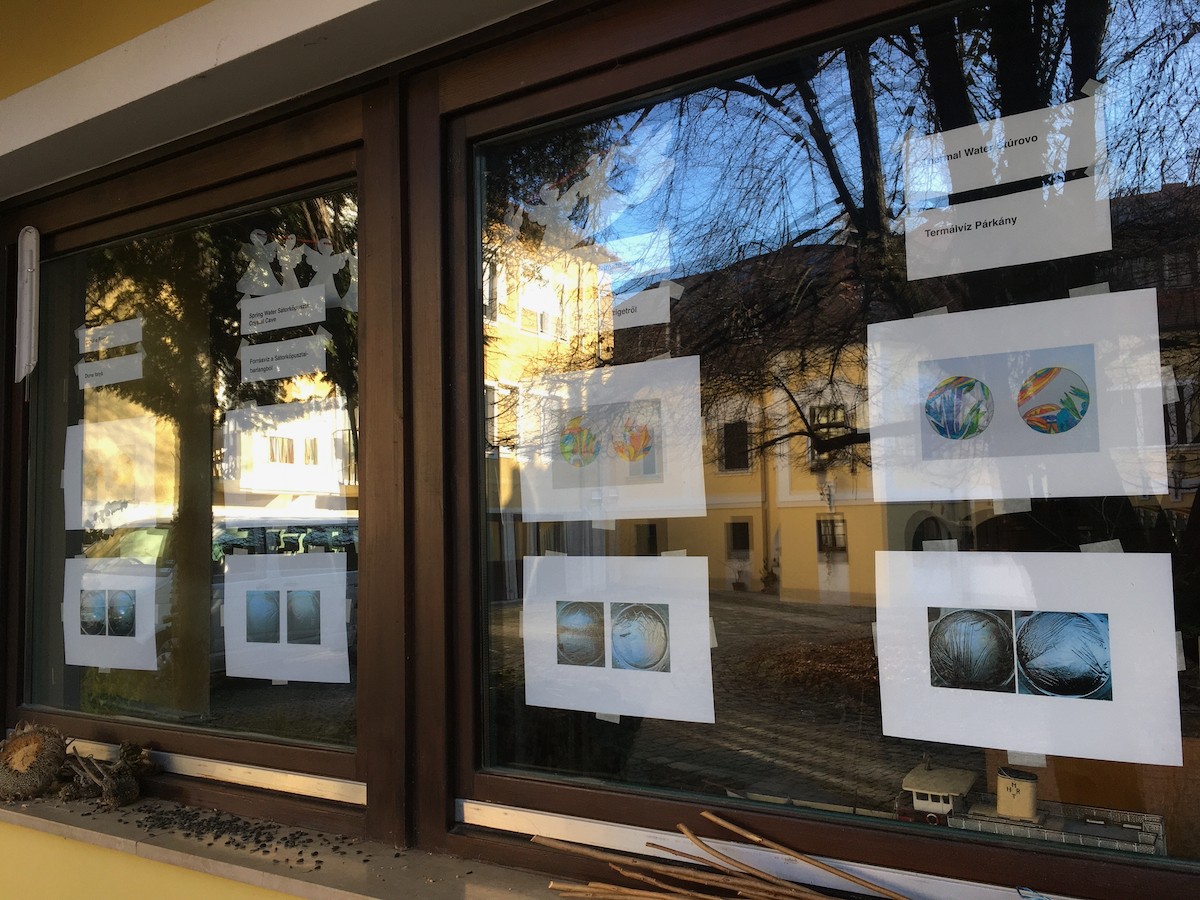
In my art practice, I co-create art with water bodies using crystallography, photography, and pencil drawings. This approach brings together art, science, mindfulness, and an interest in practical ways to work in partnership with nature.
I also help people to cultivate inner peace by teaching mindfulness meditation, run co-creating art with nature workshops, and write / research about animals and nature. Feel free to check out my website, Ko-Fi shop and commissions for current offerings. I hope you find something you like!
Is there mission driving your creative journey?
I am interested in exploring collaborative and less-anthropocentric ways to work in partnership with nature. Part of this process is about unlearning, and re-learning, pathways to know, dialogue, exchange, and listen to water, nature, and animals. Looking back, I can see an interest in these questions began at a young age when I was introduced to indigenous lifeways and culture early in my education.
When I was in primary school, I had a grade 1 teacher who taught us about the Pitjantjatjara. They are a First Nation people from the central desert region. We learned about their Dreamtime, cultural traditions, some words from their language, beautiful art, bush tucker, and how they navigate. Their knowledge of sacred sites, the seasons, wild animals, plants, waters, and skies is grounded in an ancient and uninterrupted connection to the land with thousands of years of lived experiences continuously past down through the generations.
I’m not sure why my 1st grade teacher incorporated these lessons into the weekly class schedule, as I’m fairly sure it wasn’t part of the curriculum, nor was it common in those days (and still isn’t). But I’m glad she did. I think it opened my mind to the fact that there are different realities and ways to live. Perhaps most importantly, it instilled in me a high value for ancient wisdom traditions and cultures, especially of First Nations people. I noticed there is an attentiveness to the rhythms of the natural world that are less exploitative and harmful to nature, compared to industrialization.
After that, throughout high school and university, there was limited exposure, or discussion, of First Nations people and their cultural traditions. It wasn’t directly incorporated into any courses or classes, even though I studied the natural environment. The curriculum followed more of a colonial way of thinking and an embedded idea of domination over nature. Although, I do remember that during my third year of university, I read about a course run by the Arts Faculty that involved going on a traditional seasonal migration with First Nations people — all the way from the central desert to the west coast to meet the Indian Ocean. The teachers of the course were the First Nations people and students would learn about sacred sites, traditional hunting, and harvesting practices, along the way. Although I remember really wanting to do the course, I think I was over-committed with international research at the time, and I didn’t pursue it.
The significance of the exposure to indigenous lifeways in school at a young age, albeit limited, didn’t really hit me until years later when I was working for a public water authority developing river restoration projects to improve the health of waterways and riparian zones. I was busy, multi-tasking, and I had a lot of different projects on my plate. One day, a colleague mentioned to me in passing that it would be a good idea to call a local Indigenous Elder to get advice about one of the river restoration projects I was working on. I dialed the number pretty much straight away. The Elder answered, and I introduced myself, told him about the project I was working on, and asked him the name of one of the rivers, because I wasn’t personally familiar with the area. There was a long pause on the other end of the phone. He wouldn’t tell me the name of the river, because, he explained, you can only know the river by spending time with it. Learning its rhythms, the plants and animals that live there, and to be immersed in the experience of the river. And that takes time. A lot of time. You will know the name, when you know the river. I got off the phone, not any further illuminated about the names of any rivers. But I thought: how right he was. Even if I knew how to call that river, did that say anything about how well I knew the river? Not really. And whose name should I use? I was fairly sure the English name for the river was not the same name for the river as he would use. Other questions emerged, like: how well could I deeply know the river within the limited time I had to develop the restoration project? And how would that impact the outcome?
Something about that conversation stayed with me. Years later, after studying the Spanish language, I realized English has a deficiency that limits a clear distinction between knowing a person or a place from experience compared to knowing something only intellectually. It’s two different ways of knowing. And one is a wiser, in a way, because it is based on direct experience and observations, not second hand information. In Spanish, there are two verbs to distinguish the different ways ’to know’ (conocer and saber), but in English we only have one verb. So, it’s easy to conflate the two types of knowing.
These questions about different ways of knowing, and how to put that in practice, continue to influence my work today. When I co-create art with water, I am actively working to deconstruct my hierarchical and exploitative relationship with water, and put into practice a relationship grounded in curiosity, partnership, and renewal.
What’s a lesson you had to unlearn and what’s the backstory?
I am unlearning negative ideas about failure and remembering that trying new things is an important part of expansion and growth.
Last year, after my first art-science residency, where I developed a method to co-create art with diverse water bodies, and held three art exhibitions, I applied for a number of art, and art-science, residencies. I was short-listed for a couple of residencies — out of hundreds of applicants — which did give me some encouragement. However, I was ultimately unsuccessful in all of them! I almost gave up on continuing to co-create art with nature. But first, I decided to do a business course to see if I could learn: how to make a living doing what I love? When I shared the art I co-created with water bodies in the business group, a lot of people had a very strong reaction and were really interested in what I’m doing. Some shared personal stories about how deeply connected they feel with water and nature. This gave me a boost to start sharing my work on Ko-Fi, where people I had never met before started liking my work and commenting, This helped me to feel validated in what I’m doing. Part of the process for me was about finding ways to be more comfortable with stepping out of my comfort zone, not being afraid to be different (best advice from Serena Williams!) and not caring what other people think!
On the topic of failure, I really like the mindset of Sara Blakely toward failure. To F.A.I.L. is the First Attempt In Learning. In other words, you will always take something away from that experience and learn something about yourself, and the process. For example: how to do it better, become familiar with what is involved, and also whether or not it is something you really want to do in life!
Also on failure, I’ve heard Jon Kabat-Zinn say something along the lines of “Fail once. Fail more. Fail harder.” I interpret this to mean something along the lines of: if you are not failing you are not trying. And if you are not trying, you are not learning. If you are not learning, you are not growing. So get out there and fail! And fail a lot! And fail more. And fail again! Basically, don’t stop failing. :)
At the end of 2024, some of the art I co-created with water was featured in a beautiful online publication called ‘Cycles of Hope: Voices of Regeneration’ in Part III: Inspire + Act. I was so happy to be included, because it gave my work with water global reach, and it’s now accessible to anyone with an internet connection.
So, I continue to remind myself that, thankfully, there is always the option to un-learn, re-learn, and let go of ideas and concepts that are harmful to ourselves, each other, and to all beings. That is where I prefer to put my attention: mostly because it feels better to be kind and hopeful.
Contact Info:
- Website: https://kimgraham.my.canva.site/
- Other: https://ko-fi.com/cocreatingartwithnature
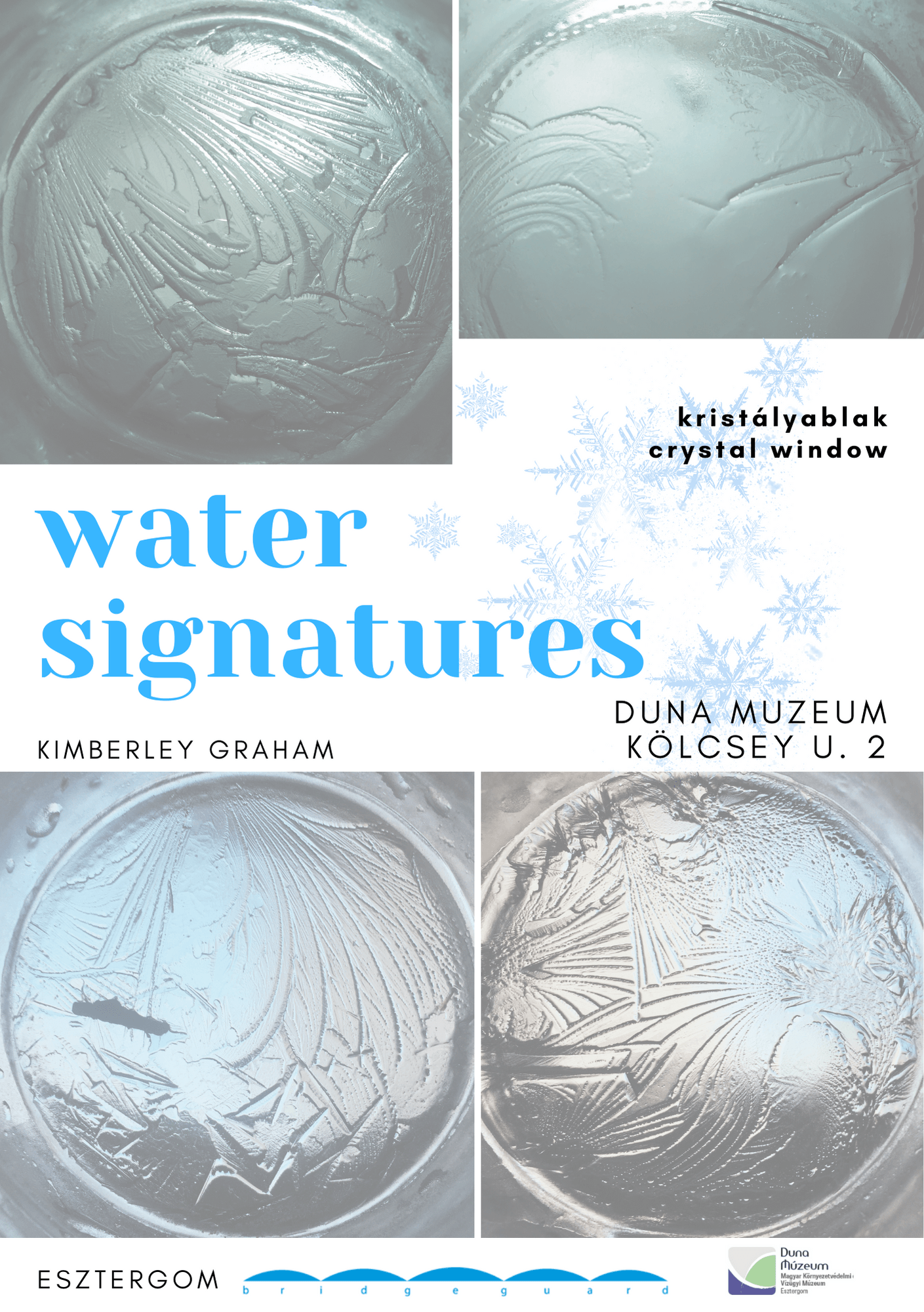
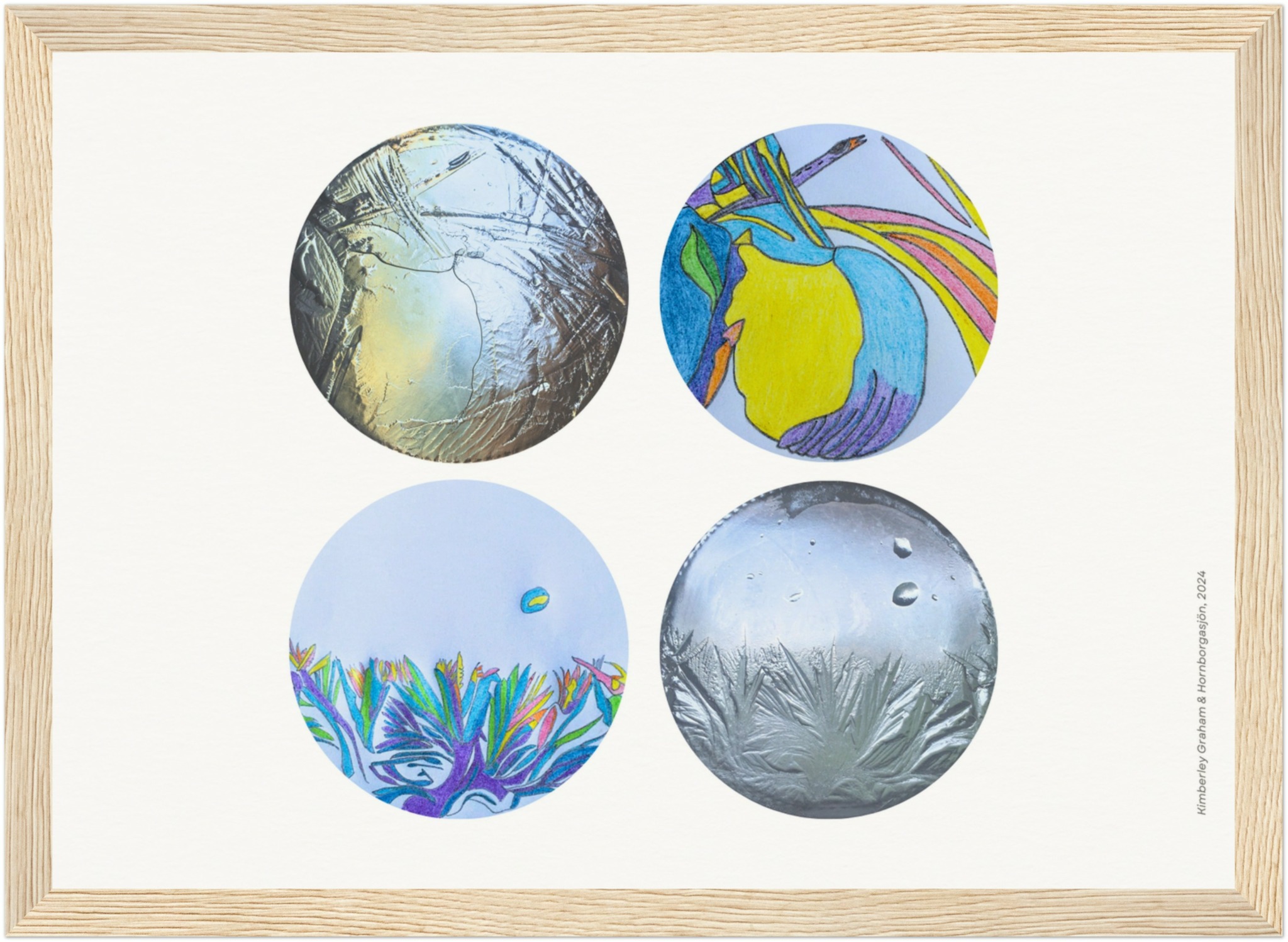
Image Credits
All photos and drawings by me: Kimberley Graham