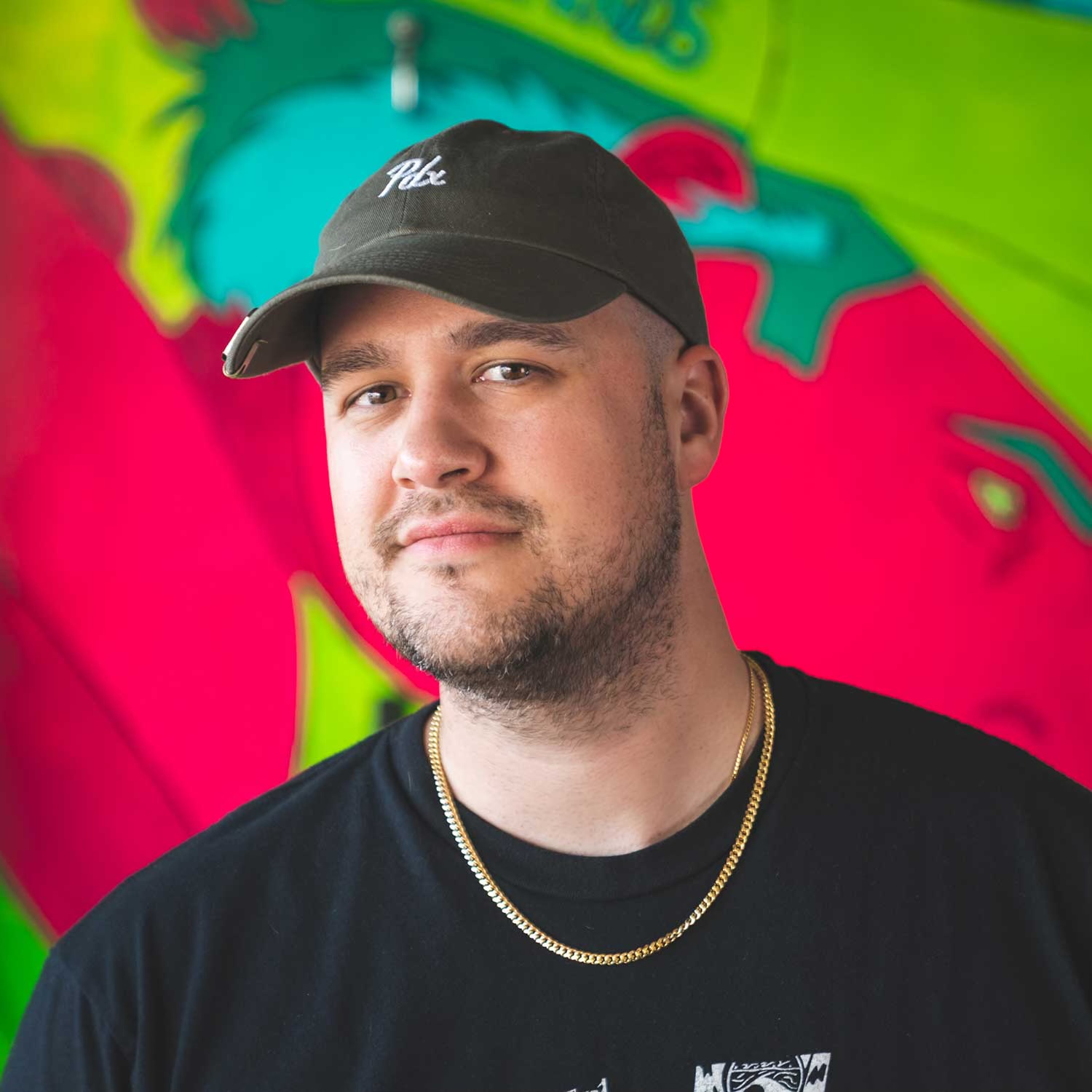

We’re excited to introduce you to the always interesting and insightful Dane Delgado. We hope you’ll enjoy our conversation with Dane below.
Dane, looking forward to hearing all of your stories today. How did you come up with the idea for your business?
In the summer of 2020, I had a favorite golf ball marker of mine that I used for every round. It was a shuttlecock from badminton — a birdie — and was made by another local Oregon company, Jones Sports Co. It had a great little double entendre behind the design, and was the perfect size. Not too thick, not so thin as to feel chintzy. I liked the high polish back and the theme behind it.
So of course, while playing my home course one day, I unknowingly fumbled it out of my pocket. I realized it after finishing the round, and went back to find it. To my dismay, it was nowhere to be found. I even called the pro shop asking if someone had turned it in; they probably thought I was crazy.
The marker wasn’t sold on Jones’ website any longer, so I spent the summer trying to replace with designs from other companies. I ordered them from large companies and brands smaller than Matchstick now. Nothing quite gave me that same satisfaction, that same in-hand feel, that same little smile when I brought it out of my pocket and placed it next to my ball on a perfectly cut green.
They’d be too small; too big; the paintwork would be shoddy; they’d be too thin and feel too cheap; they’d come with no packaging and often times no accoutrement in the mailer. They’d also often be more expensive than my product is now, up to $50 for a single item that felt as though no care was taken in its production, or for me as the customer.
After months of disappointment, I decided to take things into my own hands. After all, how hard could it be to start your own company?
Anyone who’s done this knows that, of course, the answer is that it’s extremely difficult. I spent months coming up with lists for designs, brainstorming names, and ordering samples from manufacturers. Eventually the solution was to find a metalwork company I could give my specifications for a golf ball marker to, instead of having one of these places that specializes in golf ball markers.
That way I could get exactly what I wanted — the exact right thickness, the high polish back, and everything would be handmade.
The name Matchstick came around after thinking about all the things that go on at a course. Players often smoke on the course, with cigars being the most popular and perhaps stereotypical accessory of choice. A matchbox, I thought, was the perfect packaging for a golf ball marker. It was unique, it limited the size of the object that could go in it, and it was reusable. Golfers often have this pouch on their bags that’s the de facto dumping area for anything small — coins, tees, keys, etc. What if you could reach into that pocket and find you ball marker right away because it was in its own little box?
I spent most of 2021 going through the process of sampling, finding packaging, and getting my business plan written so I could make sure I was always recentering on my through line. I finally launched in July of 2021 with eight golf ball markers.
When I did, I put a reminder on my calendar to reach out to Jones a year later. They were the big dogs in town, had inspired me to start the company, and I wanted to collaborate with them. But as a small fish, I thought I needed some credibility before exploring that avenue.
Ten days after the company launched, I got an email from Jones’ Creative Director and Partner, Chris Carnahan. He had seen the company launch on Instagram, and wanted to know if there were wholesale opportunities available. A week later, I found myself at Jones HQ, just south of Portland. I told Carnahan the story of losing the birdie marker, and as soon as I finished, he asked me to follow him to his warehouse. There, tucked away in a drawer, were a few straggling birdie golf ball markers, the same I had lost. Their selling plan for the marker was over, and so they had removed them from their website. If only I had called them and asked for one, I might not be here.
After a late summer and fall of Jones selling Matchstick’s first designs on their website, in January of 2022 Carnahan asked if I wanted to make the birdie ball marker for him. Less than six months after Matchstick’s launch, I was making the same golf ball marker for Jones that I had lost and had inspired me to start the company.

Dane, love having you share your insights with us. Before we ask you more questions, maybe you can take a moment to introduce yourself to our readers who might have missed our earlier conversations?
I started my career working on journalism. I graduated from the University of Oregon with a B.A. in History during the recession, but somehow found a job working at a communications company that owned three ABC affiliates across the state of Oregon.
While working as the New Media Manager, I started writing about sports in my free time. This was 2011, so the nascent era of sports blogging. My main sport growing up was basketball, and eventually I had moved to Portland and was writing on my own website covering the Portland Trail Blazers of the NBA. I became known well enough that I was offered an opportunity on SB Nation’s NBA news desk.
From there, I worked for various outlets including Sporting News and the Portland Timbers. My final post in sports was with NBC Sports in New York, working remotely on the west coast as an NBA writer. I had returned to school during this time, getting a second degree, this time in Accounting.
I was working for a small firm when COVID hit, and as the last in the door, I was the first out. It was their understanding that accounting would slow during COVID times — it, naturally, went the other direction. I worked as an accountant for different firms and private companies for several years, all while running Matchstick from various apartments. My first headquarters was one of those tiny storage units apartment complexes rent for exorbitant rates in their hallways — the kind that are 4’ by 4’ by 8’ tall.
In a way, my perhaps circuitous path to running a company is exactly what gave me the skillset to be able to do so. I grew up an art kid, with my mother as an artist and art teacher. My high school had a video production program, so I got experience as a teenager with visual mediums that would be extremely helpful in a digital, video-first social media age. As a writer, I gained copywriting skills that allow folks to connect with me directly. And as an accountant, my business school training and work as an auditor helps me keep everything in front of me from a business standpoint.
Matchstick is perhaps an example of my own personality, more than just the artwork itself. Golf ball markers are small pieces of each golfer’s personality. They can give you confidence on the putting green, or brighten your mood when you take one out of your pocket and you remember that, even if you did just four-putt the last hole, there’s always something to look forward to. They’re functional pieces of art, collectible and special. That’s what I love about them, it’s why I obsess over them.
And that attention to detail is what’s made Matchstick a success, in my view. For my retail customers, I made sure they get more than they bargained for on every order. I run Matchstick as if it were the company I wished I could have bought from way back in the summer of 2020.
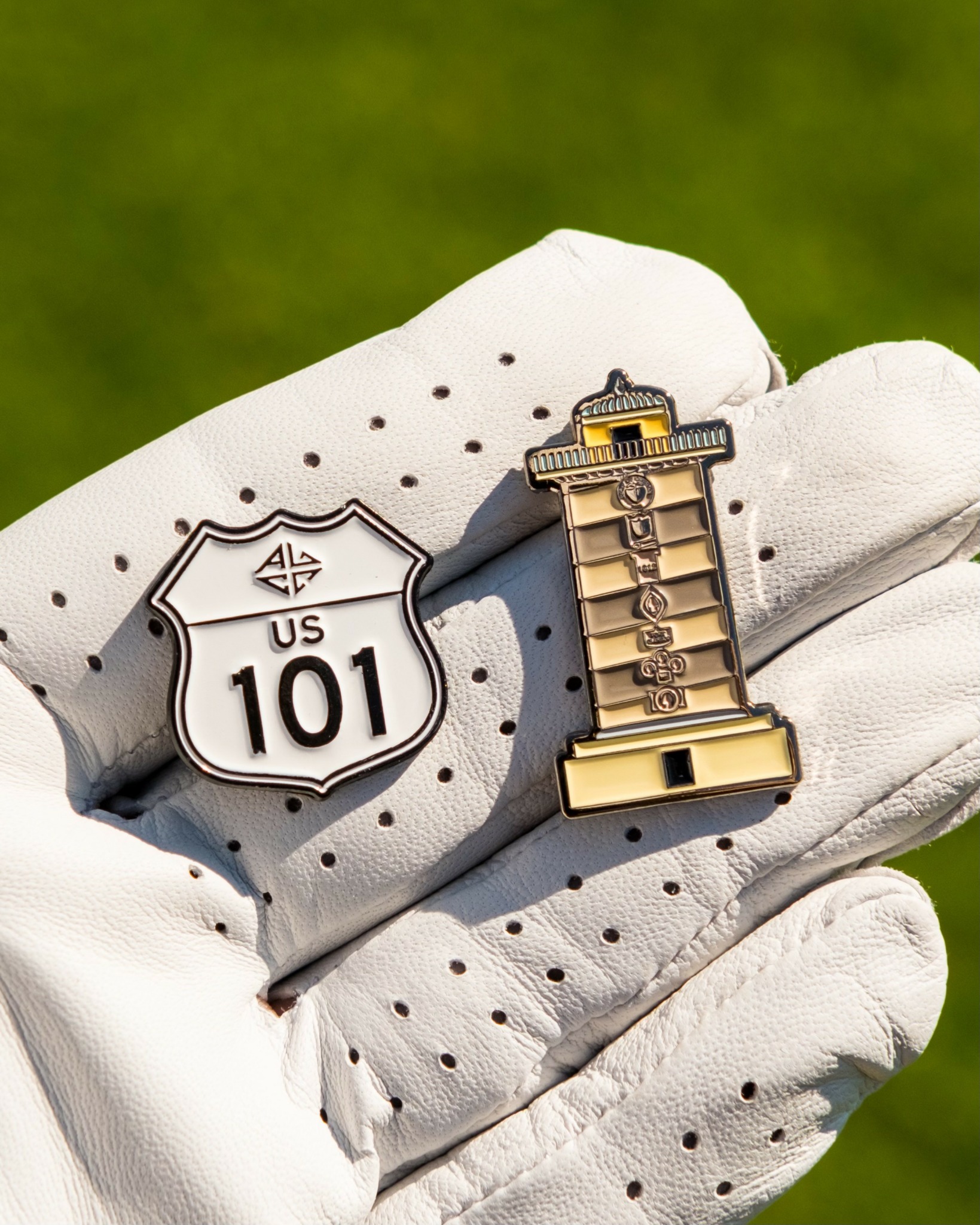
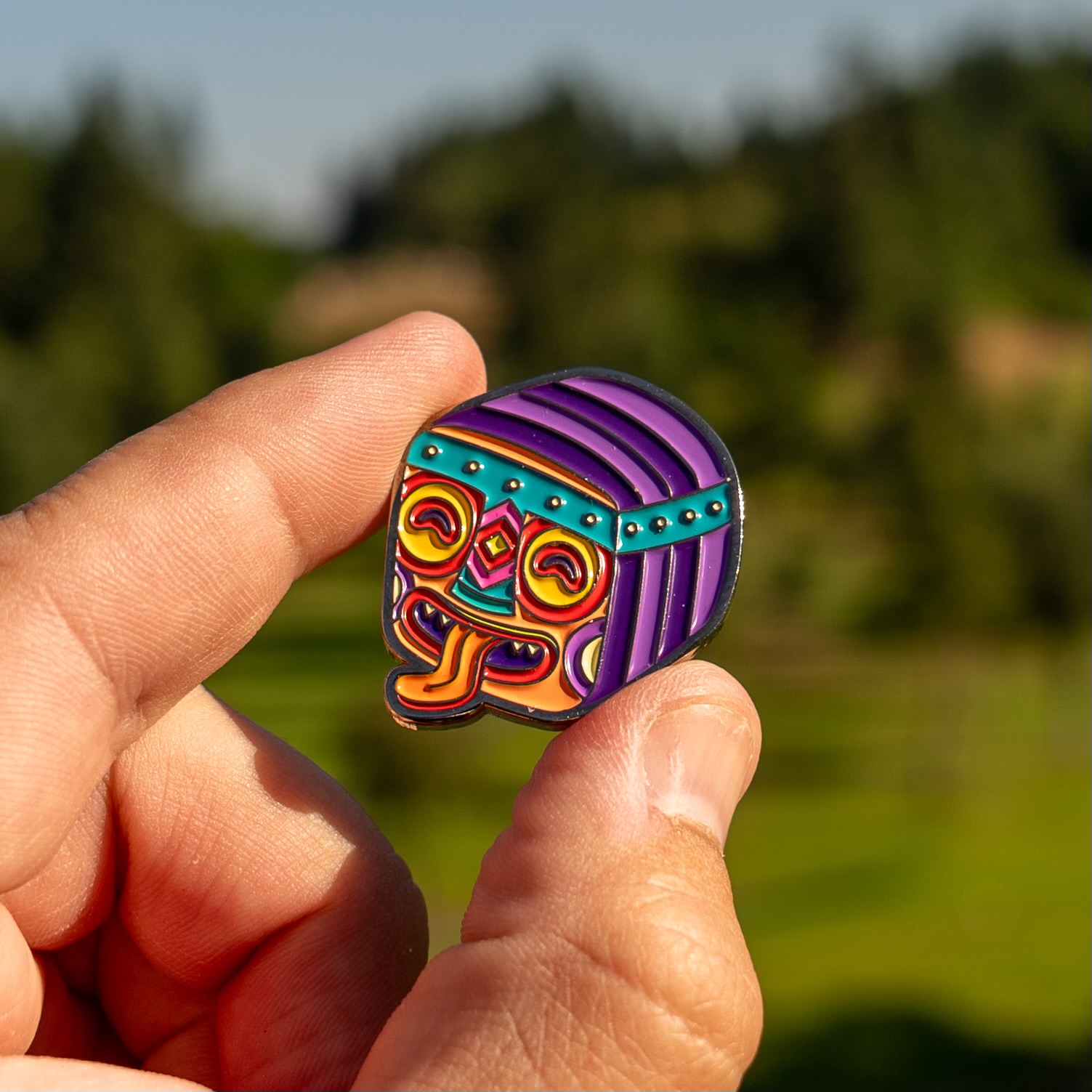
In each package, folks get a custom-designed and handmade golf ball marker, made to the highest specifications. It’s packaged in a real matchbox, complete with matches printed on the inside tray and even a block of color where the striker used to be (I learned in the first three weeks that the original matches and striker were HAZMAT, and regrettably could not be shipped via air). Each person gets delivered a branded mailer, a bright orange bubble affair with my mascot, Woody, on the side. The foldable self-sealing closure has the texture of a striker on it. And inside is the ball marker, three bamboo golf tees painted to look like matches, three stickers, and a thank you card from me.
That’s the kind of attention to detail I wanted when I was buying ball markers in 2020 for $40-50. I was disappointed when I would get a plain brown kraft mailer a few weeks later, with a ball marker in a ziploc baggie hastily tossed in.
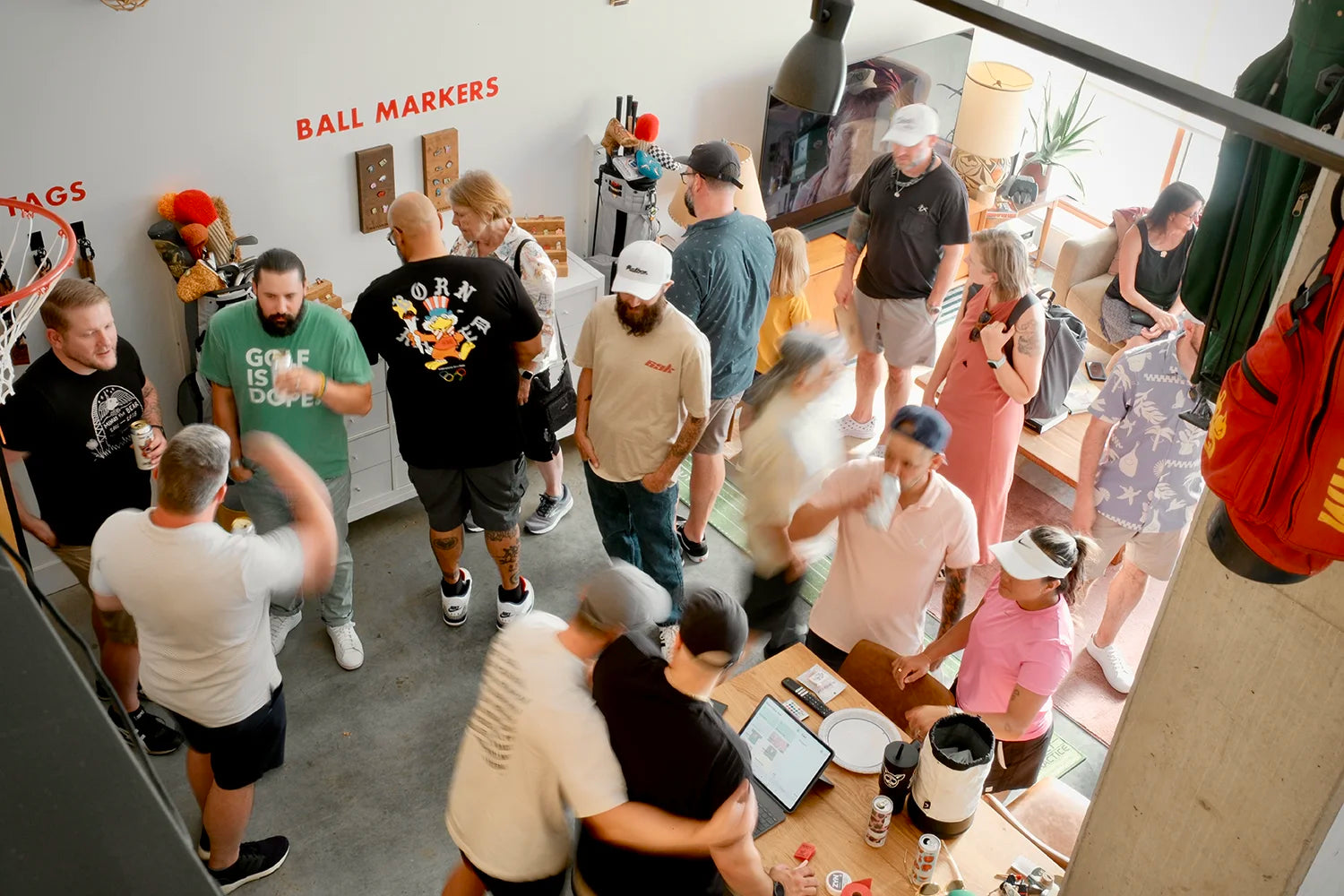
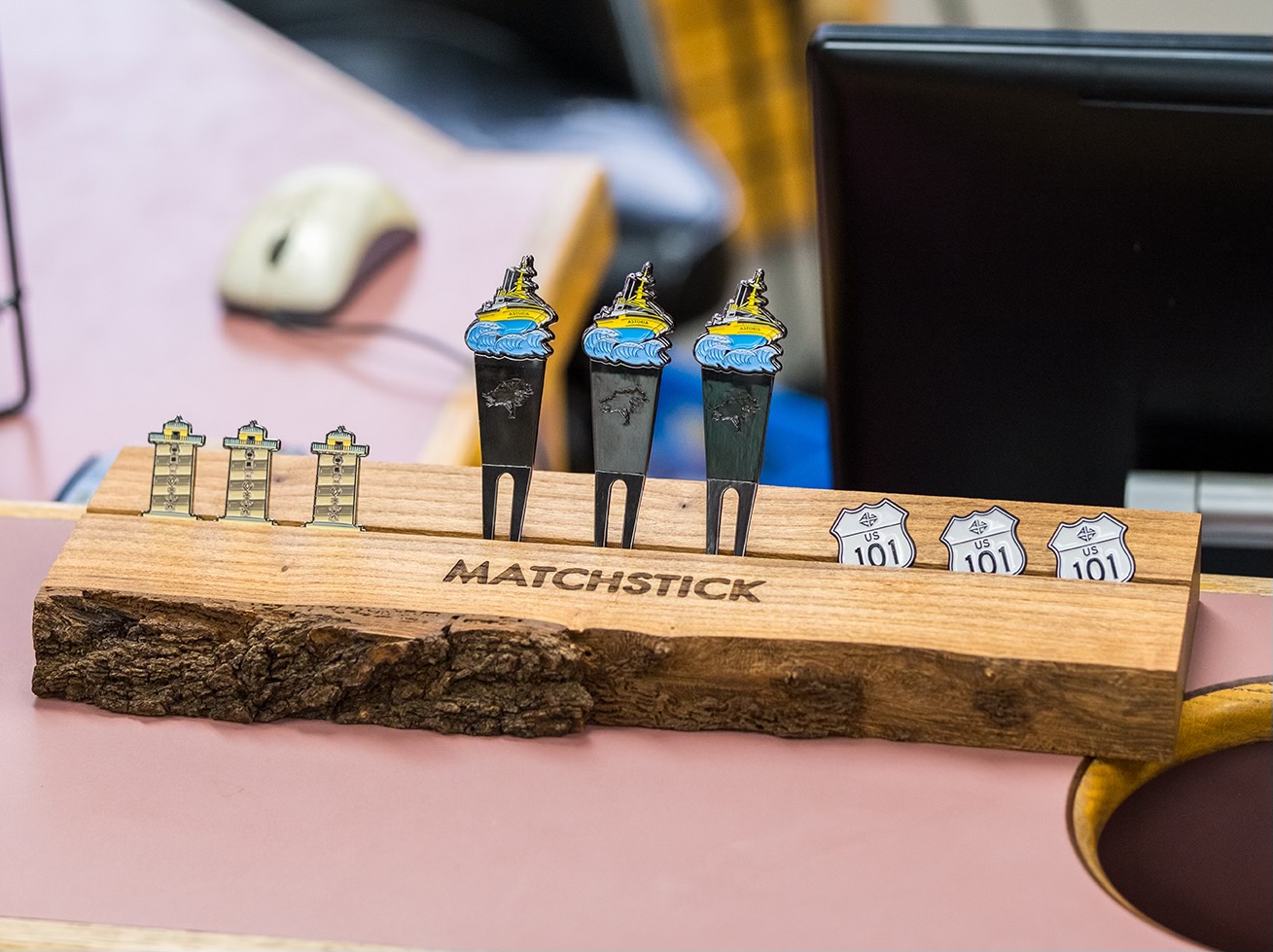
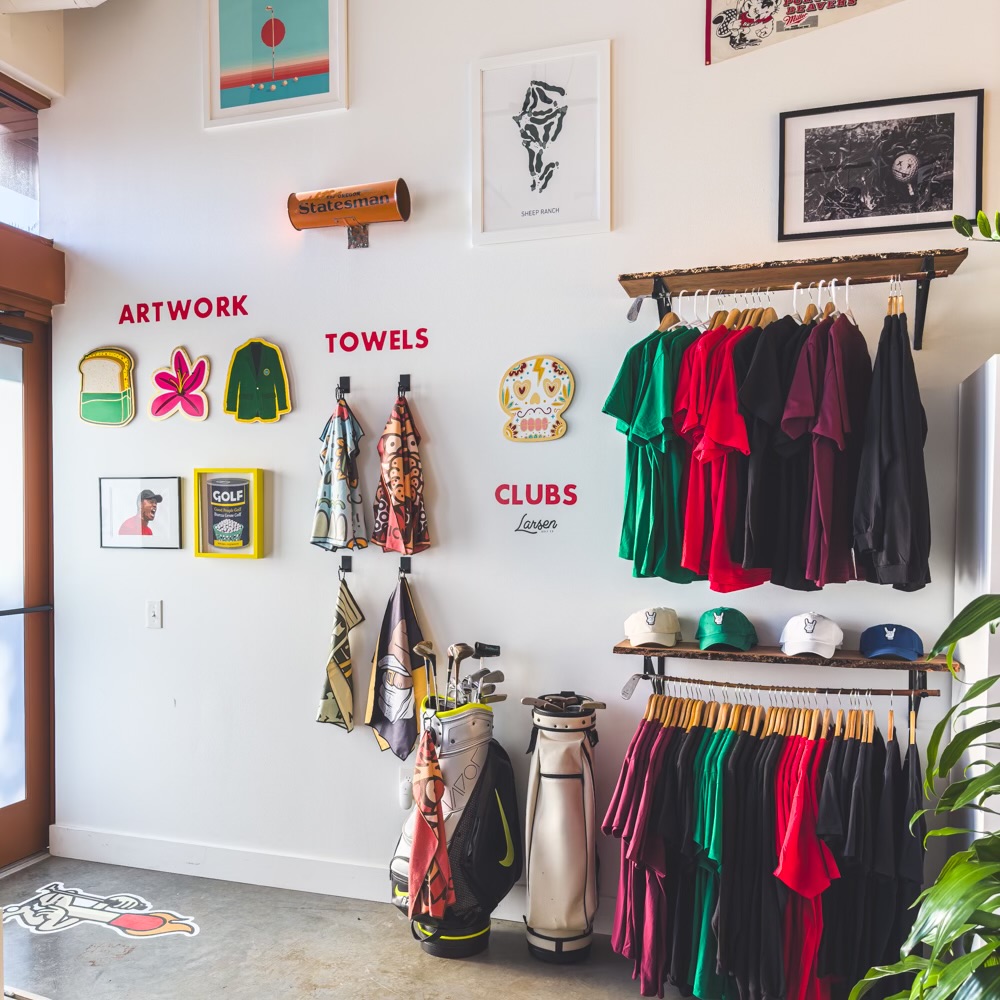
I think that’s also why my wholesale customers are so happy with my work. About half my business is in the wholesale custom space, where I draw custom markers, bag tags, golf towels, divot tools, and tees for golf courses, companies, and individuals. I’m a full-service graphic designer, so I’m able to take an idea, or brainstorm my own, and make something completely unique for anyone who wants it.
Too many golf ball marker suppliers are just there to slap a logo onto a cheap little round ball marker and call it a day. Or, if they do make non-round markers, they aren’t there to concept anything with you. Whatever artwork you send them is exactly what you’re going to get, and that can be an issue when there’s consideration for things like line thickness, metal finish choice, and Pantone colors. And even then, the packaging and presentation of Matchstick is so much more elevated than people are used to. Nothing is stuck to a cardstock placard with a glue dot and wrapped in cheap plastic. Every ball marker is carefully placed inside each matchbox, sealed in cello, and then a scale sized sticker of the design is put on the back of the box.
That’s the difference, I think, that makes it so my direct-to-consumer customers are just as pleased as my wholesale ones, and why I continue to be blessed to work with more companies and crazier projects each year.
We often hear about learning lessons – but just as important is unlearning lessons. Have you ever had to unlearn a lesson?
It took me a couple years to realize that although my own taste is a guardrail, it isn’t a steadfast rule. During my first meeting with Carnahan at Jones, he told me, “Don’t take any advice for the first year. People are going to reach out and tell you to make them bigger, make them smaller, whatever. You have your vision, and you had it enough to start your own company. Stick to it.”
I interpreted that advice perhaps more steadfastly than was helpful, making me rigid at times. For example, when I realized I wasn’t allowed to ship matches in the matchboxes, I worked on a solution to replace them with something else. I liked that the package, when a ball marker was put in it, didn’t rattle because of the thickness of the matches and the thickness of the ball marker.
Removing the matches made the ball marker move around inside the box, and I wanted to keep it so the packaging sounded the same. Just saying this out loud makes me feel ridiculous, by the way.
So for a good 18 months, I printed out stickers of the matches that now appear printed on the trays, and attached them to Gatorfoam boards. I then had them cut, and placed them inside the boxes. This achieved the effect I wanted, in that the boxes didn’t rattle. But it also doubled the cost of the packaging, and everyone around me told me that the “rattle” didn’t matter. In fact, many suggested that a rattle might actually confirm to a customer that the item was indeed inside the box. Sort of like shaking a Christmas present early in the morning, before your parents had woken up and given you the green light to tear them apart.
Eventually I relented, and decided to have my matchbox supplier print the matches directly on the tray. This gave the same effect, with there still looking like there were matches inside the box when it was opened. But it was also cheaper to produce, and much faster for me to package. Which is helpful, because to this day I still package all the markers myself.
I think one of the most important things for a small business owner to learn, particularly in a creative business, is how to properly weigh and accept the advice of others and get out of your own way.
How about pivoting – can you share the story of a time you’ve had to pivot?
I have never had a straightforward path, and perhaps the greatest lesson that Matchstick has taught me is that those who are around you are who matter most. My first degree was in history, but I didn’t have a plan of what to do with it. I didn’t want to be a teacher, I didn’t want to go further down the academic path. But I did like writing, and I enjoyed the subject matter and the professors at my university.
Fifteen years ago, people were surprised when I told them I was working in journalism and only had a degree in history. Even further, the University of Oregon has one of the best journalism schools in the United States. And yet, I had a degree from a completely different branch of the school. So since the beginning, my path has not been traditional.
It took me years of working in journalism, after transitioning to sports, to be able to even decide what I wanted to do next. The answer was never easy, and deciding to pursue my second degree in accounting took years of what felt like floating around, struggling against the current.
And then, shortly after graduation and after getting my first job in accounting, my career in accounting was over. COVID hit like a brick through a window, and years of studying, getting a second Bachelor’s, and passing CPA exams was all gone in five months. Yes, I worked in accounting until I went full-time with Matchstick, but once I got laid off in March of 2021 it felt like the end was in view.
Work has never been my issue. I devote myself fully to whatever’s ahead of me, but sometimes that work doesn’t pay off — at least not directly. I think it’s taken me a while to not be self-critical when it’s turned out those efforts have not been effective in advancing me in the specific direction I initially headed in. I’ve found the key is to always be self-evaluative, without judgement, and to continue working hard.
For me, a tenant of my own sense of self is that drive to work toward something. I’ve always done that, and it’s something I’m proud of. And like I said, in some weird way, all my experience in journalism, sports, art, social media, and accounting has made Matchstick something I’m comfortable running as an entrepreneur. My skillset has allowed me to do everything from handle supply issues, to reconcile month-end statements, to create videos for TikTok.
But it’s been a lot of work on myself to be able to recognize those efforts are not failure. In some sense, Matchstick feels slightly random. That I lucked into something, that it fell into my lap. But that’s veiled, negative self-talk that belies my efforts, my passion, and my own abilities. Put another way: there is some randomness in when opportunities are available to us. But if you’re not working hard, you’re never going to be able to capitalize on those opportunities.
Gary Player said, “The harder I work, the luckier I get.” That’s completely true for me at Matchstick, and I make sure to remind myself of it every day.
Contact Info:
- Website: https://WWW.MATCHSTICKGOLF.COM
- Instagram: https://WWW.INSTAGRAM.COM/MATCHSTICKGOLF
- Facebook: https://www.facebook.com/matchstickgolf?