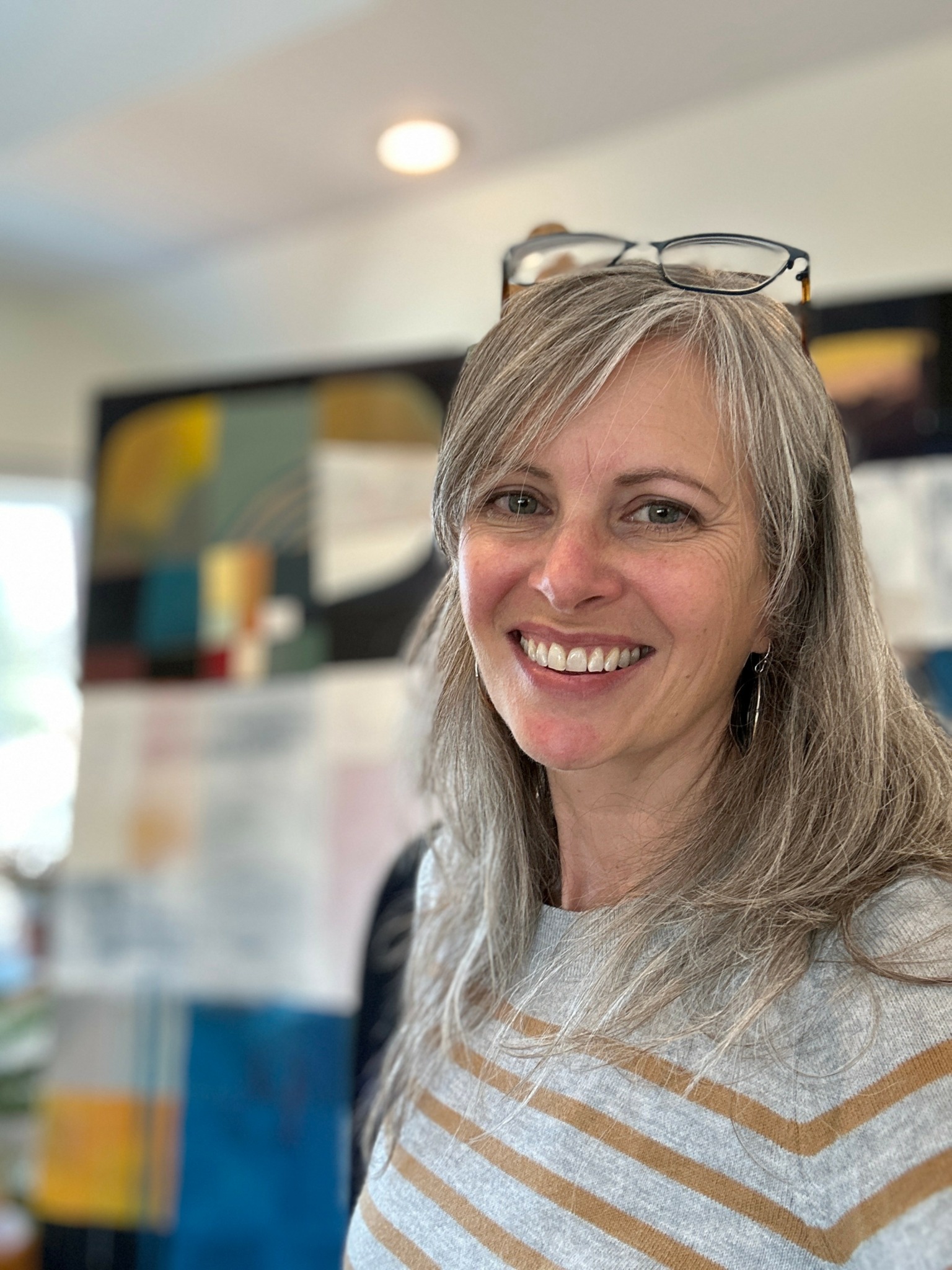

We’re excited to introduce you to the always interesting and insightful Kathleen Johnston. We hope you’ll enjoy our conversation with Kathleen below.
Kathleen, thanks for taking the time to share your stories with us today Let’s jump back to the first dollar you earned as a creative? What can you share with us about how it happened?
After graduating from college in 1997, I started experimenting with oil painting. I had set up a studio in my grandfather’s basement and found a local coffee shop to have my first show. It probably took me way too long to hang those paintings, but the people at the coffee shop were very accommodating. Most of my pieces were small but I had one larger painting. It was a painting of a town inspired by a trip I had taken to Italy that spring. I remember putting the price I thought it was worth, but being so nervous that I was pricing it too high. It was $350. I stopped by a couple days later excited to find that the big painting had already sold. At the end of the show, I went to collect the pieces that had not sold. The person who bought the large painting had already picked it up and had not left their name. A few days after, I stopped by my brother’s apartment, and there, hanging on his wall, was that painting. At that time, neither of us had extra money to spend on “expensive” paintings, but there it was. I just remember how truly supported I felt.
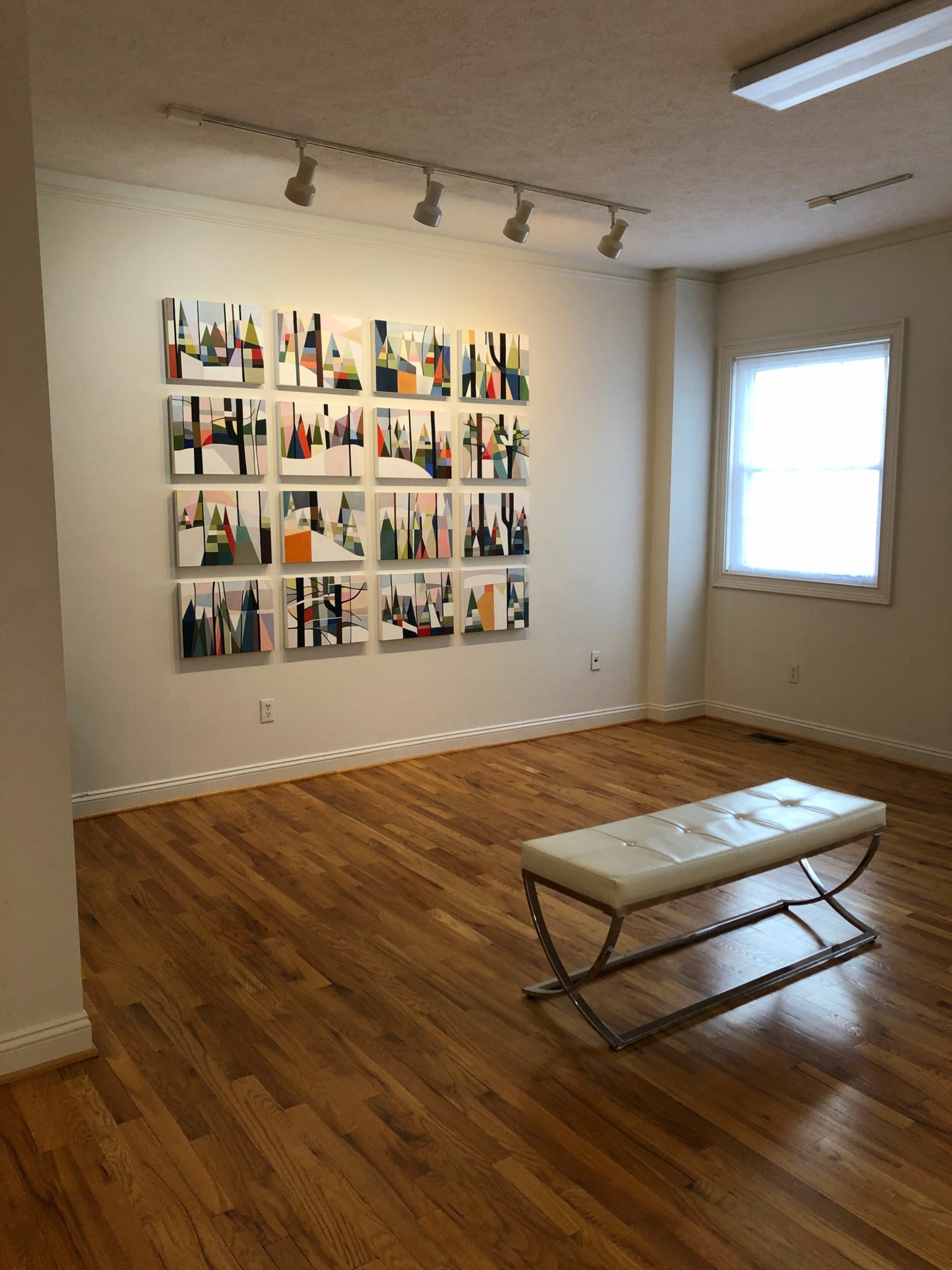
Kathleen, before we move on to more of these sorts of questions, can you take some time to bring our readers up to speed on you and what you do?
My love for art really began in preschool where, according to my teacher, I spent most of my time at the art easel. My parents always supported my creativity, providing me with supplies and opportunities for growth. So it was no surprise when I went to college and declared art as my major. I graduated from James Madison University with a degree in studio art and a concentration in art education.
I taught kindergarten in public elementary school for 4 years, took 8 years off to raise our 2 boys and then returned to teach art in elementary school for 9 more years. Although I truly loved teaching and I miss my creative young students, I am now enjoying the challenge of life as a professional artist. My artwork often reflects experiences from both being a mother and working with children as an art educator. Most of my work is about relationships…how we feel, interact, and connect with one another.
I have always been most affected by the works of artists like Helen Frankenthaler, Mark Rothko, and Paul Klee because their paintings evoke emotions and seem to tell a story. I really love abstract work because it allows a viewer the opportunity to have their own unique interaction with the image, often like solving a puzzle. And the interaction can change based on what the viewer is feeling. So you might have a different experience with the piece each time you look at it.
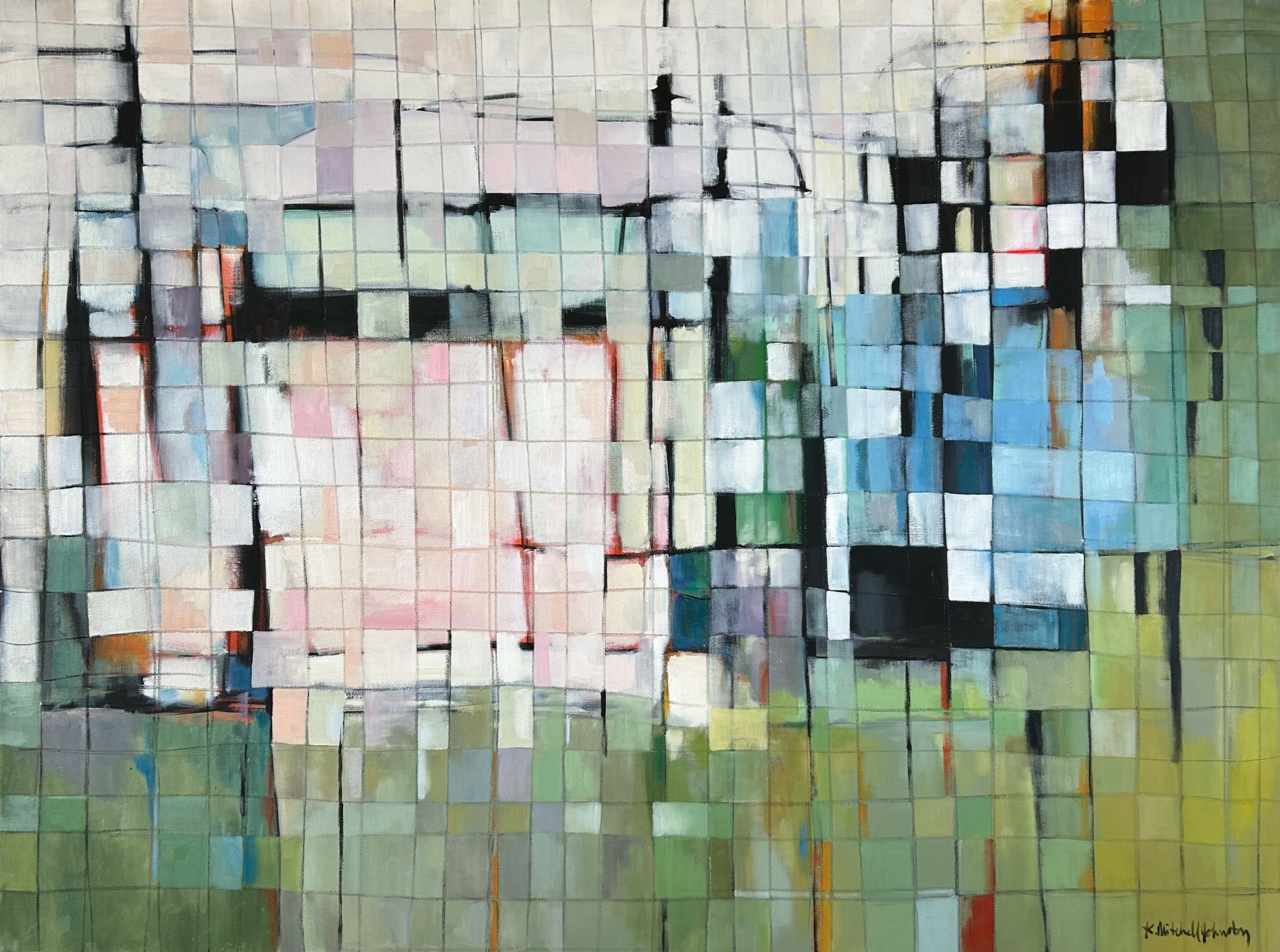
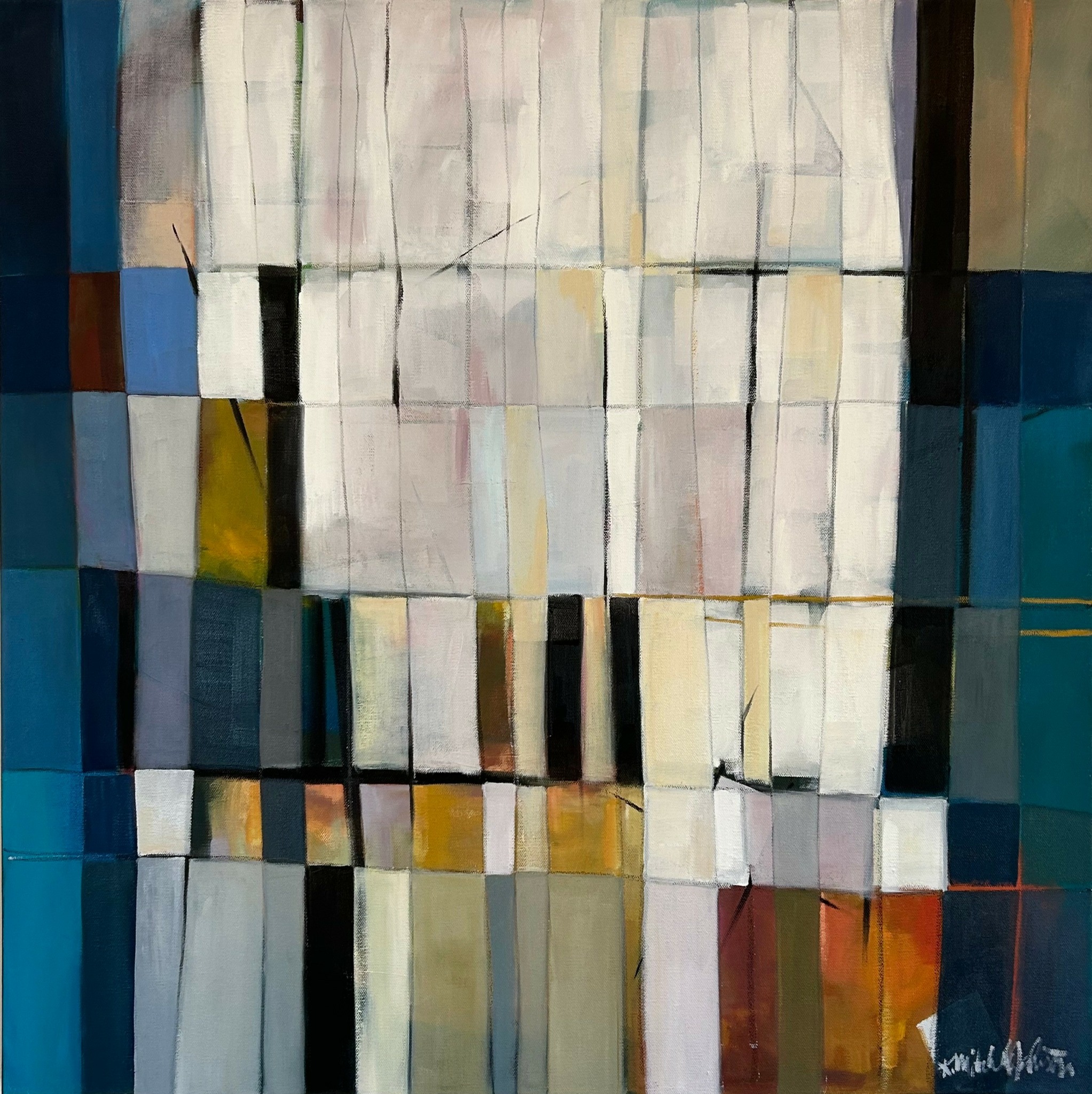
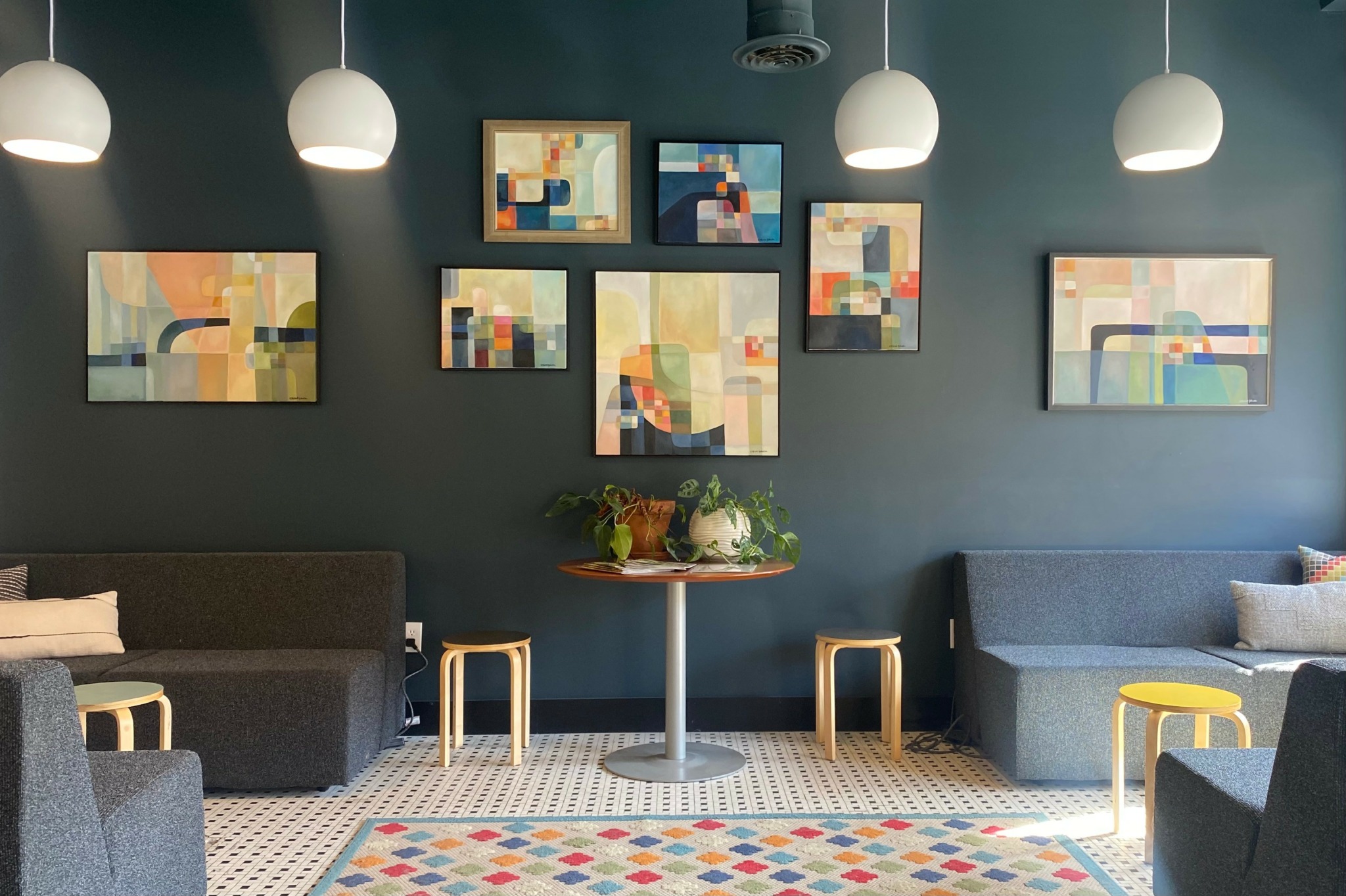
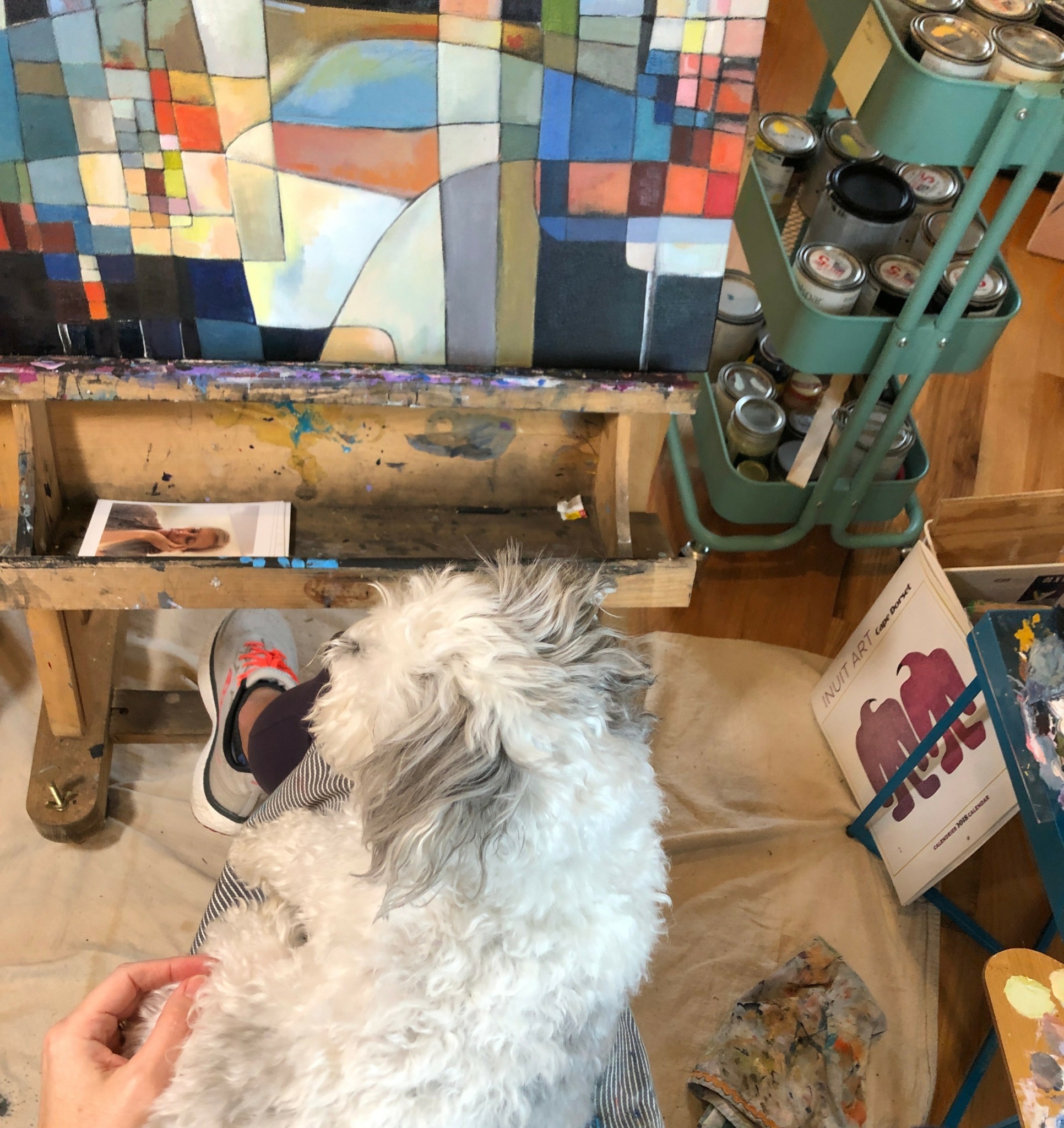
My paintings are built with layers of marks, lines, shapes and color. It is a process of fitting together shapes or overlapping them, then dividing the space with lines and marks, and repeating. Meanwhile, I play with the saturations and tones of colors to create contrast and make soft or bold statements. There is a lot of conversation between the shapes, marks, and colors. My paintings communicate the stories I hear, see, and feel.
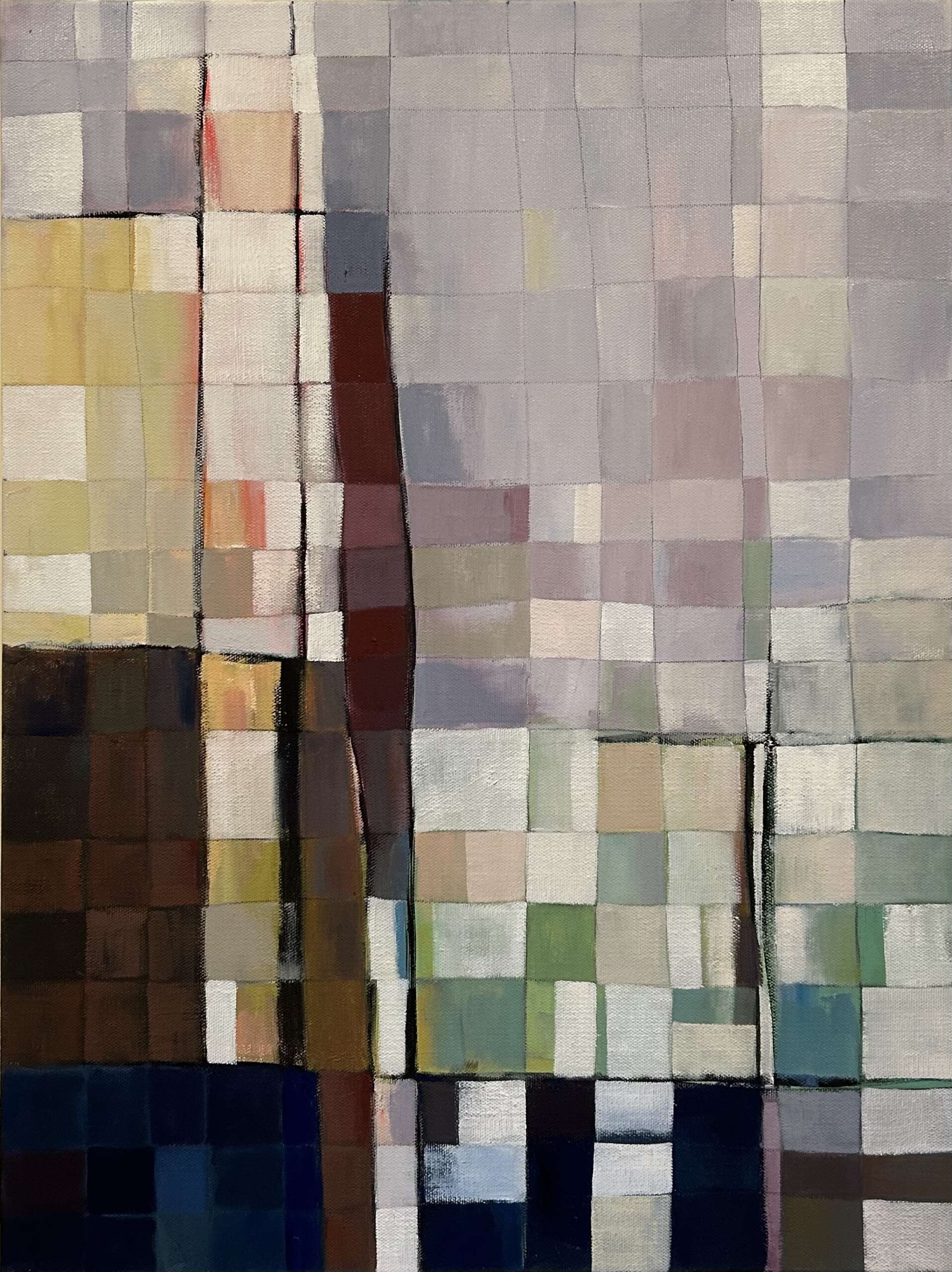
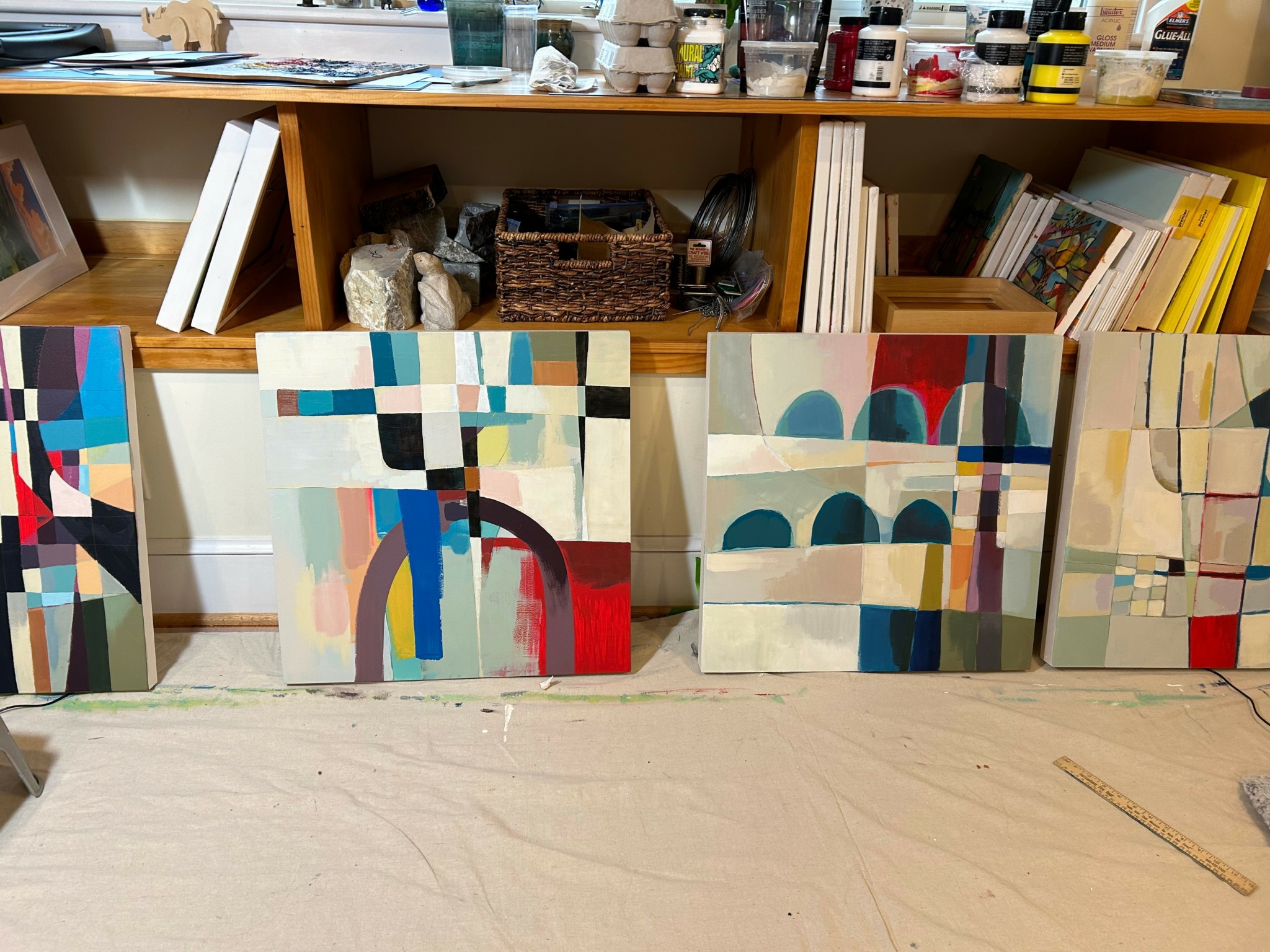
Do you think there is something that non-creatives might struggle to understand about your journey as a creative? Maybe you can shed some light?
I often hear people, when they are viewing conceptual or abstract work, make comments about not understanding or that a child could create that. I have to remind myself that it is actually a good thing that we don’t all love the same things. When I am in a gallery or museum, or any place viewing art, I choose to spend most of my time with the pieces that catch my attention, or draw me in with color or form. My first interaction is usually about the way it makes me feel.
Successful artists are masters at manipulation. Abstract work can often look simple but getting it to that point utilizes experience. I often think about a visual from a children’s book that I used when teaching about sculpture. It showed 3 of the same simple forms but in different sizes. They arranged the forms in different ways and then commented about each. In one grouping, they had them all together and the grouping looked like a loving family creating a feeling of warmth and belonging. In another, they separated one of the forms which created a feeling of loneliness and isolation. Placement, balance, contrast, color…so many things play into the process of creating. Although the artist makes many decisions to reach a desired outcome, the viewer is not required to share the artist’s intended reaction.
Being an artist appears to be a fun and easy occupation. The reality is that although the creative process is often therapeutic and rewarding, especially when you are in a period of “flow,” there is a lot of self motivation, learning, practice, failure, vulnerability, and emotional turmoil. I think most professions probably have a side of which those who are unfamiliar aren’t aware. It’s like that old saying, “don’t judge someone until you have walked a mile in their shoes.”
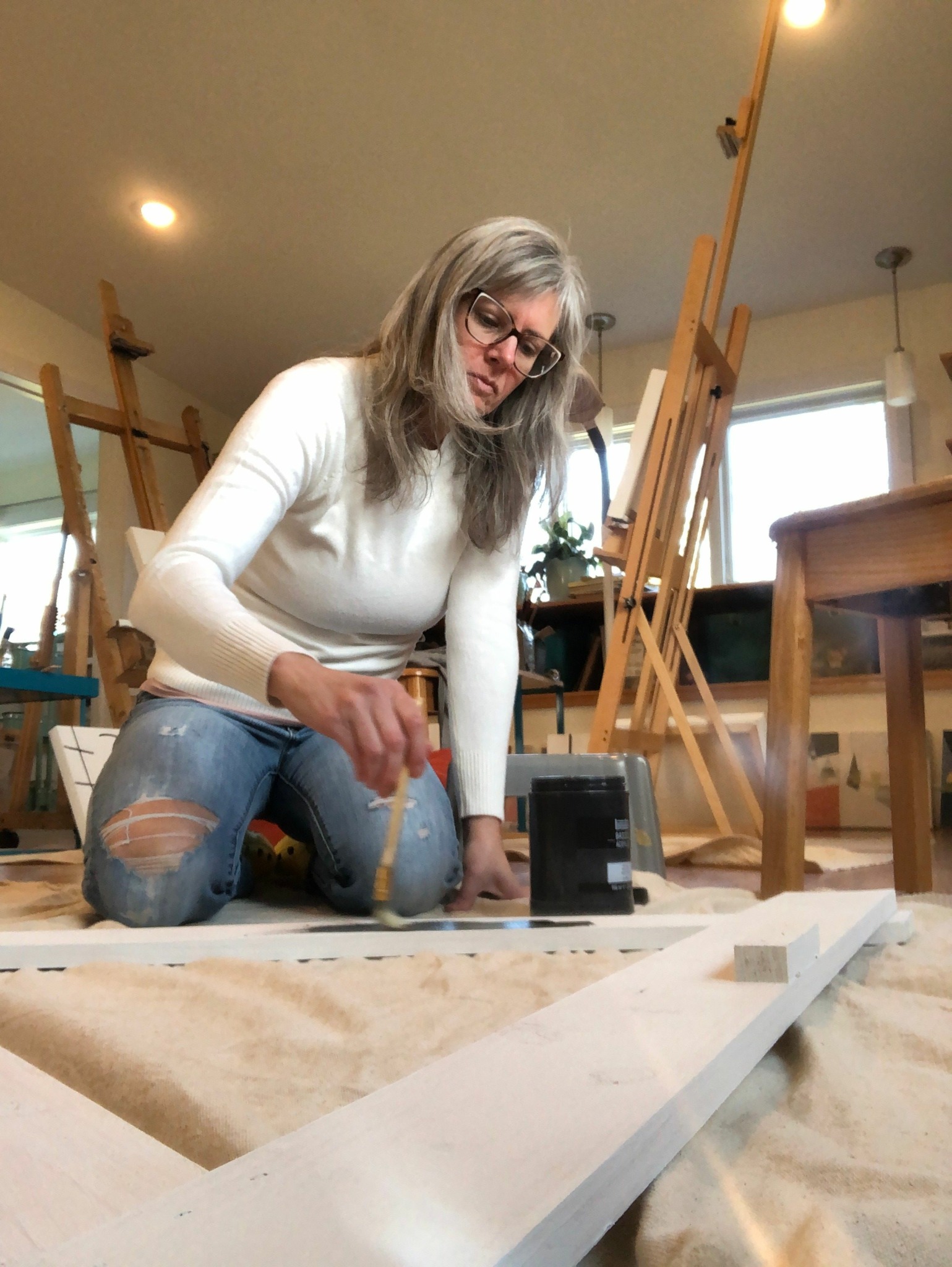
Let’s talk about resilience next – do you have a story you can share with us?
During the last several years of teaching, I was also painting on the weekends. It was really hard because I would start these pieces with gusto and everything would be clicking, and then Monday morning would come and I would have to switch back to teaching mode until Saturday. But sometimes it would be 2 or 3 weeks before I could pick up the brush again because I had two teenagers who were very involved with activities. By the time I had a chance to come back to my paintings, I wasn’t in the same headspace and it was like starting over again and again. My husband and I decided maybe I should take a sabbatical and try out painting full time. Then the pandemic hit. I actually got to teach from home and spend more time painting. But then we went back to school and after having had more time to paint, I realized that I needed to make the switch to full time. I finished the school year and was set to start this new journey. A month later, I was diagnosed with breast cancer.
With multiple surgeries over the next year, my switch to painting became more gradual than initially planned. But when you have a goal that you are passionate about, you find a way to make it happen. And I have a very supportive husband and community of family and friends for which I am grateful. I was lucky that my cancer was caught early and I had a good treatment option with surgery. I didn’t spend a lot of time panicking about what might happen, because that didn’t seem helpful. Instead, I chose to look forward. Struggling with confidence, dealing with rejections, and staying motivated and productive have been more challenging for me. Having a lack of structure to my day sounds amazing but in reality, it is difficult to maintain focus and be successful. My studio is in my home and there are always things at home that need to be done making it hard to organize my time. And rejection is tough, but a part of the profession. I try to remind myself to look forward, to learn from the experience, and not waste time needlessly. Being vulnerable is just part of being an artist. And each piece I sell helps to balance things out. Staying focused on my goals and not allowing myself to spend too much time worrying about things that I can’t control helps me to find success.
Contact Info:
- Website: https://www.kmitchelljohnston.com/
- Instagram: https://www.instagram.com/kmitchelljohnstonart/
- Facebook: https://www.facebook.com/profile.php?id=100083918484657