

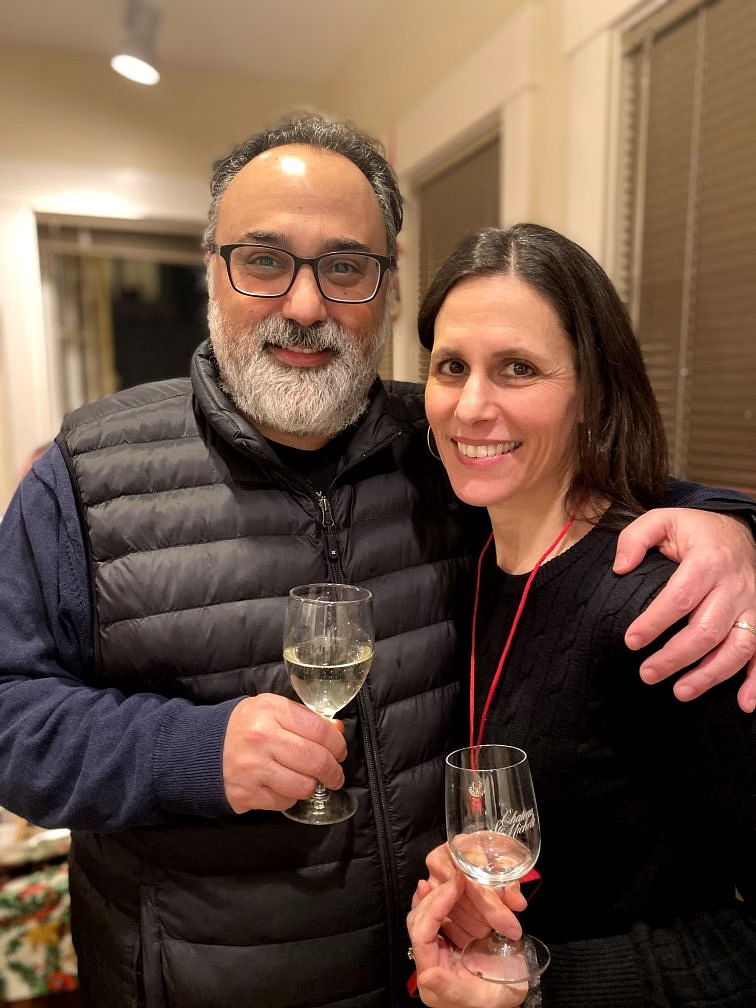

We recently connected with Joe Mele and have shared our conversation below.
Joe, looking forward to hearing all of your stories today. Can you talk to us about how you learned to do what you do?
Starting a podcast is not something new or original. There are hundreds of thousands of podcasts that have been started over the past many years, and there are lots of “how to” videos and websites out there. While the technical aspects of starting a podcast are relatively easy to figure out – get some equipment, find some editing software, get a hosting service, submit your podcast to directories – the harder part is getting into a groove that resonates with you and your audience. We started the podcast with some ideas of what we wanted to cover and who would want to listen, but over the course of the first 6-12 months, we learned a ton about how to make the podcast work for us. Honing in on our format, being consistent in our approach, and creating content that was sustainable and interesting to us and our audience took some time, and we are still figuring it out. The most essential skill might be how to pace or drive the podcast. Good podcasts have a dynamic pace to them. That doesn’t necessarily mean fast, but it means that there is a clear direction that the audience can depend on and that focuses their attention. The main obstacles that stood in our way, and continue to stand in our way, are time and scaling our audience. There is always more we can do, but there are only so many hours of the day to dedicate to the podcast.
Joe, love having you share your insights with us. Before we ask you more questions, maybe you can take a moment to introduce yourself to our readers who might have missed our earlier conversations?
We are a husband and wife team who have been enjoying wines for as long as we can remember. Carmela’s father is a wine collector, and her grandfather was a beer and wine distributor, so we have been able to drink some really great wines over the years. We love wine, and we know a lot of people love wine, too, or want to love wine and learn about it, but wine can be very overwhelming, intimidating, and expensive – lots of different names for wines, lots of different price ranges, lots of different styles, and lots of funny words and rules that seem snobby, silly, and frustrating. We realized there was a place for a podcast that could help people find great wines without breaking the bank, and could offer education on wine without being boring. We share with our listeners our real feedback in real time on the wines we drink, and we think that sets us apart from other wine reviewers and podcasters – if we don’t like a wine, we’ll tell you. Most of the time, you only hear about the wines people rate highly. We also believe that wine is fascinating and fun to learn about because it is so steeped in culture, in history, in cuisine, in science, and in art. It is a food that people have enjoyed for thousands of years, and most of the time, it has a story to tell. Finally, we really feel that the big wine industry has trained people to think that red wines are supposed to taste like California Cabs and white wines are supposed to taste like super oaky Chardonnay, and Rosé is supposed to taste like sweet Provence Rosé, but there is so much more to experience and taste and learn, and we want to help our listeners find new wines they love and expand their wine horizons.
What can society do to ensure an environment that’s helpful to artists and creatives?
For artists today, there is far too much “pay to play.” Despite the growth of social media, which should give creatives a place to share and be discovered, instead it has created a ecosystem where you have to pay to get attention, or where you have to do something outrageous to be interesting. In addition, in our educational system, art is just considered an extracurricular today. We have gutted music and art programs in schools, and as a result, we have raised generations who have not been exposed to art or had the chance to enjoy and appreciate it. So, there are a few things society can do. First, we can give as much love, attention, and money to our arts as we do to our sports. We love sports, so this is not a dig on sports, but there is just so much focus on sports, and not enough on the arts. Arts help children learn, grow, collaborate, and experience the world in new ways – and reach kids who are maybe not as interested in sports. Another thing we can do is create more support and grants for artists. The United States is the wealthiest country in the world. We should have a more thriving arts culture in our cities and towns. The arts bring people together and spread love, joy, understanding, and empathy. We need more of that in our lives.
What’s the most rewarding aspect of being a creative in your experience?
Being creative makes you feel alive. It is a way of expressing yourself as a human being that cannot be done otherwise. We are all artists, we are all creative. We all feel the need to make things, build things, learn things, and help others experience things differently. We feel most alive when we are being creative.
Contact Info:
- Website: https://thewinepairpodcast.com/
- Instagram: https://www.instagram.com/thewinepairpodcast/