We were lucky to catch up with Cecilia Shin recently and have shared our conversation below.
Hi Cecilia, thanks for joining us today. What was the most important lesson/experience you had in a job that has helped you in your creative career?
An important lesson I learned while designing for shows is how big of a role chance and luck play for someone in my field. I had a difficult first year in NYC when I moved and was searching for professional work in theater while trying to survive in the city. During that year, whenever I thought I would not land my next gig and would be out of work the next month, I would get an email about someone recommending my name, asking me to interview for the job.
I learned that being at the right place at the right time and meeting the right people is as important as my ability. The combination of all those things is what gives us the opportunity to work on an incredible project that lets you move closer to your goals.
As a scenic designer, I feel that this is especially true since our work is freelance-based and rooted in collaboration. My first year of moving to and working in NYC was very much about connections and being available at the right time when someone I wanted to work for needed someone. I was lucky enough to have gotten in touch with costume and scenic designer, and creative director Clint Ramos when he was looking for assistants for some of his projects. That opened a door for me to work professionally in the city and see a glimpse of the process of working on bigger-scale theater shows. I’m not saying that one should wait around for good luck to happen to them, but embrace that even with hard work, there are things that are out of our control and the opportunities we want may arrive in ways we don’t expect (or maybe they won’t come for a long time).

Great, appreciate you sharing that with us. Before we ask you to share more of your insights, can you take a moment to introduce yourself and how you got to where you are today to our readers.
I’m Cecilia Shin and I’m a NYC-based scenic designer working in theater and film. I’m originally from Hong Kong.
I wanted to pursue design for performance because of the touring productions Sound of Music and Wicked that visited Hong Kong when I was young. I love consuming good stories, in film/TV/theater/books. I’ve always been drawn to fine arts and landscapes too. Scenic design was the craft I’ve chosen to combine my love for environments, visual arts, and evocative storytelling.
I like the act of thinking and solving, and doing so in collaboration with others delights me. I value the process of iterating to create a set design that contains a world that aids storytelling is important to me.
I hold a BFA in Scenic design from Carnegie Mellon University and I’m currently an MFA candidate at NYU Tisch Design for Stage and Film.

What’s the most rewarding aspect of being a creative in your experience?
Seeing and hearing someone walk out of a show I worked on feeling something, is rewarding for me as an artist/creative, whether they are emotionally touched, in thought, in discussion, etc. I think the point of what I do is
to help create an experience that evokes meaningful emotion or thought in someone. It’s exciting to me to imagine what their experience (or their memory of it) springboards into.
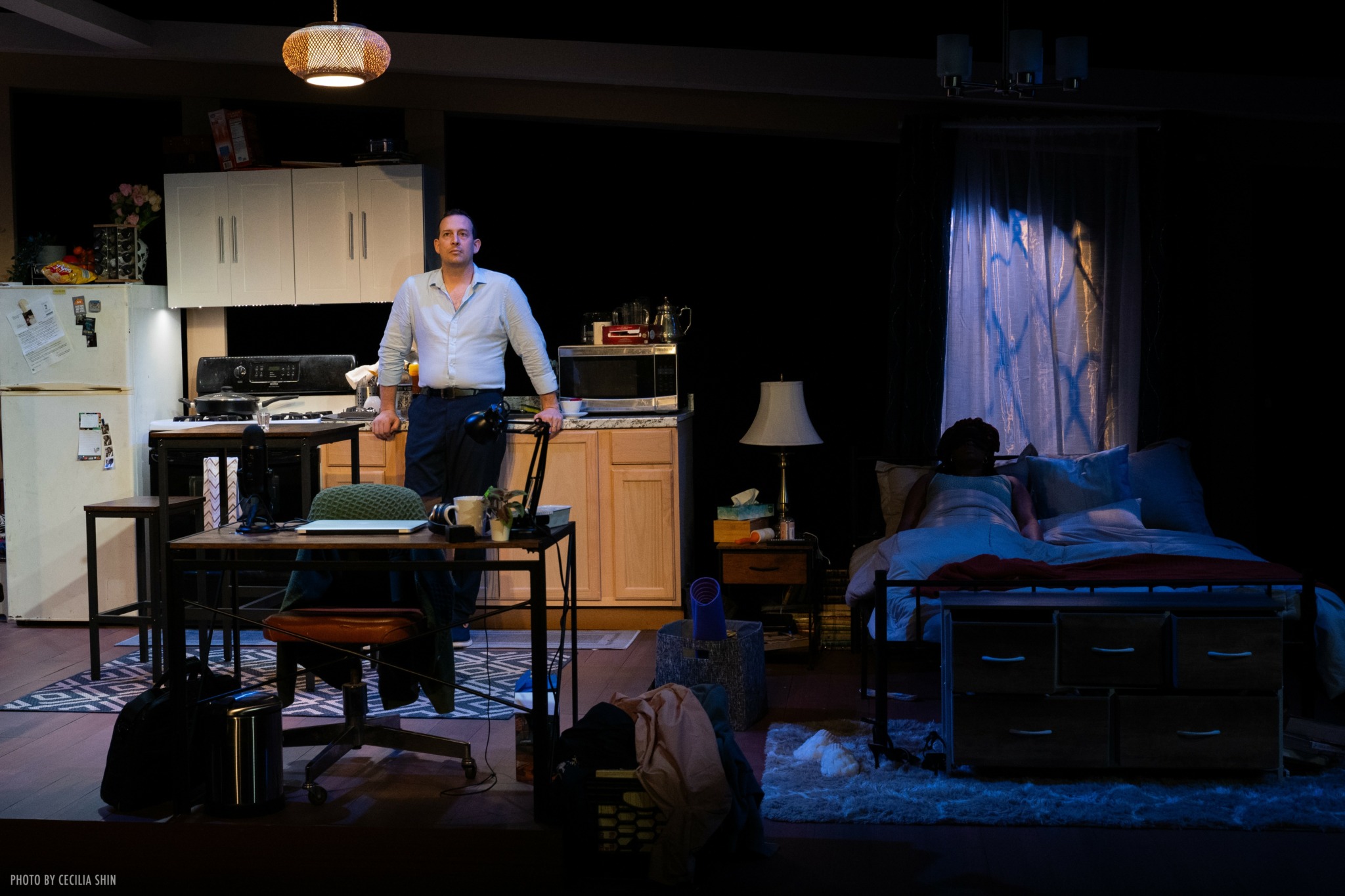
Learning and unlearning are both critical parts of growth – can you share a story of a time when you had to unlearn a lesson?
A lesson that has been deeply ingrained in me that I’ve had to unlearn is too much self-reflection. Self-reflection was taught to me as a tool for personal development and to grow professionally. I debrief with myself to assess my process and the result of every project, even the ones where I’m just an assistant. I recently designed a set with a bigger budget, compared to the small projects I’ve taken, and I realized I’ve internalized reflecting a little too much: why did I choose such a light color for wall frames? Why is the ceiling framing color beige? How could I have articulated my thoughts about the levels better? How could I have interacted with my director better? The list goes on. However, I came to this epiphany that there comes a point where reflection turns into overthinking. Some decisions, especially creative ones, were made in response to the circumstances of the moment and don’t need to be interrogated.
Contact Info:
- Website: https://ceciliashin.com