



We caught up with the brilliant and insightful Salima Bhimani a few weeks ago and have shared our conversation below.
Salima , thanks for taking the time to share your stories with us today Can you share an important lesson you learned in a prior job that’s helped you in your career afterwards?
I’ve always had this inner sense that quivers in me when it’s time to level up or find new opportunities to shape the world. It’s a voice I trust and a call to reimagine my channels of impact. My core work has always been about unlocking opportunities and forging connections where they might not otherwise exist. For example, by the time I was 19 I built an international leadership program, bridging gaps in difficult and abandoned economic, environmental and social contexts to address local needs. This inner calling and audacious disposition to dive into often messy and dynamic problems led me to the tech industry in 2017. An industry brimming with unprecedented promise and challenges. Literally shaping who we are as humans and how we meet every day needs. Consider this: By 2030, AI could contribute up to $15.7 trillion to the global economy, transforming industries from healthcare to transportation.
I had no insider track, no network within this behemoth of an industry. But something drew me to the challenge. So, I took a leap of faith and sent a LinkedIn application. Within 24 hours, my email notification went off. It was a recruiter from Google. A whirlwind of interviews later, I found myself in a role that would push me further than I ever imagined. I became the first Chief Strategist for Responsible and Inclusive Technology for the Other Bet companies at Alphabet (Google), influencing and shaping their moonshot companies towards a future where technology truly serves humanity. My mission: empower these brilliant minds to build organizations, define their purpose, and develop groundbreaking technologies and products with the potential to enhance millions of lives. There are endless lessons I have from this experience. But here are a few. When you are guided by a deep sense that you are meant to go and be part of something big, believe that it is for you. And then try every avenue to get there. Sometimes it’s the simplest one that opens the door.
So now I am there at Alphabet in this role. Imagine a world where self-driving cars increases mobility for those don’t have it, where AI diagnoses diseases with unprecedented accuracy that would have taken decades to find solutions for. These were the innovators I worked with, people pushing the very boundaries of possibility. My role was to help them push even further, to dream bigger, to reach beyond what they thought was achievable. It felt like I was already working with people who are expanding the edges, so how could I get them to go further? Sometimes I was struck with imposter syndrome, working with engineers, scientists, technologists and others whose expertise and backgrounds were so completely different than mine. So I actively sought to learn something new, while I led. One day, I was speaking with a leader who insisted their technology was already cutting-edge. And he was right! So, I simply asked, “What if your technology could not only address a market need, but what if it could redefine who and what the market is? A flicker of surprise crossed his face, then his eyes widened. “I never thought of that.” A spark ignited that led his company to new products and innovations. That’s when I learned the most important lesson of my career: even the most audacious innovators can benefit from a fresh perspective, a gentle nudge to expand their vision. My job wasn’t to tell them what to do, but to help them see what they couldn’t see themselves. To unlock the potential that lay dormant within their own brilliant minds. This meant that I had to step into the very audacity that they were being called to everyday and also now imagine beyond it. It was truly an exercise in challenging my own self conception and potential, everyday. It wasn’t easy but then that is not what I signed up for. It was one of the greatest leaps of my life.
As always, we appreciate you sharing your insights and we’ve got a few more questions for you, but before we get to all of that can you take a minute to introduce yourself and give our readers some of your back background and context?
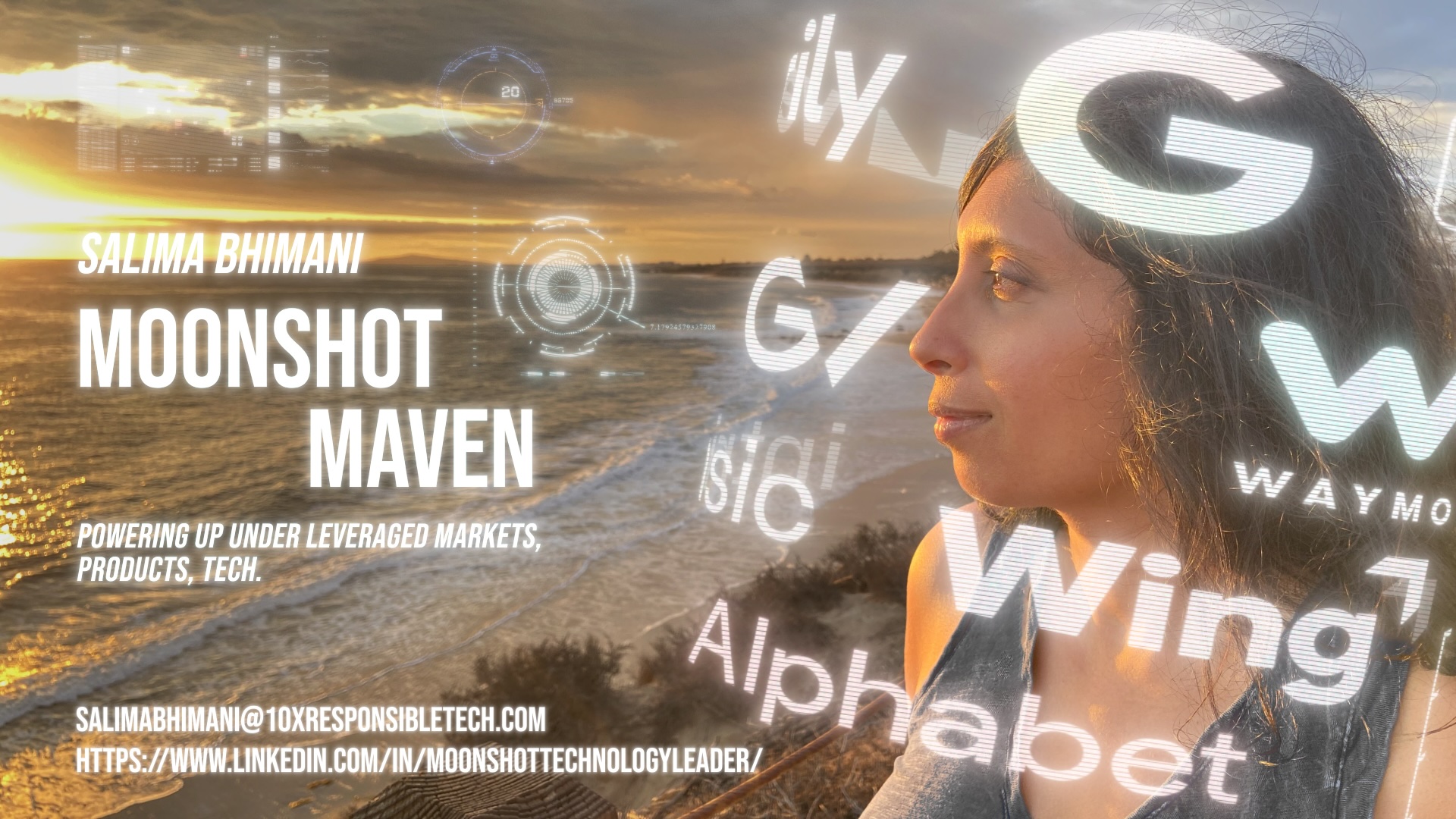
There are two aspects to my work. One is to empower those who dare to dream bigger, and I challenge those who don’t, to awaken the audacity within them. I help leaders, companies, and organizations 10X their impact, unlock hidden potential through emerging technology addressing global needs. Second, is for me to continue to harness my role as a moonshot maven. as a founder and innovator creating new avenues for innovation and technological solutions in new markets.
Even as a child, I was driven to find new ways of doing things. When I was 10 years old, I was asked by my teacher to help her with a class lesson. So I went home that evening and came up with a plan to implement 3 new activities because I noticed that all of us kids were getting bored at a certain hour of the day and that some kids liked to learn in groups, while others by themselves. I went to my teacher and presented what was essentially a lesson plan that took what she had on paper and added in new ideas, pointing out these observations I had. The teacher was shocked and asked me if my parents had helped put this together. I said, “no, it was me.” She couldn’t believe it. I told that she’s a great teacher and I learn so much from her already but I hoped these ideas would help the class experience be even better. She smiled and said, lets try this!
That early experience, amongst others, helped me understand that we are just one pivot away from expanding our ingenuity. For example, I partner with companies and walk them through their product life cycle to see if they are leaving out markets and consumers that we often don’t build for. Women make up approx. 25 trillion in annual consumer spending and yet most technologies that translate into products are not designed or deployed with their needs in mind. That is money and opportunity lost.
Whether it’s helping a Fortune 500 company reach new markets or supporting founders to bring their ideas and companies to life, I’m driven by seeing the change curve in leaders and companies. Seeing where they were to where they are going now So, my company 10X responsible tech, focuses on innovation partnership through:
1) Facilitating the moonshot ideation process for companies that are trying to find new “Bets” and opportunities that would take their company to the next level.
2) Working with leaders to develop and operationalize business aligned innovation strategies to better integrate and use technology to increase their business impact, including in AI.
3) Helping companies see where their technologies and product development, deployment and adoption life cycles could reach different users and consumers and to ensure they are built ethically and responsibly.
Jumping off a career that spans 25+ years now, I am also working on a portfolio of projects that challenge my creative potential and allow me to quickly grow, learn and pivot to opportunities that could change how we do innovation and have real time impact. One of those projects includes building a global innovation hub with several co-founders.
Can you share a story from your journey that illustrates your resilience?
Like a river carving its path through the landscape of time, you are shaped by every bend and wave. And in the reflection of the water, you glimpse the vast ocean that awaits. I think of resilience as a current that gets cultivated throughout your life paths.
At 19, I embarked on a journey to the remote corners of the global south, eager to contribute to educational development in communities with limited resources. It was my first time leaving my home country, and I was filled with a mix of excitement and apprehension. Our destination was a valley nestled amidst towering mountain ranges, where villages clung to the slopes along a winding road. Upon reaching our base, we were immediately dispatched to a particularly under-resourced remote community perched high in the mountains.
My friend and I, laden with suitcases brimming with educational materials, were entrusted to the care of the school principal where we would be working. He informed us that the school hostel wasn’t ready, so we’d be staying at his guest house for the next few days. We settled in and were asked to come into the public restaurant for dinner. As we entered the common restaurant an unsettling feeling washed over me. Six men occupied the room, their gazes heavy upon us. The principal, seated beside us began to quickly go down a path of conversation that felt uneasy. He questioned our presence in this remote village, expressing disapproval that young women would travel unaccompanied. He implied that such behavior was considered immoral, and a sense of vulnerability settled upon us as more men came to sit around us. It was so baffling to hear what he was saying as we were there to support his community. We were 10 hours away from the base village, stranded in a place where our autonomy was clearly unwelcome and where we were unsafe. More and more men entered the restaurant. No women in site.
Back in our room, fear battled with determination. We devised a plan to return to the base city, using my friend’s heart murmur as an excuse to seek medical attention. However, a raging storm hindered our communication with the director in the base village. The principal insisted we stay, offering to send someone else for the medication, but we were adamant. Finally, we managed to reach someone who could retrieve us. That night, with our luggage barricading the door, we lay awake, anxiety battling with the rising sun.
Relief washed over us as we left the situation. When we got back to the base village, the director, shocked by our experience, offered support. My friend, understandably shaken, wanted to return home. She insisted. I felt everything she did but I also felt something else. A kind of productive disobedience. I just knew I couldn’t abandon why we came there to begin with. With renewed resolve, I insisted on continuing our work, finding a safer community where our contributions would be valued.
This experience became a profound lesson in resilience. It taught me that even when faced with attempts to diminish me, I could anchor myself in my purpose and what really mattered. And in that moment it was supporting these communities. It was a stark reminder that the world can be a challenging place, but my commitment to the higher good, to being a source of opportunity for others, could not be taken away by anyone.

What do you think helped you build your reputation within your market?
Authenticity is an overused word these days. But what it means in practice is often overlooked. For me it’s about working with people and often in my case with executive leaders, in a way that honors who they are, where they are and seeing the potential of where they could be. And I do this by being myself. Letting them see who I am. Being vulnerable. Showing them that I too am an unfinished story. And through this establishing a relationship of trust and care. There is no version of me at work that is different from the version of me at home. What I mean is that the values that make me, me are the same. And I think walking in the world with this kind of integrity is paramount and it is something people appreciate, notice and want to aspire to themselves.
Contact Info:
- Linkedin: https://www.linkedin.com/in/moonshottechnologyleader/
- Youtube: https://youtube.com/@theglobalcodepodcast?si=9sxEqpikTQOMjzrc

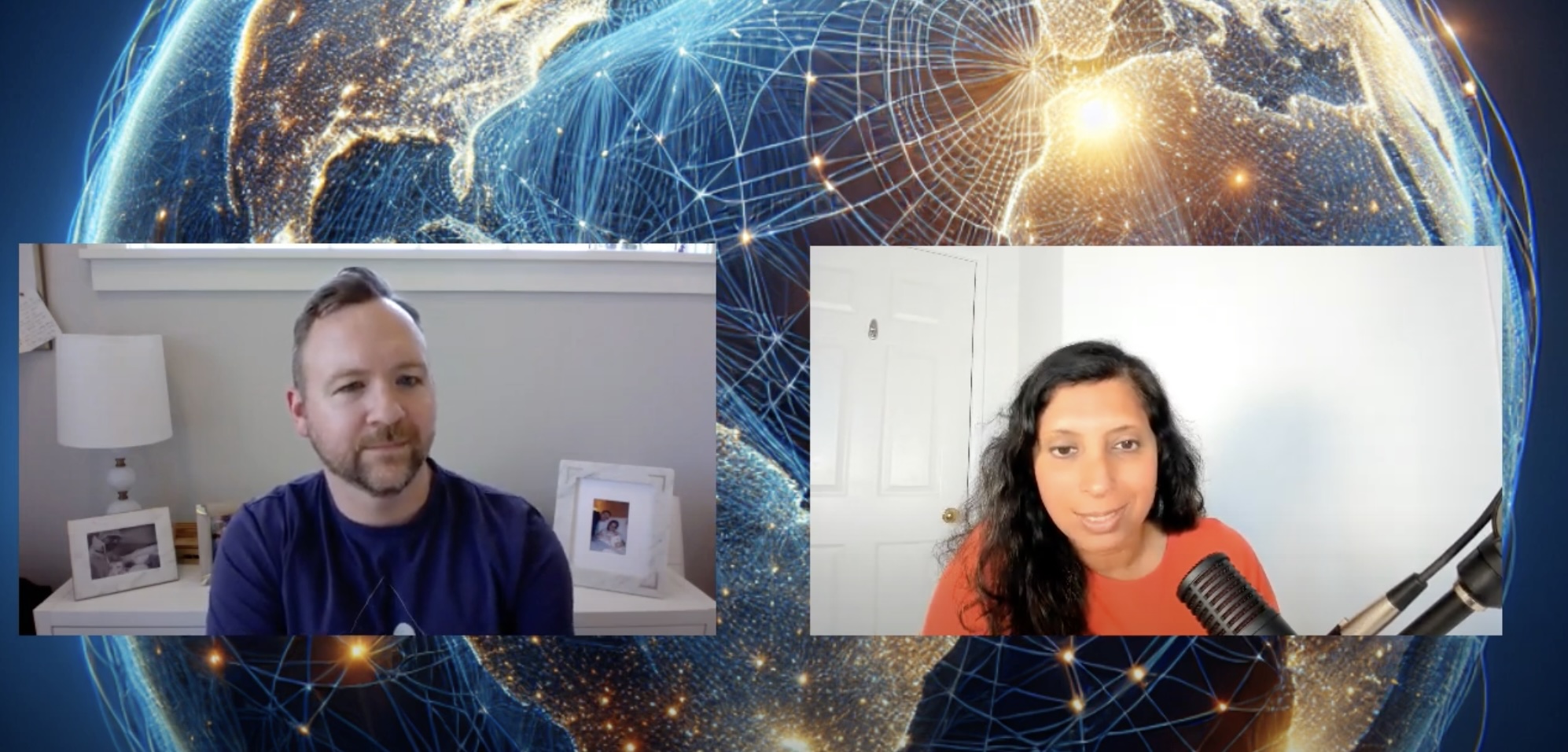
Image Credits
Google image: https://www.nextgov.com/emerging-tech/2017/10/secrets-googles-moonshot-factory/141664/
Image of woman working with tech: AI generated