

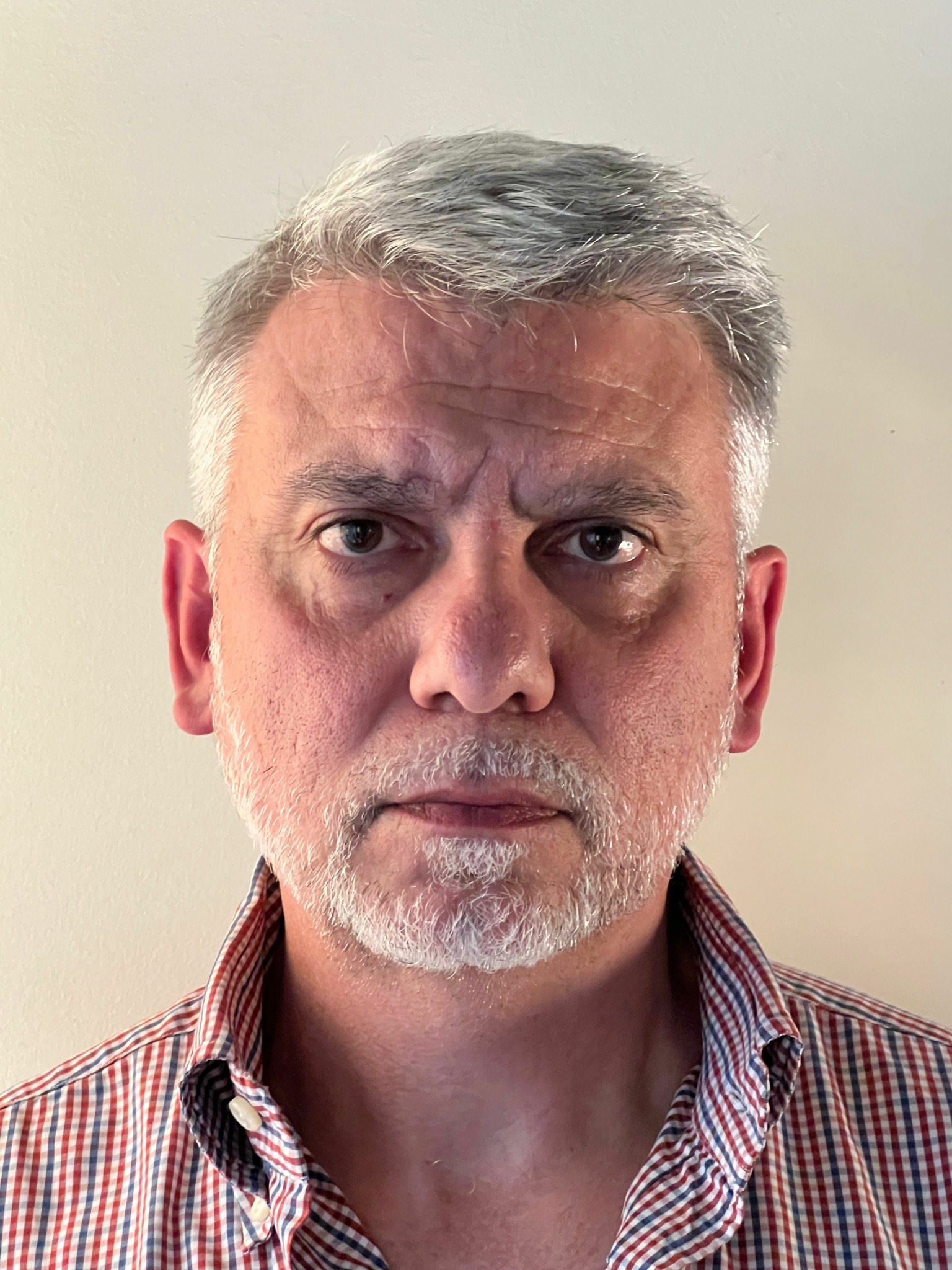

We recently connected with Joe Hawke and have shared our conversation below.
Joe, appreciate you joining us today. Let’s talk about innovation. What’s the most innovative thing you’ve done in your career?
It’s certainly true that innovation tends to be portrayed as synonymous with technology. Most of my career, I have been attracted to middle-market industrial businesses, the kinds of companies where skilled technicians do things like bend metal and turn wrenches. Within that category, my primary focus has been on fixing, flying, and financing helicopters, not so much for individuals as for mission critical applications, like medevac, law enforcement and utility operations (gas pipeline and electrical grid patrol). While helicopters themselves are highly engineered products, I am not an engineer or involved in innovating the helicopters themselves. Instead, my efforts at innovation have been focused on transforming the industry itself. My best example is my involvement with an air ambulance company based in West Plains, Missouri, called Air Evac Lifeteam. They had a unique model designed to serve rural communities that did not have access to trauma centers within the so-called “Golden Hour,” for life- and limb-threatening injuries. By partnering with Air Evac and giving them access to capital, we were able to take that business and create a market leading national business, Air Medical Group Holdings, which ended up being acquired by Bain Capital and, subsequently, by KKR. After that, I thought there might be the same kind of opportunity to do something similar with helicopter maintenance, repair and overhaul (MRO), as there is no coast-to-coast national brand in the category, and I believed that concept could be combined with helicopter leasing, similar to the model that we see in automotive dealerships. Ultimately, that plan failed, for a bunch of reasons, but I learned a lot in the process. I am now working on a new platform with sponsorship from a New York-based infrastructure fund that is focused on protecting the nation’s infrastructure, both through utility (gas and grid) operations, as well as aerial firefighting.
Great, appreciate you sharing that with us. Before we ask you to share more of your insights, can you take a moment to introduce yourself and how you got to where you are today to our readers.
I started my career the early 1990s in commercial banking, which was not my original plan when I went to college. I had been a philosophy major, and I always thought I would go to graduate school and become a professor. Instead, I concluded my poverty would not save the world, and, instead of applying to graduate schools, I decided to get a “real” job. Since there was a recession at the time, I felt very fortunate to get the job I got, which was as a Credit Analyst in a formal commercial credit training program at a bank in Philadelphia. I really enjoyed that work, but ultimately I was interested in a more entrepreneurial setting. Banks are, after all, fairly bureaucratic. Through a fortuitous confluence of events, I was able to join a small venture capital fund as an associate in 1995, and in 1999, I co-founded another small business investment company (SBIC), which is a designation from the U.S. Small Business Administration. In 2001, I ended up returning to the firm I had joined in 1995, this time as a partner, and in January 2002, I led our first investment in a helicopter company, which ended up being acquired by Sikorsky, when it was still owned by United Technologies (now it’s a subsidiary of Lockheed Martin) in 2005. Although I was still a generalist, I immersed myself in the helicopter industry, and the Air Evac deal was the culminating transaction of my time at that partnership. In 2007, I decided to go out on my own and become an entrepreneur and an independent sponsor, but I continued to focus on helicopters that entire time, and I have bought and sold numerous small businesses in the helicopter industry at this point in my career. For over twenty-years now, I have lived at the intersection of the helicopter industry and the private credit and capital markets, and that is probably what most sets me apart from others.
In terms of what I am most proud of, while it has sometimes been a rocky road, and the helicopter industry has had rough and tumble aspects to it, I have always done my best to put my employees first, even at my own personal expense. While the objective in a business is to make money, ultimately, business is about relationships, and relationships are with other people. I really do believe that you reap what you sow, and I have done my best to do right by other people in the belief that that goodness will come back in the future, even if you cannot see exactly how in the moment.
Can you talk to us about how your side-hustle turned into something more.
My “side hustle” is to develop a career as an author, now in my mid-fifties. As I mentioned, I had been a philosophy major, and when I was in my late teens and early twenties, I did a lot of writing. I did a lot of writing in business, too, but none of it was in the category of creative writing. It is still story-telling, but just of a different sort. In any case, I decided to start writing again because, as I was becoming an empty nester, I had more time than I did earlier in my career, and when my kids were younger and all that. Some of the writing builds upon pieces I had started thirty years earlier, which, shockingly, I was able to find and hold onto, notwithstanding multiple moves, and divorce and remarriage. In fact, some of the pieces I only found because of my last move, so maybe that was all meant to happen that way. In any case, a lot of them were short stories, and I decided that maybe there was a compelling narrative arc to a collection of a dozen stories that I assembled from what I had either newly written, or previously wrote, edited and modified, and I submitted the collection to Pegasus Publishers earlier this year. To my very pleasant surprise, they were interested. That collection is due out next year (early 2025) under the title On Earth As It Is In Heaven, from Pegasus’s imprint Vanguard. I am very excited to see how that is received by the distribution channels that Pegasus sells through.
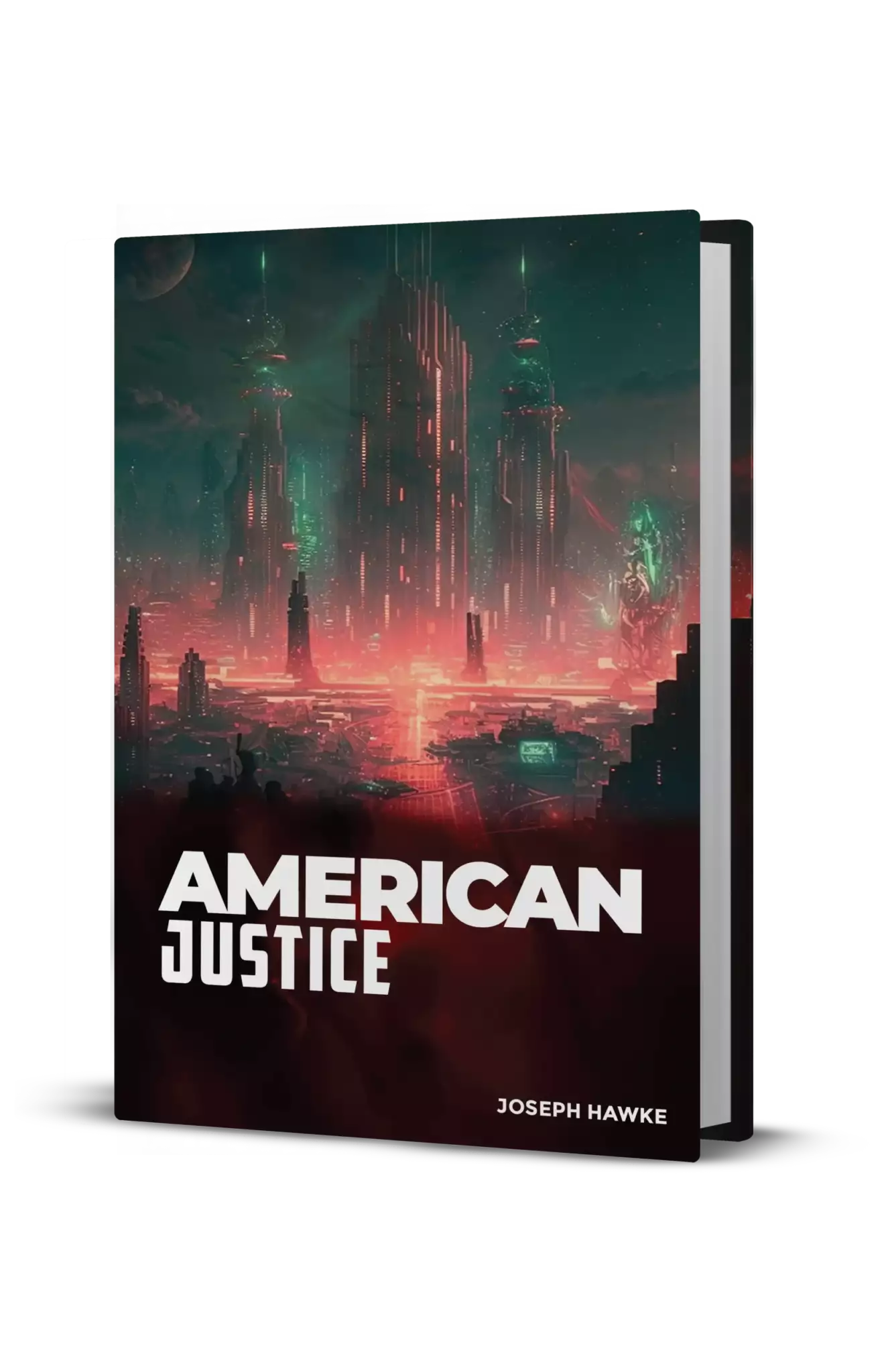
In the meantime, I decided to take a short story I had written called “In My Defense” (not part of the On Earth As It Is In Heaven collection) and build upon it to create a novella called American Justice, which is more of a satirical parody of contemporary American society. I decided to self-publish that on Amazon in the summer of 2024. I wanted to get it out quickly because it made a prediction about the 2024 election outcome (which turned out to be accurate), and, although I had no idea at the time about the case, the plot in some ways mirrors the recent Daniel Penny case in New York.
Is there mission driving your creative journey?
I think there is real value to storytelling, and art in general, and, after a thirty-plus year career in business, with which I remain active, I certainly have a lot more stories to tell. I also care deeply about the notions of freedom of thought and speech, and I think that there is a lot about human consciousness that, scientific and technological advancements notwithstanding, we still don’t know, and that perhaps we will never know, maybe because it is just unknowable. I also think that there is something to the notion of connectedness, and I think technology, in particular the internet and social media, has brought some tangibility to that idea, but perhaps not in the healthiest way. I often think that the term “social media” is an oxymoron, since most social media fosters anti-social behavior, not just in the sense of what gets posted, but in the activity of the posting, or the death scrolling. It is fundamentally a solitary activity, not inherently social. Sort of like the term “social distancing” during the Covid-19 outbreak. It is actually “physical distancing” or creating “anti-social distance,” so I spend a lot of time thinking about language, how it gets used, and how that, for better or for worse, is harnessed to shape thinking, public discourse and the like. I guess my particular goal would be to make people think, and hopefully to do that in a way that is novel.
Contact Info:
- Website: https://americanjusticebook.com/