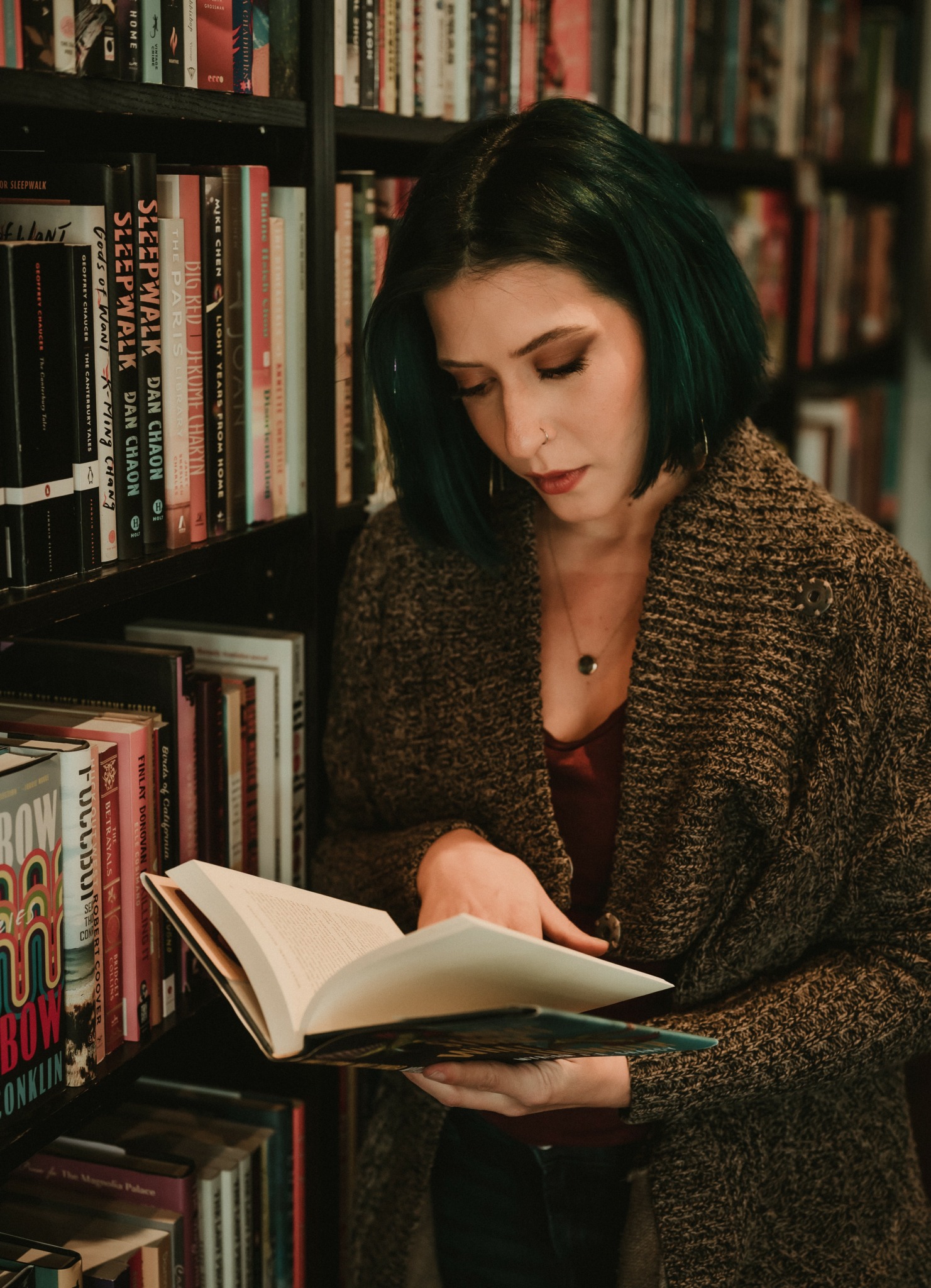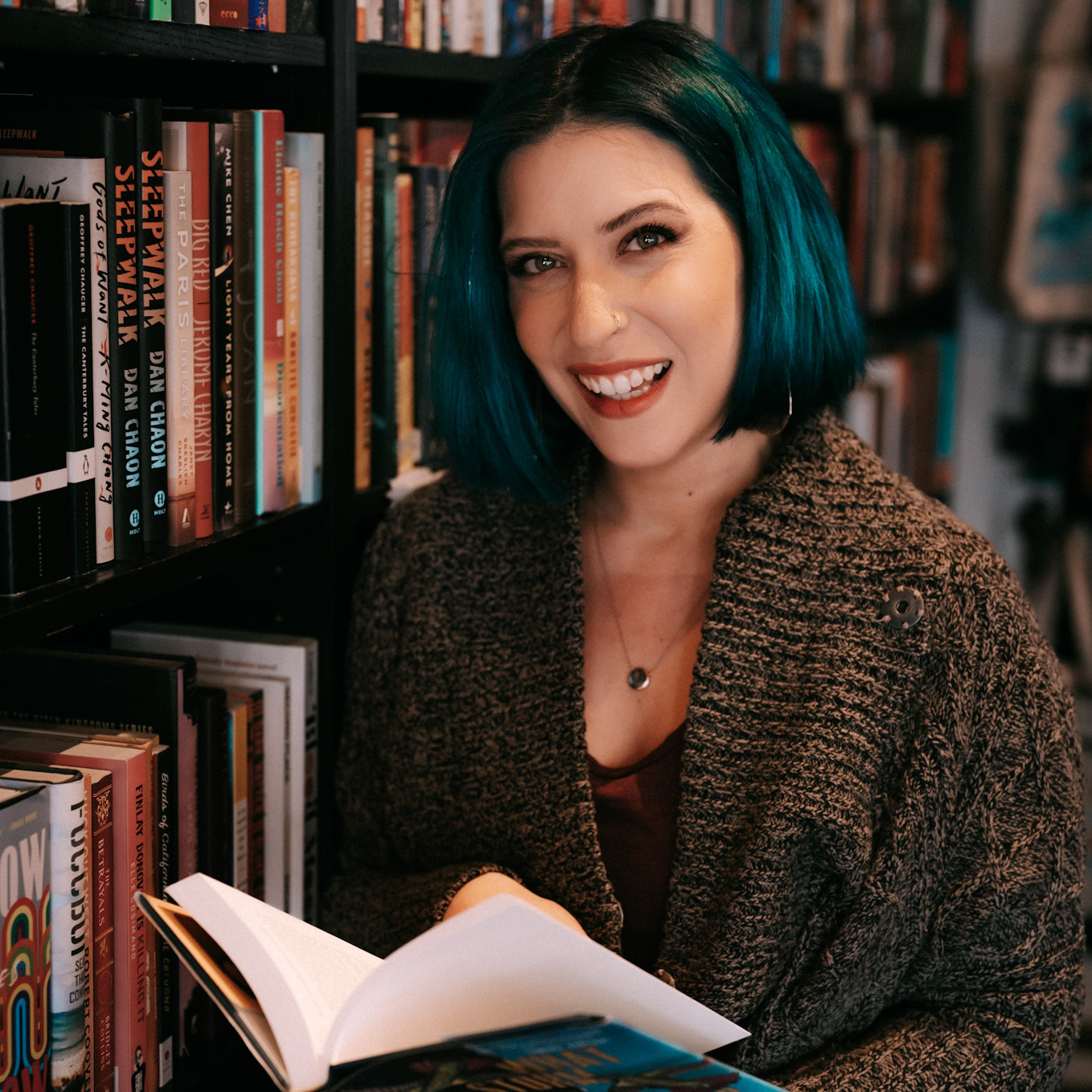

We recently connected with Emily Krempholtz and have shared our conversation below.
Emily, thanks for taking the time to share your stories with us today Have you signed with an agent or manager? Why or why not?
Finding a literary agent is like fishing—you have to make sure every condition is right. If you’re “fishing” in the right spot for the type of fish you want, but your bait (the book you wrote) isn’t what the fish are looking for, it doesn’t matter how many of them are in the water, they’re not going to bite.
It took me years to perfect my fishing technique.
When you’re a writer going into traditional publishing, your process often looks something like this:
1. Write the book
2. Edit the book
3. Edit the book again, ad nauseum, until it’s as perfect as you can possibly get it on your own
4. Query literary agents with a polished query letter, sample pages from your book, and plenty of research about which agents are looking for what you have to offer
5. Eventually—if you’re lucky and work very hard—sign with a literary agent
6. Work with your agent to submit your book to editors at publishing houses in hopes of getting an offer for a book deal
But in between all those steps are more steps, many of which lead you back to previous steps like the world’s most complicated flowchart.
I started querying literary agents in 2020, and it took hundreds of queries over the course of four different books before I signed with my agent in April 2024. During that time I honed my craft, wrote new books, and—here’s the important part—kept going even in the face of rejection.
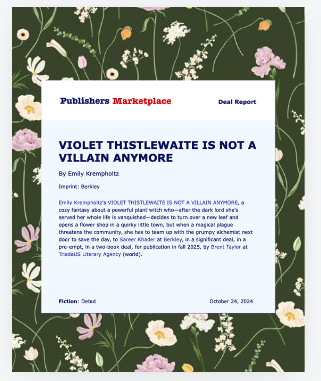
When I wrote my debut novel, VIOLET THISTLEWAITE IS NOT A VILLAIN ANYMORE, I had decided to self-publish it because I felt this book would be a good launch point for me to get my name out there and then try again for traditional publishing later. But a dear friend of mine read the book and said, “I think you’d regret it if you didn’t at least submit this to a few agents.”
I took her advice and sent my query letter and sample pages out to a couple of my dream agents, purposely keeping my sights high and my expectations low. To my delight, only a few months later, I was sitting on multiple offers of representation. Suddenly, after years of rejection, I was the one who had the power of choice (cue evil laugh here), and I had some really amazing options to choose from.
I ultimately chose my agent over the others who offered because he gave me the best sense of confidence in his business savviness and his ability to sell my book quickly and well—promises he then delivered on, as we sold my book a little over a month after I signed with him. I saw in him several things I hope he saw in me too: a hunger for opportunities in the industry, an understanding of the craft of writing and the business of publishing, a powerful drive to work hard, a willingness to learn and listen, and of course, a strong interest in the content and genre of my books.
Having an agent means having a teammate in an industry where most of your work is done alone, and that teammate also happens to be well-connected to a network of people who can get you where you’re trying to go. Because literary agents earn a commission from their clients’ book deals and advances, an author’s success is the agent’s success, and they’re just as invested in your wins as you are.
Great, appreciate you sharing that with us. Before we ask you to share more of your insights, can you take a moment to introduce yourself and how you got to where you are today to our readers.
For years, I’ve been an editor, book coach, and ghostwriter, and I’m thrilled to add “author” to that list with the release of my debut novel, VIOLET THISTLEWAITE IS NOT A VILLAIN ANYMORE, next fall with Berkley Publishing.
As an editor, coach, and ghostwriter, I work alongside other writers on their books to guide them through the ideation, drafting, revisions, querying, and publishing processes of bringing a book to life. I’ve worked with genres from historical fiction to how-to business guides, from memoir to mystery, and am so proud to have been a part of my clients’ journeys as they achieved their goals and went on to land agents, publish their books, win awards, and even hit bestsellers lists like USA Today, Forbes, Publisher’s Weekly, and the LA Times.
As an author, I write across genres, but primarily in fantasy and romance. My debut book is a cozy fantasy romcom about a witch who leaves behind her life of working for an evil supervillain to open a flower shop in a small town, where she falls in love with the alchemist next door and tries to start over—until her sordid past comes knocking and she’s forced to confront whether villains can ever truly grow their own happily ever after.
I’ve wanted to be an author since I was a little kid, but getting here was a long and winding road. For as long as I can remember, I’ve been a big reader, gobbling up pretty much any book I could get my hands on and trying my hand at telling stories of my own. I went to college for journalism because my parents thought it would be more “practical” than creative writing, and worked a number of odd jobs over the years, including working in telecom, at countless bars and restaurants, teaching horseback riding lessons, driving for ride-share apps, and even working at a chocolate shop—but I never forgot about my ultimate goal of becoming an author.
About a decade ago now, I started freelance writing for blogs and websites, which quickly turned into editing, which eventually expanded into book coaching and ghostwriting. For the first time, writing was paying my bills—and it felt great. I spent every day helping other writers achieve their dreams, and as an added bonus, being drenched in story all day was helping me sharpen my own craft, which I used in my off hours to write my own books. (And let me tell you, after years of ghostwriting books with other people’s names on the cover, it’s been a THRILL to be in the publishing process of one that I get to put my own name on!)
This experience working with other authors and their books has given me a keen sense of the publishing landscape and helped me learn from my clients even as they learned from me. I’ve built incredible relationships with talented writers and had a front row seat to the ways their brains work—showing me firsthand just how different everyone’s writing process is from one another. That fascinates me, that writers start at Point A (a blank page and an idea) and want to get to Point B (a completed manuscript) but there are an infinite number of ways to get there. I’ve made it my goal in my work to help authors uncover the path that feels right to them, giving them space and support if they need to pivot and a hand to hold if they’re not sure which steps to take next. Working this way means no one feels like I am forcing a technique on them. Instead, it’s like I’m helping them try on clothes in the fitting room, bringing them more options until they find an outfit that makes them feel confident and ready to take on the world (in this case, their writing goals!).
I’m so immensely proud of what my clients have accomplished over the years, and through working with them, I’ve honed in myself (and them!) an ability to work under deadline, to change course whenever necessary, to see projects through to completion even if they are hard, and above all, how to strategize a creative process and see it from different angles. I believe this has taken me far in both my professional career and my own author journey, and I can’t wait to see where this winding path leads me next.
Is there something you think non-creatives will struggle to understand about your journey as a creative?
Books are such a wild endeavor, because you can look at a book on a shelf or in someone’s hands and think you understand how it came to be, but most people grossly underestimate the sheer magnitude of the work, time, and people involved.
A traditionally published book that comes out tomorrow was probably purchased by the publisher 1-2 years ago. During that time, they edited it again and again, collaborated on the cover and interior design, worked on marketing and publicity strategies and started enacting them months in advance, and passed the book through countless hands making sure it was ready.
But back up even further. A book that’s bought by a publisher had to be written, a process that can take anywhere from a couple of months to a couple of decades, depending on the writer. In many cases, it probably wasn’t the writer’s first attempt at writing, even if it is their first-published book, which means they spent an additional number of years honing their craft and cutting their teeth on other projects before they were ready to write the book that was ready to be published. It had to be queried to literary agents and go on submission to publishers, both processes that take months or years on their own.
What all of this means is that the book you’re holding in your hands has had years and years of hard work and skill poured into it. It has had dozens of pairs of eyes on it in a professional capacity. Someone—either the publisher, or the author if the book is independently published—has made a significant financial investment to get that book into your hands.
Suddenly that book you’re holding feels a whole lot more substantial.
Every writer has a story about someone who comes up to them at a party and says, “You’re a writer? You know, I have an idea for a book!” But ideas are a dime a dozen. You could give fifteen writers the exact same idea and send them off to write it and they’d come back with fifteen very different books.
Books are built not with ideas but with hard work and persistence and time. Authors are always learning more about storycraft from the books we read and the movies and TV we watch and the games we play and the people we interact with, filing those findings away in some massive internal folder in our brains. Most of us at some point are squeezing our writing practices into the cracks of our lives, jotting down words for five minutes on a work break or sacrificing an extra hour of sleep to start building a good writing routine. We have to build discipline and persistence, even when writer’s block strikes and writing a book doesn’t feel fun anymore. We have to build resilience, even when agents and publishers are telling us “No thank you” and we realize we have to start over. We have to build patience when waiting for our edits to come back and marketing savvy when it comes to figuring out how to get our books into readers’ hands.
All of this comes from passion, yes. Ideas, yes.
But moreso, it comes from hard work and time spent.
Sometimes I hear the phrase “overnight success” and it makes me laugh, because when it comes to any creative endeavor, not just writing, there’s so much going on behind the scenes that the average consumer never even thinks about.
Writing a book is a labor of love. But the thing I always try to make people understand—and this goes for both readers and people thinking about trying their hand at writing—is that it is indeed a labor.
But that doesn’t mean it’s without its rewards.
For you, what’s the most rewarding aspect of being a creative?
Being a writer means you’re constantly coming up against challenges, but it also means you’re constantly finding ways to solve them, and those little wins feel so great when you stop and recognize that it means you’re growing as an artist. That sense of accomplishment, to me, is so rewarding.
It can also be really fun to reward yourself for those wins. Some of my biggest moments of celebration as a writer come when I reach milestones. I generally take myself out for breakfast or a fancy coffee when I type “THE END” on a first draft. I popped a bottle of champagne when I signed with my agent. I treated my partner and my best friend to dinner when I got offered my book deal. It makes those moments feel real, and helps me get through the moments that aren’t so much fun.
But in a greater sense, I think the most rewarding part about being a writer is seeing my vision slowly come to life. It’s jotting down some dialogue that makes me chuckle, or nailing a description that makes me stop typing and think, “Damn, that came from my brain?!” It’s looking at a revised manuscript and remembering what a mess the book was when I first wrote the rough draft, and recognizing how far I’ve come in bringing this world and these people—who previously existed entirely in my head!—to life. Like, come on! I get to make stuff up for a living! That’s so cool!
Writing is magic, and I strive every day for sorcery.
Contact Info:
- Website: https://www.emilykrempholtz.com
- Instagram: @embakesbooks_
- Other: Tiktok: @writersofrohan
Bluesky: @writersofrohan.bsky.social
Newsletter: www.penpalsforwriters.substack.com