



Alright – so today we’ve got the honor of introducing you to Erik Liberman. We think you’ll enjoy our conversation, we’ve shared it below.
Erik, thanks for taking the time to share your stories with us today Can you share a story about the kindest thing someone has done for you and why it mattered so much or was so meaningful to you?
The greatest gift you can give someone is a chance.
I’m lucky so many remarkable humans have done that for me, but one stands head and shoulders above the rest: Harold Prince.
“Hal,” as he was affectionately known, was a legendary director-producer, the recipient of 21 Tony Awards, a Kennedy Center Honor, The National Medal of Arts, and many other recognitions. I offer this because so many artists I meet today are unfamiliar with his legacy — but should be. After all, he really invented modern musical theatre. If you think of any damn near any show you’ve seen, from “West Side Story” to “Sweeney Todd,” “Company” to “Cabaret,” “Fiddler…” to “Follies” to “Phantom…” Hal had a hand in it!
When I entered The Kurt Weill Foundation’s Lotte Lenya Competition for Singers in 2005, Hal was a judge. He told me I could do anything, then gave me a shot at it by hiring me for “LoveMusik,” his last original musical on Broadway — and my first. Working with a roomful of legends was a master class on every level. After that, I must’ve gotten 10 jobs through Hal, including my first gig directing (the “Fiddler” 50th anniversary celebration at Town Hall) and “The Band’s Visit,” for which he hired me as the original “Telephone Guy.” Breathing life into that show’s finale, “Answer Me,” was just about the greatest honor imaginable.
But more than anything tangible, Hal endowed me with the spirit of paying it forward and taking chances on others. There is a culture of safety in our world today, of investing in what is familiar. Hal shook me of that. He also taught me to honor to every correspondence. I’m amazed how many of us have forgotten what the simple courtesy of a reply can do, insofar as acknowledging we exist within community and that, with any luck, we’ll be working in that community for years to come. Finally, he taught me to be curious about where things come from — their provenance — which is why I’m grateful for this question.
Curiosity and possibility: those are two of the attributes I inherited from the great Hal Prince.
Erik, before we move on to more of these sorts of questions, can you take some time to bring our readers up to speed on you and what you do?
I’ve been a working artist since I was five and probably had the urge to be one before then but couldn’t tap the medium!
My work as an actor has taught me the value of empathy, and that has always worked in tandem with writing.
I taught myself to type when I began to act, building bridges where I saw none and reaching out to potential mentors as well. In fact, delivering a return on their investment in me upholds what I offer others today.
Through acting and writing, I began to understand that what really draws me is telling stories to reveal truths. Working as a director and producer allows me to shape stories and align collaborative components to support their unfolding.
Whether paying those values forward by facilitating master classes at universities, coaching Fortune 500 executives, or mentoring private clients to unearth tangible means of living their lives as works of art — no matter the medium — my work remains tethered to a primary spiritual aim, which is to leave things better than I found them.

Is there mission driving your creative journey?
I’ve been on a kick for a while to explore “the story behind the story.”
Two projects I’ve been championing — a television pilot and a multi-media excavation of my 30-year search for a dead movie star — have forced me to live with the “why” behind those ventures — and having the courage to sit with that “why,” versus being motivated by fear, is what reveals the jewel behind our creativity.
The reason, I think, work comes and goes so quickly these days is because we chase trends instead of being willing to sit with the discomfort of “not knowing” and seeing what kind of magic our leaning in — and being met by the spark of true “source material” — can yield.

How did you build your audience on social media?
I saw a quote I liked recently: “My heart is my brand.”
My best advice for social media — and I should qualify this by saying that I am by no means an “influencer” but do like putting forth content which reflects my values — is to build a life which is rich in experience, in context. Travel, ask questions, tilt your nervous system from certainty to curiosity on a regular basis. Let your feed reflect not what you think others will find impressive, but what makes you distinctly you — that is, your world view — which should be ever-evolving. Sharing authentically from that space will leave room for others to do the same, and that “breathability” is what draws me to content — I can find myself in it.
Also… save something for yourself! Not everything is meant to be broadcast. Just as seeds need to live in darkness before meeting the sun, have faith in gestation. I’ll take Jeff Olson’s lead here in considering the elegance of the water hyacinth: just because we didn’t notice it growing beneath the surface today doesn’t mean we won’t find it canvassing the pond tomorrow.
Contact Info:
- Website: https://www.erikliberman.org
- Instagram: @erikliberman
- Linkedin: https://www.linkedin.com/in/erik-liberman-030958232
- Youtube: Check out Moth stories, comedy videos, and singing by searching under “Erik Liberman” on YouTube.
- Other: WIKIPEDIA: https://en.wikipedia.org/wiki/Erik_Liberman
SPOTIFY: https://open.spotify.com/artist/4jXfZAiIgS7oM4Bz87I5eV
IMDB: https://www.imdb.com/name/nm0508806/?ref_=fn_al_nm_1
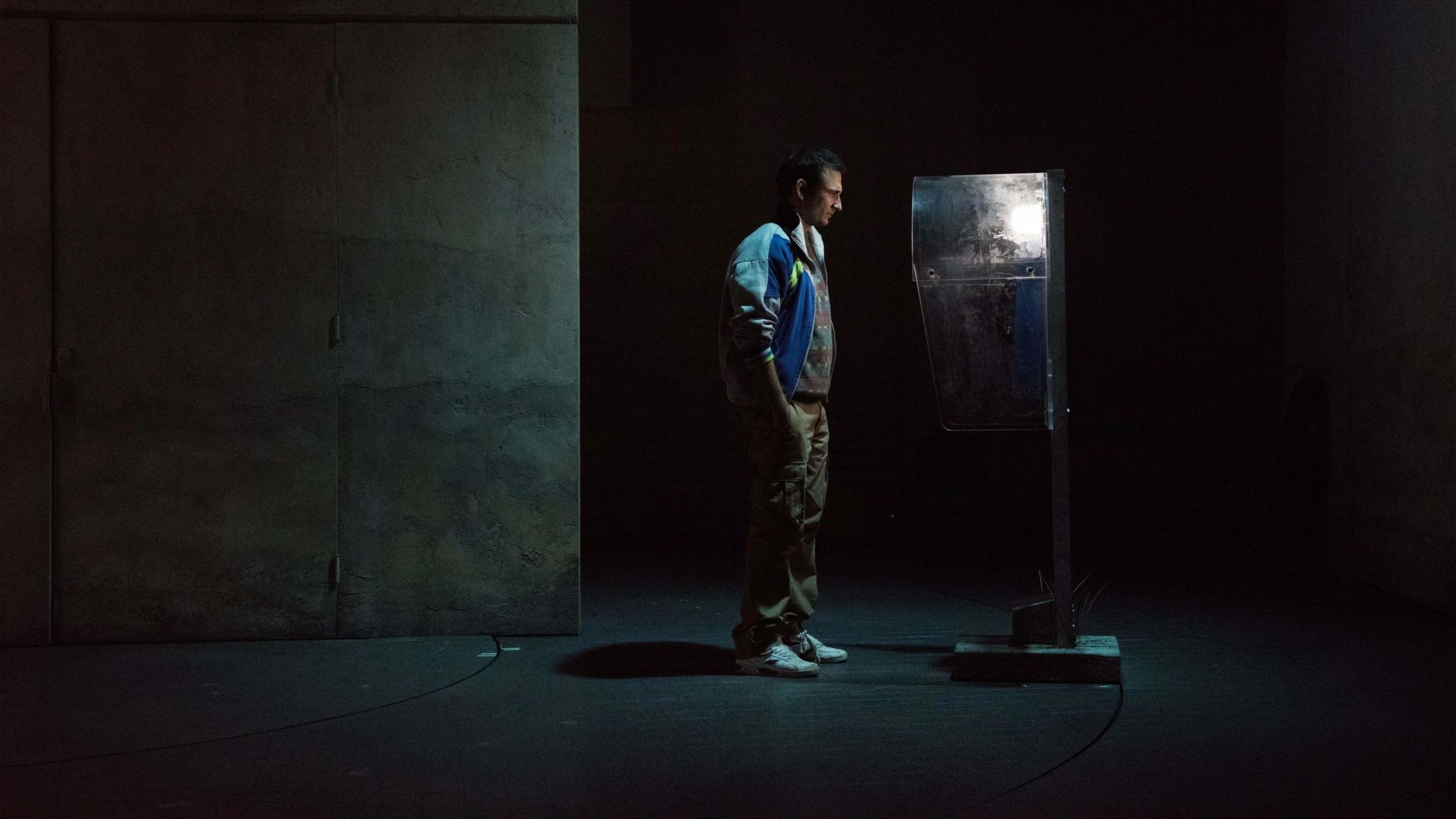
Image Credits
Nogen Beck, Carol Rosegg, Ahron R. Foster, Kevin Berne