



We caught up with the brilliant and insightful Karly Thomas a few weeks ago and have shared our conversation below.
Karly, thanks for joining us, excited to have you contributing your stories and insights. Can you talk to us about a project that’s meant a lot to you?
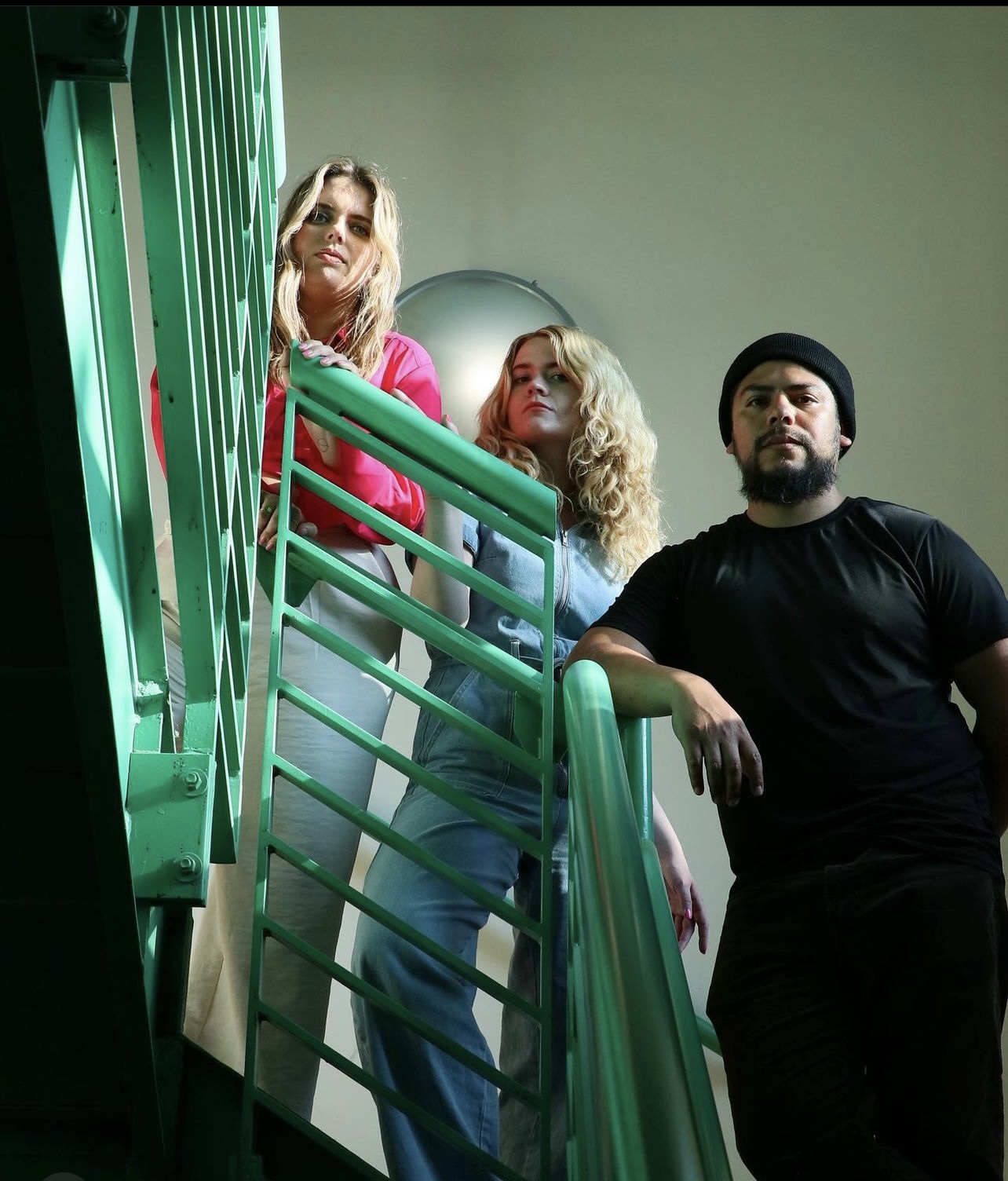
In 2021, I met Ava Fojtik and Aaron Higareda as we all began UC Riverside’s MFA in Creative Writing for the Performing Arts program. It turns out we were fated to meet each other–in 2022, we would be founders of the Inland Empire based theatre company AKA Productions. Our founding manifesto is built on a commitment to championing innovative, thought-provoking work; creating compassionate, enriching, and inspiring spaces (both in our rehearsal rooms and performance venues) for artists, students, and audiences alike; and fostering a strengthened sense of community within UC Riverside and the greater Inland Empire.
The subject material of the work we’ve produced–sometimes written by us, sometimes written by local writers we are eager to platform–has varied drastically, but we have always maintained an interest in dissecting the current moment (in wildly theatrical fashion, of course). In my own writing, I am so drawn to the well of pop culture that is largely recognized on the macro level, and how it is always indicative of the current state of our politics, our economics, our societal values: deeply held convictions that we pretend aren’t present in our favorite pop album or reality TV show.
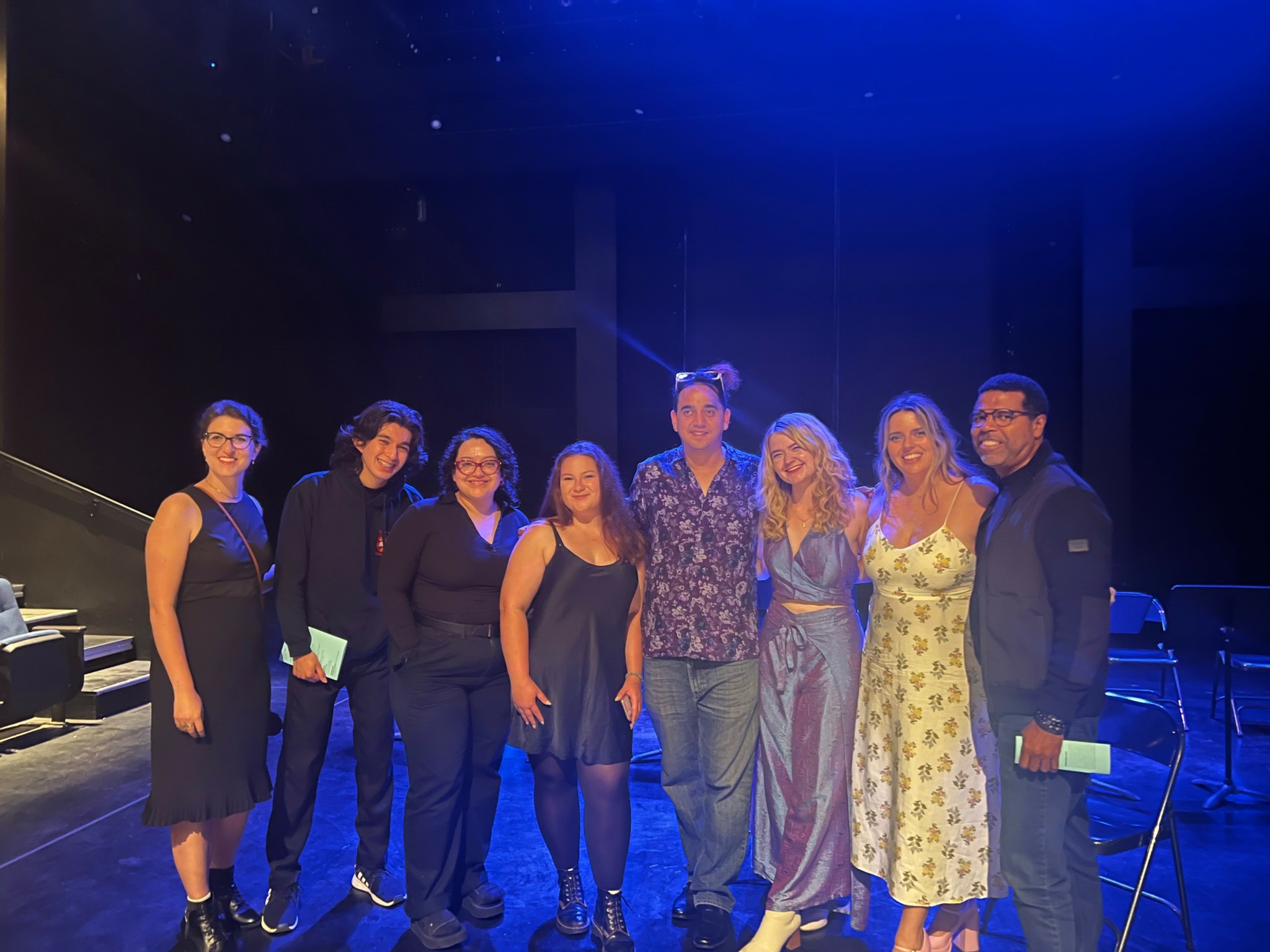
Therefore, I’d have to say my most meaningful project with AKA Productions was in the June of 2023, when, via the New Works Festival produced in tandem with UC Riverside, I had the opportunity to showcase my script entitled “Lizzy: A Totes Woke Rendition of Lysistrata”.
Lysistrata by Aristophanes has been a permanent fixture of Western Theatre ever since it occurred to us to look to the Greeks for inspiration. While I do concede that, at its point of origin, the play was progressive in its anti-war rhetoric and suggestion that women can be powerful agents of political change, its agenda has become stale as time unlocked the oh-so-crazy revelations that a woman’s sexuality is her own (and not something being withheld from “its rightful owners”), and that an aggressive barrage of sexual assault jokes isn’t so funny after all. I can see why a gesture of activism this–seemingly–simplistic would be appealing. After all, versions of it had permeated in contemporary society (such as with the 4B movement in Korea). This got me thinking: in which circumstances would the injustice become so desperate, that we would be tempted to pursue such an ill-fated method of resistance? Well, with June 2023 marking one year since the overturns of Roe v. Wade & Planned Parenthood v. Casey, I confess the allure of Lysistrata’s ways had never felt stronger.
The events of “Lizzy: A Totes Woke Rendition of Lysistrata”, therefore, kick off when Lizzy, an eager & well-intentioned white poly-sci student, learns about the leaked draft of the Supreme Court decision for Dobbs v. Jackson. Lizzy takes to social media and announces that until safe, legal access to abortion is guaranteed for all, her only sexual partner will be her vibrator Gloria…and she urges the rest of America’s women to follow suit. All seems well for Lizzy and her career as an “influencer-activist”, until people start asking questions. Are queer couples also supposed to abstain? Are the various medical needs of the trans community included in Lizzy’s litany of hashtags? Will she continue to refuse sex until the working-class & people of color have the same quality of, and access to, these resources? As the play progresses, Lizzy transitions from a mere adaptation to something more jagged, more biting, and far more critical—calling into attention my aforementioned qualms with the original source material, as well as with the historical hypocrisy of both white feminism and social media slactivism.
The script is still deep in its process of revision; I am still hammering out exactly how to land the moment Jane Fonda throw a water balloon at Tucker Carlson, and how to ensure it responsibly endures in the face of our bitter, real-life fight to protect universal reproductive healthcare. But this reading was, by far, the loftiest literary project in which I have ever had the privilege of participating. Never before had I been as rigorously devoted to a message as urgent as Lizzy’s. Never before had I stood in such awe of so many gifted artists–from actors to directors to production crew members–all amassed on behalf of words I had written. And never before had I had such faith that AKA Productions, a company for which I still can’t believe I get to call myself a founder, would continue to soar to incredible heights.
Karly, love having you share your insights with us. Before we ask you more questions, maybe you can take a moment to introduce yourself to our readers who might have missed our earlier conversations?
In the Fall of 2021, I began pursuing my MFA in Creative Writing for the Performing Arts at UC Riverside. I was coming off of four years in New York, working as the Director of Creative Development for the theatrical production company OHenry Productions, and four years at the University of Michigan before that. Moving to Riverside, and therefore back to my native California, was an unexpected pivot in the career plan I had built up until that point, as I had been hellbent on establishing myself in the theatre industry in its most iconic American city.
My tenure in New York had also been unexpected, though–while I enjoyed the dizzying, ambitious work that came with tending to OHenry’s robust portfolio new work, I had more or less abandoned my own literary career. It’s a life so many writers know so well: the anxiety of paying bills, the drought of sufficient writing time, the paralyzing fear of rejection, the comfort that comes with routine (any routine, whatsoever). But after so much time away from this art form that I loved–and this art form in which, frankly, I knew I had a singular talent–I could feel the withdrawal having an almost metaphysical effect on me.
It would be José Casas, associate professor of playwriting at the University of Michigan and my mentor, who would insist I apply to UC Riverside’s for my MFA. He had an immense admiration for–and decades long friendship with–a playwriting & hip-hop theatre professor there, Rickerby Hinds, and was therefore able to regale me with the intricacies of the program. I left our meeting pretty convinced UC Riverside would be a good fit for me…I had no idea it would transform pretty much everything about my developing artistic career (though I can now confirm José understood exactly what he was doing).
It was also the Fall of 2021 where I met two other MFA playwrights in my cohort, Ava Fojtik and Aaron Higareda. We sat together in our First Years’ Orientation, cracking each other up with our ice breaker fun facts & wowing each other with our preliminary ideas for scripts. After the orientation, we went for what I thought would be a thirty minute coffee. But two and a half hours later I was still hungry to hear more about Ava’s exquisite, hyper articulate use of linguistic absurdism, as a way to explore our most daunting human truths. I was desperate for more about Aaron’s experimentation in surrealist metatheatricality, via an autobiographical trilogy of epic narrative proportions. I craved more with these two writers whose literary philosophies blew my mind; whose commitments to responsible, community-oriented artistry invigorated me; whose aspirations were fearless and unapologetically plentiful.
It would eventually be this synergistic exchange of ideas, combined with an independent study we built for ourselves the next quarter called “Playwrights Turned Producers”–in which we simultaneously wrote and produced a staged reading series of brand new work over the course of ten weeks–that we realized of just how much we, as a collective, were capable. We thought we were merely building our debut as first year MFA playwrights. We would swiftly discover, however, we were building something that far outweighed our individual contributions.
After the readings Ava, Aaron, and I separately came to the same conclusion: we could produce something like this again, and we could work towards production of even larger scale. We could build the context for our own artistry, effectively protecting us from that writers withdrawal we all endured prior to our time at UCR. We could provide the same for the artists in the Inland Empire–a community with just as much talent as the iconic New York or LA or Chicago, but not necessarily the resources. And we could do this all with institutional support from the university that brought us together, and those like Rickerby Hinds who unequivocally believed in us. Thus a theatre company, AKA Productions, was born. Since this inaugural reading series, AKA has produced four more theatrical presentations of new work: exclusively written us or by a group of roughly a dozen local writers we set out to platform, and performed, directed & designed by Inland Empire based artists.
It is Fall of 2024, and Ava, Aaron, and I have all officially received our MFAs. What is next for AKA Productions, you may ask? Stay tuned: our collective aspirations have only become more plentiful, more fearless, and more unapologetic.
Do you think there is something that non-creatives might struggle to understand about your journey as a creative? Maybe you can shed some light?
I think a fallacy that has been largely destabilizing, industry-wide, is this notion that you aren’t “allowed” to identify as your fill-in-the-blank profession until you’ve achieved a certain level of acclaim–or, even more crassly, a certain amount of generated income. Of course I’m sure this fallacy plagues folks in several industries beyond the creative, but this dynamic has been pervasively normalized amongst professional artists. I am definitely still what you would call an early-career writer; my work is not yet the primary source of my income. Does that mean, when I asked what I do for a living, I should exclude this art form I consider my life’s calling? Or should I offer a middling “I’m trying to be a writer”?
If you would have asked me this four years ago, I would have said yes.
But a personal success I claim as a result of cofounding AKA Productions has been an empowerment of identity. I am a writer because I say so–I wanted my work produced, so I saw to its production. I’m not waiting on my tax returns, or some award, or the theatre industry’s institutions of prestige to validate me as such. In fact, I have really come to appreciate that arenas such as Broadway are not, in and of themselves, metrics of artistic quality. Instead, they merely reflect where professional theatre leaders have decided to predominantly invest their resources. Don’t get me wrong, I worked on Broadway and Broadway-adjacent properties for four years. I appreciate there is a marketplace and an audience for the titles that are deemed “fit for Broadway”…I’m just not writing that kind of work right now. And that doesn’t compromise my status as a writer.
So I ask non-creatives–and frankly also creatives, who may be doubting themselves–to try and understand: there is far more than Broadway, or a Pulitzer, or HBO, or the New York Times Bestsellers List for writers to aspire to and consider success. There is more than one path to self-actualization. There is more than one way to build life as a creative, of any discipline. My advice? Just take a creative at their word when they tell you who are. And my advice if you suspect you might be a creative? The only criteria worth considering is if you can imagine life without the art form in question. If the answer is no: congratulations. You are a creative.
What do you think is the goal or mission that drives your creative journey?
A component of AKA’s founding manifesto I am especially proud of is a commitment to creating compassionate, enriching, and inspiring spaces for artists, students, and audiences alike–or as we shorthand refer to them, “ethical arts spaces”. For all of us cofounders, this is built on the idea that the quality of the work we’re creating is directly tethered to the quality of that creative environment (we’re not pulling any Stanley Kubricks, verbally abusing our artists for the sake of “authenticity” or whatever). In other words we are all hyper protective of the people we invite into AKA’s fold, be it production meetings, rehearsals, performances, or in any other way.
The dedication to building ethical arts spaces has three tangible tenants to it, inclusive of the actual content we are producing; the compensation, working conditions, and overall treatment of our cast & creative team throughout the rehearsal process; and the commitment to accessible, safe, and sensitive performances for all audiences. I know for a fact there are creative institutions that bristle at our prioritization of ethical arts spaces–that believe prioritizing the well-being of artists & audiences comes, at some point, at the sacrifice of the art itself. AKA has found, however, the ethical arts space does not make our work any less challenging or our community any less engaged.
For example, one of my scripts AKA produced was a One Act called “It’s All Just Noise”, a meditation on the genre of true crime & my outrage about how it gleefully inflicts trauma on its audiences via graphic and exploitative violence against women. It experiments with a lot of the genre’s tropes, in an attempt to discover if there is a way to tell a true crime story responsibly. Needless to say, director Kali Veach and I were anxious about what we were asking a) our actors to embody for the sake of an experiment, and b) audiences to absorb, without knowing each individual’s relationship to violence against women. We spent hours dissecting the script, finding moments that may hypocritically inflict the very trauma I have set out to indict. We thoroughly spoke with our actors and designers about safeguards they should take during rehearsal, and strategies about shaking the content off once they leave. All of our advertising for the presentation included thorough content warnings and the assurance that audiences would be welcomed back into the theater if they needed a break. Come the night of the presentation, the actors pushed their performances to new, provocative heights, and the audience flooded AKA’s inbox with feedback about how the subject matter deeply (and in some cases, shockingly) affected them. I am firmly of the conviction the actors delivered their stunningly provocative performances, and the audience garnered their deep, shocking insights because of our wealth of firmly set emotional boundaries–not in spite of them.
Whether the needs of our AKA community are physical, emotional, or financial, it will always be integral to Ava, Aaron, and I to honor them. Never will we take for granted the time and effort we are asking of our artists, professional or aspiringly so. Never will we underestimate how intensely any given theme or conversation may land with someone. We have said time and time again, we have more or less proven to ourselves that ethical arts spaces make for better theatre. But even if that weren’t true, there is no script or performance or opportunity for which it is worth sacrificing our commitment to these spaces, as well as the people that inhabit them.
Contact Info:
- Website: https://newplayexchange.org/users/20418/karly-thomas
- Instagram: https://www.instagram.com/a.k.aproductions?igsh=MzRlODBiNWFlZA==
- Facebook: https://www.facebook.com/profile.php?id=61556599054054
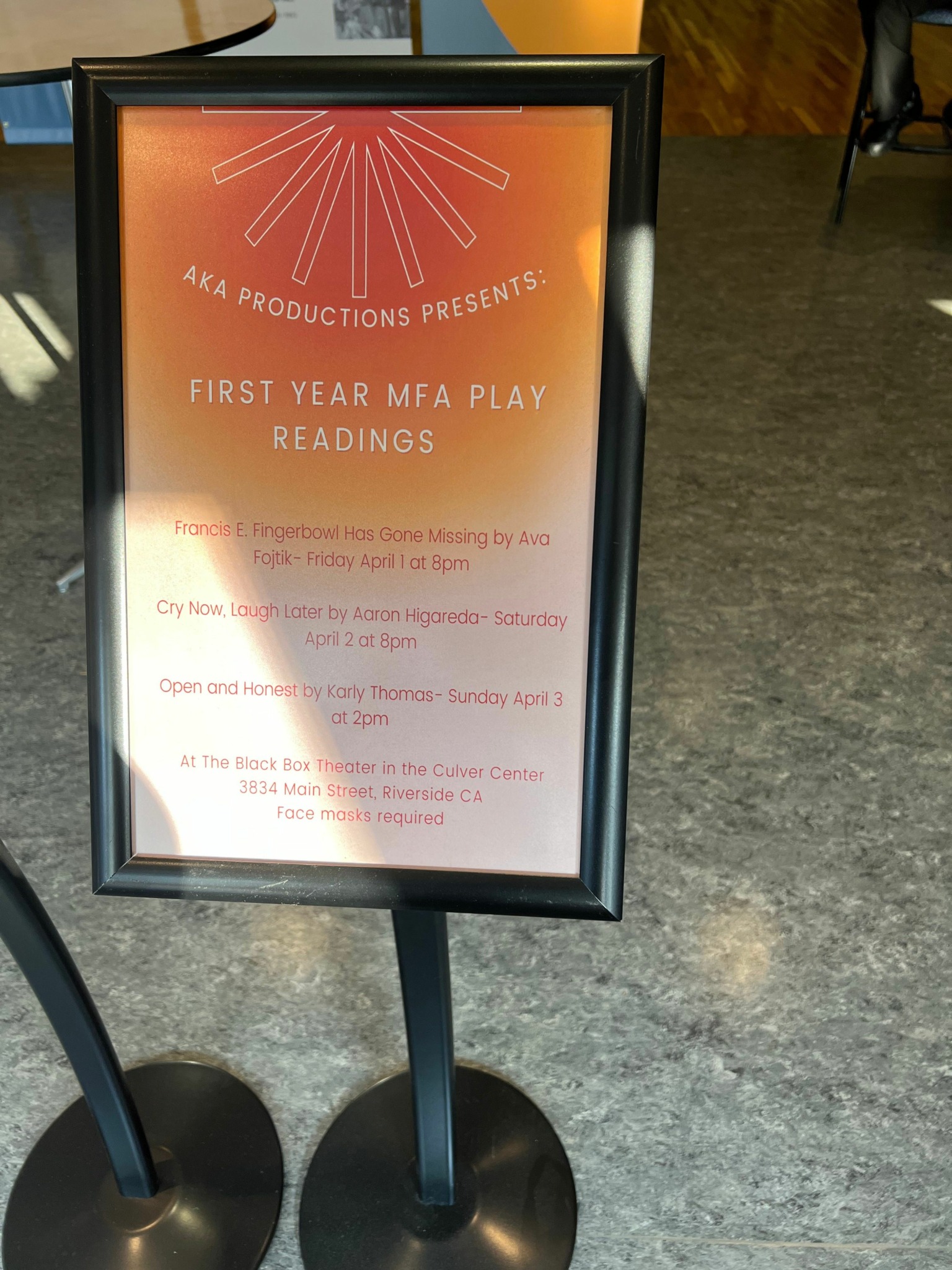
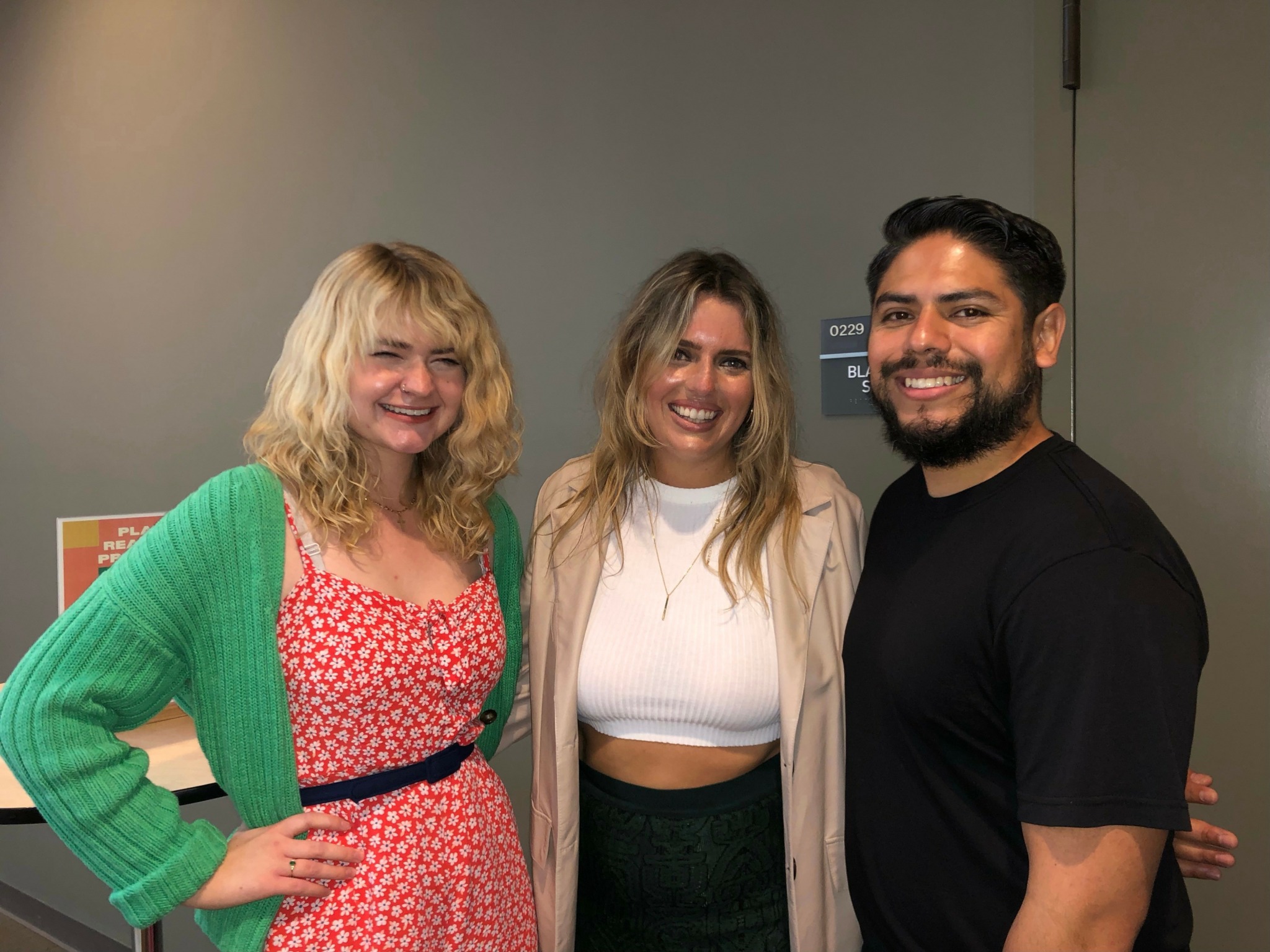
Image Credits
Ava Fojtik
Tom Vo
Kali Veach