



We’re excited to introduce you to the always interesting and insightful Matthew Wittmer. We hope you’ll enjoy our conversation with Matthew below.
Matthew, thanks for taking the time to share your stories with us today Can you talk to us about a project that’s meant a lot to you?
One of my meaningful projects has been documenting a southern California mausoleum over the course of the last several years by creating onsite observational drawings and diagrams of its interiors. My first book of mausoleum drawings was published in 2020; a second book is currently in progress. Both contain hundreds of reproductions of my onsite diagrams (visual drawings that recreate the patterns) of the building’s interiors as well as the extent of the complex’s resulting memorialization patterns. My work often reconstructs the visual components of locales associated with death or the threat thereof. These visual reconstructions are participatory in nature because I get to know the mausoleum space first hand in order to create. In this way these pieces are less illustrative as they stem directly from me being an active observer onsite. Being involved with spaces in this way, for me, brings a sacredness and magic to taboo issues often associated with locations I chose, seen as infamous. I guess you could say that visiting the Alcatraz island cellblock in my formative years helped start my interest with locales.
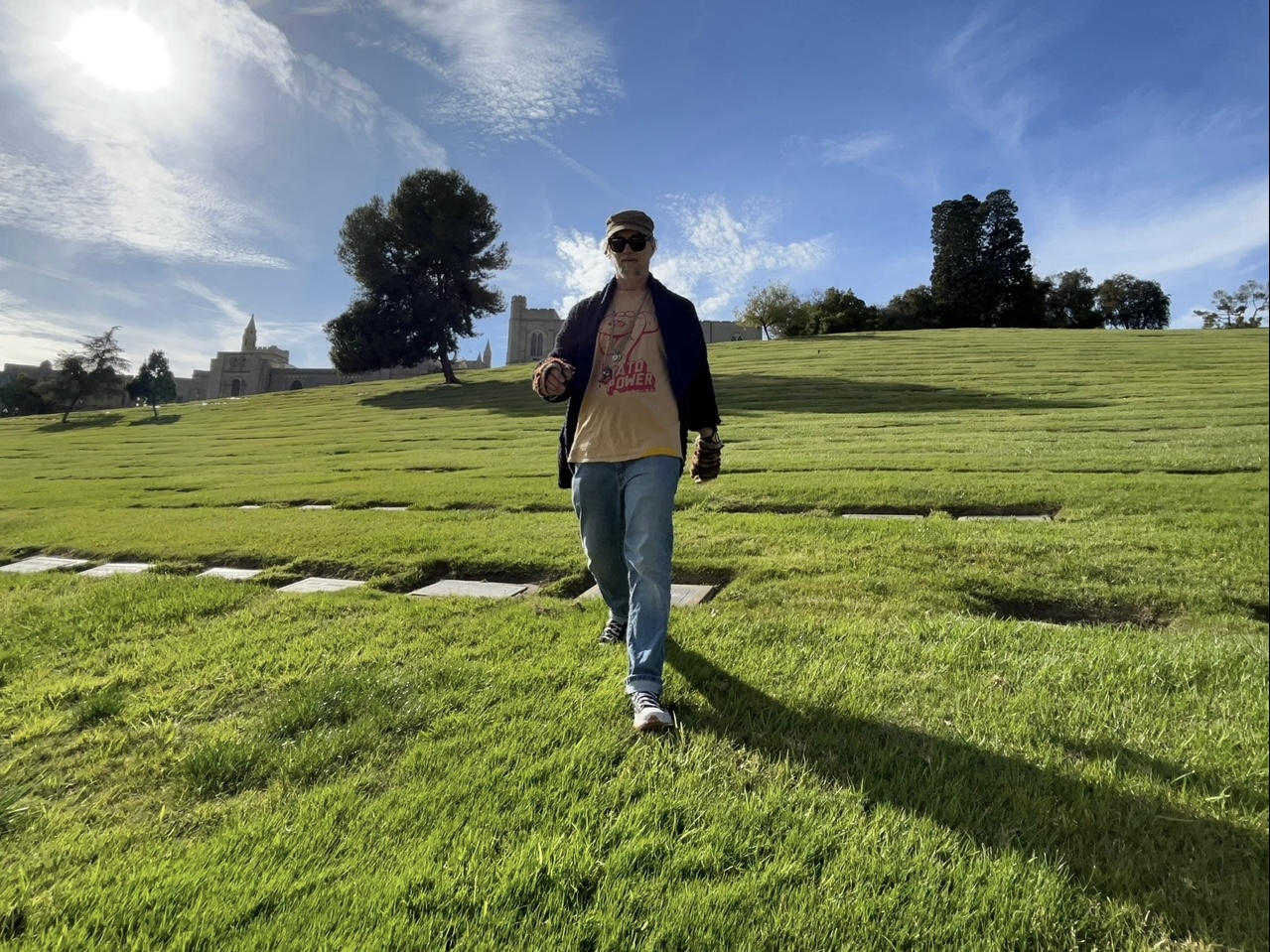
As always, we appreciate you sharing your insights and we’ve got a few more questions for you, but before we get to all of that can you take a minute to introduce yourself and give our readers some of your back background and context?
My name is Matthew D. Wittmer. I was raised in southern Missouri and reside in southern California. Since grade school I have always reconstructed locations that have fascinated me in various ways (models, drawings, photos) that have lead me to better understand those places and therefore aspects of the world. My studies in college and graduate school were in studio art and information studies. One of my longest standing commitments to understanding a location has been to try to understand the building that was center of the siege and fire that occurred in Waco, Texas in 1993. The journey to understanding that building that is lost to us now has has resulted in many strong connections to survivors, preserving their dignity and their stories, the memorialization efforts on the property, and how memorializations have been altered over time. Another location that has pulled me to explore and document it, is the remote site on BLM land in southeastern Utah where hiker Aron Ralston was pinned by a boulder that dislodged on top of him in 2003 on a hike, resulting in Ralston amputated his own hand to free himself. His story was documented in his book, by Tom Brokaw for a documentary television special, and was the basis for the movie ‘127 Hours.’ My work in exploring these locations often exists outside the norms of the visual art or academic world. Some of my pursuits are shared on my website, stormbound.org and on my linked youtube channel where most anyone with an internet connection has access to what I post.
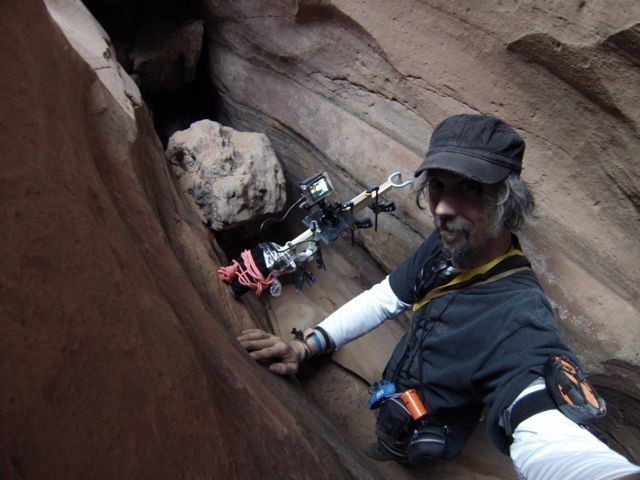
We’d love to hear a story of resilience from your journey.
I developed a steadfast commitment to better understand that building that once existed in Waco, Texas that was the source of national attention in 1993 when an FBI siege occurred for 51 days ending in a horrific demolition and fire that killed over 70 people. My interest in this came about in 1998 from seeing the director’s cut of a documentary of the siege entitled “Waco: The Rules of Engagement” (later re-edited and released by Somford). That first VHS edit polarized me to learn more about the unusual building. I soon found exploring questions I had about that building were going to be directly intertwined with learning more about the siege, the survivors (who knew the most about the building, and were small in number), the aftermath, and the religious history that small offshoot in Waco. The documentary revealed many of the criminal acts that took place during the siege, but it was seeing the footage of survivor Clive Doyle tearfully testifying before congress in 1995 about how he survived the fire that spurred me to get involved. I visited the property where it turned out Clive was still living with his mother. If someone would have told me in 1998 that Clive and I would become good friends for over two decades, I wouldn’t have believed it. Yet after a decade of meeting him, found myself working alongside him to help organize and publish his autobiography. I also wouldn’t have thought it was possible to aide with the coordination and documentation of the annual April 19th survivor memorials for over a decade either – yet that has transpired as well. In the last few years, the youngest generation of the siege survivors have developed a firm dedication and commitment to organizing their annual memorial that Clive is largely credited for holding together for nearly three decades. Having recording many of these memorials and with Clive having written down his memories of all those who were killed (he often spoke about these details at the memorials) provides the next generation of survivors with a foundation of information they can build upon for how they choose to remember the event and people who were killed. When Clive passed away in 2022 I wanted to create a headstone for him. I did so with a mutual friend and scholar, Catherine Wessinger, who aided in securing a plot for it in a cemetery next to the burial plots of his close friends – his Waco family. Getting to know Clive and helping to preserve his memories and the history that he shared so unselfishly only came about only because of a steadfast commitment to become directly involved with trying to understand that building. Making work that is in response to my direct involvement has been a guiding principal in my work that professor Karen Kunc at the University of Nebraska-Lincoln helped me to realize when I was a graduate student. My initial visit to the property in Waco spurred regular visits for 24 years now, altering the course of my life. The people there and difference they’ve made has helped me ensure that the work I create today is thoughtful, inclusive and approachable.
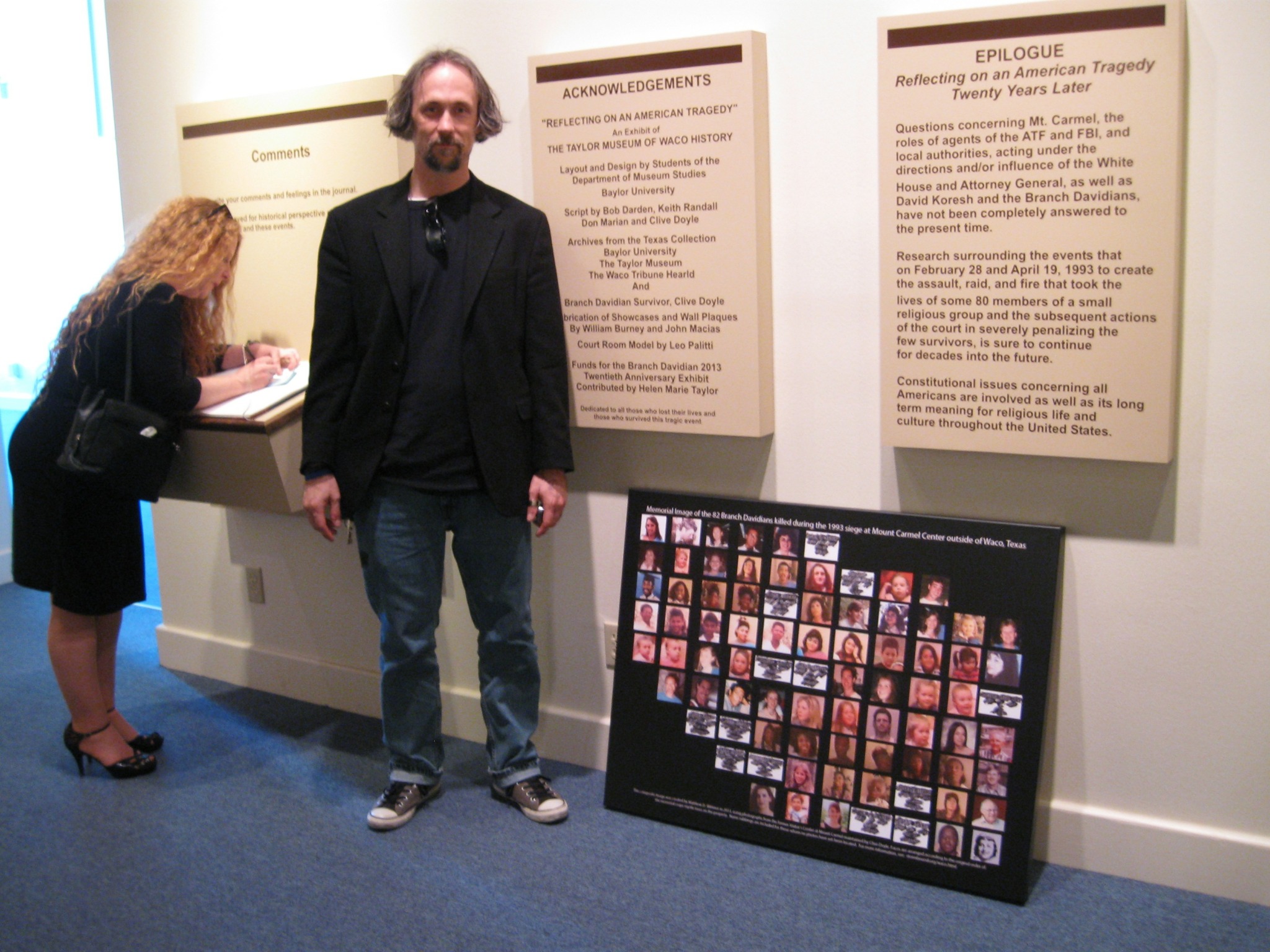
Is there mission driving your creative journey?
Curiosity has always driven me to create things – or recreate them in my own way. True curiosity is often fleeting on many in today’s marketplace culture. People are often confused when they see what I’m doing in public spaces observing or reconstructing. They often tell me I must be doing work for an employer, for a school project, or for some mission greater than a simple commitment to exploring a personal curiosity. As an example, I took up learning the art of tightrope walking in 2009 after seeing the documentary “Man On Wire.” I threw myself into mastering how to become a wire walker for several years. For me that also involved learning the art of rigging the wire, inherent to the craft, which included knowing how to find and use heavy equipment, even creating equipment like the balance poles and shoes for performances. This particular passion lead me to meeting, working with, and walking on wires with renown tightrope artist Philippe Petit in New York City. Philippe’s notable fame is for walking a tightwire he strung between the World Trade Center towers in 1974 at a height of 1,300 feet. Philippe taught me how he performed his 180 degree turns on the cable that day whilst holding a 50 pound balance pole when he was fleeing the law enforcement officers awaiting at the ends of the wire (not featured in his books or interviews). People who saw me wire walking in Los Angeles – even LAPD and the LA Fire Department – always voiced that I must be auditioning for a film or television show. They often couldn’t believe I was doing this out of personal passion, in much the same way producers of MSNBC, CNN and even FBI lead negotiator Gary Noesner would express to me confusion about how I came to know the details about the siege in Waco. Becoming personally vested in the authenticity of my work and work ethic (regardless of day job) is something my mentors have always held in high esteem and encouraged. Creating work or attempting to recreate spaces in ways the are approachable by others is, for me, a sacred act. I would like to think that is something that can occasionally resonate with others.
Contact Info:
- Website: https://stormbound.org
- Instagram: https://www.instagram.com/matthewdwittmer/
- Youtube: https://www.youtube.com/@sustainingtraces
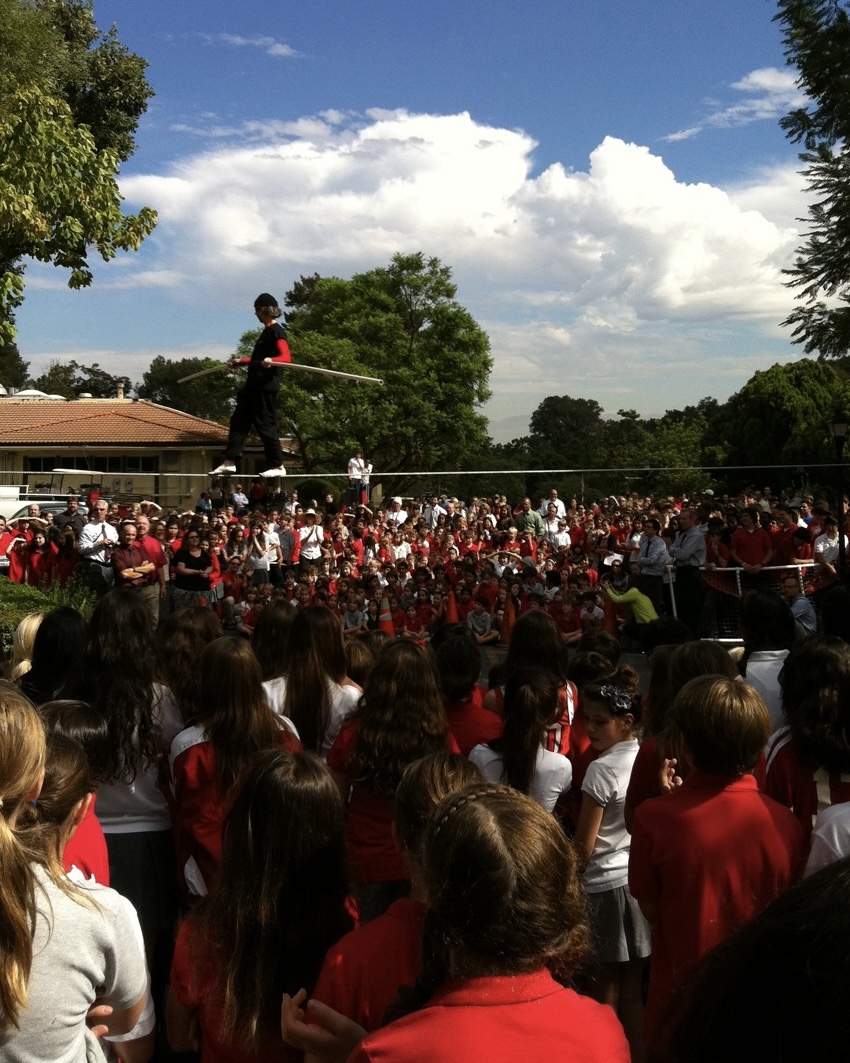
Image Credits
Wire pic with audience courtesy of Sam Bierman; Boulder pic courtesy of Matthew Wittmer; Standing in Waco exhibit courtesy of Catherine Wessinger; Cemetery grounds pic courtesy of Matthew Wittmer; Profile pic on wire in yellow shirt courtesy Matthew Wittmer