

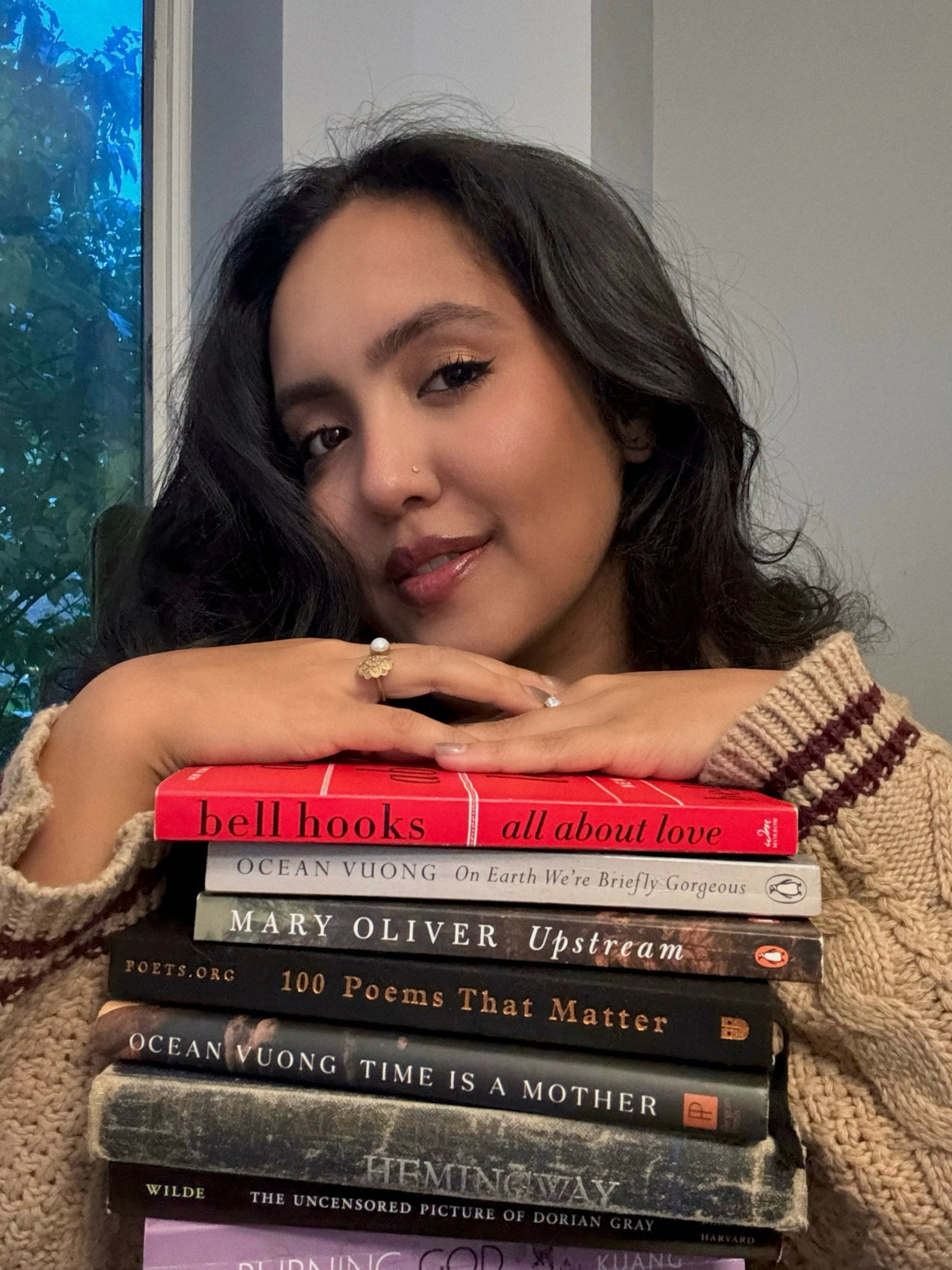

We caught up with the brilliant and insightful Alida Moon a few weeks ago and have shared our conversation below.
Alida, thanks for joining us, excited to have you contributing your stories and insights. Learning the craft is often a unique journey from every creative – we’d love to hear about your journey and if knowing what you know now, you would have done anything differently to speed up the learning process.
I think I learned how to write because I was allowed to. What I mean by that is pretty simple, even though layered. I always say I am a “writer first, human second.” As in, writing has always been a part of me. I was that kid that made up words to fit her rhyme scheme, who gave her parents poems on their birthdays, who wrote stories in her spare time. I didn’t think of it as learning something—rather, I was simply doing it. And I did it consistently because I loved it; because I needed it to navigate the world.
Another part of what I mean by “allowed” has to do with the gift of neutrality, which I think matters a lot when you are young and doing something for the love of it. No one told me I was bad at writing. No one said I was necessarily the best, either (except for maybe my dad). But that worked in my favor, too. I didn’t put pressure on my skills and advanced at my own pace. I wrote a lot. And I mean a lot. Bad, experimental poems. Songs that I sang off key. Stories with plot holes and inconsistencies. Entries in those cartoon, passcode-locked diaries where I didn’t shy away from the intensity of my feelings. And because I was allowed, and allowed myself, to be all of those things—bad, imperfect, dramatic—I was able to learn this craft seemingly seamlessly. I was free to grow. And so I grew.
Knowing what I know now, I don’t think I would have done anything differently to speed up the process. Partly because I don’t think speed is the point, and never was, at least for me when it comes to writing. It’s easier said than done, of course, especially when you’re not a kid anymore. But what does it matter how long it takes when you’re doing something you love? Something you need to do to live? When the time will pass anyway? That being said, one thing I would do, not for speed but for efficiency, is to read more and to read different kinds of books. I love to read and I do read as much as I can, but you can never do too much of it and you can never start too early! After all, to be a writer, you must be a reader first.
The skills that I think were most essential in my journey are persistence and passion. In my case, they went hand in hand and I did a lot of it without active thinking. I wrote in class—often instead of taking notes. I woke up with an idea of a verse or a concept of a poem. I filled my notebooks and my notes app with unfinished pieces. The persistence added to my progress, and the passion made the persistence easy and nearly unintentional. That being said, I also forgot a lot of pieces that I didn’t write down. I lost some when I changed phones or laptops. I left a few behind on loose sheets of papers. I went through creative droughts that lasted weeks, sometimes months. But even then, I told myself it would come back to me. And every time, it did.
I guess what I’m trying to say is, if you want to get better at something, you need to do it and you need to do it a lot. If you can love the process, have fun with it, and give yourself even the smallest bit of neutrality, it will feel effortless. But, of course, that’s not always the case. I am not a kid anymore and I no longer make up words to fit my rhyme schemes. My rule-breaking, easy-going nature that allowed me to write and progress in writing without doubts ended, for the most part, when my childhood did. I tend to be so harsh on myself with almost everything else. I re-started learning the guitar at least 4 different times, losing hope and interest when it took me longer than I deemed acceptable to pick up a chord. I took taekwondo for a semester and didn’t continue because I felt embarrassed and inadequate. As adults, living in a society that can often be very critical and harsh, it’s hard to allow ourselves to be bad at something, so that we may someday grow to be good at it. But if you are persistent, and trust the process, the progress will come. That’s something I am trying to internalize as well, outside of writing, and it’s an ongoing process.
The stories we tell ourselves matter; how we speak to ourselves matter. In fact, it adds to our identity. In a creative writing class during undergrad, one of my professors, Chris, told me I should take out the word “aspirational” when I called myself a writer. “You write and you write well,” He had said. “So you’re a writer.” My initial reaction to his sentiment was confusion. At the time, my writings had only been read by a few people in class and heard by the small audience of the open mic night I had gone to earlier in the semester. I couldn’t conceptualize being a writer—a title that felt so formal somehow—when what I was writing still mostly lived in my notebooks (and laptop). “But I’ve always written,” I told him. “And not always well.” He simply smiled and told me, “Then I suppose you’ve always been a writer.” And that was that.
It felt affirming, especially since I admired Professor Chris and his work so much. I was privileged to earn my Bachelor’s Degree in English Language and Literature, and lucky to have people—friends and mentors—who supported me while pushing me to grow. And that’s a gift. At the end of the day, whether seen by 200 people or 200k, whether liked by 9 people or 90k, my words will always be a testament to my experience in this world; a pen-carved “I was here” on the tree of life. Regardless of where my words take me, I will always be a writer first, human second.
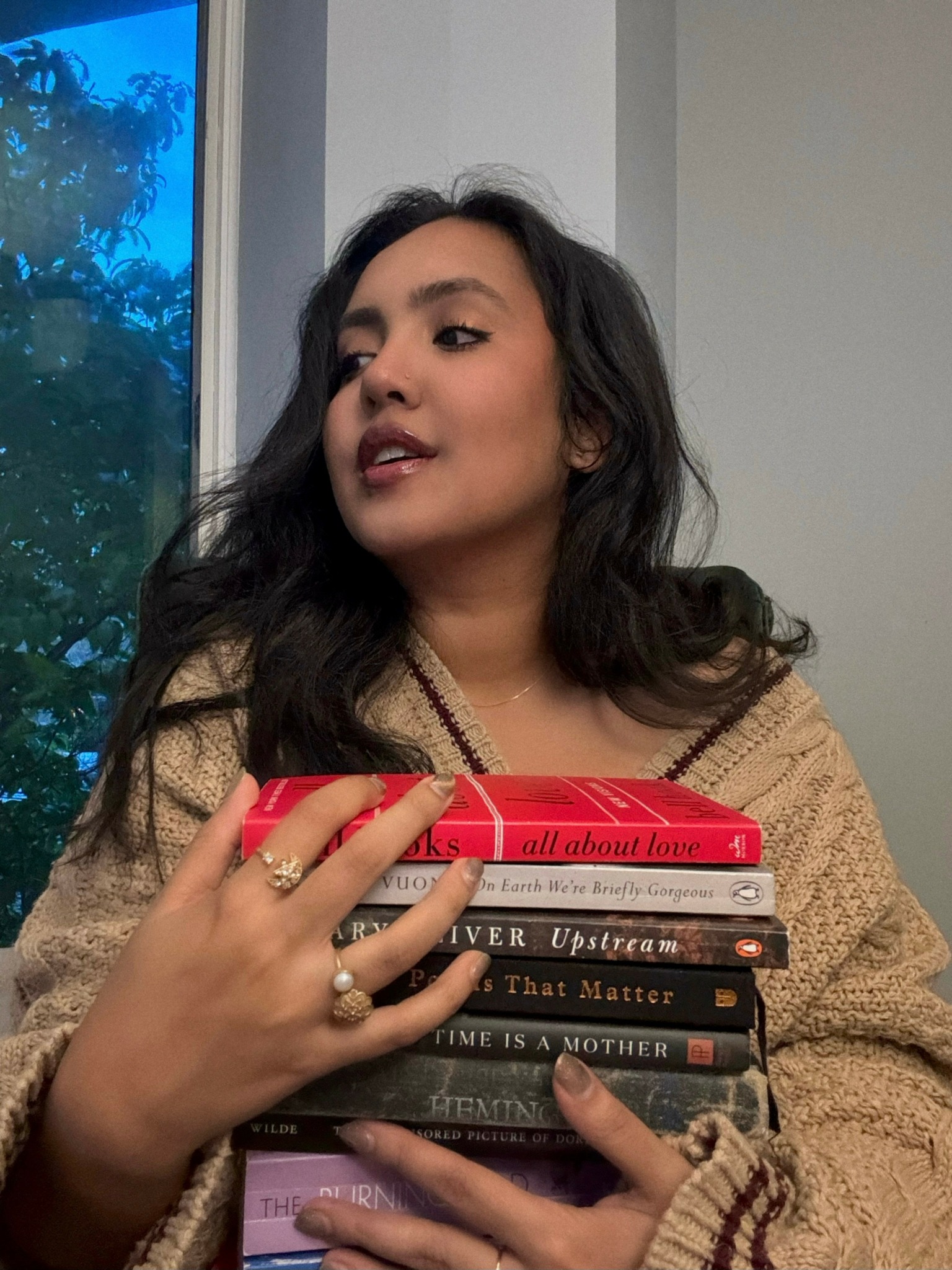
Great, appreciate you sharing that with us. Before we ask you to share more of your insights, can you take a moment to introduce yourself and how you got to where you are today to our readers.
Writing has always been my way of connecting with myself, and, by extension, my way of connecting with the world. I put words to my feelings a little like trying out puzzle pieces to see which fit, building my way up to a bigger picture. But sometimes it’s messier than that—almost bloody. Like I’m making an incision, reaching in and pulling out whatever is inside in an attempt to make sense of it. Cleaning up the mess after is easier than living with it inside.
I got into this craft mostly out of love, and partly out of necessity. I journaled so that someday I could look back, with the compassion only hindsight can provide, and see that it got better. I wrote poetry to put pain in a more bearable—and dare I say, beautiful—light. I constructed whole worlds and wrote stories because it put me in complete control in a life that was so uncontrollable. It was a means of survival as well as an act of creation. Both existed side by side, and both made it special.
At first, it felt a little odd to share my writings publicly. I had tried and stopped it a couple of times before. These attempts are now instagram accounts long forgotten, or maybe deleted. This time, I only started because a class I was taking in grad school about social media required us to post on multiple platforms a certain amount of times weekly, totalling to a certain amount of posts by the end of the semester. I fell behind on my postings on all accounts by the third week or so and never really caught up. It soon became clear that, while I could do a lot of things with my words, I couldn’t rush it.
And, if I’m being honest, I also think I used the class as a way to bypass my own fear of putting myself out there. It was somehow easier that way—telling myself it was just for class and that it didn’t matter that I was shouting out my innermost thoughts in a room where no one had gathered yet. The truth was I wanted to do it, even if it felt scary and oddly self-centered. My desire of being witnessed lived side by side with my fear of the exact same thing. On one hand, who cared about my experiences? Who cared that I was shouting? But on the other hand, you shout long enough and some people are bound to stop by.
What really did it was TikTok. A couple of my posts reached a good number of people, garnering over 500k views and close to 100k likes, each. I was suddenly face to face with an awe-striking and terrifying realization: People did care. What I wrote did matter. I realized that while I wrote from very specific and personal experiences, the underlying subject matter was still universal. Love was still love and loss was still loss and pain was still pain. To be understood is a beautiful gift. To be the one understanding, even more so, somehow. To be able to offer that understanding is an honor, whether to a hundred people or to just one.
Ultimately, that’s what I give, or at least hope to give, through my work. I want to explore all the beautiful, ugly, difficult, and confusing things that make us human. The love, the pain, the desperation. I want to depict how I feel and understand them, and in doing so I want to say that yes, I understand. But also, I want to capture the mundane things; how it feels to laugh with friends, to unpack groceries with music playing in the background, to drink wine and to kiss and to dance. Right now, I post a lot of my writings on social media. Of course, someday I hope to have a book. I would say that in a lot of ways, it’s already in progress.
What do you find most rewarding about being a creative?
There are so many rewarding aspects of being an artist or creative that it’s hard to choose just one. First and foremost, you get to be both the creator and the witness, and perhaps the creator because of being a witness. In writing, I find myself a little changed over time. Or at the very least, a little understood and taken care of, somehow.
I would also say it’s incredibly rewarding to make others feel seen and understood. Every time someone tells me that I captured what they were feeling, that my words either eased their loneliness or brought them comfort, I feel deeply honored. It feels a little like being trusted with something precious, and what a privilege it is to carry that responsibility.
Selfishly, another rewarding thing about being creative is the self-exploration and compassion that comes with it. There needs to be a certain level of tenderness present in the process of digging through the mess of your emotions, of your life, and deeming it worth capturing. No matter the medium or content—even a cry for help is an acknowledgement that help is needed, an underlying, however subconscious, belief that help is deserved.
Finally, there’s the fact that writing, specifically, for me is an act of preservation. I’ve spent a lot of time grappling with the impermanence of everything, trying to wrap my head around the inevitable coming and going of people from my life. I’ve spent it trying to hold onto them, and onto the version of myself with them. I’ve written people into pieces that they may never read (scarier, even, that they might). I’ve filled my journal pages with details of my life with and without them, trying to honor the before and the during and the after. It’s an act of preservation and immortalizing, and thus, ultimately, an act of love. It’s to say, I cared about you; I want to remember.
Is there a particular goal or mission driving your creative journey?
A little while ago, in a folder found at the bottom of a storage bin, I came across a printed copy of a poem I had written for a Creative Writing class in undergrad. It was called, “Wasteland, Baby!” based on Hozier’s album of the same name. The assignment, as noted on the top left corner of the paper right under my name, was to create a mixtape of sorts. So, I had taken the songs from that album, all the ways it made me feel, all the ways I related to a lot of them at that point in time, and constructed a “mixtape” poem out of it.
Reading that after so long made me have an almost out-of-body experience. I simultaneously felt like I was transported back in time while also feeling like I was reading the work of a different writer instead of my own. In a lot of ways, both of those were true. Poems, like songs, can be like time machines. And time, in turn, has a funny way of putting us face to face with all that’s changed. That poem, though creatively abstract, experimental, and inspired by Hozier’s album, also held within it the essence of who I had been at the time of writing it. Furthermore, it had captured a little bit of the world I was living in. Though the poem itself mentioned no such thing, I could almost picture my dorm room; the glow from the laptop screen lighting up my face past midnight, the music through my headphones buzzing in my head as I wrote, the darkness like a soft blanket around me as my roommates slept. I had documented myself, my creativity, and my life in a way that felt raw and striking.
My mission with my creative journey is simple, and one I try to stay true to: keep writing. I want to document with unabashed honesty. I want to explore and break rules when it comes to writing poetry. I want to create mixtapes and stories and paintings with my words. I want to leave traces of myself in my work so that I may come back to them later. I want people to connect to my words and feel a little more understood because of them. I want to have fun. I want to never stop.
Contact Info:
- Website: Coming soon! :)
- Instagram: Personal: @alidamoon || Poetry: @moonmusing.s
- Other: TikTok: @moonmusings
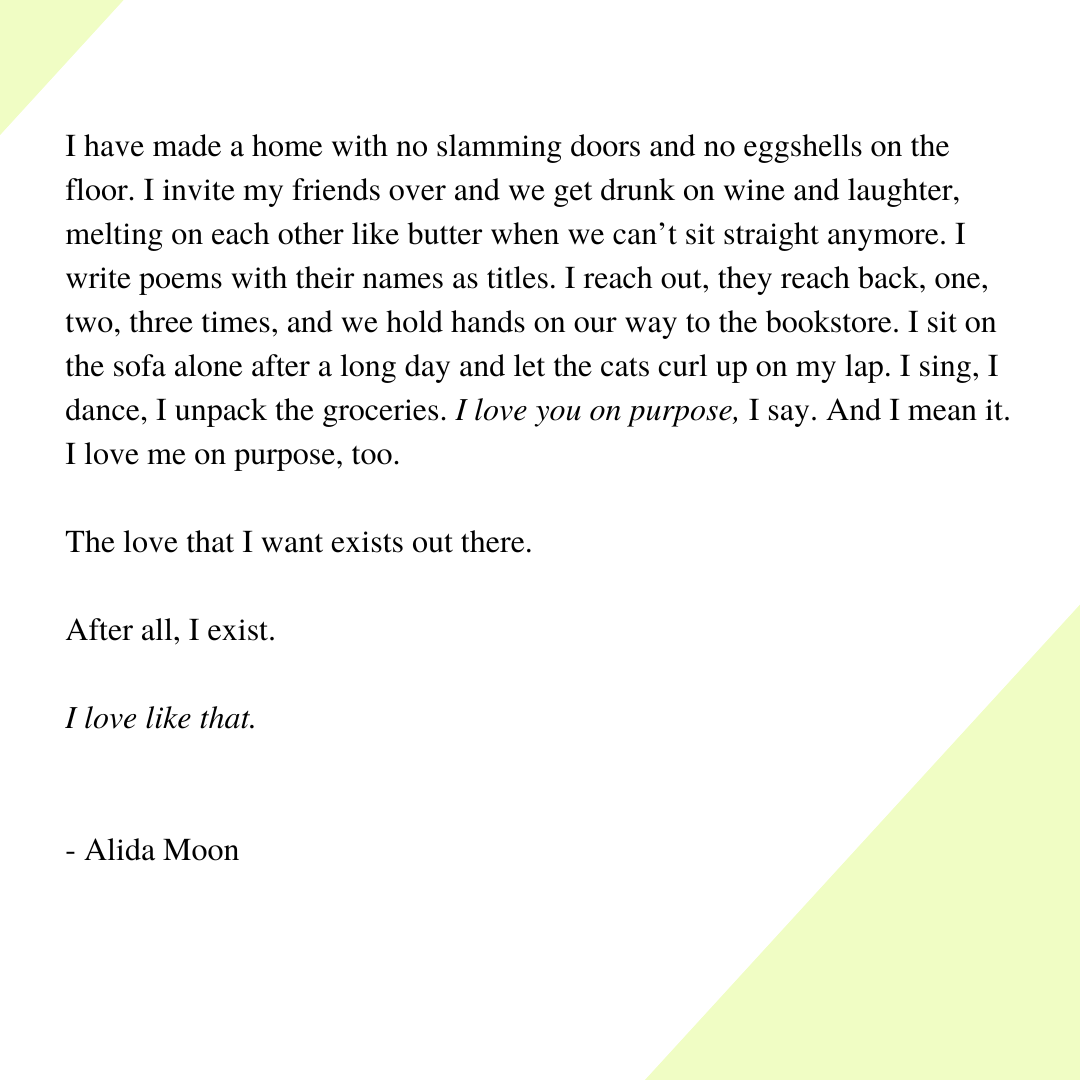
Image Credits
Alida Moon